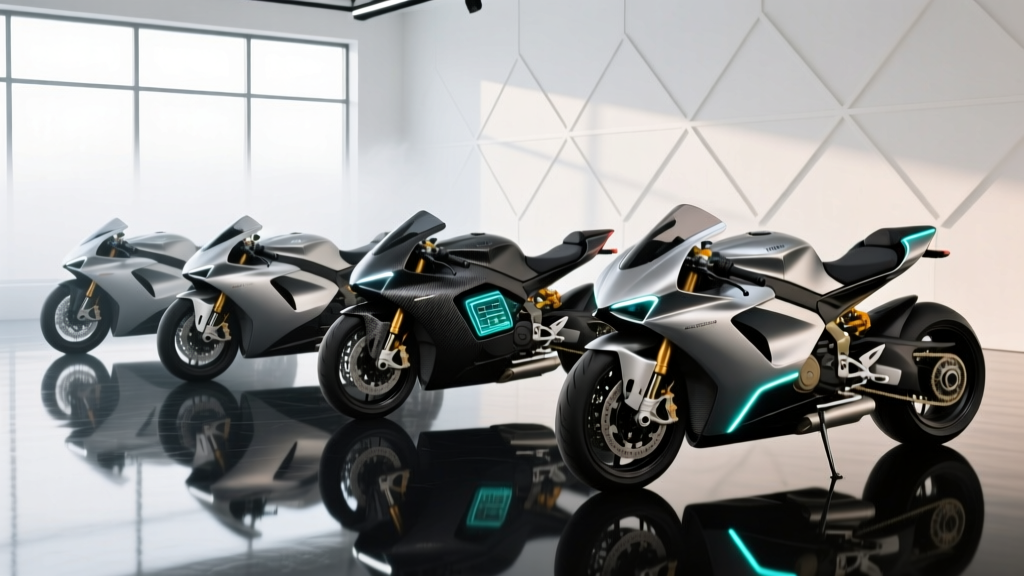
Note: This guide focuses on electric motorcycles in the cafe racer style. While AutoEdgeView primarily covers four-wheeled EVs, reader demand for electrified two-wheelers warranted this deep dive into the segment.
Quick Answer: Are Electric Cafe Racers Worth Buying in 2026?
Electric cafe racers are street-legal electric motorcycles styled after the stripped-down, low-handlebar British cafe racers of the 1960s. In 2026, the segment is led by models like the Ryvid R-18 (~$7,800, 55-mile real-world range), Super73-R Brooklyn (classified as an e-moto, ~$4,500, 75-mile range), and the premium Arc Fox (~$14,000, announced). These bikes trade the long range and quick fueling of gas motorcycles for near-zero maintenance, silent operation, and "fuel" costs under $0.02 per mile when charging at home. However, with most models offering 45–75 real-world miles per charge and 2–5 hour Level 1 charge times, they serve best as urban commuters and weekend canyon carvers — not long-distance tourers. If your daily ride is under 40 miles round-trip and you have access to a standard 120V outlet, an electric cafe racer can be a practical, stylish, and economical choice.
What Is an Electric Cafe Racer, Exactly?
A cafe racer is a motorcycle style defined by low clip-on handlebars, a rear-set footpeg position, a solo seat (often with a rear cowl), and a stripped-down aesthetic emphasizing speed and minimalism. The name originated from 1960s British riders who raced between transport cafes.
An electric cafe racer applies this design language to a battery-electric powertrain. Instead of a parallel-twin or single-cylinder gas engine, these bikes use a hub motor or mid-drive electric motor powered by a lithium-ion (typically NMC) battery pack. Most eschew multi-speed transmissions entirely — electric motors deliver peak torque from 0 RPM, making a single-speed reduction gear sufficient.
The segment currently spans three tiers:
- E-moto / electric moped class: 750W–3,000W motors, 20–40 mph top speed, often street-legal as low-speed vehicles or mopeds (licensing requirements vary by state).
- Light electric motorcycle class: 3,000W–11,000W motors, 50–75 mph top speed, full street-legal motorcycles requiring a motorcycle endorsement.
- Full-power electric motorcycle: 11,000W+ motors, 100+ mph, competing directly with mid-displacement gas sport bikes.
2026 Electric Cafe Racer Models: Specs & Pricing
The electric cafe racer market remains niche compared to four-wheeled EVs, but several manufacturers are delivering compelling options. Here's how the leading models stack up by the numbers:
| Model | Motor (kW) | Battery (kWh) | Equiv. Range | Top Speed | Charge Time (120V) | MSRP |
|---|---|---|---|---|---|---|
| Ryvid R-18 | 7.2 kW peak | 3.6 kWh (NMC) | ~55 mi (mixed) | 60 mph | ~3.5 hrs | $7,800 |
| Super73-R Brooklyn | 2.0 kW peak | 1.15 kWh (NMC) | ~75 mi (eco mode) | 28 mph (Class 2) | ~4 hrs | $4,495 |
| Maeving RM1S | 5.0 kW peak | 2.4 kWh (NMC, dual-battery option) | ~50 mi (single) / ~100 mi (dual) | 50 mph | ~4 hrs per battery | $7,995 (single) / $9,490 (dual) |
| Arc Fox (announced) | 15 kW peak (est.) | 7.0 kWh (est.) | ~100 mi (est.) | 90+ mph (est.) | TBD (DC capable) | ~$14,000 (est.) |
Real-world range caveat: Manufacturer range claims assume eco-mode riding on flat terrain at moderate speeds. Expect 20–35% less range at full-speed highway riding, aggressive acceleration, or in cold weather (below 45°F), where lithium-ion chemistry becomes less efficient and cabin-heating equivalents (heated grips/gear) draw additional power.
Electric Cafe Racer vs. Gas Motorcycle: Cost Breakdown
The upfront price of electric cafe racers is competitive with entry-level gas motorcycles, but the ownership economics diverge significantly over time. Here's a data-driven comparison between a typical electric cafe racer (Ryvid R-18 class, $7,800) and a comparable gas standard motorcycle (e.g., a used or new entry-level 300–500cc standard at ~$6,500):
| Cost Category | Electric Cafe Racer ($7,800 MSRP) | Gas Standard Motorcycle ($6,500 MSRP) |
|---|---|---|
| Purchase price | $7,800 | $6,500 |
| Fuel / electricity (5 yrs, 3,000 mi/yr) | $180 (at $0.16/kWh avg) | $1,650 (at 50 MPG, $4.40/gal) |
| Oil changes | $0 | $375 (5 changes × $75) |
| Chain/sprocket maintenance | $0 (belt or shaft drive typical) | $450 (adjustment + replacement) |
| Air filter / spark plugs | $0 | $200 |
| Tire replacement (5 yrs) | $400 | $400 |
| Insurance (avg, 5 yrs) | $2,400 ($480/yr) | $2,750 ($550/yr) |
| Estimated 5-year total | $11,180 | $12,325 |
The electric cafe racer saves roughly $1,145 over five years, primarily through eliminated engine maintenance and drastically lower fuel costs. At 3,000 miles per year, the Ryvid-class bike consumes approximately 225 kWh annually — about $36/year in electricity at the U.S. average residential rate of $0.16/kWh. The gas equivalent burns about 60 gallons per year at 50 MPG.
Insurance note: Electric motorcycle insurance premiums vary widely. Some insurers offer discounts for electric powertrains; others charge more due to higher repair/replacement costs for battery packs. Always get quotes before purchasing.
Real-World Ownership: What First-Time EV Riders Must Know
If you're coming from a gas motorcycle — or buying your first motorcycle ever — the electric ownership experience has distinct practical considerations:
Charging Access Is Your #1 Factor
Unlike electric cars with access to DC fast-charging networks (Tesla Superchargers, Electrify America), most electric cafe racers do not support DC fast charging. You'll charge exclusively on Level 1 (standard 120V household outlet) at 0.5–1.0 kW, meaning a full charge from empty takes 3–5 hours for most models.
This makes home charging access essential. If you live in an apartment without garage or outlet access, or park on the street, charging an electric motorcycle becomes a significant logistical challenge. Some riders remove the battery (the Maeving RM1S features a removable pack) and charge indoors — a viable workaround if your building allows it.
Range Planning Is Different on Two Wheels
With 45–75 miles of real-world range, electric cafe racers are urban and suburban machines. A 30-mile round-trip commute leaves adequate buffer, but spontaneous 80-mile day rides require route planning around charging stops — and those stops will be 3+ hours at a standard outlet, not 30 minutes at a fast charger.
Cold weather impact: Lithium-ion batteries lose 15–30% of usable capacity in temperatures below 40°F. A bike rated for 55 miles in summer may deliver only 38–47 miles in January. Preconditioning (warming the battery while plugged in) is not yet widely available on electric motorcycles the way it is on EVs like the Tesla Model 3 or Hyundai Ioniq 5.
Regenerative Braking Changes Your Riding
Most electric cafe racers feature regenerative braking — the motor acts as a generator during deceleration, sending energy back to the battery. This ranges from mild engine-braking feel to aggressive one-pedal-style slowing. Regen extends range by 5–15% in stop-and-go urban riding and reduces wear on physical brake pads.
Common Misconceptions About Electric Cafe Racers
| Myth | Fact |
|---|---|
| "Electric motorcycles are silent and therefore unsafe" | At speed, wind noise, tire noise, and drivetrain whine make electric motorcycles audible. Many riders add aftermarket bells or rely on lane positioning and lights for visibility — the same strategies gas riders use. |
| "The battery will need replacement in 2–3 years" | NMC lithium-ion packs in quality electric motorcycles are rated for 800–1,200 full charge cycles before degrading to 80% capacity. At 50 miles per charge and 3,000 miles/year, that's 13–20 years of typical use before meaningful degradation. |
| "You can't ride in the rain" | All street-legal electric motorcycles are sealed to IP67 or equivalent standards for the battery and motor. Rain riding is safe — the same precautions for traction and visibility apply as with gas bikes. |
| "Electric cafe racers qualify for the $7,500 federal tax credit" | The IRS §30D Clean Vehicle Credit applies to four-wheeled vehicles. Electric motorcycles may qualify for the separate §30D(g) qualified two-wheeled plug-in electric vehicle credit — up to 10% of the purchase price, capped at $2,500. Income and sourcing restrictions apply. Consult a tax professional. |
| "They're slower than gas bikes" | In the 0–40 mph range, most electric cafe racers match or beat equivalent gas motorcycles due to instant torque. Where they fall short is top speed and sustained highway performance — a 7 kW motor simply can't compete with a 35 kW (47 HP) gas twin above 65 mph. |
Decision Framework: Is an Electric Cafe Racer Right for You?
Choose an electric cafe racer if:
- Your daily riding is under 40 miles round-trip
- You have access to a 120V outlet at home (garage, carport, or removable battery access)
- You ride primarily in urban/suburban environments under 55 mph
- You value near-zero maintenance (no oil, no spark plugs, no clutch, no multi-speed transmission)
- You appreciate silent operation for neighborhood-friendly early-morning rides
- You want the cafe racer aesthetic with modern EV technology
Stick with a gas motorcycle if:
- You regularly ride 80+ miles in a single trip
- You lack reliable home charging access
- You ride primarily on highways at sustained 70+ mph speeds
- You live in a region with extreme cold (below 20°F) for extended winter months
- You want a wide dealer/service network for repairs
- Long-distance touring or group rides with gas-powered friends are your primary use case
Consider an electric bicycle (Class 3 e-bike) instead if:
- Your commute is under 20 miles and you don't need motorcycle licensing
- Your budget is under $3,500
- You want pedal-assist exercise option and bike-lane access
Charging Costs vs. Gasoline: The Per-Mile Math
One of the strongest arguments for electric cafe racers is the energy cost advantage. Here's the precise math:
| Metric | Electric Cafe Racer (Ryvid R-18 class) | Gas Standard Motorcycle (400cc class) |
|---|---|---|
| Energy efficiency | ~65 Wh/mile (real-world mixed) | ~50 MPG (real-world mixed) |
| Energy cost | $0.16/kWh (U.S. avg residential) | $4.40/gallon (2026 avg) |
| Cost per mile | $0.010 | $0.088 |
| Annual fuel cost (3,000 mi) | $31 | $264 |
At roughly one cent per mile for electricity versus nearly nine cents per mile for gasoline, the electric cafe racer costs about 89% less to "fuel." Over 15,000 miles (five years at 3,000 mi/yr), that's a $1,320 energy savings alone.
Even if you pay premium public charging rates ($0.35/kWh at some Level 2 stations), the per-mile cost is still only $0.023 — a fraction of gasoline. According to EIA weekly gas price data, fuel costs remain one of the most volatile ownership variables for gas motorcycles.
Battery Longevity, Warranty & Replacement Costs
The battery pack is the single most expensive component in an electric cafe racer. Understanding its lifespan is critical to long-term ownership planning:
- Chemistry: Most use NMC (nickel manganese cobalt) lithium-ion cells, chosen for energy density over the LFP (lithium iron phosphate) chemistry more common in electric cars like the Tesla Model 3 RWD. NMC offers more range in a smaller, lighter package — critical for motorcycles — but has a slightly shorter cycle life.
- Cycle life: Expect 800–1,200 full charge cycles before the battery degrades to 80% of original capacity. A "full cycle" means using 100% of the battery (e.g., two 50% discharges count as one full cycle).
- Calendar aging: Even with minimal use, lithium-ion batteries degrade over time. Expect 2–3% capacity loss per year regardless of mileage.
- Warranty: Most manufacturers offer 2 years on the battery pack. The Maeving RM1S includes a 2-year/unlimited-mileage battery warranty. Compare this to the 8-year/100,000-mile battery warranties common on four-wheeled EVs.
- Replacement cost: A replacement NMC battery pack for a Ryvid-class bike runs approximately $2,000–$3,500 in 2026. This is a significant expense relative to the bike's purchase price — budget accordingly for long-term ownership beyond year 8–10.
Pro tip: To maximize battery life, avoid regularly charging to 100% and draining to 0%. The 20–80% state-of-charge window minimizes degradation. Store the bike at approximately 50% charge if it won't be ridden for weeks.
Frequently Asked Questions
Do I need a motorcycle license to ride an electric cafe racer?
It depends on the model and your state. Full-power electric motorcycles (over 3,000W, capable of 30+ mph) require a motorcycle endorsement (M1 in most states) just like a gas motorcycle. Lower-power models classified as electric mopeds or low-speed vehicles may only require a standard driver's license. Check your state's DMV requirements — classification varies significantly between California, New York, Texas, and other jurisdictions.
Can I charge an electric cafe racer at a public EV charging station?
Generally, no. Most electric motorcycles use a standard 120V household plug (NEMA 5-15) or a proprietary charger, not the J1772 connector used by electric cars. You cannot plug into a ChargePoint, Electrify America, or Tesla Supercharger station. Some newer models are exploring J1772 compatibility, but as of 2026, plan to charge at home or at standard wall outlets.
How fast do electric cafe racers go?
Top speed varies dramatically by class. The Super73-R Brooklyn tops out at 28 mph (Class 2 e-moto). The Ryvid R-18 reaches approximately 60 mph. The Maeving RM1S hits about 50 mph. For context, a gas-powered Royal Enfield Continental GT 650 (a popular gas cafe racer at ~$6,700) reaches 100+ mph. Electric cafe racers prioritize urban agility and instant torque over top-speed performance.
Are electric cafe racers safe in a crash compared to gas motorcycles?
There is limited crash-specific data for electric motorcycles. The NHTSA tracks motorcycle fatalities broadly but does not separate electric from gas in public reports. The primary safety differences: electric bikes are typically lighter (fewer heavy engine components), which can aid maneuverability, but they lack the auditory presence that alerts drivers. Always wear a DOT-certified helmet and ride defensively regardless of powertrain.
What happens if I run out of charge on the road?
Unlike a gas motorcycle where a fuel delivery or tow to a gas station solves the problem in minutes, a depleted electric motorcycle must be towed to a power source or charged on-site — which takes hours. Most roadside assistance plans cover motorcycle towing. Some riders carry a portable generator as an emergency range extender, though this adds weight and negates the emissions benefit.
Do electric cafe racers qualify for any federal or state incentives?
The federal §30D Clean Vehicle Credit does not apply to two-wheeled vehicles. However, a separate qualified two-wheeled plug-in electric vehicle credit (up to 10% of purchase price, max $2,500) may be available depending on current IRS rules and your tax liability. Some states (California, Colorado, New York) offer additional rebates for electric motorcycles. Check IRS.gov and your state energy office for current eligibility.
The Bottom Line
Electric cafe racers in 2026 occupy a specific niche: stylish, low-maintenance urban commuters that trade range and refueling speed for near-silent operation, instant torque, and one-cent-per-mile energy costs. If your riding profile fits — short commutes, home charging access, and realistic range expectations — the Ryvid R-18, Maeving RM1S, and similar models deliver a genuinely compelling ownership experience. If you need highway capability, long-distance touring, or lack charging access, a gas standard motorcycle or a used gas cafe racer remains the more practical tool. As battery energy density improves and DC fast-charging trickles down to two-wheelers, expect this segment to grow — but in 2026, buying an electric cafe racer is a lifestyle choice backed by solid urban economics, not a one-size-fits-all solution.