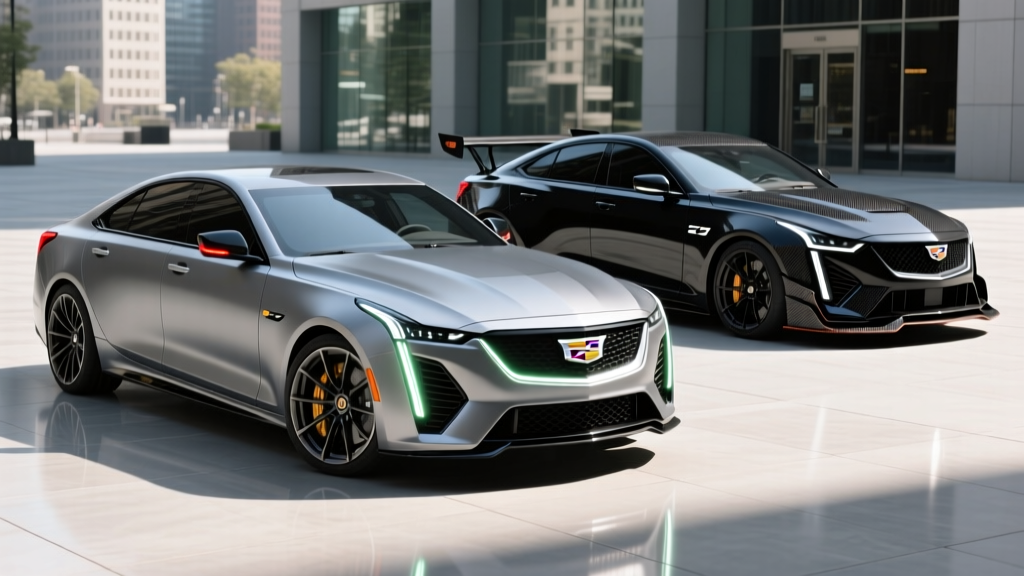
If you are searching for an electric Cadillac sedan, the current landscape centers on one production model and one highly anticipated arrival. The Cadillac Celestiq is Cadillac's flagship hand-built ultra-luxury electric liftback, starting around $340,000, offering an EPA-estimated 300+ miles of range and a 111 kWh Ultium battery. For buyers seeking a more mainstream electric Cadillac sedan, the next-generation CT5 EV (announced, expected late 2026/early 2027) will sit on GM's Ultium platform with pricing projected in the $55,000–$70,000 range. Below, we break down exact specs, real-world range expectations, charging infrastructure, ownership costs, and the decision framework to determine if an electric Cadillac sedan fits your garage.
Quick Answer: Which Electric Cadillac Sedan Should You Consider?
Buy the Celestiq now if budget is not a constraint and you want a bespoke, 300+ mile, 600 HP flagship. Wait for the CT5 EV if you want a practical luxury electric sedan in the $55K–$70K range with Super Cruise and competitive range. Cadillac currently does not offer a compact electric sedan; the Lyriq and Optiq are SUVs/crossovers.
The 2026 Electric Cadillac Sedan Lineup at a Glance
Cadillac's electrification strategy has leaned heavily into SUVs (Lyriq, Optiq, Vistiq, Escalade IQ), but the sedan segment is not abandoned. Here is what exists and what is announced for buyers specifically seeking an electric Cadillac sedan.
| Specification | Cadillac Celestiq (2026) | Cadillac CT5 EV (Announced) |
|---|---|---|
| Body Style | Ultra-luxury liftback sedan | Luxury sport sedan (expected) |
| Battery (Usable) | ~111 kWh (NMC, Ultium) | ~85–100 kWh est. (Ultium) |
| EPA Range | ~300–308 mi (est.) | ~320–350 mi (projected) |
| Drivetrain | AWD, dual motor | RWD / AWD options expected |
| Horsepower | ~600 HP | ~340–500 HP (est.) |
| 0–60 mph | ~3.8 seconds | ~4.5–5.5 sec (est.) |
| Peak DC Fast Charge | ~190–200 kW | ~190 kW (est., 800V capable) |
| 10–80% DC Charge Time | ~30 minutes | ~25–30 min (projected) |
| Level 2 Home Charging | 19.2 kW (AC) | 11.5–19.2 kW (est.) |
| Starting MSRP | ~$340,000 | ~$55,000–$65,000 (est.) |
| Federal Tax Credit (§30D) | Not eligible (MSRP/income cap) | Potentially eligible — TBD on sourcing |
| ADAS | Super Cruise (Level 2) | Super Cruise (Level 2) expected |
| Warranty (Battery) | 8 yr / 100,000 mi | 8 yr / 100,000 mi (expected) |
| Availability | Production now (limited) | Announced — late 2026/2027 |
Note: CT5 EV specs are preliminary estimates based on GM Ultium platform data and industry projections. Final figures will be confirmed at launch. Source: Cadillac Celestiq Official, fueleconomy.gov.
Real-World Range vs. EPA Estimates: What to Actually Expect
The EPA range sticker is a starting point, not a guarantee. For the Celestiq's ~300–308 mile EPA estimate, real-world conditions meaningfully shift that number.
Range Reality Check: Cadillac Celestiq
EPA Estimate: ~300–308 miles
Real-World Highway (75 mph, moderate climate): ~250–275 miles
Cold Weather (below 30°F, highway): ~200–230 miles
Mixed City/Suburban: ~280–300 miles
EVs lose 15–30% of range in sustained cold due to battery heating demands and cabin HVAC load. Highway speeds above 70 mph also increase aerodynamic drag significantly, reducing efficiency. The Celestiq's large, heavy sedan profile is more affected by speed than a compact EV.
For the upcoming CT5 EV with a projected 320–350 mile EPA rating, expect real-world highway range of roughly 270–310 miles in mild conditions, and 220–260 miles in winter. These are typical NMC Ultium pack behaviors consistent with the Chevrolet Blazer EV and Cadillac Lyriq on the same platform.
Charging Speed and Infrastructure: kW, Connectors, and the NACS Shift
Understanding the difference between kW (power — the rate of energy delivery) and kWh (energy — battery capacity) is essential. The Celestiq's ~111 kWh battery charged at a peak rate of ~200 kW means, in ideal conditions, you are adding roughly 200 kWh of energy per hour of charging — but the charge curve tapers significantly above 80% state of charge (SoC).
| Charging Level | Power (kW) | Miles Added Per Hour | Best For |
|---|---|---|---|
| Level 1 (120V outlet) | ~1.4 kW | ~3–4 mi/hr | Overnight trickle, emergencies |
| Level 2 (240V home) | 7.7–19.2 kW | ~22–55 mi/hr | Daily home charging |
| DC Fast Charge | 50–200 kW | ~150–600+ mi/hr | Road trips, quick top-ups |
Connector update for 2026: GM vehicles, including all Cadillacs, have transitioned to the NACS (North American Charging Standard) connector — the Tesla-style plug. This grants Celestiq and future CT5 EV owners access to Tesla Supercharger stations (15,000+ locations) via adapter or native NACS port, in addition to Electrify America, EVgo, and other networks. This is a significant advantage over CCS-only vehicles.
Charging Myths vs. Facts
| Myth | Fact |
|---|---|
| "Peak 200 kW means the whole session charges at 200 kW" | Peak rate is sustained only between ~10–50% SoC. Charging slows to ~50 kW or less above 80% to protect battery health. A 10–80% session averages closer to 120–140 kW. |
| "You can't charge an EV without a garage" | Public Level 2 and DC fast charging is viable for apartment dwellers, though it costs 2–3× more than home charging and requires planning. |
| "Fast charging ruins the battery" | Modern Ultium packs use active thermal management. Occasional DC fast charging has minimal impact on long-term degradation; GM warranties 8 years/100,000 miles with a capacity retention threshold. |
Cost Breakdown: Electric Cadillac Sedan vs. Gas Equivalent
Let's compare the total ownership economics. We'll use the Celestiq vs. a comparable ultra-luxury gas sedan (e.g., Mercedes S-Class) for the flagship segment, and a projected CT5 EV vs. a BMW 5 Series for the mainstream luxury segment.
| Cost Factor | Cadillac Celestiq (EV) | Mercedes S 580 (Gas) |
|---|---|---|
| Base MSRP | ~$340,000 | ~$118,000 |
| Federal Tax Credit (§30D) | $0 (exceeds MSRP cap) | N/A |
| Annual Fuel/Energy (12,000 mi) | ~$600–$900 (home charging) | ~$2,400–$3,000 (premium gas) |
| Annual Maintenance | ~$300–$500 | ~$1,200–$1,800 |
| Annual Insurance (est.) | ~$4,500–$6,000 | ~$3,000–$4,000 |
| 5-Year Fuel + Maintenance | ~$4,500–$7,000 | ~$18,000–$24,000 |
Key takeaway: The Celestiq is not a value proposition — it is a bespoke luxury statement. Its energy and maintenance savings are real but trivial relative to its purchase price. For the mainstream buyer considering a future CT5 EV:
| Cost Factor | CT5 EV (Projected) | BMW 530i (Gas) |
|---|---|---|
| Base MSRP | ~$58,000 (est.) | ~$58,000 |
| Federal Tax Credit (§30D) | Up to $7,500 (if eligible) | $0 |
| Effective Price After Credit | ~$50,500 | $58,000 |
| Annual Fuel/Energy (12,000 mi) | ~$500–$750 | ~$1,800–$2,200 |
| Annual Maintenance | ~$250–$400 | ~$800–$1,200 |
| 5-Year Total Energy + Maint. | ~$3,750–$5,750 | ~$13,000–$17,000 |
| 5-Year Net Savings (EV) | ~$7,000–$12,000 in fuel + maintenance alone | |
The §30D federal tax credit eligibility for the CT5 EV will depend on battery sourcing, critical mineral requirements, MSRP caps ($55,000 for sedans), and buyer income limits (≤$150K single / $300K joint). Rules evolve — verify current-year eligibility at IRS.gov and consult a tax professional. Note: the sedan MSRP cap of $55,000 is tight for a luxury vehicle; the CT5 EV may need a base trim priced at or below that threshold to qualify.
Federal Tax Credit Eligibility: What Cadillac EV Buyers Must Know
§30D Clean Vehicle Credit Checklist (2026 Rules)
- Vehicle MSRP Cap: ≤$55,000 for sedans; ≤$80,000 for SUVs/trucks/vans
- Buyer Income Cap (MAGI): ≤$150,000 (single), ≤$225,000 (head of household), ≤$300,000 (joint)
- Battery Component Sourcing: Must meet North American assembly + critical mineral + battery component thresholds (phased annually)
- Point-of-Sale Transfer: Eligible buyers can apply the credit as a down-payment reduction at the dealer (effective 2024+)
- Manufacturer Cap: GM's previous 200K-unit cap was removed; all GM EVs are potentially eligible if other criteria are met
The Celestiq's ~$340,000 MSRP eliminates it from §30D eligibility entirely. The CT5 EV's eligibility will hinge on whether its base trim falls under the $55,000 sedan cap and meets sourcing rules at time of purchase.
Real-World Ownership: What First-Time EV Buyers Need to Know
Transitioning to an electric Cadillac sedan involves practical shifts beyond the showroom.
Home Charging Access Is the Make-or-Break Factor
Charging at home on a Level 2 (240V) system is where EV ownership economics shine. Expect to pay $500–$2,500 for a quality Level 2 charger (e.g., ChargePoint Home Flex, Emporia Vue) and $800–$3,000+ for professional electrical installation — potentially more if your panel needs a 200-amp upgrade. A Celestiq with its 19.2 kW AC capability requires a 100-amp dedicated circuit for maximum speed; most homes need an electrical panel assessment. Always hire a licensed electrician for final specs.
Cold-Weather Range Loss Is Real but Manageable
If you live in the upper Midwest or Northeast, expect 20–30% range reduction in sustained sub-30°F conditions. The Celestiq's heat pump (standard on Ultium vehicles) helps mitigate cabin heating energy draw. Preconditioning the battery while plugged in — warming it before departure using grid power — preserves range and improves regenerative braking performance in cold weather.
Insurance Costs Are Typically Higher
EV insurance premiums run 15–30% higher than equivalent gas vehicles due to higher repair costs, specialized parts, and total-loss battery replacement expenses. For a $340,000 Celestiq, expect annual premiums in the $4,500–$6,000+ range. Get quotes before purchasing.
Maintenance Is Genuinely Lower
No oil changes, no transmission fluid, no spark plugs, no exhaust system. Brake pad life extends significantly thanks to regenerative braking (often 80,000–120,000+ miles). Expect to maintain tires (EVs are heavier and wear tires faster), cabin air filters, washer fluid, and coolant system checks. Cadillac's Ultium battery warranty covers 8 years / 100,000 miles against excessive degradation.
Super Cruise and Driver Assistance: SAE Level 2, Not Self-Driving
SAE Automation Level: Level 2 (Partial Driving Automation)
Cadillac's Super Cruise is a Level 2 hands-free driver-assistance system. It controls steering, acceleration, and braking on pre-mapped divided highways (~400,000+ miles of compatible roads in North America). The driver must remain attentive and ready to take over at all times. An infrared camera monitors driver gaze and will issue escalating alerts if attention lapses. This is not autonomous driving (Level 4). You are the driver.
Super Cruise is one of the best-executed Level 2 systems available, with smooth lane changes (on newer iterations) and reliable hands-free operation on mapped highways. It is a genuine long-distance fatigue reducer, not a replacement for an engaged driver.
What Super Cruise Does NOT Do
- Operate on unmapped roads, city streets, or construction zones
- Handle stoplights, stop signs, or pedestrian crossings autonomously
- Function without the driver paying attention (gaze monitoring is active)
- Replace the need for a licensed, sober, alert driver
Decision Framework: Should You Buy an Electric Cadillac Sedan?
Choose the Cadillac Celestiq If:
- You want an ultra-luxury, bespoke electric flagship and budget exceeds $300K
- You value exclusivity (limited production, hand-built) over practicality
- You have reliable home Level 2 charging and access to NACS/Supercharger networks for travel
- You want 600 HP, AWD, and a 300+ mile range in a statement vehicle
Wait for the Cadillac CT5 EV If:
- You want a mainstream luxury electric sedan in the $55K–$70K range
- Daily driving is under 80 miles round-trip (home charging covers nearly all needs)
- You want Super Cruise, Ultium battery tech, and NACS charging access at an accessible price
- Potential §30D tax credit eligibility matters to your purchase math
Consider a Gas or Hybrid Alternative If:
- You lack home or workplace charging access and rely solely on public infrastructure
- You regularly drive 400+ miles in a single day in rural areas with sparse charging
- Your budget is under $50,000 and you need immediate availability (no EV sedan from Cadillac fits this now)
- You live in extreme cold (-20°F regularly) and cannot precondition at home
Frequently Asked Questions
Does Cadillac currently make an electric sedan I can buy?
Yes — the Cadillac Celestiq is in limited production now as a ~$340,000 ultra-luxury electric liftback sedan. It is not a mainstream vehicle. For a more accessible electric Cadillac sedan, the CT5 EV has been announced but is not yet available for purchase as of early 2026.
How does the Celestiq's range compare to a Tesla Model S?
The Celestiq targets ~300–308 miles EPA, while the 2025 Tesla Model S Long Range achieves an EPA-estimated 402 miles. The Model S is lighter, more aerodynamic, and benefits from over a decade of efficiency refinement. The Celestiq prioritizes luxury, bespoke materials, and exclusivity over maximum range efficiency.
Can I charge a Cadillac EV at Tesla Superchargers?
Yes. GM has adopted the NACS connector for all new EVs. Cadillac EVs can use Tesla Supercharger stations with the appropriate adapter (provided by GM) or via a native NACS port on newer production vehicles. This significantly expands road-trip charging options.
What is the battery replacement cost for a Cadillac Ultium EV?
Full Ultium battery pack replacement is estimated at $15,000–$25,000+ depending on pack size and labor. However, Ultium packs are modular — individual modules can be replaced rather than the entire pack, potentially reducing costs. Real-world degradation data for Ultium is still maturing, but GM warranties 8 years / 100,000 miles with coverage for excessive capacity loss (typically below 60–70% retention).
Is the Celestiq eligible for any federal or state EV incentives?
No. The Celestiq's ~$340,000 MSRP far exceeds the §30D federal tax credit MSRP cap of $55,000 for sedans. Buyer income caps would also eliminate most purchasers. Some states offer separate incentives, but most have price caps as well. Check your state's energy office for specifics.
How does an electric Cadillac sedan compare to the Lyriq or Optiq?
The Lyriq and Optiq are crossovers/SUVs, not sedans. They share Ultium platform technology and Super Cruise capability but offer different cargo profiles, ride heights, and pricing. The Lyriq starts around $50,000 with ~314 miles of EPA range. If you specifically want a sedan body style, the Celestiq (now) or CT5 EV (upcoming) are the Cadillac options.
Sources: Cadillac Official, EPA fueleconomy.gov, IRS §30D Clean Vehicle Credit. Specifications for announced vehicles are preliminary estimates and subject to change. Always verify current pricing, tax credit eligibility, and vehicle availability with an authorized Cadillac dealer and a qualified tax professional.