Quick Answer: Is the Electric Cadillac Escalade Worth It?
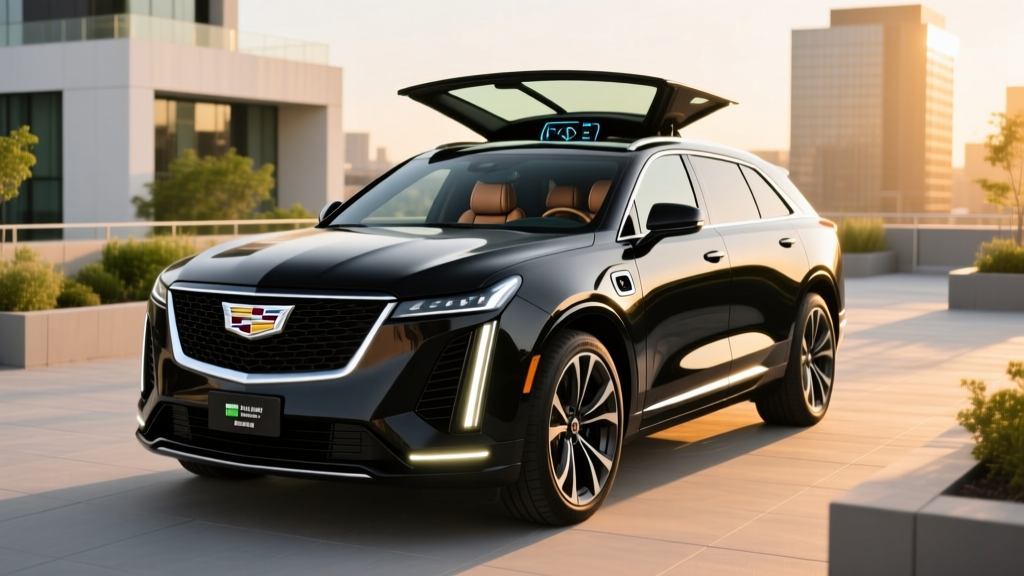
The 2026 Cadillac Escalade IQ delivers an EPA-estimated 460 miles of range from a massive 200+ kWh Ultium battery, peaks at 350 kW DC fast charging (10–80% in ~20 minutes), and produces up to 750 horsepower in Velocity trim. Starting at $129,990, it costs roughly $40,000 more than a gas Escalade, but annual fuel savings of $2,500–$3,500 and near-zero drivetrain maintenance narrow the gap over a 5-year ownership cycle. It does not qualify for the $7,500 federal §30D tax credit due to its MSRP exceeding the $80,000 SUV cap. The Escalade IQ is best suited for buyers with Level 2 home charging, long commutes, and a taste for flagship luxury — but its 8,600-pound curb weight means real-world highway and cold-weather range will land closer to 350–380 miles.
Range, Battery, and Efficiency: What the Numbers Actually Mean
The Escalade IQ rides on GM's BT1 electric platform with a dual-layer Ultium battery pack rated at over 200 kWh of usable capacity — one of the largest battery packs in any production vehicle. That enormous energy store is what makes the 460-mile EPA estimate possible, but physics always collects its due.
EPA Range vs. Real-World Expectations
| Scenario | Estimated Range |
|---|---|
| EPA Combined (sticker) | 460 miles |
| Highway cruising (70–80 mph, mild weather) | ~370–400 miles |
| Cold weather (below 30°F, cabin heat) | ~320–360 miles |
| Towing (5,000 lb trailer, flat terrain) | ~220–260 miles |
Source: EPA estimates via fueleconomy.gov; real-world figures based on large-battery EV testing patterns and vehicle mass.
At roughly 8,600 pounds, the Escalade IQ's efficiency hovers around 48–52 MPGe combined, or approximately 2.0–2.2 kWh per mile. That's thirsty by EV standards — a Tesla Model Y uses about 0.28 kWh/mile — but it's the unavoidable cost of moving a three-row luxury fortress. For context, a 2026 gas Escalade with the 6.2L V8 averages 16 MPG combined, meaning the IQ uses roughly one-third the energy cost per mile even at its weight.
Charging Speed: 350 kW Peak, but Mind the Curve
The Escalade IQ supports up to 350 kW on a DC fast charger via its NACS (Tesla-standard) connector, and GM claims a 10–80% charge in approximately 20 minutes under optimal conditions. That's impressive on paper, but real-world charging sessions tell a more nuanced story.
| Level | Power (kW) | Miles Added per Hour | Full Charge Time |
|---|---|---|---|
| Level 1 (120V household) | ~1.4 kW | ~3 mi/hr | ~140+ hours |
| Level 2 (240V, 48A home) | ~11.5 kW | ~25 mi/hr | ~18–20 hours |
| Level 2 (240V, 80A) | ~19.2 kW | ~42 mi/hr | ~10–12 hours |
| DC Fast (350 kW peak) | Up to 350 kW | N/A | 10–80% in ~20 min |
The critical detail is the charge curve. The 350 kW peak only holds roughly from 10–30% state of charge, then tapers progressively. Expect the session average to land around 200–240 kW across the full 10–80% pull. That still gets you ~300 miles of range in 20 minutes at a modern Electrify America or Tesla Supercharger V4 station — adequate for road-trip stops — but you won't sustain peak speed throughout.
For daily driving, home Level 2 charging on a 48-amp circuit (requiring a 60-amp breaker) replenishes roughly 25 miles per hour of charging, meaning a 10-hour overnight session adds 250 miles. Given the IQ's range, most owners will charge 2–3 times per week at home and rarely need public charging except on long trips.
Performance and Powertrain: 750 HP, Sub-5-Second 0–60
The Escalade IQ comes in two powertrain configurations. The Luxury and Premium Luxury trims run a dual-motor eAWD setup producing approximately 600 horsepower and 615 lb-ft of torque, achieving a 0–60 mph time around 5.0 seconds. The Velocity trim unlocks a 750-horsepower, 785 lb-ft configuration with a claimed 0–60 under 4.5 seconds — remarkable for a vehicle with the footprint of a small apartment.
| Spec | Detail |
|---|---|
| EPA Range | 460 miles |
| Battery Capacity | 200+ kWh usable (NMC Ultium) |
| Peak DC Charge Rate | 350 kW |
| 10–80% DC Charge Time | ~20 minutes |
| Level 2 Charge Rate | Up to 19.2 kW |
| Horsepower (Velocity) | 750 hp |
| 0–60 mph | <4.5 sec (Velocity) |
| Towing Capacity | ~8,000 lbs (estimated) |
| Base MSRP | $129,990 |
| Battery Warranty | 8 years / 100,000 miles |
GM's Ultium platform uses NMC (nickel manganese cobalt) chemistry for maximum energy density — necessary to hit 460 miles in this vehicle class. The 8-year/100,000-mile battery warranty covers capacity retention below 60% of original, consistent with industry norms, though most Ultium packs in GM's EV lineup have shown degradation under 8% over the first 100,000 miles in fleet data.
Cost of Ownership: Escalade IQ vs. Gas Escalade
The purchase price gap is steep. A 2026 gas Cadillac Escalade Premium Luxury starts around $90,000, while the IQ equivalent opens at $129,990 — a $40,000 premium before options. Neither qualifies for the federal §30D new EV tax credit: the IQ exceeds the $80,000 MSRP cap for SUVs, and the gas model is ineligible by definition. Some states offer additional rebates (California's CVRP, for example, has income-adjusted programs), so check your local programs.
| Category | Escalade IQ (EV) | Gas Escalade (6.2L V8) |
|---|---|---|
| Purchase Price (base MSRP) | $129,990 | $90,000 |
| Federal Tax Credit | $0 (MSRP cap) | $0 |
| Fuel/Energy (5 yrs, 15k mi/yr) | $6,500–$8,500 | $22,000–$26,000 |
| Maintenance (5 yrs) | $2,000–$3,000 | $5,500–$7,500 |
| Insurance (5 yrs, avg) | $18,000–$22,000 | $15,000–$18,000 |
| Estimated Depreciation (5 yrs) | $52,000–$62,000 | $38,000–$45,000 |
| Total 5-Year Cost | ~$208,000–$225,000 | ~$170,000–$187,000 |
The IQ saves $13,000–$18,000 on fuel and $2,500–$4,500 on maintenance over five years, driven by the absence of oil changes, transmission fluid, spark plugs, and reduced brake wear from regenerative braking. However, higher insurance premiums (luxury EVs carry 15–25% higher rates per IIHS data) and steeper projected depreciation partially offset those gains. The total cost gap narrows to roughly $25,000–$40,000 over five years, not the $40,000 purchase-price difference alone.
Home charging installation adds a one-time cost. A 48-amp Level 2 charger (such as the ChargePoint Home Flex or Emporia Vue) costs $600–$800 for the unit, plus $800–$2,500 for electrician labor and permits, depending on whether your panel needs a 200-amp upgrade. Budget $1,500–$3,500 total for a proper home setup.
Common Misconceptions About the Escalade IQ
| Myth | Fact |
|---|---|
| "460 miles means I'll never need to charge on road trips." | Expect 350–380 miles at highway speeds in moderate weather. Plan one 20-minute stop on 400+ mile trips. |
| "The battery will need replacing in a few years." | Ultium NMC packs are warrantied for 8 years/100,000 miles at 60% capacity. Real-world data shows <10% degradation at 100k miles. Replacement, if ever needed, is estimated at $20,000–$30,000 but is rarely required. |
| "I'll get the $7,500 federal tax credit." | The §30D credit caps SUV eligibility at $80,000 MSRP. The IQ starts at $129,990 and is ineligible. See IRS §30D guidelines. |
| "I can charge it on a regular outlet." | Level 1 adds only ~3 miles per hour. A full charge would take nearly a week. A 240V Level 2 home circuit is effectively mandatory for daily ownership. |
| "Super Cruise drives itself." | GM Super Cruise is an SAE Level 2 driver-assistance system. It handles steering, acceleration, and braking on mapped highways, but the driver must remain attentive and hands-free monitoring is enforced via a driver-facing camera. |
Real-World Ownership: What First-Time EV Buyers Need to Know
Owning the Escalade IQ differs from the gas Escalade in several practical ways that go beyond the spec sheet:
Home charging is non-negotiable. With a 200+ kWh battery, relying on public DC fast charging exclusively would cost $0.35–$0.50/kWh (roughly $70–$100 per full charge) versus $0.12–$0.18/kWh at home ($24–$36 per full charge). Over five years, exclusive public charging would add $8,000–$12,000 in extra energy costs. Confirm your home electrical panel supports a 60-amp circuit before purchasing.
Cold weather reduces range 20–30%. The IQ's heat pump helps, but a 460-mile battery dropping to 320 miles in sub-freezing temperatures is physics, not a defect. If you live in northern climates and regularly drive 300+ miles in winter, plan for one charging stop on trips you'd otherwise complete in summer.
Towing cuts range nearly in half. The IQ's estimated 8,000-pound tow rating is useful for boat trailers and campers, but expect 220–260 miles of range when towing near max capacity. Preconditioning the battery before DC fast charging (automatic when a charger is set in navigation) is critical to achieving advertised charge speeds.
Super Cruise is excellent but not autonomous. GM's hands-free driving system covers over 750,000 miles of mapped highways in North America and is one of the best Level 2 systems available. It does not handle construction zones, unmapped roads, or adverse weather. You remain the driver at all times.
SAE Automation Level: Level 2
GM Super Cruise and the Escalade IQ's driver-assistance features are classified as SAE Level 2 — partial automation. The vehicle can control steering, acceleration, and braking simultaneously, but the human driver must continuously supervise and be ready to take over immediately. This is fundamentally different from Level 4 robotaxi services like Waymo, which operate without a human driver in defined areas.
Decision Framework: Should You Buy the Electric Escalade IQ?
Choose the Escalade IQ if:
- You have reliable Level 2 home charging (garage or driveway with 240V access)
- You drive 15,000+ miles per year, making fuel savings meaningful ($2,500–$3,500 annually)
- You value silent, vibration-free powertrain refinement and instant torque for highway merging
- You want the latest GM Ultium tech, Super Cruise coverage, and a 55-inch hyperscreen dashboard
- You live in a region with robust DC fast-charging infrastructure for road trips (I-5, I-95, I-70 corridors)
- The $130,000+ price point fits your budget without depending on tax credits
Choose the Gas Escalade (or wait) if:
- You lack home charging access and rely on street parking or apartment living
- You regularly tow heavy trailers over 300+ miles — range drops make EV towing impractical on long hauls
- You live in a region with sparse DC fast-charging infrastructure (rural Mountain West, parts of the Great Plains)
- Upfront cost is a primary concern and the $40,000 premium over gas is hard to justify on fuel savings alone
- You plan to keep the vehicle 10+ years and are uncertain about long-term EV depreciation curves
For buyers on the fence, the gas Escalade remains a capable, proven luxury hauler with 16/20 MPG (city/highway) and no charging dependency. But if your daily driving pattern involves a 40–80 mile round-trip commute with home charging, the IQ's operating cost advantage and powertrain smoothness make a compelling case — provided you accept the higher entry price as the cost of flagship electric luxury.
Frequently Asked Questions
Does the Cadillac Escalade IQ qualify for any federal tax credits?
No. The federal §30D clean vehicle credit imposes an $80,000 MSRP cap for SUVs, and the Escalade IQ starts at $129,990. It is ineligible regardless of buyer income or battery sourcing. Some states offer separate incentives — check your state's energy office or DMV for current programs.
How long does it take to charge the Escalade IQ at home?
On a 48-amp, 240V Level 2 circuit (~11.5 kW), a full charge from near-empty takes approximately 18–20 hours. On an 80-amp circuit (~19.2 kW), it drops to 10–12 hours. Most owners charge partially overnight, adding 150–250 miles in 8–10 hours, which covers several days of typical driving.
What connector does the Escalade IQ use?
The 2026 Escalade IQ uses the NACS (North American Charging Standard) connector, the same standard adopted by Tesla. This grants access to Tesla Supercharger stations (17,000+ stalls in North America) as well as Electrify America, EVgo, and other networks that support NACS. No adapter is required at NACS-equipped stations.
Is the Escalade IQ's battery covered under warranty?
Yes. GM provides an 8-year/100,000-mile warranty on the Ultium battery pack, covering defects and capacity loss below 60% of original capacity. The broader vehicle limited warranty is 4 years/50,000 miles, with a 6-year/70,000-mile powertrain warranty on non-battery components.
How does the Escalade IQ compare to the Tesla Model X and Rivian R1S?
The IQ is significantly larger and more expensive than both. The Model X (EPA ~348 miles, ~$80,000) offers faster Supercharger network access and a lower price but has a smaller third row and less cargo volume. The Rivian R1S (EPA ~410 miles with Max Pack, ~$90,000) is a capable off-road three-row EV but lacks the IQ's ultra-luxury interior. The Escalade IQ competes more directly with the Mercedes EQS SUV and the upcoming electric Range Rover in the six-figure luxury segment.
What will my electricity bill look like charging the Escalade IQ at home?
At the national average residential rate of $0.16/kWh and an efficiency of ~2.1 kWh/mile, driving 15,000 miles per year costs approximately $5,040 in electricity. Compare that to roughly $4,500–$5,200 in gasoline for the gas Escalade at 16 MPG and $3.20/gallon. Your actual savings depend heavily on local electricity rates and whether you can access time-of-use plans that offer off-peak rates as low as $0.08–$0.10/kWh, which could cut your annual charging cost to $2,500–$3,200.