Quick Answer: Are Electric Buses a Fire Risk?
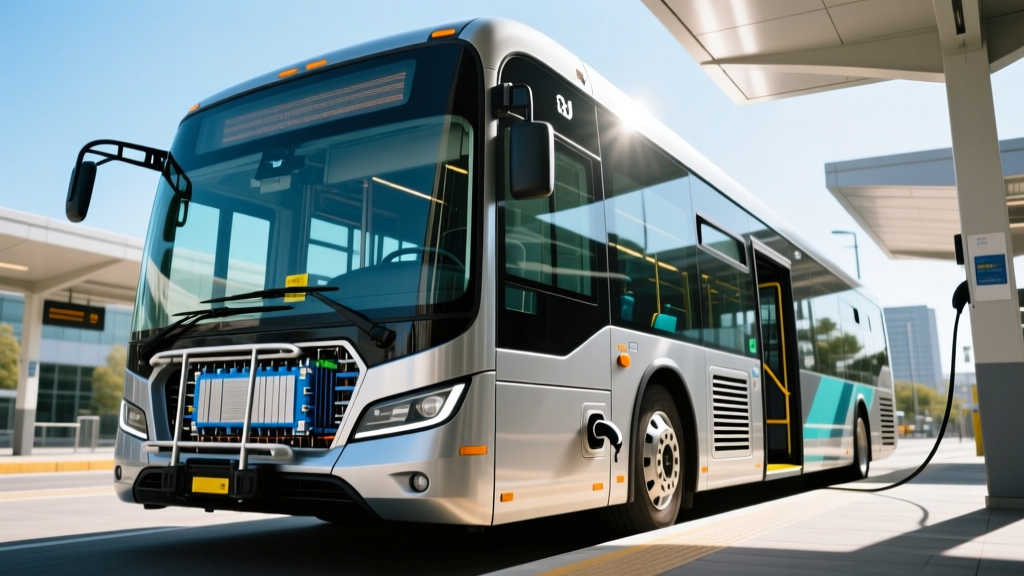
Electric bus fires are rare and proportionally less frequent than diesel bus fires. A 2023 study by the Swedish research institute RISE found that electric buses had roughly 0.02 fires per 1,000 vehicles compared to 0.94 per 1,000 for diesel buses. When electric bus fires do occur, they almost always trace back to battery thermal runaway in older NMC (nickel manganese cobalt) packs subjected to physical damage, manufacturing defects, or inadequate thermal management — not spontaneous combustion during normal operation. Modern transit buses increasingly use LFP (lithium iron phosphate) chemistry, which is far more thermally stable. For passenger EV buyers, this data is reassuring: the battery chemistries and safety systems in today's consumer EVs are equal or superior to those in commercial fleets.
Why "Electric Bus Fire" Searches Spiked — And What the Data Actually Shows
High-profile electric bus fire incidents in cities like Paris (2022, Bolloré buses temporarily pulled from service), Ottawa (2022, New Flyer Xcelsior CHARGE), and various Chinese cities have generated alarming headlines. Each incident prompts understandable concern — a 60-foot bus engulfed in flames makes dramatic footage. But context matters enormously.
According to NHTSA data and fleet safety analyses compiled through 2025, the fire incident rate for battery-electric transit buses in North America sits well below 1% of the active fleet over any given year. Compare that to diesel buses, where engine-compartment fires from fuel leaks, hot exhaust components, and electrical shorts are a routine maintenance concern.
The key difference is severity and response, not frequency. A lithium-ion battery fire burns hotter (up to 2,000°F / 1,093°C in thermal runaway), takes longer to extinguish, and can potentially reignite hours or days later. Fire departments have adapted with updated protocols — using far more water (sometimes 20,000+ gallons versus ~500 for a car fire) and extended monitoring periods. This makes each incident more resource-intensive and newsworthy, creating a perception gap.
Battery Chemistry Matters: LFP vs NMC Fire Safety Compared
The single most important factor in electric bus fire risk — and passenger EV fire risk — is battery chemistry. Here's how the two dominant chemistries compare on safety:
| Factor | NMC (Nickel Manganese Cobalt) | LFP (Lithium Iron Phosphate) |
|---|---|---|
| Thermal runaway onset | ~210°C (410°F) | ~270°C (518°F) |
| Oxygen release during failure | Yes — accelerates fire | No — self-extinguishing tendency |
| Propagation risk (cell-to-cell) | Moderate to high | Low |
| Energy density | Higher (~250 Wh/kg cell-level) | Lower (~170 Wh/kg cell-level) |
| Common in transit buses (2026) | Older fleets | Newer procurements (BYD, Proterra successors) |
| Common in passenger EVs (2026) | Tesla Model 3/Y LR, Hyundai Ioniq 5, Ford Mustang Mach-E | Tesla Model 3/Y RWD, Ford F-150 Lightning Standard, many Chinese-market EVs |
The transit industry is shifting decisively toward LFP. When the Paris RATP authority temporarily suspended a subset of its Bolloré electric buses in 2022 after two fire incidents, those buses used NMC cells. The subsequent investigation pointed to battery management system (BMS) faults and cell manufacturing inconsistencies — not a fundamental flaw in electric bus design. Replacement buses ordered since have specified LFP chemistry.
For passenger EV buyers, this matters directly. If you choose a 2026 Tesla Model 3 Rear-Wheel Drive (LFP, 60 kWh usable, EPA 272 miles, $38,990 base MSRP), you are getting inherently more fire-resistant battery chemistry than the NMC pack in a Model 3 Long Range (82 kWh usable, EPA 363 miles, $42,990). The trade-off is range and cold-weather performance — LFP loses a larger percentage of capacity in sub-freezing temperatures (roughly 30-40% range reduction at 20°F vs 20-30% for NMC with a heat pump).
Electric Bus Fires vs Diesel: A Cost and Safety Comparison
Transit agencies don't electrify blindly. They run the numbers. Here's how electric buses stack up against diesel on the metrics that matter:
| Metric | Electric Bus (2026 typical) | Diesel Bus (2026 typical) |
|---|---|---|
| Purchase price | $750,000 – $1,200,000 | $500,000 – $600,000 |
| Fuel/energy cost per mile | $0.40 – $0.65 (electricity) | $0.70 – $1.10 (diesel) |
| Maintenance cost per mile | $0.25 – $0.40 | $0.50 – $0.80 |
| Fire incident rate (per 1,000 vehicles/year) | ~0.02 | ~0.94 |
| Lifetime (years) | 12 – 15 | 12 – 15 |
| Battery replacement cost (mid-life) | $80,000 – $150,000 | Engine rebuild: $15,000 – $25,000 |
| Depot charging infrastructure | $50,000 – $150,000 per charger (DC 150-350 kW) | Fuel storage: existing |
The higher upfront cost of electric buses is offset over a 12-year service life by dramatically lower fuel and maintenance expenses. A typical 40-foot transit bus driven 45,000 miles/year saves roughly $25,000 – $40,000 annually in fuel and maintenance with electric. That's $300,000 – $480,000 over its lifetime — enough to cover the price premium and depot charging installation.
The fire safety data further strengthens the electric case. Fewer fires mean lower insurance premiums, fewer service disruptions, and reduced liability. Transit agencies that have published safety reports — including LA Metro and King County Metro — note zero fire incidents in their electric fleets through 2025.
What Electric Bus Safety Means for Passenger EV Buyers
If you're shopping for a personal EV, you might wonder why bus safety matters to you. The connection is direct:
1. Shared battery supply chains. The same CATL, BYD, LG Energy Solution, and Samsung SDI cells used in transit buses appear in passenger EVs. Safety recalls and BMS improvements driven by fleet incidents benefit all vehicles on the same cell platform.
2. Regulatory standards flow downstream. The Federal Transit Administration's safety requirements for battery-electric buses — including UN ECE R100 compliance, thermal propagation testing, and crash-simulated abuse testing — have informed updated NHTSA rulemaking for passenger EVs. The thermal propagation standard now requires that a single cell failure must not propagate to adjacent cells within 5 minutes (giving occupants time to exit), a rule directly influenced by fleet data.
3. Firefighter training benefits everyone. The NFPA (National Fire Protection Association) has trained over 300,000 first responders on EV fire response since 2015, heavily informed by transit bus and commercial fleet data. When your local fire department knows how to handle a 600 kWh bus battery fire, they're certainly prepared for your 75 kWh passenger car.
Common EV Fire Myths — Addressed With Data
| Myth | Fact (with data) |
|---|---|
| "EVs catch fire more often than gas cars" | NTSB data (2022 analysis): EV fire rate is ~25 per 100,000 vehicles sold vs. 1,530 per 100,000 for ICE vehicles. EVs are roughly 61x less likely to experience a fire. |
| "EV battery fires are impossible to put out" | They require more water and time, but fire departments extinguish them regularly. The NFPA has established protocols. Reignition risk exists but is managed with extended monitoring (typically 24-48 hours in a controlled lot). |
| "Charging an EV overnight is a fire hazard" | Level 2 home charging (7-11 kW, 240V) generates minimal battery heat. Modern BMS systems monitor every cell. The vast majority of EV charging fires trace to damaged or non-UL-listed extension cords and adapters — not the vehicle or proper EVSE equipment. |
| "A fender-bender can trigger a battery fire" | Battery packs are housed in reinforced enclosures with crush zones. NHTSA crash testing shows EV battery intrusion is extremely rare at speeds below 50 mph. Post-crash thermal events, when they occur, typically manifest hours later — giving ample time for evacuation. |
| "All lithium batteries are equally flammable" | LFP chemistry is fundamentally more stable than NMC. It does not release oxygen during thermal decomposition, making self-sustaining fires far less likely. This is why Tesla switched Model 3/Y RWD to LFP globally. |
Real-World EV Ownership: Fire Safety in Context
Fire risk is one factor among many in the EV ownership equation. Here's how it fits into the broader picture for a first-time buyer in 2026:
Purchase cost. The average new EV sells for ~$47,000 (before incentives), compared to ~$38,000 for an average ICE vehicle. However, the federal §30D tax credit can reduce that by up to $7,500 — if you meet income caps ($150,000 single / $300,000 joint AGI), the vehicle's MSRP is under the cap ($55,000 sedans / $80,000 SUVs, trucks, vans), and the battery meets critical mineral and component sourcing requirements. Point-of-sale transfer is now available, meaning the dealer applies the credit as a down-payment reduction. Always verify current-year eligibility on IRS.gov before committing.
Charging access. If you have a garage or driveway with 240V access (or can install it), home Level 2 charging at 7-11 kW adds roughly 25-44 miles of range per hour of charging — more than enough for overnight replenishment. Installation costs range from $500 (simple outlet near the panel) to $3,000+ (panel upgrade, long conduit runs). If you rely on public charging, your experience will depend heavily on your local infrastructure. Networks like Electrify America, EVgo, and Tesla Supercharger (now open to NACS-equipped non-Tesla EVs) offer DC fast charging at 150-350 kW — typically 10-80% in 18-30 minutes depending on the vehicle and peak charge rate.
Cold climate reality. If you live where winter temperatures regularly drop below 30°F, expect 20-40% range reduction depending on chemistry (LFP worse, NMC better) and whether your EV has a heat pump. A vehicle rated at 300 miles EPA may deliver 180-220 miles in a 15°F winter commute. Preconditioning the battery while plugged in mitigates this significantly and also protects charging speed — cold batteries charge far more slowly.
Insurance. EV insurance premiums average 15-25% higher than comparable ICE vehicles, driven by higher repair costs (specialized collision repair, battery replacement after even minor structural damage). Fire risk is a minor factor in premium calculations — collision and comprehensive claims dominate.
Decision Framework: Should Fire Safety Influence Your EV Choice?
Choose an LFP-battery EV if:
- You prioritize maximum thermal safety and are willing to accept ~15-20% less range for the same battery weight
- Your daily commute is under 150 miles round-trip (LFP packs are typically smaller, 50-65 kWh)
- You live in a mild climate (LFP cold-weather penalty is steeper)
- You want to charge to 100% regularly without degradation concerns (LFP tolerates full-SoC storage better than NMC)
- Examples: 2026 Tesla Model 3 RWD ($38,990, 272 mi EPA, 60 kWh LFP), 2026 Ford F-150 Lightning Standard Range ($54,995, 240 mi, 98 kWh LFP)
Choose an NMC-battery EV if:
- You need maximum range per charge (300+ miles EPA)
- You regularly drive in cold climates and want better low-temperature performance
- You tow or carry heavy loads (higher energy density = more kWh in the same space)
- You're comfortable charging to 80% daily and reserving 100% for road trips
- Examples: 2026 Tesla Model Y Long Range ($44,990, 330 mi EPA, 82 kWh NMC), 2026 Hyundai Ioniq 5 Long Range ($45,500, 305 mi, 77.4 kWh NMC)
Don't let fire fear paralyze your decision: The data is unambiguous — EVs of any chemistry are far less likely to experience a fire than the gasoline vehicle you're replacing. The fuel in your current car's tank is far more flammable than any EV battery pack in normal operation.
Frequently Asked Questions
How many electric bus fires have occurred in the US?
Exact nationwide counts are not centrally tracked in a single public database, but fleet safety reports from major transit agencies and FTA (Federal Transit Administration) records indicate fewer than 20 significant fire incidents across the approximately 5,000+ battery-electric buses in US service through 2025. That's an incident rate well below 0.5% of the fleet over several years of operation.
Are electric school buses safe for children?
Yes. Electric school buses from manufacturers like Blue Bird, Thomas Built (Saf-T-Liner C2 Jouley), and Lion Electric use LFP or advanced NMC packs with reinforced enclosures, fire suppression systems, and BMS monitoring. The NHTSA applies the same FMVSS (Federal Motor Vehicle Safety Standards) to electric school buses as to diesel ones, with additional battery-specific crash and penetration testing. No child injuries from battery fires in electric school buses have been reported as of 2026.
What happens if my EV is in a crash — will the battery catch fire?
Post-crash thermal events are rare. NHTSA data shows battery-related fires following collisions occur in roughly 1 in 10,000 EV crashes. Modern packs include pyro-fuses that disconnect the high-voltage system within milliseconds of airbag deployment, reinforced enclosures that resist intrusion, and cell-level thermal barriers that delay or prevent propagation. First responders are trained to check for high-voltage cable damage and monitor battery temperature post-crash.
Should I avoid parking my EV in a garage due to fire risk?
No. The fire risk from a properly functioning EV parked or charging in a garage is negligibly small — far less than the risk from a gasoline car with fuel vapors in an attached garage. Ensure your Level 2 charger is UL-listed (or equivalent), installed by a licensed electrician on a dedicated circuit, and that your garage has a working smoke detector. Do not use extension cords or non-rated adapters.
Do EVs cost more to insure because of fire risk?
Fire risk is a minimal factor in EV insurance pricing. The 15-25% premium increase for EVs is driven primarily by higher collision repair costs (specialized body shops, battery replacement protocols, expensive parts) and higher total-loss payouts due to elevated purchase prices. Shopping multiple insurers — including EV-specialty providers — typically narrows the gap.