Quick Answer: What Does an Electric Bus Conversion Cost?
A full electric bus conversion (repower) in 2026 typically runs $80,000–$250,000+ depending on bus size, battery capacity, and kit provider. A Type A school bus (short bus) repower with a 100–150 kWh LFP pack starts around $80K–$120K. A full-size Type C/D transit or school bus with 200–400 kWh of battery and a heavy-duty e-axle can reach $180K–$250K+. Expect 75–150 miles of real-world range, 2–4 hours on Level 2 (19.2 kW), and 45–90 minutes on DC fast charging (50–150 kW). Compared to a new electric bus at $350K–$500K+, a conversion can save 40–60% on acquisition cost while extending the life of an existing chassis.
What Is an Electric Bus Conversion (Repower)?
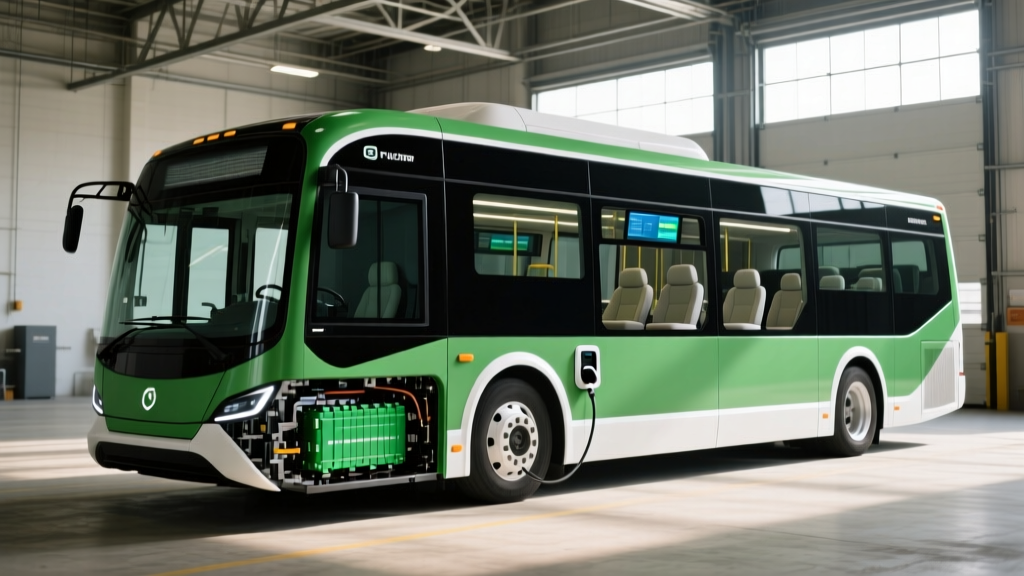
An electric bus conversion — industry term: repower or EV swap — replaces the diesel or CNG powertrain of an existing bus with a battery-electric drivetrain. The chassis, body, suspension, and interior are retained; the engine, transmission, fuel tank, and exhaust system come out. In goes an electric motor (or e-axle), inverter, battery pack, onboard charger, and thermal management system.
Repower providers in 2026 include companies like EPA-recognized retrofit firms, as well as specialists such as SEA Electric, Lightning eMotors (now part of REE Automotive), Unique Electric Solutions, and several regional integrators. Some fleets work with local high-voltage EV shops using open-source or semi-custom kits built around components from BorgWarner, Dana, or Cummins' Meritor e-axle line.
The core appeal: a 10-year-old diesel school bus with a sound body but a dying engine gets a second life as a zero-tailpipe-emission vehicle for a fraction of a new BEV bus price.
Conversion Cost Breakdown: Where the Money Goes
The single biggest cost driver is the battery pack. LFP (lithium iron phosphate) cells — the standard for commercial repowers due to cycle life and thermal stability — run roughly $100–$140 per kWh at the pack level in 2026. A 200 kWh pack alone is $20,000–$28,000 before BMS, cooling, and enclosure integration.
| Component | Cost Range | Notes |
|---|---|---|
| Battery pack (LFP, 200 kWh) | $20,000–$30,000 | Cell cost + BMS + enclosure + cooling |
| Electric motor / e-axle (150–250 kW) | $12,000–$25,000 | Direct-drive or 2-speed; BorgWarner/Dana/Cummins |
| Inverter + power electronics | $5,000–$10,000 | Motor controller, DC-DC converter |
| Onboard charger (19.2–40 kW AC) | $3,000–$6,000 | Dual or quad Level 2 modules |
| Thermal management (liquid cooling/heating) | $4,000–$8,000 | Critical for battery longevity + cold climates |
| HV wiring, contactors, safety systems | $3,000–$6,000 | Orange HV cabling, manual service disconnect, fusing |
| Instrumentation, VCU, telematics | $2,000–$5,000 | CAN bus integration, driver display, fleet telematics |
| Fabrication, mounts, driveline adapter | $5,000–$12,000 | Motor-to-axle adapter plate or prop shaft |
| Labor (integration, engineering, testing) | $25,000–$60,000 | 200–500+ hours at $100–$150/hr for certified HV techs |
| Certification, EPA/CARB compliance, inspection | $2,000–$8,000 | FMVSS compliance, state registration, weight certification |
| TOTAL (Type C, 200 kWh) | $81,000–$170,000 | Varies by kit maturity, volume, and bus condition |
For a full-size Type D transit bus requiring 300–400 kWh and a heavier-duty e-axle, push every line item up 40–60% and you arrive at the $180K–$250K+ range. Volume matters: fleets converting 5+ identical buses can amortize engineering and certification across units, dropping per-bus cost by 15–25%.
Range, Battery Sizing & Charging: The Numbers That Matter
Bus energy consumption is measured in kWh per mile, not MPGe. A Type C school bus typically consumes 1.8–2.8 kWh/mile depending on route topography, stop frequency, HVAC load, and passenger weight. A transit bus on a stop-and-go urban route can hit 3.0–4.0 kWh/mile.
Real-World Range vs. Sticker
A 200 kWh LFP pack in a Type C school bus at 2.2 kWh/mile yields roughly 90 miles of real-world range with HVAC running and a full passenger load. On a flat, mild-weather route with light loads, you might see 105–110 miles. In cold weather (below 20°F), expect a 20–35% range reduction due to cabin heating and battery internal resistance — potentially dropping to 60–70 usable miles unless the bus has a heat pump and battery preconditioning.
Battery chemistry choice: LFP vs. NMC. Nearly every reputable repower shop defaults to LFP for bus applications. Here's why:
| Factor | LFP (LiFePO4) | NMC (LiNiMnCoO2) |
|---|---|---|
| Cycle life | 3,000–6,000 cycles | 1,000–2,500 cycles |
| Energy density | ~160 Wh/kg (lower) | ~250 Wh/kg (higher) |
| Thermal stability | Excellent — no thermal runaway at cell level | Requires robust BMS and cooling |
| Cost per kWh (2026) | $100–$130 | $120–$160 |
| Cold-weather performance | Weaker — needs active heating | Slightly better in cold |
| Best for | Daily-cycle fleet use, safety priority | Range-critical routes, weight-limited chassis |
For a school bus running a 60-mile route daily and charging overnight, LFP's lower energy density is irrelevant — the bus has physical space for the heavier pack, and 5,000+ cycles means the battery outlasts the bus body.
Charging Speeds for Converted Buses
| Level | Power (kW) | Miles Added/Hour | 200 kWh: 10–80% |
|---|---|---|---|
| Level 1 (120V, not practical) | 1.4 kW | ~0.5 mi/hr | ~100 hours (skip it) |
| Level 2 (208/240V, single onboard charger) | 19.2 kW | ~8 mi/hr | ~7 hours |
| Level 2 (dual onboard chargers) | 38.4 kW | ~16 mi/hr | ~3.5 hours |
| DC Fast Charge (CCS1) | 50–80 kW | ~25–35 mi/hr | ~90–120 min |
| DC Fast Charge (CCS1, high-power) | 120–150 kW | ~55–70 mi/hr | ~50–70 min |
Charging curve reality: Most repower LFP packs accept peak DC charge rates of 0.5C to 0.75C — meaning a 200 kWh pack peaks at 100–150 kW but tapers significantly above 80% State of Charge. Plan for depot charging overnight on Level 2 as the primary strategy; DC fast charging is for opportunity top-ups or midday route extensions.
Electric Bus Conversion vs. Diesel: Total Cost of Ownership
The purchase price of a conversion is only half the equation. Fleets evaluate total cost of ownership (TCO) over a 10–15 year service life. Here's how a converted electric bus stacks up against keeping a diesel running or buying new.
| Cost Category | Electric Conversion | Diesel (Existing Bus) | New BEV Bus |
|---|---|---|---|
| Acquisition / conversion cost | $140,000 | $0 (existing asset) | $400,000 |
| Fuel / energy (10 yrs, 120K mi) | $21,600 ($0.18/kWh × 2.2 kWh/mi) | $60,000 ($4.00/gal ÷ 6 MPG) | $21,600 |
| Maintenance (10 yrs) | $8,000 (tires, brakes, cabin filter, coolant) | $45,000 (oil, filters, DPF, turbo, trans) | $8,000 |
| Depot charger install (Level 2) | $8,000–$15,000 | $0 | $8,000–$15,000 |
| Engine/trans rebuild or replacement | $0 | $12,000–$18,000 (year 6–8) | $0 |
| Federal/state incentives | –$20,000 to –$75,000 (see below) | $0 | –$40,000 to –$100,000 |
| Estimated 10-Year Net TCO | $112,600–$157,600 | $117,000–$123,000 | $294,600–$354,600 |
Key insight: The conversion TCO beats diesel primarily when incentives are applied and fuel/maintenance savings compound over high annual mileage. At 12,000 miles/year with diesel at $4.00/gal and electricity at $0.18/kWh, the energy savings alone are roughly $3,840/year. Maintenance savings add another $3,700/year. That's $7,540/year in operating savings — or $75,400 over 10 years — which nearly pays for the conversion itself before incentives.
The EPA Clean School Bus Program has been a major funding source for school bus electrification, offering up to $262,500 per new electric bus and funding for infrastructure. Repower conversions may qualify under certain grant programs, though eligibility varies by program year and state. Check current-year EPA and state energy office guidelines before budgeting.
Incentives, Tax Credits & Grant Programs for Bus Repowers
The federal §30D Clean Vehicle Credit that applies to light-duty EVs (up to $7,500) does not apply to heavy-duty buses. Instead, bus conversions tap into a different incentive landscape:
- Commercial Clean Vehicle Credit (§45W): Up to $40,000 for qualified commercial clean vehicles with GVWR over 14,000 lbs. A repowered bus may qualify if the conversion meets IRS requirements for a "qualified clean vehicle." Consult a tax professional and review current IRS §45W guidance.
- EPA Clean School Bus Program: Competitive rebates and grants; check current-year eligibility for repowers vs. new purchases.
- State and utility incentives: California's Hybrid and Zero-Emission Truck and Bus Voucher Incentive Project (HVIP), New York's Truck Voucher Incentive Program, and utility make-ready programs (covering charger installation costs) can stack. Amounts vary by jurisdiction — check your state energy office and local utility.
- Depreciation: Section 179 and bonus depreciation may apply to the conversion as a capital improvement. Confirm with a tax professional.
Common Misconceptions About Electric Bus Conversions
| Myth | Fact |
|---|---|
| "Conversions aren't reliable — they're science projects." | Modern repower kits use production-grade e-axles (Dana, Cummins/Meritor) and automotive LFP cells with integrated BMS. Reliability depends on integrator quality, not the concept. Fleets running 50+ converted buses exist. |
| "You'll never get enough range for a real bus route." | Average US school bus route is 30–60 miles round trip. A 200 kWh conversion covers most routes with margin. For 100+ mile routes, larger packs (300–400 kWh) or midday opportunity charging are viable. |
| "The battery will need replacing in 5 years." | LFP cells rated for 4,000+ cycles at 80% depth of discharge last 11–15 years at one cycle/day. Most reputable integrators warranty the pack for 5–8 years / 70–80% capacity retention. |
| "It's cheaper to just buy a used diesel bus." | A used diesel bus has lower upfront cost but $6,000–$8,000/year higher operating costs. Over 10 years at 12K miles/year, the conversion typically breaks even or saves money — especially with incentives. |
| "Any mechanic can do a conversion." | High-voltage (400–800V) systems require certified EV technicians. Improper work risks arc flash, fire, and voided insurance. Use integrators with documented safety processes and FMVSS compliance. |
Real-World Ownership Considerations
Before committing to a bus repower, evaluate these practical factors:
Depot Charging Infrastructure
You need a dedicated Level 2 (or higher) charging station at the bus depot. A single 19.2 kW Level 2 station for a bus requires a 100A/240V circuit. Installation costs range from $5,000–$15,000 depending on panel capacity, trenching distance, and local utility requirements. For a fleet of 5 buses, you're looking at a potential panel upgrade to 400–800A service ($10K–$30K) plus individual chargers. Engage a licensed electrician and your utility's make-ready program early.
Cold Climate Operations
If your buses operate below 20°F regularly, battery heating is non-negotiable. LFP cells lose 20–35% usable capacity in deep cold, and charging below freezing without cell heating causes lithium plating — permanent damage. Specify liquid thermal management with a heating loop (PTC heater or heat pump). Cabin heating draws 5–15 kW; consider a diesel- or Eberspächer-fired auxiliary heater to preserve battery range for propulsion.
Route Analysis
Map every route your bus will run. Calculate distance, elevation change, stop frequency, and HVAC load. A hilly route with 40 stops and full A/C can consume 3.5 kWh/mile vs. 1.8 kWh/mile on a flat suburban run. Size your battery for the worst-case route on the worst-case day (January, full load, heater on), not the average.
Weight and Registration
Battery packs are heavy. A 200 kWh LFP pack adds roughly 2,800–3,500 lbs. The diesel engine, transmission, and fuel tank you removed weigh 1,500–2,500 lbs. Net weight gain: 500–1,500 lbs. This may affect axle weight ratings, GVWR compliance, and registration class. Get a certified weight ticket post-conversion and verify compliance with your state's DMV.
Decision Framework: Should You Convert or Buy New?
Choose an Electric Bus Conversion If:
- You have existing buses with sound bodies/chassis but aging diesel powertrains
- Your routes are under 80 miles round-trip with predictable daily patterns
- You have depot parking with access to electrical infrastructure (or can install it)
- Your fleet budget can't absorb $350K–$500K per new BEV bus
- You qualify for §45W credit, state vouchers, or utility incentives
- You want to extend asset life by 10–15 years while eliminating tailpipe emissions
Buy a New OEM Electric Bus Instead If:
- You need 150+ miles of range and can't accommodate midday charging
- You want a single-source warranty covering the entire vehicle (not a split between chassis OEM and repower integrator)
- Your fleet is large enough to access volume pricing on new BEV buses (e.g., Thomas eLiner, Blue Bird Vision Electric, IC Bus CE Series Electric)
- You need guaranteed EPA/CARB certification without navigating the repower compliance process
- Your existing buses have significant body corrosion, frame damage, or are near end-of-life regardless of powertrain
Frequently Asked Questions
How long does an electric bus conversion take?
A professional repower shop typically completes a Type C school bus conversion in 8–16 weeks from receiving the donor bus, depending on kit availability, engineering complexity, and certification requirements. Custom one-off conversions with significant fabrication can take 6+ months.
Can I convert a school bus to electric as a DIY project?
Technically, yes — people have converted vehicles to electric in home garages. Practically, a 200+ kWh, 400–800V system on a 33,000-lb GVWR vehicle carrying children is not a DIY project. You need high-voltage certification, FMVSS compliance documentation, DOT inspection, and commercial insurance. Most insurers will not cover a DIY high-voltage conversion on a passenger-carrying commercial vehicle.
What happens to the battery at end of life?
LFP bus batteries typically retain 70–80% capacity after 10–15 years. At that point, they can be repurposed for stationary energy storage (second life) before eventual recycling. LFP chemistry contains no cobalt or nickel, simplifying recycling. Companies like Redwood Materials and Li-Cycle accept commercial battery packs.
Does a converted electric bus qualify for the federal §30D $7,500 tax credit?
No. The §30D Clean Vehicle Credit applies to light-duty vehicles under 14,000 lbs GVWR. Most school and transit buses exceed this. The §45W Commercial Clean Vehicle Credit (up to $40,000 for heavy vehicles) is the relevant federal incentive, though eligibility for repowers depends on meeting specific IRS criteria. Consult a tax professional.
What connector does a converted bus use for charging?
Most US-based repowers use the CCS1 (Combined Charging System) connector for DC fast charging and a J1772 inlet for Level 2 AC charging. Some integrators are beginning to offer NACS (Tesla-style) connectors as that standard gains adoption in commercial vehicles. Specify your connector based on your local charging infrastructure.
How does regenerative braking affect bus brake maintenance?
Significantly. Regenerative braking handles 60–80% of deceleration in stop-and-go bus routes, dramatically reducing friction brake wear. Fleets report brake pad life extending from 30,000–50,000 miles (diesel) to 100,000–150,000+ miles (electric). This is one of the largest maintenance savings in bus electrification.
Next Steps for Fleet Managers
If a bus repower makes sense for your operation, here's a practical sequence:
- Audit your routes: Map daily mileage, elevation, stops, and worst-case weather scenarios for every bus in your fleet.
- Assess depot electrical capacity: Have a licensed electrician evaluate your panel, service size, and trenching requirements for Level 2 or DC fast chargers.
- Get 3 repower quotes: Request detailed proposals including battery chemistry, capacity, warranty, charge rate, range estimate, and certification documentation.
- Research incentives: Check current-year EPA Clean School Bus funding, your state's voucher programs, utility make-ready programs, and §45W eligibility with your tax advisor.
- Pilot one bus first: Convert a single bus, run it on your most demanding route for 90 days, measure actual kWh/mile, range, and charging behavior, then scale based on data.
An electric bus conversion isn't the right answer for every fleet, but for operators with predictable routes, sound existing chassis, and access to incentives, it's a pragmatic path to electrification at 40–60% less cost than buying new. The key is sizing the battery for your worst-case day — not your best — and building depot charging infrastructure before the first bus arrives.