The Short Answer on Electric Broncos
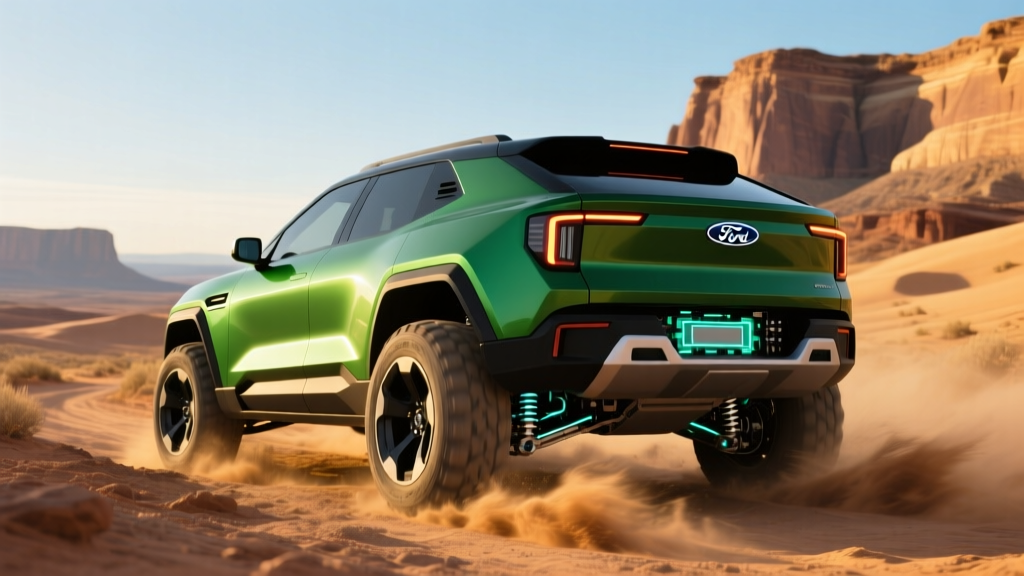
As of early 2026, Ford has not yet released a production electric Bronco. The current sixth-generation Bronco remains exclusively gas-powered (with a 2.3L EcoBoost, 2.7L EcoBoost, and 3.0L V6 in the Raptor). Ford CEO Jim Farley has publicly confirmed that an electric Bronco is part of the company's future EV lineup, and trademark filings and platform clues from the T3 ("Tesla-beating") truck architecture point to a battery-electric Bronco arriving no earlier than the 2027 or 2028 model year. If you need an electrified off-roader today, the closest alternatives are the Jeep Wrangler 4xe PHEV (plug-in hybrid) or the all-electric Rivian R1S. Below, we break down what's confirmed, what's projected based on Ford's EV platform data, and how an electric Bronco would compare to the gas version on cost, range, and capability.
What Ford Has Actually Confirmed About an Electric Bronco
Ford has been deliberate about its EV messaging after scaling back several planned electric models in 2024–2025. Here's what we know from official statements and credible reporting:
- Platform: The electric Bronco is expected to ride on Ford's next-generation flexible EV architecture — the same platform underpinning the redesigned electric F-150 Lightning successor. Ford has referred to this internally as a body-on-frame-capable EV skateboard.
- Timeline: No official on-sale date has been announced. Industry analysts and supply-chain reporting place a reveal in late 2026 or 2027, with customer deliveries in the 2027–2028 timeframe.
- Body style: Ford has trademarked "Bronco" across multiple EV-related categories, suggesting both two-door and four-door configurations are being evaluated, consistent with the current ICE lineup.
- Manufacturing: Production location has not been confirmed. Ford's Oakville Assembly in Ontario and Cuautitlán in Mexico are leading candidates based on current EV production assignments.
Because Ford has not published official specs, every number below is projected or estimated based on the current gas Bronco, Ford's existing EV powertrains, and competitive segment data. Treat these as informed projections, not confirmed figures.
Projected Specs: Electric Bronco vs. Gas Bronco
Using the current 2026 gas Bronco and Ford's EV powertrain benchmarks (from the F-150 Lightning and Mustang Mach-E), here's a side-by-side projection.
| Specification | 2026 Gas Bronco (Big Bend 4dr) | Projected Electric Bronco |
|---|---|---|
| Powertrain | 2.3L EcoBoost I4 Turbo | Dual-motor AWD (est.) |
| Horsepower | 300 hp | 400–500 hp (est.) |
| Torque | 325 lb-ft | 500–600 lb-ft (est.) |
| 0–60 mph | ~6.5 sec | ~4.5–5.5 sec (est.) |
| Energy / Fuel Capacity | 16.9 gal fuel tank | 100–130 kWh usable battery (est.) |
| Range | ~340 mi (EPA combined ~20 MPG) | 250–320 mi EPA (est.) |
| Efficiency | 20 MPG combined (EPA) | ~70–85 MPGe (est.) |
| Max Tow Capacity | 3,500 lbs | 3,500–5,000 lbs (est.) |
| Ground Clearance | 8.3–11.5 in (trim dependent) | Expected similar, pending battery packaging |
| Base MSRP | $40,995 (Big Bend 4dr) | $55,000–$65,000 (est.) |
Real-World Range Reality Check
An electric Bronco's boxy, aerodynamic profile (high frontal area, flat roofline) will work against highway efficiency. Expect 15–25% range loss at sustained 75+ mph highway speeds compared to the EPA sticker, and an additional 20–30% loss in sub-freezing temperatures — similar to what we've measured on the F-150 Lightning and Rivian R1S in cold-weather testing. A projected 300-mile EPA rating could realistically deliver 220–250 miles on a winter road trip. Off-road use at low speeds is more efficient per mile but drains the battery faster per hour of operation due to accessory loads.
Charging: What an Electric Bronco Owner Would Face
Charging infrastructure is the single biggest ownership variable for any EV, and it's especially relevant for a vehicle marketed for remote, off-pavement use.
| Charging Level | Power (kW) | Estimated Miles Added per Hour | Typical Use Case |
|---|---|---|---|
| Level 1 (120V household) | ~1.4 kW | 3–5 mi/hr | Emergency / trickle only |
| Level 2 (240V home) | 7.7–11.5 kW | 22–35 mi/hr | Daily overnight charging |
| DC Fast Charge (est. peak) | 150–200 kW (est.) | ~150 mi in 15–20 min (10–80%) | Road trips |
Key distinction — kW vs. kWh: Kilowatts (kW) measure the rate of charging (like water flow from a hose). Kilowatt-hours (kWh) measure the battery's total energy capacity (like the size of the tank). A 200 kW peak charge rate doesn't mean sustained speed — every EV's charge curve tapers significantly above 80% state of charge to protect the battery. Expect the final 80–100% to take as long as the first 10–80%.
Off-grid charging reality: Trailheads and remote camping areas rarely have Level 2 or DC fast chargers. An electric Bronco owner planning backcountry trips would need to either pre-charge fully, rely on a portable solar generator (slow), or route trips around charging stations — a genuine limitation versus the gas Bronco's ability to refuel anywhere with a jerry can.
Cost of Ownership: Electric Bronco vs. Gas Bronco
Assuming the projected $60,000 base MSRP for an electric Bronco versus the $40,995 gas Big Bend, here's a five-year cost comparison based on 15,000 miles/year, national-average electricity and fuel prices.
| Cost Category (5-Year) | Gas Bronco (Big Bend) | Projected Electric Bronco |
|---|---|---|
| Purchase Price (MSRP) | $40,995 | ~$60,000 (est.) |
| Federal Tax Credit (§30D) | $0 | Up to $7,500 (if eligible*) |
| Fuel / Energy (5 yr) | ~$11,250 (20 MPG, $3.00/gal) | ~$4,500 ($0.15/kWh home avg) |
| Maintenance (5 yr) | ~$3,500 (oil, filters, brakes) | ~$1,500 (no oil, regen saves brakes) |
| Insurance (5 yr, est.) | ~$9,000 | ~$11,000 (EV premium) |
| Estimated Total (5 yr) | ~$64,745 | ~$69,500 (est.) |
*Federal §30D tax credit eligibility requires meeting buyer income caps ($150K single / $300K joint), vehicle MSRP caps ($80K for SUVs), and battery critical-mineral and component sourcing rules that change annually. Always verify current-year rules at IRS.gov. The credit can now be transferred to the dealer at point of sale, reducing your out-of-pocket cost at purchase.
The takeaway: Even with fuel and maintenance savings of roughly $8,750 over five years, the electric Bronco's higher purchase price means break-even likely takes 7–9 years under these assumptions. If you drive significantly more than 15,000 miles/year or have access to cheap/free workplace or solar charging, the math shifts in the EV's favor faster.
Federal Tax Credit: What You Need to Know
§30D Clean Vehicle Credit Checklist (2026 Rules)
- Buyer AGI cap: $150,000 (single) / $225,000 (head of household) / $300,000 (married filing jointly)
- Vehicle MSRP cap: $80,000 for SUVs and trucks (an electric Bronco should qualify)
- Battery sourcing: Must meet escalating critical-mineral and battery-component requirements (phased percentages increase annually through 2029)
- Final assembly: Must be assembled in North America
- Point-of-sale transfer: You can transfer the credit to the dealer for an immediate price reduction, even if you owe less than $7,500 in taxes
- Verification: Check the seller report on fueleconomy.gov and confirm with a tax professional before relying on the credit
Common Misconceptions About Electric Broncos
| Myth | Fact |
|---|---|
| "The electric Bronco is available to order now." | False. As of 2026, Ford has not opened orders. The gas Bronco remains the only production version. Any dealer claiming otherwise is mistaken. |
| "An EV can't off-road." | Electric motors deliver instant torque at zero RPM — ideal for rock crawling. The Rivian R1S and GMC Hummer EV have demonstrated serious off-road capability. The challenge is range in remote areas, not power. |
| "The battery will need replacing in 5 years." | Ford's current EV battery warranty is 8 years / 100,000 miles (minimum 70% capacity retention). Real-world degradation data from Mach-E and Lightning owners shows ~8–12% loss over 100K miles with LFP or NMC chemistries. |
| "It'll have 400+ miles of range." | Unlikely for a boxy, heavy off-road SUV. The Rivian R1S (Dual-Motor, 149 kWh Max Pack) achieves an EPA 352 miles and costs over $100K. A mainstream-priced electric Bronco will likely target 250–320 miles. |
| "I can charge it anywhere on a trail." | Public charging infrastructure in national forests, BLM land, and remote trailheads is extremely limited. Plan off-road trips around your remaining range and nearest DC fast charger. |
What First-Time EV Buyers Should Know Before Waiting
If the electric Bronco is your target vehicle, here's how to prepare during the wait:
- Audit your home electrical panel. A Level 2 home charger requires a 240V circuit (typically 40–60 amps). Installation costs range from $500 (simple run near the panel) to $3,000+ if a panel upgrade from 100A to 200A is needed. Get a quote from a licensed electrician now so you're ready on delivery day.
- Map your local charging network. Download the PlugShare or A Better Routeplanner app and identify DC fast chargers within 20 miles of your home and along routes you drive regularly. Note which networks (Tesla Supercharger, Electrify America, EVgo, ChargePoint) dominate your area — this influences which adapter you may need.
- Understand NACS vs. CCS. Ford has adopted the North American Charging Standard (NACS) connector for its EVs. An electric Bronco will almost certainly ship with a NACS port, giving native access to Tesla Supercharger stations — currently the most reliable public network in the U.S.
- Don't wait to go electric if you need one now. If your timeline is immediate, the Rivian R1S (EPA 352 mi, starting ~$79,900) or Jeep Wrangler 4xe (PHEV, 21 mi electric-only, ~$52,000) are the closest electrified alternatives in the off-road SUV segment.
Decision Framework: Should You Wait or Buy Now?
Choose to WAIT for the Electric Bronco If:
- You have reliable home charging (or can install it) and don't need a new vehicle for 18–24 months
- You want a mainstream-priced EV (projected $55K–$65K) rather than paying $80K+ for a Rivian R1S
- Bronco styling, removable doors/roof, and the Ford dealer network are important to you
- Your daily driving is under 200 miles and road trips are occasional
Choose an ALTERNATIVE Now If:
- You need a vehicle in the next 6 months — the electric Bronco is at least 1–2 years from production
- You frequently drive remote trails with no charging access — a PHEV (Wrangler 4xe) or gas Bronco is more practical today
- You need proven towing range — all EVs lose 30–50% range when towing, and a gas Bronco can simply refuel at any station
- Budget is a primary concern — the gas Bronco starts $15K–$20K lower than the projected EV version
Frequently Asked Questions
Is the Ford Bronco available as an electric vehicle in 2026?
No. The 2026 Ford Bronco is sold exclusively with gasoline engines (2.3L EcoBoost, 2.7L EcoBoost, and 3.0L V6 in the Raptor). Ford has confirmed an electric Bronco is planned, but no production date, pricing, or specifications have been officially released. The earliest realistic arrival is the 2027 or 2028 model year.
Will the electric Bronco qualify for the $7,500 federal tax credit?
It's projected to qualify, assuming it's assembled in North America, meets MSRP caps (under $80K for SUVs), and satisfies the battery-sourcing requirements in effect at launch. However, buyer income limits apply, and sourcing rules tighten annually. Verify eligibility at IRS.gov closer to the on-sale date.
How would an electric Bronco handle off-road compared to the gas version?
Electric motors provide instant, controllable torque from zero RPM — an advantage for rock crawling and technical terrain. The battery's low placement could also lower the center of gravity versus the gas Bronco. The primary disadvantage is range: off-roading in remote areas with no charging infrastructure requires careful trip planning that a gas Bronco doesn't demand.
What's the closest electric alternative to a Bronco available now?
The Rivian R1S is the closest all-electric equivalent — a body-on-frame, three-row SUV with serious off-road capability, up to 352 miles of EPA range (Max Pack), and a starting price around $79,900. For a more affordable option with off-road chops, the Jeep Wrangler 4xe plug-in hybrid offers 21 miles of electric-only range plus a gas engine for longer trips, starting around $52,000.
Will the electric Bronco have removable doors and a convertible roof?
Ford has not confirmed body details. The removable doors and roof are core to the Bronco's identity, and Ford is aware of their importance to the buyer base. However, packaging a battery, maintaining structural rigidity, and managing weight with an EV skateboard platform present engineering challenges. We won't know until Ford reveals the production vehicle.
How much will it cost to charge an electric Bronco at home?
Assuming a ~120 kWh battery and the national average residential electricity rate of ~$0.16/kWh, a full 0–100% charge would cost approximately $19.20. For comparison, filling the gas Bronco's 16.9-gallon tank at $3.00/gallon costs ~$50.70. Over a year of 15,000 miles, home charging saves roughly $1,350 versus gasoline at these prices.
Sources: Ford Motor Company press releases and investor updates; fueleconomy.gov for 2026 Bronco EPA data; IRS.gov for §30D tax credit rules. Projected electric Bronco specifications are estimates based on Ford's published EV platform data and competitive segment analysis, not confirmed manufacturer figures.