Quick Answer: Is the Electric Bronco Worth It?
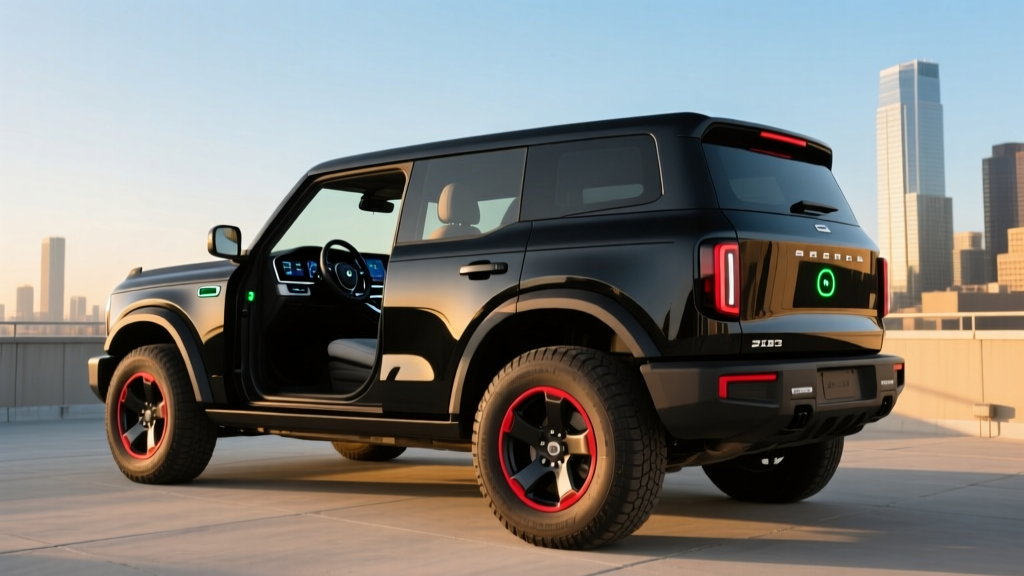
As of early 2026, Ford has not yet released a fully electric Bronco. The current sixth-generation Bronco lineup (2021–present) offers only gasoline turbo-four and V6 powertrains, along with the Bronco Hybrid (a mild-hybrid 2.3L EcoBoost expected for the 2026 model year). Ford has signaled that an electric Bronco is under development—potentially riding on a dedicated EV platform—but no official specs, pricing, or release date have been confirmed. If you see "electric Bronco" content online, it is either speculative renderings, confusion with the Ford Bronco Sport (also gas-only), or conflation with the Ford F-150 Lightning (Ford's actual electric truck). This guide covers what we know, what's likely based on Ford's EV roadmap, and what alternatives exist today for buyers who want an electrified off-roader.
What We Know About a Future Electric Bronco
Ford CEO Jim Farley has publicly stated that iconic nameplates like the Bronco and Ranger are candidates for electrification, but the company has prioritized its commercial EV van business and next-generation truck platform over expanding the Bronco into battery-electric territory. Here's where things stand:
- Platform: Ford's upcoming flexible EV architecture (co-developed elements from the canceled next-gen F-150 Lightning program) could underpin a future electric Bronco, but no spy shots or patent filings confirm a body-on-frame EV Bronco as of Q1 2026.
- Timeline: Industry analysts project a possible 2028–2030 debut at the earliest, assuming Ford greenlights the program after stabilizing its EV division profitability.
- Hybrid first: The more imminent electrified Bronco is a hybrid variant—likely pairing the 2.3L EcoBoost with a mild-hybrid or full-hybrid system for improved low-end torque and fuel economy, not plug-in capability.
- Competitive pressure: The Jeep Grand Cherokee 4xe (PHEV) and the fully electric Rivian R1S already serve the electrified off-road SUV segment, which may accelerate Ford's timeline.
Gas Bronco vs. Electrified Alternatives: By the Numbers
Since an electric Bronco doesn't yet exist, here's how the current gas Bronco stacks up against the closest electrified competitors a buyer might cross-shop:
| Spec | 2026 Ford Bronco (2.3L EcoBoost) | 2026 Jeep Wrangler 4xe (PHEV) | 2026 Rivian R1S (Dual-Motor) | 2026 Jeep Grand Cherokee 4xe |
|---|---|---|---|---|
| Powertrain | Turbo I-4 Gas | 2.0L Turbo + Electric (PHEV) | Dual-Motor BEV | 2.0L Turbo + Electric (PHEV) |
| Horsepower | 300 hp | 375 hp combined | 533 hp | 375 hp combined |
| EPA Range / Electric-Only | ~370 mi (17.5 gal tank, ~21 MPG) | ~370 mi total / 22 mi electric-only | ~352 mi (EPA est.) | ~440 mi total / 25 mi electric-only |
| Battery Capacity | N/A | 17.3 kWh (usable ~15 kWh) | ~128.9 kWh (Max Pack) | 17.3 kWh (usable ~15 kWh) |
| Fuel Economy / MPGe | ~20 MPG combined | 49 MPGe (elec+gas) / 20 MPG gas-only | ~73 MPGe (2.1 kWh/mi) | 56 MPGe / 23 MPG gas-only |
| 0–60 mph | ~6.6 sec | ~6.0 sec | ~4.5 sec | ~6.3 sec |
| Max DC Fast Charge | N/A | N/A (Level 2 only) | ~200 kW peak | N/A (Level 2 only) |
| Starting MSRP | ~$39,630 | ~$51,790 | ~$79,900 | ~$62,995 |
| Federal Tax Credit (§30D) | None | Up to $3,750* | Up to $7,500* | Up to $3,750* |
| Off-Road Capability | Excellent (G.O.A.T. modes, lockers) | Excellent (solid axles, sway-bar disconnect) | Very Good (air suspension, quad-motor torque vectoring) | Good (Quadra-Trac, not hardcore) |
*Tax credit eligibility depends on MSRP caps, buyer income limits, and battery critical-mineral sourcing per IRS §30D rules. PHEVs qualify for a reduced credit based on battery capacity. Verify current-year eligibility with a tax professional.
Real-World Ownership Costs: Gas Bronco vs. Electrified Off-Roaders
If you're weighing a gas Bronco against an electrified alternative, total cost of ownership (TCO) over five years tells a more complete story than MSRP alone. Here's a comparison assuming 15,000 miles/year, national-average electricity and fuel prices:
| 5-Year Cost Category | Ford Bronco (Gas) | Jeep Wrangler 4xe | Rivian R1S |
|---|---|---|---|
| Purchase Price (base, before credit) | $39,630 | $51,790 | $79,900 |
| Federal Tax Credit Applied | $0 | –$3,750 | –$7,500 |
| Net Purchase | $39,630 | $48,040 | $72,400 |
| Fuel/Energy (5 yr / 75,000 mi) | ~$11,250 (at $3.50/gal, 20 MPG) | ~$8,500 (mix of electric + gas) | ~$5,400 (at $0.16/kWh home charging) |
| Maintenance (5 yr est.) | ~$3,500 | ~$3,200 | ~$1,800 |
| Insurance (5 yr avg.) | ~$9,000 | ~$9,500 | ~$12,500 |
| Estimated 5-Year Total | ~$63,380 | ~$69,240 | ~$92,100 |
Key takeaway: The gas Bronco remains the most affordable option over five years, primarily because of its lower purchase price. The Wrangler 4xe narrows the gap through fuel savings if you charge regularly at home. The Rivian R1S costs significantly more upfront but delivers dramatically lower per-mile energy costs and minimal maintenance—making it competitive over a longer ownership horizon (8–10 years).
What First-Time EV Buyers Should Know Before Waiting for an Electric Bronco
If the idea of an electric Bronco appeals to you, you're likely considering your first EV purchase. Here are the practical realities that separate EV ownership expectations from reality:
Home Charging Is Non-Negotiable for Most Owners
Over 80% of EV charging happens at home. Without access to a Level 2 (240V) home charger—whether in a garage, driveway, or dedicated parking spot—daily EV ownership becomes a logistical burden. A Level 2 home installation typically costs $1,200–$3,500 (charger unit + licensed electrician + permit), and may require a panel upgrade ($1,500–$4,000) if your home has a 100-amp service. If you live in an apartment or lack off-street parking, an electric Bronco (when it arrives) will require a reliable public-charging strategy.
Cold Weather Cuts Range 20–40%
Battery chemistry slows in freezing temperatures, and cabin heating draws significant energy. An electric Bronco with a hypothetical 300-mile EPA range could realistically deliver 180–240 miles in sustained sub-30°F driving, especially at highway speeds. A heat pump (standard on some Ford EVs) mitigates this but doesn't eliminate it.
Charging Curves Aren't Linear
A vehicle advertising "200 kW DC fast charging" does not sustain 200 kW for the entire session. Most EVs peak briefly, then taper aggressively above 80% State of Charge (SoC). A realistic 10–80% session at a 200 kW-capable vehicle takes 20–30 minutes, not the 10 minutes peak-rate math might suggest.
Federal Tax Credits Have Strings Attached
The §30D clean vehicle credit (up to $7,500 for BEVs, up to $3,750 for PHEVs) requires meeting all of these criteria:
- Vehicle MSRP under $80,000 (SUVs/trucks) or $55,000 (sedans)
- Buyer AGI under $150,000 (single) / $300,000 (joint)
- Battery components manufactured in North America (phasing thresholds increase annually)
- Critical minerals sourced from the U.S. or FTA partners
- Final assembly in North America
Many EVs fail one or more of these requirements in a given model year. Always check the fueleconomy.gov tax credit database before purchasing.
Common Electric Bronco Misconceptions — Fact-Checked
| Myth | Fact |
|---|---|
| "The electric Bronco is available to order now." | False. Ford has not announced, priced, or opened orders for any electric Bronco as of 2026. Any dealer or website claiming otherwise is inaccurate. |
| "The Bronco Sport is electric." | False. The Bronco Sport uses a 1.5L or 2.0L turbo gasoline engine. No electrified variant exists. |
| "An electric Bronco would be worse off-road than the gas version." | Unproven. EVs offer instant torque and precise individual-wheel control (see Rivian R1S quad-motor, Hummer EV). Battery weight is a trade-off, but low center of gravity aids stability. |
| "I can tow as far on a charge as on a tank of gas." | False for all current EVs. Towing a 3,500+ lb trailer typically cuts EV range by 40–60%. The gas Bronco tows up to 3,500 lbs with minimal range penalty. |
| "EV batteries need replacing every 5 years." | False. Modern LFP and NMC batteries are warranted for 8 years/100,000 miles at ≥70% capacity retention. Real-world degradation data shows most packs retain 85–90% capacity after 100,000 miles. |
Decision Framework: What Should You Buy Today?
If you want an off-road SUV and are ready to buy now:
- Choose the gas Ford Bronco if: You need maximum off-road capability at the lowest price point, tow regularly, drive in remote areas with no charging infrastructure, or want a removable roof/doors experience that no EV currently offers.
- Choose the Jeep Wrangler 4xe if: You want serious off-road chops with the option to drive 20+ miles on electricity for daily commutes, have home charging access, and want to reduce fuel spend without full EV commitment.
- Choose the Rivian R1S if: Budget allows ($75K+), you want the best on-road performance and tech in an off-road-capable EV, have home Level 2 charging, and don't need removable body panels or solid-axle articulation.
- Choose the Jeep Grand Cherokee 4xe if: You want a more refined, family-oriented PHEV SUV with 25 miles of electric range, premium interior, and moderate off-road ability.
If you specifically want an electric Bronco:
- Wait and monitor Ford's announcements. Set alerts for Ford investor days and auto show reveals (typically Detroit in January, New York in April). A production electric Bronco is likely a 2028–2030 vehicle at the earliest.
- Consider the Ford F-150 Lightning as the closest current Ford EV with off-road capability, 320-mile range (extended-range battery), and available Pro Power Onboard for campsite/trail use.
Frequently Asked Questions
Will Ford make an electric Bronco?
Ford has not officially confirmed an electric Bronco, but company leadership has indicated that iconic nameplates are electrification candidates. Based on Ford's current EV product cadence and platform development, a 2028–2030 debut is plausible but not guaranteed.
Is there a hybrid Ford Bronco available in 2026?
Ford has announced a Bronco Hybrid for the 2026 model year, expected to use a mild-hybrid system paired with the 2.3L EcoBoost engine. This is not a plug-in hybrid—it cannot drive on electric power alone—but should provide improved low-RPM torque and a modest fuel-economy bump (estimated 1–2 MPG combined improvement).
What's the best electric off-road SUV I can buy right now?
The Rivian R1S is the most capable fully electric off-road SUV on the market, with up to 352 miles of range (Max Pack), air suspension for ground-clearance adjustment, and available quad-motor torque vectoring. The Hummer EV SUV from GMC offers extreme off-road hardware (Extract Mode, CrabWalk) but starts above $100,000 and delivers only ~314 miles of range.
How much would an electric Bronco likely cost?
Based on Ford's current pricing strategy and the competitive landscape, a hypothetical electric Bronco would likely start in the $55,000–$65,000 range for a base two-door model, with fully loaded four-door variants reaching $75,000+. This would need to stay under the $80,000 MSRP cap to remain eligible for the federal §30D tax credit.
Can I reserve an electric Bronco?
No. Ford has not opened reservations or a waitlist for any electric Bronco variant. Be cautious of third-party websites claiming to accept deposits—these are not affiliated with Ford Motor Company.
How does the Bronco's fuel cost compare to charging an EV equivalent?
At 20 MPG combined and $3.50/gallon, the gas Bronco costs roughly $0.175 per mile in fuel. A comparable EV consuming 2.2 kWh/mile charged at home ($0.16/kWh national average) costs about $0.035 per mile—an 80% reduction. However, DC fast charging at $0.40–$0.50/kWh raises EV cost to $0.088–$0.11/mile, narrowing the advantage on road trips.
Bottom Line
The electric Bronco remains a compelling "what if" rather than a purchasable reality in 2026. Ford's hybrid Bronco is the nearest electrified option, while the Rivian R1S and Jeep Wrangler 4xe serve buyers who want electric or plug-in off-road capability today. If an electric Bronco matters to your next purchase, plan for a 2028+ timeline and use the interim to install home charging infrastructure, build familiarity with EV ownership, and monitor Ford's official product roadmap via Ford's media center.