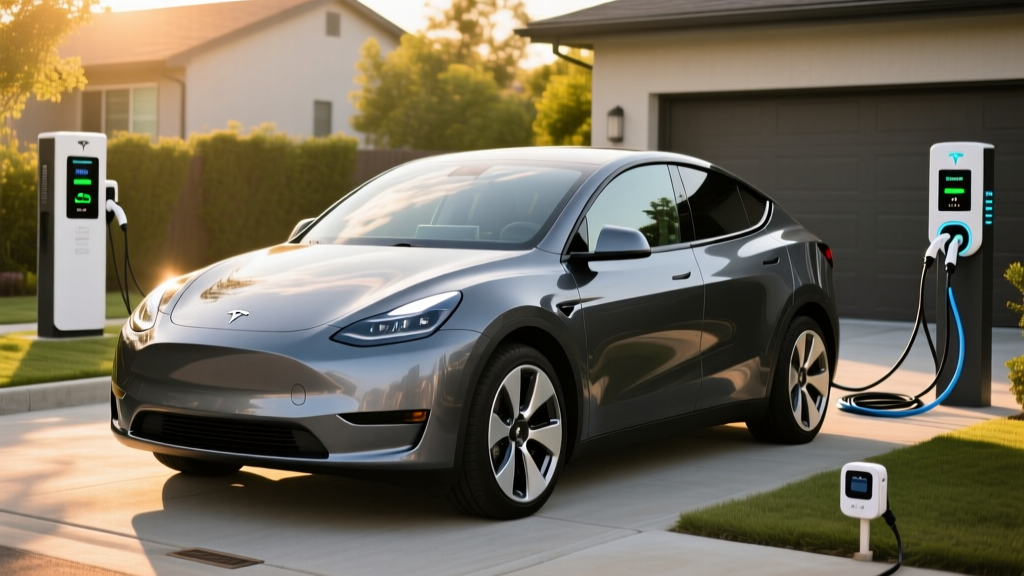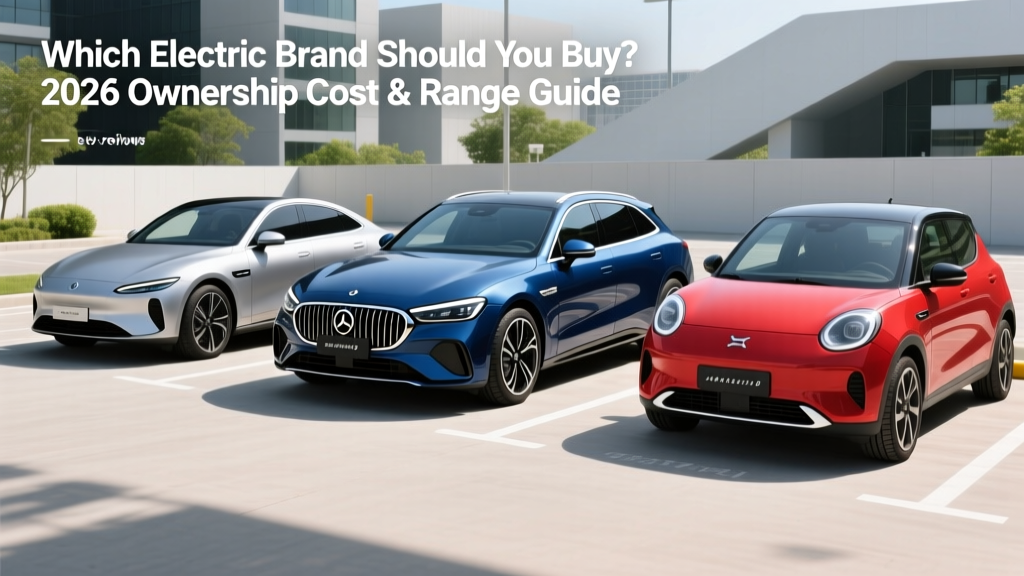
The Short Answer: Which Electric Brand Fits You?
If you need a single recommendation: Tesla still leads in charging infrastructure access and software; Hyundai/Kia offers the best balance of range, 800V fast-charging, and value; Ford targets truck and SUV buyers with the F-150 Lightning and Mustang Mach-E; and Chevrolet undercuts on price with the Equinox EV and Bolt EUV. The right electric brand depends on your budget, whether you have home Level 2 charging, your daily commute distance, and your climate. Below, we break down real numbers — not marketing claims — so you can decide.
What Does an Electric Brand Actually Cost to Own?
The sticker price is only the entry point. A realistic ownership comparison must include electricity versus gasoline, maintenance savings, insurance premiums (which run 15–25% higher for EVs on average), and depreciation. Here's a five-year cost projection for three popular 2026 models versus their closest gas-powered competitors, assuming 15,000 miles/year, $0.14/kWh home electricity, $3.40/gallon gas, and no commercial charging premium.
| Category | Tesla Model Y LR ($44,990) | Toyota RAV4 Gas ($33,500) | Hyundai Ioniq 5 SEL ($46,500) | Honda CR-V Gas ($35,200) |
|---|---|---|---|---|
| Purchase Price (MSRP) | $44,990 | $33,500 | $46,500 | $35,200 |
| Federal Tax Credit (§30D) | –$7,500* | $0 | –$7,500* | $0 |
| Net Purchase | $37,490 | $33,500 | $39,000 | $35,200 |
| Fuel/Energy (5 yrs) | $5,250 | $12,750 | $5,460 | $13,125 |
| Maintenance (5 yrs) | $1,500 | $4,200 | $1,600 | $4,400 |
| Insurance (5 yrs, est.) | $9,800 | $7,200 | $9,400 | $7,500 |
| Depreciation (est.) | $18,500 | $14,000 | $19,200 | $14,800 |
| 5-Year Total | $72,540 | $71,650 | $74,660 | $75,025 |
*§30D eligibility requires buyer income under $150K single/$300K joint, vehicle MSRP under $55K (sedans) or $80K (SUVs/trucks), and battery sourcing compliance. Always verify on IRS.gov before purchasing. Credit available as point-of-sale transfer at participating dealers.
The takeaway: EVs close the cost gap primarily through fuel and maintenance savings, but higher insurance and steeper early depreciation partially offset those gains. If you drive more than 15,000 miles annually or live in a state with cheap electricity (under $0.12/kWh), the EV math tilts further in your favor.
Range, Charging, and Efficiency: Brand-by-Brand Breakdown
Every electric brand markets "long range" and "fast charging," but the actual numbers vary dramatically. Here's what the current top-selling brands deliver in 2026, with real-world caveats that manufacturer spec sheets omit.
| Brand / Model | Battery (kWh, Chem.) | EPA Range | Real-World Hwy* | Peak DC kW | 10–80% Time | 0–60 mph | MPGe |
|---|---|---|---|---|---|---|---|
| Tesla Model Y LR | 75 kWh, NMC | 320 mi | 270–290 mi | 250 kW | ~20 min | 4.8s | 122 |
| Hyundai Ioniq 5 SEL | 77.4 kWh, NMC | 318 mi | 260–280 mi | 240 kW (800V) | ~18 min | 5.1s | 114 |
| Ford Mustang Mach-E ER | 91 kWh, NMC | 320 mi | 265–285 mi | 150 kW | ~32 min | 5.1s | 101 |
| Chevrolet Equinox EV RS | 85 kWh, NMC | 319 mi | 260–280 mi | 190 kW | ~28 min | 6.2s | 109 |
| Kia EV6 GT-Line | 77.4 kWh, NMC | 310 mi | 255–275 mi | 240 kW (800V) | ~18 min | 5.1s | 117 |
| Rivian R1S Dual | 106 kWh, NMC | 352 mi | 290–310 mi | 200 kW | ~30 min | 4.5s | 77 |
*Real-world highway range assumes 70–75 mph sustained, 65–75°F. Subtract 15–30% for cold weather (below 32°F), especially for models without a heat pump. Source: fueleconomy.gov and independent testing.
What the Charging Curve Actually Means
Peak kW is a headline number, not a sustained rate. A vehicle claiming 250 kW peak might only hold that rate from 10–30% State of Charge (SoC), then taper to 150 kW, then 80 kW, and finally trickle below 30 kW above 85%. This is why the 10–80% time is a more honest metric. Hyundai and Kia's 800V architecture sustains higher power longer, which is why their 18-minute 10–80% time beats vehicles with nominally similar peak rates. Always precondition your battery (most EVs do this automatically when you navigate to a charger) — a cold battery can cut charge speed by 50% or more.
Electric Brand vs. Gas vs. Hybrid: The Honest Comparison
Not every driver benefits equally from going fully electric. Here's where each powertrain type wins.
| Factor | BEV (Full Electric) | PHEV (Plug-in Hybrid) | HEV (Standard Hybrid) | Gas |
|---|---|---|---|---|
| Best For | Home chargers, predictable commutes | No home charging, mixed driving | High mileage, no plug access | Low annual miles, budget buyers |
| Fuel Cost per Mile | $0.04–0.06 (home) | $0.04 electric / $0.12 gas | $0.09–0.11 | $0.12–0.16 |
| Cold-Weather Penalty | 15–30% range loss | Engine compensates | Minimal | Minimal |
| Road-Trip Charging | 20–35 min stops every 200–250 mi | Gas backup, no stops needed | No stops | 5-min stops |
| Maintenance | Very low (no oil, fewer brakes) | Moderate (dual systems) | Moderate | Highest |
| Upfront Cost (avg.) | $38,000–$65,000 | $35,000–$55,000 | $28,000–$42,000 | $25,000–$38,000 |
When a PHEV Beats a BEV
If you live in an apartment without charging access, regularly drive over 300 miles in a day, or face extreme winters (below 0°F), a plug-in hybrid like the Toyota RAV4 Prime (42 mi electric-only, 38 MPG combined on gas) eliminates range anxiety entirely. You charge when you can and burn gas when you must. The EPA rates the RAV4 Prime at 94 MPGe in electric mode — close to a pure EV for daily commutes under 40 miles.
Real-World Ownership: What First-Time Buyers Must Know
Home Charging Is the Make-or-Break Factor
Over 80% of EV charging happens at home. If you can install a Level 2 (240V) charger, your EV experience will be fundamentally different — and better — than if you rely solely on public stations.
- Level 1 (120V): Adds 3–5 miles of range per hour. Fine for PHEVs or EVs driven under 40 miles/day.
- Level 2 (240V, 32–48A): Adds 25–40 miles per hour. Fully recharges most EVs overnight. Equipment costs $300–$700; professional installation runs $500–$2,500 depending on panel capacity and run distance.
- DC Fast Charging (public): 150–350 kW, adds 150–300 miles in 20–30 minutes. Costs $0.30–$0.55/kWh at networks like Electrify America or EVgo — often more expensive than gasoline per mile.
If your home electrical panel is at or near capacity (common in older homes with 100A service), a panel upgrade to 200A can add $1,500–$3,500 to installation. Always get a licensed electrician's assessment before committing to a vehicle.
Cold Weather: The Range Tax Nobody Advertises
Battery chemistry slows in cold temperatures. At 20°F, expect 20–30% less range than the EPA sticker, even with a heat pump (which uses roughly half the energy of resistive cabin heating). A Tesla Model Y rated at 320 miles EPA might deliver 225–255 miles on a 20°F highway trip. If you live in the Upper Midwest or Northeast, budget for this loss — it's physics, not a defect.
Insurance and Depreciation Realities
EV insurance premiums are typically 15–25% higher than comparable gas vehicles due to higher repair costs (specialized body shops, battery replacement risk, sensor recalibration). Depreciation has also been steeper for EVs, partly driven by Tesla's aggressive price cuts in 2023–2024 that reset used-EV values industry-wide. A 3-year-old EV may retain 45–55% of its value versus 55–65% for a gas equivalent. This gap is narrowing as the market stabilizes.
Common EV Misconceptions — Corrected With Data
| Myth | Fact |
|---|---|
| "EV batteries need replacing every 5 years" | Federal law mandates 8-year/100,000-mile battery warranties. Real-world degradation averages 10–15% over 8 years (Source: NHTSA warranty requirements, Recurrent Auto data). |
| "Charging takes hours" | Home Level 2 replenishes overnight (7–10 hrs for full charge). DC fast charging adds 150–200 miles in 20 minutes on a 250 kW station. |
| "EVs are worse for the environment" | Even on coal-heavy grids, EVs produce fewer lifetime emissions than gas cars. On clean grids (hydro, wind, solar), the advantage is 60–70% fewer grams CO2/mile (Source: EPA). Manufacturing emissions are higher, but are offset within 1–2 years of driving. |
| "There aren't enough chargers" | The U.S. has over 200,000 public charging ports as of 2026. Tesla's Supercharger network (20,000+ ports) now accepts NACS-equipped Fords, Rivians, and others. Rural gaps remain real — plan accordingly. |
| "All EVs qualify for the $7,500 tax credit" | Many don't. §30D requires compliance with battery sourcing, critical mineral, MSRP caps, and buyer income limits. Check the fueleconomy.gov tax credit tool for each specific VIN. |
Decision Framework: Which Electric Brand Should You Choose?
Choose Based on Your Situation
Choose Tesla (Model Y / Model 3) if:
- You want the most reliable public charging network (Supercharger)
- You value software updates and integrated trip planning
- You drive frequently on highways and want proven Autopilot (SAE Level 2 — not self-driving)
- Budget: $38,990–$52,990 before credit
Choose Hyundai / Kia (Ioniq 5 / EV6) if:
- Fastest public charging speed matters to you (800V architecture, 18-min 10–80%)
- You want strong value with premium features at mid-range pricing
- You prefer a more conventional dealership experience
- Budget: $42,000–$56,000 before credit
Choose Ford (Mach-E / F-150 Lightning) if:
- You need a truck or family SUV with towing capability (Lightning: 7,700 lbs max)
- You want NACS access to Tesla Superchargers with an adapter
- You prefer an American brand with a large dealer network for service
- Budget: $42,995–$65,000 before credit
Choose Chevrolet (Equinox EV / Blazer EV) if:
- Lowest entry price is your priority (Equinox EV starts at $33,000)
- You want GM's Ultium battery platform with 190 kW DC fast charging
- You're trading up from a gas Chevy and want brand continuity
- Budget: $33,000–$52,000 before credit
Choose a PHEV instead (Toyota RAV4 Prime / Jeep Wrangler 4xe) if:
- You lack home charging and can't install it
- You regularly take 400+ mile road trips in areas with sparse charging
- You live in extreme cold climates and want a gas backup
Frequently Asked Questions
Which electric brand has the best reliability record?
Tesla leads in powertrain simplicity (fewer moving parts), but Consumer Reports and J.D. Power data consistently show Hyundai/Kia and BMW scoring higher in overall build quality and initial quality surveys. Tesla's panel gaps and interior trim remain common complaints, though improving in 2025–2026 models.
Do I need a home charger to own an EV?
You don't need one, but you'll want one. Public-only charging costs 3–5x more per mile than home Level 2, and you'll spend 2–4 hours per week at stations. If you can't install a home charger, consider whether a PHEV better fits your situation — it gives you electric commuting with gas flexibility.
How long do EV batteries actually last?
Data from fleet operators and services like Recurrent Auto show most modern NMC and LFP batteries retain 85–92% of original capacity after 100,000 miles and 8 years. LFP (lithium iron phosphate) chemistry, used in standard-range Teslas and some Chinese-market models, offers even longer cycle life (3,000+ cycles) at the cost of lower energy density. Federal warranty mandates require manufacturers to cover batteries for 8 years/100,000 miles with a minimum 70% capacity retention threshold.
Is the federal tax credit guaranteed?
No. The §30D credit has strict requirements: buyer AGI under $150K (single) or $300K (joint), vehicle MSRP under $55K (cars) or $80K (SUVs/trucks/vans), and battery components plus critical minerals must meet North American sourcing thresholds that tighten annually. Many EVs qualify for only $3,750 (half credit) or none at all depending on the model year and build date. Always verify on IRS.gov before signing a purchase agreement.
What's the cheapest electric brand to insure?
Among mainstream EVs, the Chevrolet Bolt EUV and Nissan Leaf tend to carry the lowest insurance premiums due to lower replacement values and widely available parts. Tesla and Rivian typically cost 20–30% more to insure. Always get a quote from your insurer before purchasing — premiums vary dramatically by ZIP code, driving record, and model.
Bottom Line: Match the Brand to Your Life
The best electric brand isn't the one with the most impressive spec sheet — it's the one that fits your daily driving, your charging access, your climate, and your budget after tax credits. A Hyundai Ioniq 5 with home charging in Southern California is a dramatically different ownership experience than the same car parked on a Chicago street in January with no charger in sight. Run your actual numbers: commute distance, local electricity rate, installation quote from an electrician, and an insurance estimate for your ZIP code. The data will tell you which electric brand earns your money.