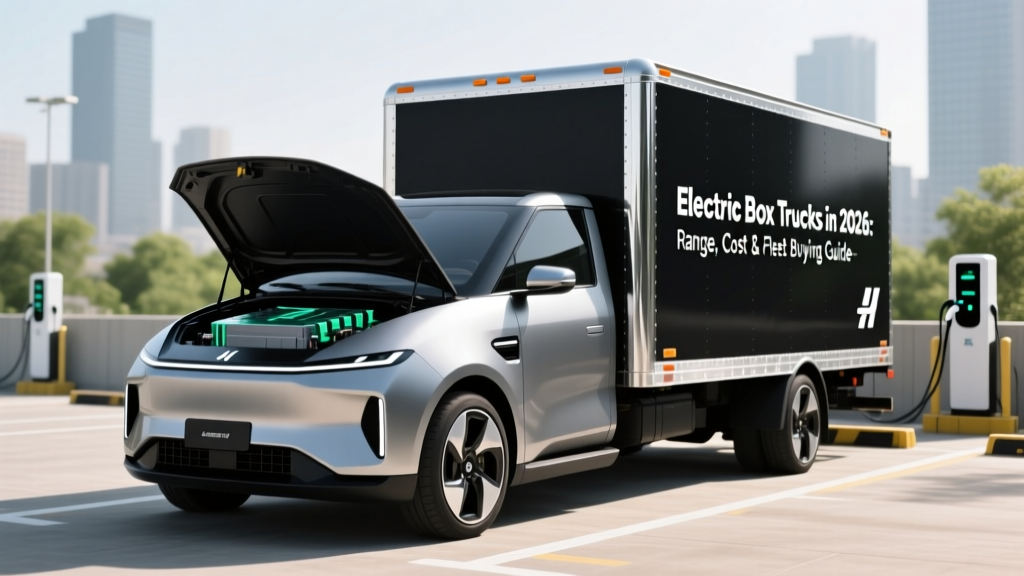
The Short Answer: Are Electric Box Trucks Ready for Fleet Duty?
For last-mile and urban delivery routes under 150 miles per day, electric box trucks in 2026 deliver lower per-mile operating costs than diesel equivalents — typically $0.12–$0.18/mile in electricity versus $0.35–$0.55/mile in diesel fuel, depending on local rates. The trade-off is a higher upfront purchase price ($100,000–$160,000 for Class 3–4 step vans versus $55,000–$85,000 for diesel), reduced payload capacity (500–1,500 lbs less due to battery weight), and route planning constrained by real-world range of 100–180 miles. Federal commercial EV incentives under IRS §45W can offset up to $40,000 per vehicle for qualifying businesses, significantly narrowing the payback period to 3–5 years on high-utilization routes.
The Electric Box Truck Landscape in 2026
The medium-duty electric commercial vehicle segment has consolidated around a handful of production-ready platforms after several early entrants (Arrival, Bollinger) failed to reach volume manufacturing. Buyers in 2026 have credible options from established OEMs and purpose-built EV startups, each with distinct trade-offs in range, payload, charging architecture, and upfit flexibility.
| Model | Class | Battery (kWh usable) | EPA Range (mi) | Real-World Range* | Payload (lbs) | Peak DC Charge (kW) | 10–80% Time | Base MSRP |
|---|---|---|---|---|---|---|---|---|
| BrightDrop Zevo 600 | 3 | 165 (NMC) | 162 | 110–140 mi | 2,500 | 120 kW | ~45 min | ~$110,000 |
| Ford E-Transit (Cutaway/Box) | 2–3 | 68 (NMC) | 126 (cargo van); ~108 (box upfit) | 75–100 mi | 3,300 (van); ~2,800 (box) | 115 kW | ~45 min | ~$58,000 (van); ~$65,000+ (cutaway) |
| Lightning Electric Class 4 | 4 | 150 (LFP option avail.) | 150 | 100–130 mi | ~4,000 | 150 kW | ~50 min | ~$145,000 |
| Xos SV (Step Van) | 3–4 | 180 (NMC) | 175 | 120–155 mi | ~3,200 | 140 kW | ~55 min | ~$135,000 |
*Real-world range reflects loaded urban delivery cycles, HVAC use, and moderate climates. Cold-weather operations (below 32°F) can reduce range an additional 20–35%. Highway-speed operation above 55 mph disproportionately increases energy consumption in box-body configurations due to aerodynamic drag.
Electric vs. Diesel Box Trucks: Operating Cost Breakdown
The economic case for electric box trucks hinges on utilization. High-mileage urban routes with predictable daily distances unlock the fuel and maintenance savings that offset the purchase premium. Low-utilization or long-haul routes rarely justify the investment.
| Cost Category | Electric (BrightDrop Zevo 600) | Diesel (Equivalent Class 3) |
|---|---|---|
| Purchase Price (after §45W credit) | $70,000 | $72,000 |
| Fuel/Energy (5 years, 156,000 mi) | $23,400 (avg. $0.15/mi) | $70,200 (avg. $0.45/mi diesel) |
| Maintenance (5 years) | $6,200 | $18,500 |
| Insurance (5 years) | $21,000 | $18,500 |
| Depreciation (est.) | $28,000 | $22,000 |
| 5-Year Total | $148,600 | $201,200 |
| Cost per Mile | $0.95 | $1.29 |
Assumes commercial electricity rate of $0.14/kWh, diesel at $4.20/gal, and 15 MPG for diesel equivalent. Actual figures vary by utility rate structure, route topography, and regional fuel prices. Source: Fleet operating cost modeling using DOE Alternative Fuels Data Center methodology.
Charging Infrastructure: What Fleet Operators Actually Need
Charging electric box trucks is fundamentally different from passenger EV charging. Fleet depot charging requires electrical infrastructure planning 12–18 months in advance, utility demand-charge negotiation, and careful charge-management software to avoid peak-rate penalties.
Depot Charging Requirements
A typical Class 3 electric box truck with a 150 kWh battery needs approximately 120–140 kWh to recharge from 20% to 95% state of charge. At a Level 2 rate of 19.2 kW (the practical maximum for commercial AC charging), that requires 6.5–7.5 hours — adequate for overnight depot return. However, depots running multi-shift operations need DC fast charging at 60–150 kW to turn vehicles in 45–90 minutes.
| Level | Power (kW) | Miles Added/Hour | Typical Use Case |
|---|---|---|---|
| Level 2 (AC) | 7.2–19.2 kW | 15–45 mi/hr | Overnight depot charging |
| DC Fast (low) | 50 kW | ~90 mi/hr | Mid-day opportunity charge |
| DC Fast (high) | 120–150 kW | ~200–280 mi/hr | Rapid turnaround, multi-shift |
Infrastructure Cost Reality
Installing depot charging is the single largest barrier to electric box truck adoption. Costs vary dramatically based on existing electrical service, utility upgrade timelines, and the number of chargers deployed simultaneously.
- Single Level 2 station (19.2 kW): $3,500–$8,000 installed (assuming adequate panel capacity)
- Single DC fast charger (60 kW): $25,000–$45,000 installed
- Utility service upgrade (480V three-phase): $15,000–$120,000+ depending on distance from transformer
- Charge management software: $50–$150/month per vehicle
Fleets deploying 5+ vehicles should engage utility account representatives early. Many utilities offer commercial EV rate structures with off-peak discounts (as low as $0.06–$0.08/kWh overnight) and infrastructure make-ready programs that cover conduit and panel upgrades up to $50,000–$100,000.
Real-World Range: Why the EPA Number Isn't Your Route Number
EPA range ratings for commercial electric trucks are measured on standardized duty cycles that do not fully replicate the stop-and-go, loaded, HVAC-intensive reality of delivery operations. Fleet buyers should plan routes using a derated range figure and build in a 20–30% buffer for seasonal variation.
Range Derating Factors for Electric Box Trucks
- Full payload: Reduce EPA range by 10–15%
- Cold weather (below 32°F): Reduce by 20–35% (battery resistance + cabin/cargo heat)
- Hot weather (above 90°F, A/C running): Reduce by 8–12%
- Highway speeds (55+ mph sustained): Reduce by 15–25% (aero drag penalty on box body)
- Hilly terrain: Reduce by 10–20% (regenerative braking recovers some energy on descent)
A BrightDrop Zevo 600 with an EPA rating of 162 miles might realistically deliver 95–110 miles on a winter day with full payload, urban stops, and cargo-area heating. Plan routes accordingly.
Federal Tax Credits and Incentives for Commercial EVs
Commercial fleet buyers do not qualify for the consumer §30D credit. Instead, the Commercial Clean Vehicle Credit (§45W) provides up to $40,000 for qualifying Class 3+ electric trucks (or the incremental cost of the EV over a comparable ICE vehicle, whichever is less). Key eligibility requirements:
- Vehicle must be acquired for business use (not personal)
- Must meet battery component and critical-mineral sourcing requirements (phased in annually — check current-year IRS guidance)
- Gross vehicle weight rating (GVWR) determines credit cap: $7,500 for under 14,000 lbs, $40,000 for 14,000+ lbs
- Credit is non-refundable but can offset tax liability; some lessors pass through credit value in lease pricing
- State and utility incentives stack on top — many states offer $5,000–$25,000 additional per vehicle (check AFDC state incentive database)
The §45W credit is subject to annual manufacturer caps and evolving sourcing rules. Consult a tax professional and verify current-year eligibility on IRS.gov before committing to a purchase order.
Common Misconceptions About Electric Box Trucks
| Myth | Fact |
|---|---|
| "Electric trucks can't handle cold weather." | Range drops 20–35% in freezing temperatures, but modern thermal management systems (liquid heating/cooling) maintain battery health. Preconditioning while plugged in mitigates most range loss. Fleets in Minneapolis and Chicago operate electric box trucks year-round with adjusted route planning. |
| "Batteries will need replacement in 5 years." | Commercial-grade NMC and LFP packs are warrantied for 8–10 years or 100,000–150,000 miles at 70–80% capacity retention. Real-world degradation data from early-adopter fleets shows 12–18% capacity loss at 100,000 miles — well within warranty thresholds. |
| "Charging takes too long for delivery schedules." | Overnight Level 2 charging at the depot fully replenishes most trucks in 6–8 hours. For multi-shift operations, a 150 kW DC fast charger adds 80–100 miles in 30 minutes during driver lunch breaks or load changes. |
| "Payload capacity is too low." | Battery weight reduces payload by 500–1,500 lbs depending on the platform. For volumetric loads (parcels, food distribution) where trucks cube out before they gross out, the payload penalty is often irrelevant. For dense freight (beverages, building materials), verify GVWR and axle ratings before spec'ing. |
| "Electric trucks are unreliable." | EV powertrains have fewer moving parts than diesel (no transmission, no exhaust aftertreatment, no fuel injectors). Early-adopter fleet data from FedEx, Amazon, and municipal operators shows higher uptime rates and fewer road calls for electric versus diesel box trucks, though body/upfit issues remain comparable. |
Decision Framework: Should Your Fleet Go Electric?
Choose Electric Box Trucks If:
- Daily routes are predictable and under 120 miles (loaded, all-weather adjusted)
- Vehicles return to a central depot nightly with 8+ hours for charging
- Annual mileage exceeds 20,000 miles per vehicle (higher utilization = faster payback)
- Operating in urban areas with idling restrictions, noise ordinances, or clean-air-zone mandates
- Your utility offers commercial EV rate structures or make-ready infrastructure programs
- ESG reporting or customer sustainability requirements favor zero-tailpipe-emission operations
Stay With Diesel (or Wait) If:
- Daily routes regularly exceed 180 miles or are highly variable
- Operations require highway-speed travel (55+ mph sustained) over long distances
- No depot charging access and no feasible path to install it (leased facility, utility constraints)
- Vehicles operate in extreme cold (sustained below 0°F) without garage parking
- Payload requirements are at the upper limit of Class 3–4 ratings and battery weight pushes you into Class 5+ territory
- Annual mileage is under 12,000 miles — fuel savings won't offset the purchase premium within a reasonable payback window
Frequently Asked Questions
How long do electric box truck batteries last before replacement?
Most manufacturers warrant battery packs for 8–10 years or 100,000–150,000 miles at 70–80% of original capacity. Real-world fleet data suggests usable life of 10–15 years for most delivery-cycle applications before capacity loss makes the vehicle unsuitable for its original route. Replacement costs for a 150 kWh commercial pack currently run $30,000–$50,000, though prices are declining 8–12% annually.
Can I charge an electric box truck on a standard commercial outlet?
A standard 120V/20A outlet delivers approximately 1.9 kW — adding roughly 3–4 miles of range per hour. This is inadequate for daily fleet operations. You need at minimum a 240V Level 2 station (19.2 kW recommended) or DC fast charging for multi-shift use. Engage a licensed electrical contractor and your utility early in the planning process.
Do electric box trucks qualify for the $7,500 consumer tax credit?
No. The consumer §30D credit applies only to personal-use vehicles. Commercial fleet buyers use the §45W Commercial Clean Vehicle Credit, which provides up to $40,000 for vehicles over 14,000 lbs GVWR. Eligibility depends on battery sourcing requirements, business use, and tax liability. Always verify current-year rules on IRS.gov and consult a tax professional.
What happens if my route runs out of charge mid-day?
Unlike a diesel truck that can refuel in 10 minutes at any truck stop, an electric box truck with a depleted battery requires towing to a charger (Level 2: 4–8 hours; DC fast: 45–90 minutes). This is why route planning with a 20–30% range buffer is non-negotiable. Some fleets spec a small diesel range-extender or carry a portable DC generator for emergency situations, though this adds weight and complexity.
Is LFP or NMC battery chemistry better for fleet use?
LFP (lithium iron phosphate) offers longer cycle life (3,000–5,000 cycles vs. 1,500–2,500 for NMC), better thermal stability, and lower cost per kWh — but with 20–30% lower energy density, meaning heavier or larger packs for the same range. For daily depot-return routes where weight is less critical than longevity, LFP is increasingly preferred. For range-critical applications or weight-sensitive payloads, NMC remains the default. Ask your OEM about chemistry options for your spec.