Quick Answer: Electric Boat 2 Person — What EV Owners Need to Know
A 2-person electric boat in 2026 typically runs on a 3–10 kWh lithium battery pack, delivers 1.5–5 hours of runtime at cruising speed, and costs between $2,500 and $12,000 depending on hull type and motor output. Unlike electric cars, most electric boats do not qualify for the federal §30D tax credit — that credit applies only to highway-capable four-wheeled vehicles. However, the charging infrastructure and battery-care knowledge you've built as an EV owner transfers directly. If you already have a Level 2 home charger and understand lithium battery management, you're ahead of most first-time electric boat buyers. The key differences: marine batteries face harsher thermal environments, DC fast charging is virtually nonexistent, and range is measured in hours, not miles.
If you've spent time researching electric vehicles, you've likely noticed a growing crossover: EV owners who want to extend electrified living beyond the driveway. The electric boat 2 person category — compact, trailerable, lake-friendly runabouts and pontoons — has become a natural next step. But marine electrification plays by different rules than automotive. This guide translates what you already know about EVs into what you need to know about going electric on the water.
What Is a 2-Person Electric Boat, Exactly?
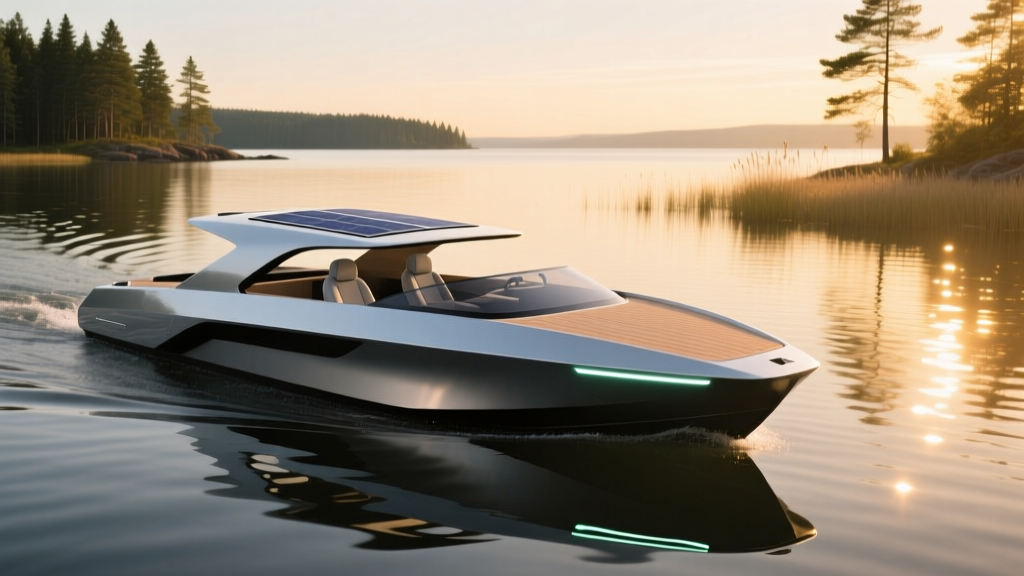
A 2-person electric boat is a small watercraft — typically 8 to 14 feet long — powered by an electric motor and onboard battery pack rather than an internal combustion outboard. These range from inflatable dinghies with integrated electric drives to rigid-hull day boats with trolling motors. The category includes:
- Electric pontoons and mini-pontoons (e.g., Princecraft, Sun Tracker mini models) — stable, flat-water cruisers
- Electric runabouts and day boats (e.g., X Shore, Candela-inspired foiling prototypes, though most foiling models seat more than two)
- Electric kayaks and canoes with integrated motors — the lightest end of the spectrum
- Electric dinghies and tenders — used as shore boats from larger vessels
Most models in this segment use brushless DC (BLDC) motors rated between 1 kW and 5 kW continuous output. Battery packs are predominantly LFP (lithium iron phosphate) chemistry in higher-end models and sealed lead-acid (SLA) in budget options — a distinction that matters enormously for longevity and weight.
Battery Specs and Runtime: The Marine Equivalent of EPA Range
In an EV, you look at kWh and EPA range. In an electric boat, you look at kWh and runtime at cruising throttle. There is no EPA sticker for boats, so manufacturer claims require scrutiny.
| Category | Battery (kWh) | Chemistry | Motor (kW) | Runtime (hrs, 50% throttle) | Top Speed |
|---|---|---|---|---|---|
| Budget inflatable/dinghy | 1–2 kWh | SLA or basic Li-ion | 0.5–1 kW | 1–2 hrs | 4–6 mph |
| Mid-range rigid hull | 3–5 kWh | NMC or LFP | 2–3 kW | 2–4 hrs | 6–10 mph |
| Premium electric runabout | 5–10 kWh | LFP | 3–5 kW | 3–5 hrs | 10–18 mph |
Real-world caveat: Just as highway driving at 75 mph slashes EV range versus the EPA city cycle, running an electric boat at full throttle against current or wind can cut runtime by 40–60%. A 5 kWh pack that delivers 4 hours at half-throttle might give you only 1.5 hours at wide-open. Water resistance scales with the cube of speed — pushing harder costs exponentially more energy than on pavement.
LFP vs NMC in marine use: The same trade-offs from EVs apply here. LFP batteries are heavier but offer 3,000+ cycle life and superior thermal stability — critical when your battery sits in a hot bilge or under direct sun. NMC packs are lighter (important for trailerable boats where every pound matters) but degrade faster in high-heat environments. For a boat that lives on a trailer in a garage, NMC is fine. For a boat that sits in a slip year-round, insist on LFP.
Charging Your Electric Boat: Leveraging Your EV Setup
Here's where your EV ownership experience pays off. Most 2-person electric boats charge via standard 120V AC (Level 1 equivalent) using an onboard charger or an included shore-power cord. Higher-end models may accept 240V AC (Level 2 equivalent) through a marine-grade inlet.
| Level | Power (kW) | Typical Boat Charge Time (5 kWh pack) | EV Equivalent |
|---|---|---|---|
| 120V household outlet | 0.8–1.2 kW | 5–7 hours (0–100%) | Level 1 EV charging |
| 240V marine inlet | 2–3.5 kW | 1.5–3 hours (0–100%) | Low-end Level 2 |
| DC fast charge (marine) | Rare — a few premium models | N/A for most buyers | No CCS/NACS standard yet |
Practical tip: If you already have a 240V/50A outlet installed for your EV's Level 2 charger (e.g., a NEMA 14-50 in your garage), you can often use the same circuit to charge a trailered electric boat overnight — just ensure your panel has headroom. A 5 kWh boat battery pulling 3 kW alongside a 7.7 kW EV charger on a 100A subpanel could trip a breaker. Plan your charging schedule accordingly, or have an electrician add a dedicated 20A/240V circuit for marine use.
Marina charging reality: Unlike EV public charging networks (Electrify America, EVgo, Tesla Superchargers), marina shore power is designed for AC loads — lights, AC, appliances. You'll plug into a standard 30A or 50A marine receptacle, which provides ample 120V or 240V AC for overnight boat charging. But don't expect anything resembling DC fast charging at the dock. Plan your day on the water around your battery capacity, not around the hope of topping up mid-outing.
Cost Breakdown: Electric Boat vs. Gas Outboard
The upfront premium for electric marine propulsion is real, but operating costs tell a different story — much like the EV vs. gas car comparison you're already familiar with.
| Cost Factor | Electric Boat (5 kWh, 3 kW motor) | Gas Boat (5 HP outboard) |
|---|---|---|
| Purchase price | $5,500–$9,000 | $3,000–$5,500 |
| Fuel/energy per season (50 outings) | $40–$90 (at $0.13–$0.30/kWh) | $250–$450 (at $4.50/gal ethanol-free) |
| Annual maintenance | $0–$50 (prop inspection, connections) | $150–$350 (oil, impeller, lower unit, winterization) |
| 5-year fuel/energy total | $200–$450 | $1,250–$2,250 |
| 5-year maintenance total | $0–$250 | $750–$1,750 |
| 5-year total cost | $5,700–$9,700 | $5,000–$9,500 |
The verdict: At the 5-year mark, costs converge. By year 7–8, the electric boat pulls ahead — assuming the LFP battery retains 80%+ capacity (typical for LFP at 2,000+ cycles). The gas outboard, meanwhile, faces escalating maintenance as seals, gaskets, and the carburetor age. This mirrors the EV total cost of ownership advantage documented by the Department of Energy for cars, just stretched across a longer timeline due to the higher marine purchase premium.
Tax credit reality check: The IRS §30D clean vehicle credit applies to four-wheeled vehicles with a GVWR under 14,000 lbs designed for public road use. Electric boats do not qualify. Some states offer separate marine electrification rebates — check your state's energy office or Alternative Fuels Data Center state law database for specifics, as these vary by jurisdiction and change frequently.
Common Misconceptions About Electric Boats — Fact-Checked
| Myth | Fact |
|---|---|
| "Electric boats are too slow to be useful" | Premium 2-person models hit 15–18 mph — adequate for lake cruising, fishing, and tender duty. Not for watersports, but neither is a 5 HP gas outboard. |
| "The battery will die and strand me" | Same concern as EV range anxiety — and solved the same way: plan your outing within your battery's realistic runtime, carry a portable solar trickle panel for emergencies, and learn to read your SoC display. |
| "Saltwater kills electric motors" | Brushless electric motors are actually more corrosion-resistant than gas outboards (no exhaust ports, no fuel lines, no carburetor). Rinse with freshwater after saltwater use — same as any marine equipment. |
| "I need a special marine charger" | Most electric boats charge from a standard 120V outlet. If you can charge an EV at home, you can charge an electric boat. |
| "The battery will need replacing in 3 years" | LFP packs are rated for 3,000+ cycles to 80% SoH. At 50 outings per year, that's 60+ years of use before meaningful degradation. SLA packs, however, may last only 3–5 years — this is where the LFP premium pays off. |
Decision Framework: Is a 2-Person Electric Boat Right for You?
Choose an Electric Boat If:
- You boat on small lakes, calm rivers, or protected harbors where top speed isn't critical
- You already have home charging access (a garage or covered dock with 120V/240V power)
- You value silent operation — electric motors are nearly silent, which is transformative for fishing and wildlife observation
- You want near-zero maintenance — no winterization fuel stabilizer, no impeller changes, no lower-unit gear oil
- You boat 2–4 hours per outing and can charge overnight between trips
- You appreciate the no-emissions aspect on lakes with exhaust restrictions (some lakes ban or restrict gas motors)
Stick With a Gas Outboard If:
- You need speeds above 20 mph or need to pull a skier/tuber
- You boat in open water, strong currents, or tidal zones where reserve power and range matter
- You cannot charge at home or at your dock — there's no marine equivalent of a public DC fast-charging network
- You boat all day, multiple days in a row without time for an overnight charge (e.g., multi-day fishing trips)
- Your budget is strictly under $3,000 — the gas outboard entry point is lower
What First-Time Electric Boat Buyers Should Know
If you're coming from the EV world, a few marine-specific realities deserve attention:
1. Weight sensitivity matters more than in a car. Every extra kWh of battery in a 2-person boat adds 15–25 lbs (for LFP). A 10 kWh pack adds 150–250 lbs to a boat that might weigh 300 lbs empty. This directly affects speed, draft, and trailer towing weight. Don't overspec battery capacity — match it to your actual outing pattern.
2. There's no regenerative braking on water. Unlike an EV, where regen recovers 15–30% of energy in stop-and-go driving, boats don't brake — they decelerate through drag. Some premium electric outboards offer prop-regen when sailing or drifting (the water flow spins the prop to generate charge), but the recovery is minimal — typically 1–3% of battery capacity per hour. Don't count on it.
3. Thermal management is primitive. EVs like the Tesla Model Y or Hyundai Ioniq 5 have active liquid cooling for their battery packs. Most electric boats use passive air cooling or, at best, water-cooled motor housings. In hot climates (Southern US lakes in August), battery temperatures can exceed 110°F, accelerating NMC degradation. This is another reason to prefer LFP chemistry for marine use.
4. Trailer your boat to protect the battery. If your boat lives in the water at a slip, the battery is exposed to constant humidity, temperature swings, and potential submersion risk. Trailering it to a dry garage extends battery and electronics life significantly — and lets you charge on your home Level 2 circuit.
5. Insurance costs vary wildly. Marine insurance for electric boats is still a developing category. Some insurers offer discounts for electric propulsion (fewer fire risks with LFP, no fuel spills), while others charge premiums due to unfamiliar technology and battery replacement costs. Get quotes before purchasing — don't assume your homeowner's policy covers a boat.
Frequently Asked Questions
Can I use my EV's Level 2 home charger to charge an electric boat?
Not directly — EV Level 2 chargers use a J1772 or NACS connector, while electric boats typically use a standard marine shore-power cord (NEMA L5-30 or similar). However, if your Level 2 charger is on a dedicated 240V circuit, an electrician can add a second outlet (e.g., a NEMA 14-50 or L6-30) on the same panel for your boat's onboard charger. Just confirm your panel has the amperage headroom for simultaneous charging.
How far can a 2-person electric boat go on a single charge?
Distance on water depends on speed, current, wind, and hull design. A typical 5 kWh electric boat at 5 mph cruising speed covers roughly 15–25 miles before needing a recharge. At 10 mph, that drops to 8–12 miles. Unlike EVs, where you can reference fueleconomy.gov for standardized range data, boat range varies too much for a single sticker number.
Do electric boats qualify for any tax credits or incentives?
The federal §30D clean vehicle credit does not apply to boats — it's limited to road-registered four-wheeled vehicles. However, some states and local utilities offer marine electrification rebates, and certain lakes with noise or emission restrictions effectively incentivize electric propulsion by banning gas motors. Check your state energy office for current programs.
What happens if the battery dies on the water?
You drift. Unlike a gas boat that can be refueled from a jerry can, a dead electric boat battery requires a tow or a long wait for a solar trickle to build enough charge to limp back. Always carry a marine VHF radio or phone in a waterproof case, know your SoC before leaving the dock, and keep a 20% buffer — the same discipline you'd use planning an EV road trip through a charging desert.
Is an electric boat a good choice for fishing?
Excellent. The near-silent operation of a brushless electric motor doesn't spook fish, and the lack of exhaust fumes makes for a more pleasant experience. Many bass anglers already use electric trolling motors (Minn Kota, Garmin Force) — a fully electric 2-person boat is a natural extension of that same concept, with the motor integrated into the hull rather than bolted to the transom as an accessory.