The Quick Answer: Is the Electric BMW X5 Right for You?
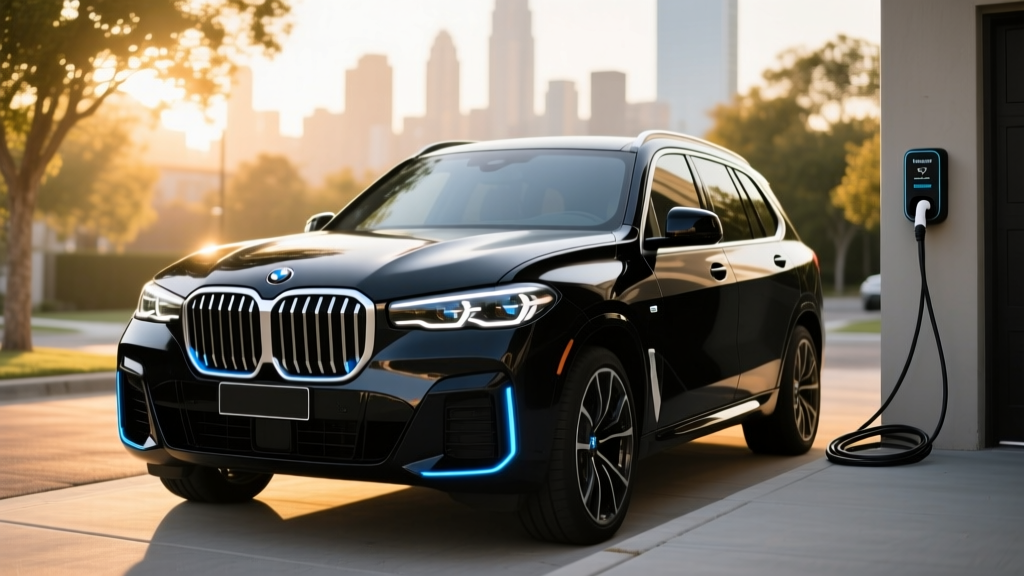
The electric BMW X5 — officially the BMW iX xDrive50 — is a luxury electric SUV offering an EPA-estimated 324 miles of range, 516 horsepower, and DC fast charging up to 195 kW. Starting around $87,250 (2026 MSRP), it competes with the gas-powered BMW X5 xDrive40i on performance and refinement, but trades engine sound and quick refueling for lower per-mile energy costs and instant torque. It's best suited for buyers with reliable home Level 2 charging, moderate climates, and daily drives under 200 miles.
BMW does not sell a model literally badged "electric X5." The iX is a dedicated EV platform (not a converted X5), meaning its interior, floor, and proportions differ from the gas X5. If you're cross-shopping the two, you're comparing the iX against the gas X5 xDrive40i and the plug-in hybrid X5 xDrive50e. This guide gives you the exact numbers, costs, and decision framework to choose wisely.
Electric BMW X5 (iX) Specs at a Glance
| Specification | BMW iX xDrive50 | BMW iX M60 |
|---|---|---|
| EPA Range | 324 miles (20" wheels) | 296 miles |
| Battery (usable) | ~105.2 kWh (NMC) | ~105.2 kWh (NMC) |
| Horsepower | 516 hp | 610 hp |
| 0–60 mph | 4.4 seconds | 3.6 seconds |
| Peak DC Fast Charge | 195 kW | 195 kW |
| 10–80% DC Charge | ~35 minutes | ~35 minutes |
| Level 2 (AC) Charge Rate | 11 kW (~7.5 hrs 0–100%) | 11 kW |
| Efficiency (MPGe) | 86 MPGe combined | 78 MPGe combined |
| Cargo Volume | 35.5 cu ft / 77.9 cu ft (rear folded) | 35.5 / 77.9 cu ft |
| Base MSRP (2026 est.) | $87,250 | $111,500 |
| Battery Warranty | 8 years / 100,000 miles | 8 years / 100,000 miles |
Source: fueleconomy.gov and BMW USA specifications. Real-world highway range typically runs 10–15% below EPA; expect ~275–290 miles at sustained 75 mph in mild weather, and as low as ~230 miles in sub-20°F cold.
iX vs. Gas X5 vs. PHEV X5: Which Powertrain Wins?
BMW offers the X5 in three flavors. Here's how they stack up on the metrics that matter to your wallet and daily routine.
| Metric | iX xDrive50 (EV) | X5 xDrive40i (Gas) | X5 xDrive50e (PHEV) |
|---|---|---|---|
| Powertrain | Dual-motor BEV | 3.0L turbo I-6 + 48V mild hybrid | 3.0L turbo I-6 + electric motor |
| EPA Range / MPG | 324 mi / 86 MPGe | ~22 MPG combined | ~38 mi electric + 20 MPG gas |
| 0–60 mph | 4.4 sec | 5.2 sec | 4.6 sec |
| Base MSRP | ~$87,250 | ~$66,600 | ~$74,600 |
| Annual Fuel/Energy Cost* | ~$650 | ~$2,400 | ~$1,400 (mixed) |
| Home Charging Needed? | Yes (strongly recommended) | No | Recommended for EV mode |
| Federal Tax Credit (§30D) | Up to $7,500 (eligibility varies) | None | Up to $7,500 (eligibility varies) |
*Annual energy cost estimated at 12,000 miles/year, $0.16/kWh national average for home charging, and $3.60/gallon premium unleaded. Actual costs vary by local utility rates and driving mix. Source: fueleconomy.gov.
The gas X5 wins on upfront price and road-trip refueling convenience. The PHEV X5 xDrive50e is a strong bridge option if you have a short commute (under 38 miles) and can charge at home but still want gas flexibility for longer trips. The iX wins on per-mile operating cost, acceleration smoothness, and zero tailpipe emissions — but demands a charging plan.
Real Ownership Costs: 5-Year Breakdown
| Cost Category | iX xDrive50 (EV) | X5 xDrive40i (Gas) |
|---|---|---|
| Purchase Price (MSRP) | $87,250 | $66,600 |
| Estimated Federal Tax Credit | −$7,500 (if eligible) | $0 |
| Effective Purchase Price | $79,750 | $66,600 |
| 5-Year Fuel/Energy | $3,250 (home charging) | $12,000 (premium gas) |
| 5-Year Maintenance | ~$1,500 | ~$3,500 |
| 5-Year Insurance (est.) | ~$12,500 | ~$10,000 |
| Home Charger Install | ~$1,200 (Level 2, 240V/48A) | $0 |
| 5-Year Total (pre-depreciation) | ~$97,000 | ~$92,100 |
The iX carries a higher entry price even after the federal credit, but its energy and maintenance savings recapture roughly $10,000–$12,000 over five years. Insurance is typically 15–25% higher on EVs due to repair complexity and battery replacement cost. Depreciation is the wild card: luxury EVs have depreciated faster than their gas counterparts in recent years, though the gap is narrowing as the market matures.
Common Misconceptions About the Electric BMW X5 (iX)
| Myth | Fact |
|---|---|
| "The iX is just an electric X5." | The iX rides on BMW's dedicated EV platform with a unique chassis, interior layout, and larger footprint than the X5. |
| "I'll get 324 miles no matter what." | EPA estimates assume mixed driving in mild conditions. Sustained highway speeds, cold weather, and mountain grades reduce range 10–30%. |
| "Everyone gets the $7,500 tax credit." | The §30D credit has income caps ($150K single / $300K joint), MSRP caps ($80K for SUVs — the iX base may exceed this in some configurations), and critical-mineral/battery-sourcing rules. Verify on IRS.gov. |
| "Charging takes too long on road trips." | At 195 kW peak, the iX adds ~150 miles in 15 minutes. Charging from 10–80% takes ~35 minutes — roughly a meal break. |
| "The battery will need replacing soon." | BMW warranties the iX battery for 8 years/100,000 miles against degradation below 70% capacity. NMC batteries typically retain 85–90% capacity after 100K miles in real-world data. |
Charging the iX: What You Need at Home and on the Road
Home charging (Level 2) is where most iX owners will do 90%+ of their charging. The iX accepts up to 11 kW on AC, meaning a 48-amp Level 2 wallbox (like the BMW Wallbox or a ChargePoint Home Flex) will replenish the 105.2 kWh battery from empty in roughly 10–11 hours, or overnight for typical daily use.
| Charging Level | Power | Miles Added per Hour | Use Case |
|---|---|---|---|
| Level 1 (120V outlet) | ~1.4 kW | ~4–5 mi/hr | Emergency/trickle only |
| Level 2 (240V, 48A) | 11 kW | ~32–35 mi/hr | Daily home charging |
| DC Fast Charge | Up to 195 kW | ~550 mi/hr (peak) | Road trips |
DC fast charging reality: The iX peaks at 195 kW but only sustains that rate up to roughly 30–40% state of charge. Above 50%, the charge curve tapers significantly — by 80%, you're pulling closer to 50–70 kW. This is normal for NMC battery thermal management. Always plan road-trip stops around 10–80% charges; the final 20% is painfully slow.
Connector note: The 2026 iX uses the CCS1 connector in North America. BMW has announced a transition to NACS (Tesla's connector) for future models, and adapters are expected to be available for access to Tesla Supercharger stalls. Confirm adapter availability with your dealer before relying on Supercharger access.
Tax Credit Eligibility: What Actually Applies to the iX
- MSRP Cap: SUVs must have an MSRP at or below $80,000 to qualify for the §30D credit. The iX xDrive50 base MSRP hovers near this threshold — options and packages can push it over, disqualifying the vehicle.
- Income Cap: Modified adjusted gross income must not exceed $150,000 (single) or $300,000 (married filing jointly).
- Battery Sourcing: Critical minerals and battery components must meet escalating percentages from qualified trade partners. These requirements tighten annually. Check the DOE's eligible vehicle list for current-year status.
- Point-of-Sale Transfer: As of 2024+, you can transfer the credit to the dealer at purchase, reducing your out-of-pocket cost immediately rather than waiting for a tax refund.
- Consult a tax professional. IRS rules are complex and change frequently. This is guidance, not tax advice.
Decision Framework: Should You Buy the Electric BMW X5?
Choose the BMW iX (electric X5 equivalent) if:
- You have (or can install) a 240V Level 2 home charger
- Your daily commute is under 200 miles round-trip
- You live in a moderate climate, or can accept 15–25% winter range loss
- You value instant torque, quiet operation, and lower per-mile energy cost
- You can stay under the $80K MSRP cap (base trim, minimal options) for tax-credit eligibility
Choose the gas BMW X5 xDrive40i if:
- You lack home charging access and rely on street or apartment parking
- You take frequent 400+ mile road trips and don't want to plan around chargers
- You want a lower purchase price and don't mind higher fuel costs
Choose the PHEV BMW X5 xDrive50e if:
- You want electric commuting (38 miles) but gas flexibility for long trips
- You're not ready to go fully electric but want to reduce fuel consumption
- You have home charging but also drive in areas with sparse DC fast-charging infrastructure
First-Time EV Buyer Checklist
If the iX would be your first EV, here's what to settle before signing:
- Confirm your electrical panel has capacity for a 240V/60A circuit. A licensed electrician should assess this — panel upgrades can add $1,500–$3,000 to charger installation.
- Test your commute in the coldest month. If your round-trip is 150 miles and the iX drops to ~240 miles of range in January, you still have a comfortable buffer — but know your margin.
- Download charging apps (PlugShare, Electrify America, EVgo) and map DC fast chargers along your most common long routes.
- Get insurance quotes before purchasing. EV premiums are higher; shop multiple carriers.
- Verify tax-credit eligibility on IRS.gov for the exact model year and trim you're buying — rules change, and not every iX configuration qualifies.
Frequently Asked Questions
Does BMW make an electric X5?
BMW does not badge any vehicle as the "electric X5." The BMW iX is a standalone electric SUV that competes in the same segment as the X5 but uses a dedicated EV platform. It is slightly larger than the X5 and has a different interior layout. A next-generation all-electric X5 (based on the Neue Klasse platform) has been announced for the late 2020s but is not yet available.
What is the real-world range of the BMW iX?
The EPA rates the iX xDrive50 at 324 miles with 20-inch wheels. In real-world highway driving at 75 mph in mild weather, expect 275–290 miles. In cold weather (below freezing), plan for 230–260 miles. Larger 21- or 22-inch wheels reduce range by 5–10%.
How long does it take to charge the iX at home?
On a Level 2 home charger (11 kW), a full charge from near-empty takes about 10–11 hours. Most owners plug in nightly and wake to a full battery — similar to charging a phone. On a standard 120V outlet (Level 1), expect 3–4 days for a full charge, which is only practical as emergency trickle charging.
Is the BMW iX eligible for the $7,500 federal tax credit?
It depends on the exact configuration, your income, and current battery-sourcing rules. The §30D credit requires the SUV's MSRP to be $80,000 or less, which the base iX xDrive50 may meet before options. Check the latest eligible-vehicle list on fueleconomy.gov and consult a tax professional.
How does iX maintenance compare to the gas X5?
The iX eliminates oil changes, spark plugs, transmission fluid, and exhaust system maintenance. Brake wear is significantly reduced thanks to regenerative braking. Expect annual maintenance costs of roughly $250–$400 for the iX vs. $600–$900 for the gas X5. Tire replacement costs are similar, though EVs tend to wear tires slightly faster due to higher vehicle weight and instant torque.
Can I tow with the BMW iX?
Yes. The iX is rated to tow up to 3,500 pounds when properly equipped. However, towing significantly reduces range — expect a 30–50% reduction depending on trailer weight and aerodynamics.