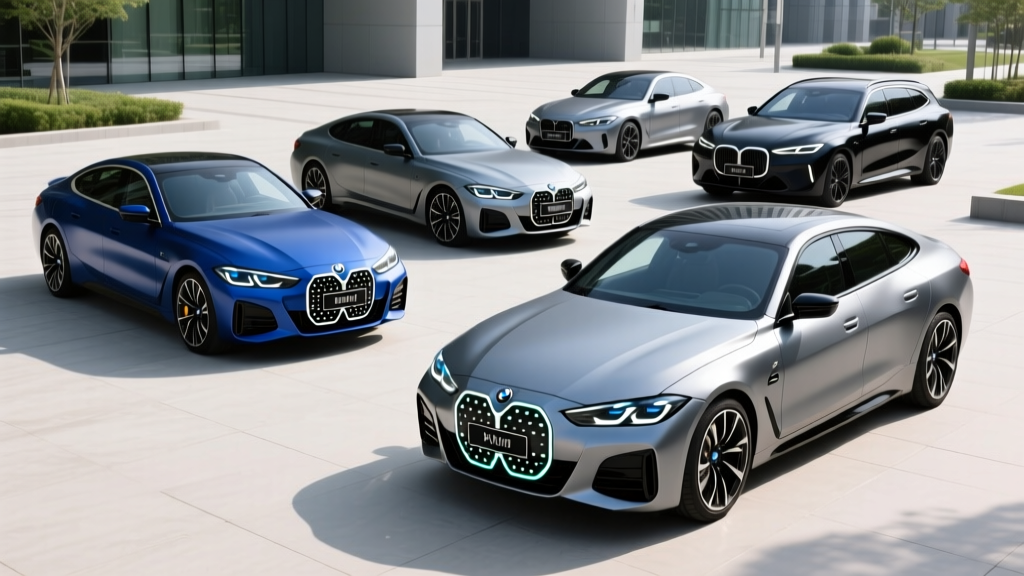
Quick Answer: BMW's 2026 electric lineup spans four core models: the i4 Gran Coupe (from ~$52,200, up to 307 mi EPA), the i5 sedan (from ~$66,800, up to 295 mi), the flagship i7 (from ~$105,700, up to 318 mi), and the iX SUV (from ~$87,250, up to 324 mi). All use BMW's 5th-gen eDrive on a 400V architecture with NMC battery chemistry. None currently qualify for the full $7,500 federal §30D tax credit due to battery-sourcing rules. Real-world highway range drops 10-15% below EPA; cold weather can cut 20-30%. If you have Level 2 home charging and mostly drive under 250 miles daily, an electric BMW delivers meaningful fuel and maintenance savings over its gas counterpart — but the upfront premium and insurance costs are real.
The 2026 Electric BMW Lineup at a Glance
BMW has taken a different path than rivals like Mercedes-Benz or Volvo by refusing to build dedicated EV-only platforms. Instead, every current electric BMW shares its CLAR architecture with gas and plug-in hybrid variants. That means you get familiar BMW proportions, interior layouts, and driving dynamics — but with battery packs tucked where a transmission tunnel and fuel tank would normally sit. The trade-off: slightly less interior packaging efficiency than purpose-built EVs like the Hyundai Ioniq 5 or Tesla Model S, and no frunk (front trunk) on any current model.
Here's how the four production models stack up for the 2026 model year:
| Model | Battery (usable kWh) | EPA Range | Peak DC Charge | 10–80% Time | 0–60 mph | HP | Base MSRP |
|---|---|---|---|---|---|---|---|
| i4 eDrive40 | 81.5 (NMC) | 307 mi | 205 kW | ~31 min | 5.5 sec | 335 | $52,200 |
| i4 M50 | 81.5 (NMC) | 270 mi | 205 kW | ~31 min | 3.7 sec | 536 | $69,700 |
| i5 eDrive40 | 81.2 (NMC) | 295 mi | 205 kW | ~30 min | 5.7 sec | 335 | $66,800 |
| i5 M60 | 81.2 (NMC) | 256 mi | 205 kW | ~30 min | 3.7 sec | 593 | $84,100 |
| i7 eDrive50 | 101.7 (NMC) | 318 mi | 195 kW | ~34 min | 4.5 sec | 449 | $105,700 |
| iX xDrive50 | 105.2 (NMC) | 324 mi | 150 kW | ~35 min | 4.4 sec | 516 | $87,250 |
| iX M60 | 105.2 (NMC) | 296 mi | 150 kW | ~35 min | 3.6 sec | 610 | $111,500 |
Sources: fueleconomy.gov, BMW USA product pages. All figures for 2026 model year base trims with standard wheels. Range varies by wheel/tire option.
Real-World Range: What the EPA Sticker Doesn't Tell You
EPA vs Reality: The iX xDrive50's 324-mile EPA rating is the lineup's best, but expect ~275–290 miles in mixed highway driving at 70-80 mph. In freezing temperatures (below 32°F), plan for 20-30% range loss — that same iX could deliver as little as 225-260 miles. The i4 eDrive40's 307-mile sticker translates to roughly 260-280 miles on the highway in mild weather.
BMW's NMC (nickel manganese cobalt) battery chemistry offers strong energy density but is more temperature-sensitive than the LFP (lithium iron phosphate) packs used in base Tesla Model 3s. BMW does include a heat pump on all 2026 electric models, which helps mitigate cold-weather losses — but physics still applies. If you live in Minnesota or Maine, budget an extra charging stop on any road trip over 200 miles in winter.
One often-overlooked factor: BMW's 400V architecture caps DC fast-charging speeds at 205 kW for the i4/i5 and 195 kW for the i7. Competitors on 800V platforms — the Hyundai Ioniq 5 (peak 240 kW), Porsche Taycan (peak 270 kW), and Lucid Air (peak 300+ kW) — can add range significantly faster. BMW's 10-80% charge times of 30-35 minutes are acceptable but no longer class-leading. The charge curve also tapers sharply above 80%, so plan to unplug at 80% on road trips rather than waiting for a full charge.
Electric BMW vs Gas BMW: The Cost Comparison
The most common question from BMW shoppers: does going electric actually save money? The answer depends heavily on your local electricity rates, annual mileage, and whether you can charge at home. Here's a five-year cost breakdown comparing the i4 eDrive40 against its closest gas sibling, the 430i Gran Coupe:
| Cost Factor (5 Years / 75,000 mi) | i4 eDrive40 (EV) | 430i Gran Coupe (Gas) |
|---|---|---|
| Base MSRP | $52,200 | $49,900 |
| Fuel/Energy Cost | $3,750 (home L2 @ $0.14/kWh) | $9,375 (premium @ $4.20/gal, 28 MPG) |
| Maintenance | $1,200 (cabin filter, wipers, brake fluid) | $3,800 (oil, brakes, spark plugs, filters) |
| Insurance (avg) | $12,500 | $9,750 |
| Federal Tax Credit (§30D) | $0 (battery sourcing inelig.) | $0 |
| 5-Year Total | $69,650 | $72,825 |
Assumptions: 15,000 mi/year, home Level 2 charging at national avg $0.14/kWh, premium gasoline at $4.20/gal. Insurance estimates from industry averages; actual quotes vary. Source: IRS §30D rules.
The i4 wins on operating costs by roughly $7,825 over five years, but the higher purchase price and insurance premiums eat into that advantage. If you rely exclusively on public DC fast charging at $0.35-$0.50/kWh, your energy cost jumps to $9,400-$13,400 over five years — wiping out the fuel savings entirely. Home charging access is the single biggest financial variable.
Federal Tax Credits and Incentives: The Bad News
As of 2026, no electric BMW qualifies for the full $7,500 federal §30D clean vehicle credit. The reason: BMW's battery cells are sourced from suppliers that do not yet meet the Inflation Reduction Act's critical-mineral and battery-component requirements, which mandate increasing percentages of US-sourced or free-trade-agency-partner materials each year.
§30D Credit Requirements for 2026 (all must be met):
- Vehicle MSRP below $55,000 (sedans/coupes) or $80,000 (SUVs/trucks/vans)
- Buyer AGI below $150,000 (single) / $300,000 (married filing jointly)
- Battery components ≥80% manufactured or assembled in North America
- Critical minerals ≥80% sourced from US or FTA partners
- Final assembly in North America
Source: IRS.gov — New Clean Vehicle Credit. Rules subject to annual adjustment; verify with a tax professional before purchase.
The i4 eDrive40 at $52,200 technically clears the MSRP cap for sedans, and the iX at $87,250 clears the SUV cap — but the battery-sourcing rules disqualify the entire lineup. BMW has stated it is working toward compliance for future model years, and the upcoming Neue Klasse platform (expected late 2026/2027) may change this picture. For now, check your state's individual incentives — California, Colorado, New York, and others offer their own rebates that stack regardless of federal eligibility.
Charging at Home and on the Road
Every 2026 electric BMW ships with a CCS1 charge port (a J1772 connector for Level 1/2, plus two additional DC pins). BMW has not yet adopted Tesla's NACS connector natively, though adapters are available for Supercharger access on some models. Here's what charging looks like in practice:
| Level | Power | Miles Added per Hour | Typical Use Case |
|---|---|---|---|
| Level 1 (120V) | 1.4 kW | ~4 mi/hr | Emergency/trickle only |
| Level 2 (240V, 48A) | 11.5 kW | ~30-35 mi/hr | Home overnight (7-10 hr for full charge) |
| DC Fast (max) | 150-205 kW | ~500-700 mi/hr (peak) | Road trips; 10-80% in 30-35 min |
For home Level 2 installation, expect to pay $800-$1,500 for a quality hardwired charger (like a ChargePoint Home Flex or Emporia V2) plus $1,000-$3,000 for electrician labor, depending on your panel's capacity and the distance from panel to garage. If your home has a 100-amp electrical panel, you may need a $2,000-$4,000 panel upgrade to support a 48-amp charger — a common surprise for first-time EV buyers.
On the road, BMW's partnership with Electrify America provides complimentary charging credits on new vehicle purchases (typically 2 years or a set kWh allotment). Beyond that, plan on paying $0.35-$0.55/kWh at public DC fast chargers. An iX going from 10-80% on a 150 kW Electrify America station would cost roughly $25-$35 — comparable to a tank of premium gas, which erodes the cost advantage unless you charge at home most of the time.
Decision Framework: Which Electric BMW Is Right for You?
Choose the i4 eDrive40 if: You want the most affordable entry into the BMW EV lineup, drive under 250 miles daily, value sporty handling, and can charge at home. At $52,200, it's the closest the lineup gets to "accessible," and 307 miles of EPA range covers most daily needs with margin.
Choose the i5 eDrive40 if: You need a proper midsize executive sedan with more rear-seat room and trunk space than the i4, regularly carry passengers, and want the 5 Series experience without the fuel bill. The 295-mile range is slightly less than the i4 due to higher weight.
Choose the i7 eDrive50 if: Budget is secondary to luxury, you want a 7 Series flagship with near-silent operation, and your daily driving is mostly under 250 miles. The 101.7 kWh battery provides strong range, but the $105,700+ starting price puts it in ultra-luxury territory.
Choose the iX xDrive50 if: You need SUV practicality, all-wheel drive for snow/rain, and maximum range (324 mi EPA). The iX is the lineup's most capable road-tripper. If performance matters more, the M60 sacrifices ~28 miles for a 3.6-second 0-60.
Wait or look elsewhere if: You need NACS native charging, 800V fast-charging speeds, a frunk, or a sub-$45,000 price point. The Hyundai Ioniq 5, Tesla Model 3/Y, and Chevrolet Equinox EV serve those needs better today.
Common Misconceptions About Electric BMWs
| Myth | Fact |
|---|---|
| "Electric BMWs get the $7,500 tax credit." | No current BMW EV qualifies for §30D due to battery-sourcing rules. State incentives may apply separately. |
| "The battery will need expensive replacement within a few years." | BMW warrants the high-voltage battery for 8 years/100,000 miles against dropping below 70% capacity. Real-world degradation data from older iX3/i4 owners shows ~5-8% loss over 100k miles — well within warranty thresholds. |
| "You can't road-trip an electric BMW." | You can, but plan for 30-35 minute DC fast-charge stops every 200-250 miles. Preconditioning the battery (enabled via navigation to a charger) is essential for hitting peak charge rates. |
| "BMW's driver-assist is self-driving." | BMW's Driving Assistant Professional is SAE Level 2 — you must keep your hands on the wheel and eyes on the road at all times. The Highway Assistant allows hands-free driving at up to 85 mph on divided highways but still requires driver attention monitoring. |
| "Electric BMWs cost less to insure." | EV insurance premiums run 15-25% higher than gas equivalents due to higher repair costs and battery replacement risk. Get quotes before committing. |
SAE Automation Level Reminder: BMW's Driving Assistant Professional and Highway Assistant are Level 2 systems. The driver remains fully responsible for vehicle operation at all times. No production BMW is Level 3 or above in the United States. (BMW's Level 3 "Personal Pilot" is available only in Germany on the 7 Series under strict conditions.)
What First-Time EV Buyers Should Know Before Purchasing
If you're transitioning from a gas BMW to an electric one, here are the ownership realities that brochures don't emphasize:
Preconditioning matters. When you set a charger as your navigation destination, the car warms or cools the battery to optimal temperature before arrival. Skip this step in cold weather and your peak charge rate could drop from 205 kW to under 80 kW, doubling your stop time.
Regenerative braking is adjustable, not one-pedal by default. Unlike Tesla or Nissan Leaf, BMW lets you choose between adaptive regen, low, medium, and high. The "B" mode on the gear selector enables max regen for one-pedal-like driving, but it's not as aggressive as Tesla's. New owners often need 1-2 weeks to dial in their preference.
Tire wear accelerates. EVs are heavier (the iX xDrive50 weighs ~5,660 lbs) and deliver instant torque. Expect to replace tires every 25,000-35,000 miles instead of the 40,000-50,000 miles typical on gas cars. Budget $1,200-$2,000 for a set of EV-rated tires.
Depreciation is steeper. EVs have experienced higher-than-average depreciation in recent years due to rapid tech advancement, Tesla price cuts, and lease-volume flooding the used market. A 3-year-old i4 may retain 45-50% of its value versus 55-60% for a gas 4 Series. Factor this into your total cost calculations, especially if you plan to sell rather than drive the car to 100,000+ miles.
Frequently Asked Questions
Does BMW use NACS or CCS charging connectors?
All 2026 electric BMWs use CCS1 natively. BMW has announced plans to adopt the NACS (Tesla-style) connector on future models, likely beginning with the Neue Klasse platform expected in 2027. For now, CCS-to-NACS adapters are available for Supercharger access, but they add bulk and may slightly reduce peak charge rates.
How long does it take to fully charge an electric BMW at home?
On a 48-amp Level 2 home charger (11.5 kW), expect 7-10 hours for a full charge depending on the model. The i4/i5 (81 kWh usable) takes roughly 7.5 hours; the i7 and iX (101-105 kWh) take 9-10 hours. Most owners charge overnight and wake up to a full battery every morning — the practical equivalent of always starting with a full tank.
Is BMW's battery warranty competitive?
BMW provides an 8-year/100,000-mile high-voltage battery warranty with a 70% capacity retention threshold. This matches the federal minimum and aligns with most competitors (Tesla, Mercedes, Audi). Hyundai/Kia offer a more generous 10-year/100,000-mile warranty, which is worth noting if long-term battery anxiety is a concern.
Can I tow with an electric BMW?
The iX is rated for up to 3,500 lbs of towing capacity — adequate for a small trailer or jet skis. The i4 and i5 are not rated for towing. Keep in mind that towing reduces range by 30-50% depending on trailer weight and aerodynamics.
Should I buy or lease an electric BMW?
Leasing is often the smarter financial play for electric BMWs in 2026. You avoid the steeper EV depreciation curve, can upgrade to newer battery tech every 3 years, and — critically — some leases allow the dealer to pass through a commercial clean vehicle credit (§45W) even when the consumer §30D credit isn't available. Ask your dealer specifically about lease-only incentives before deciding.