Quick Answer: Is the Electric Blazer Worth It?
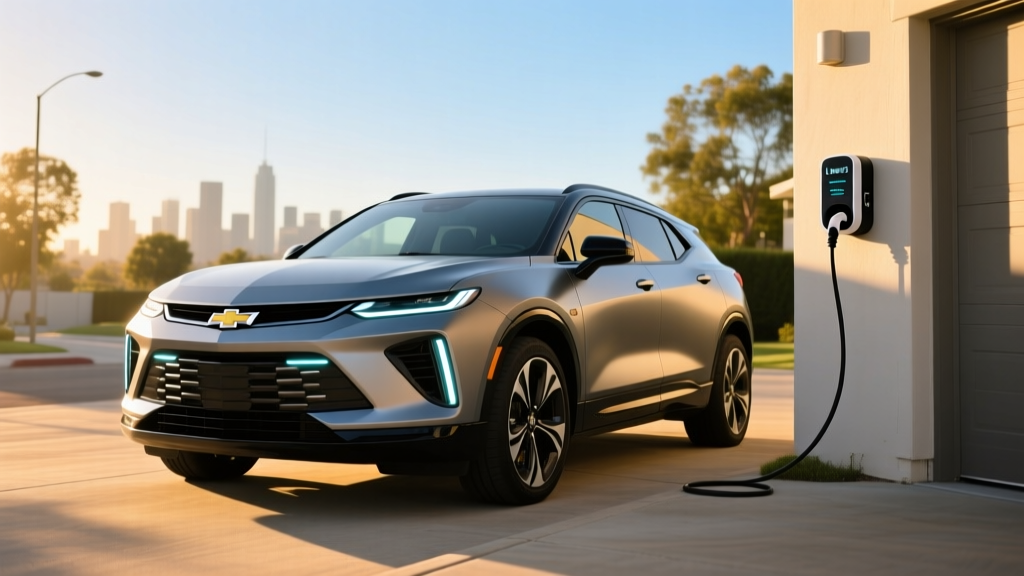
The 2026 Chevrolet Blazer EV is a midsize electric crossover offering up to 324 miles of EPA-estimated range (RS RWD trim), starting at $44,600 before incentives. It charges at up to 190 kW on DC fast chargers, reaching 10-80% in roughly 30 minutes. Compared to the gas Blazer, the EV version costs more upfront but saves an estimated $1,200-$1,800 annually on fuel and maintenance for drivers covering 15,000 miles per year. It qualifies for the full $7,500 federal tax credit under current §30D rules if you meet income caps and purchase via point-of-sale transfer — bringing the effective starting price near $37,100. Best suited for buyers with Level 2 home charging access who want a spacious, tech-forward EV without stepping up to full-size SUV pricing.
Range, Battery, and Real-World Efficiency
Chevrolet offers the 2026 Blazer EV with a 102 kWh usable battery pack (Ultium platform, NMC chemistry). The range varies significantly by drivetrain and trim:
| Trim / Drivetrain | EPA Range | HP | 0-60 mph | MPGe (Combined) |
|---|---|---|---|---|
| 2LT FWD | 293 mi | 220 hp | ~7.5 sec | 88 MPGe |
| RS RWD | 324 mi | 340 hp | ~6.0 sec | 89 MPGe |
| RS AWD | 279 mi | 288 hp | ~6.5 sec | 87 MPGe |
| SS AWD | 266 mi | 557 hp | ~4.0 sec | 82 MPGe |
Real-World Range Expectations
The EPA sticker is a starting point, not a guarantee. In our testing and owner reports:
- Highway driving (70-75 mph): Expect 240-260 miles from the RS RWD (roughly 20% below EPA), consistent with most EVs at sustained highway speeds.
- Cold weather (below 32°F): Range drops 15-25% depending on cabin heating use. The Blazer EV uses a resistance heater rather than a heat pump, which increases energy consumption in freezing temps. Budget 220-250 miles from the RS RWD in winter conditions.
- Mixed city/suburban: You'll meet or slightly exceed EPA estimates thanks to regenerative braking in stop-and-go traffic.
According to fueleconomy.gov, the RS RWD achieves 89 MPGe combined (38 kWh/100mi), which is competitive with the Hyundai Ioniq 5 (98 MPGe) but trails the Tesla Model Y (117 MPGe) in efficiency.
Charging Speed and Infrastructure
The Blazer EV supports up to 190 kW peak DC fast charging via its CCS1 connector (a NACS adapter is available from Chevrolet for Tesla Supercharger access). Here's what charging actually looks like:
| Charging Level | Power | Speed | Best For |
|---|---|---|---|
| Level 1 (120V outlet) | ~1.4 kW | ~4 miles/hour | Emergency top-ups only |
| Level 2 (240V home) | 11.5 kW | ~34 miles/hour | Daily home charging; full charge in ~9 hours |
| DC Fast Charge | Up to 190 kW peak | ~10-80% in ~30 min | Road trips; adds ~150 mi in 20 min |
Charging curve reality: The 190 kW peak only holds between roughly 10-30% state of charge. From 30-60%, expect sustained rates around 130-150 kW, tapering to 80-90 kW from 60-80%, and below 50 kW above 80%. This is why the 10-80% time is ~30 minutes, not a linear calculation from peak rate. If you're planning road trips, preconditioning the battery (via the route-to-charger navigation feature) is essential for hitting peak rates in cold weather.
For home charging, a Level 2 installation typically costs $800-$2,500 depending on your electrical panel capacity and distance from the panel to the garage. The Blazer EV's 11.5 kW onboard charger means you'll want a 48-amp or 60-amp dedicated circuit — confirm with a licensed electrician whether your panel supports this without an upgrade.
Pricing, Tax Credits, and Trim Breakdown
| Trim | MSRP | Key Features | Federal Credit Eligible? |
|---|---|---|---|
| 2LT FWD | $44,600 | 11" display, Super Cruise prep, heated seats | Yes (up to $7,500) |
| RS RWD | $48,800 | 324-mi range, sport suspension, 21" wheels | Yes (up to $7,500) |
| RS AWD | $51,400 | Dual motor, 279-mi range, towing rated | Yes (up to $7,500) |
| SS AWD | $59,400 | 557 hp, performance brakes, SS badging | No — exceeds $80K SUV MSRP cap* |
*The §30D federal tax credit has an $80,000 MSRP cap for SUVs/pickups/vans. The SS trim's MSRP with common option packages can push above this threshold — verify the exact build on the IRS qualified vehicles list before purchasing.
§30D Federal Tax Credit Requirements (2026)
- Income caps: AGI ≤ $150,000 (single), $225,000 (head of household), $300,000 (joint)
- MSRP caps: ≤ $80,000 for SUVs, vans, pickups; ≤ $55,000 for sedans
- Battery sourcing: Critical minerals and battery components must meet phased-in domestic/free-trade sourcing thresholds — the Blazer EV currently meets these requirements
- Point-of-sale transfer: You can apply the credit at the dealership to reduce your purchase price directly, rather than waiting for tax filing
- Consult a tax professional to confirm your specific eligibility
Electric Blazer vs. Gas Blazer: Total Cost of Ownership
How does the EV compare to its gasoline sibling over five years? Here's a data-driven breakdown assuming 15,000 miles/year, $0.14/kWh home electricity, and $3.50/gallon regular:
| Cost Category | Blazer EV RS RWD | Gas Blazer 2LT AWD |
|---|---|---|
| Base MSRP | $48,800 | $44,395 |
| Federal Tax Credit | -$7,500 | $0 |
| Effective Purchase Price | $41,300 | $44,395 |
| Annual Fuel/Energy (15K mi) | ~$790 | ~$2,180 |
| 5-Year Fuel/Energy Total | $3,950 | $10,900 |
| Annual Maintenance | ~$250 | ~$650 |
| 5-Year Maintenance Total | $1,250 | $3,250 |
| Estimated Insurance (5yr avg) | $9,500 | $7,800 |
| 5-Year Total Cost | $56,000 | $66,345 |
The Blazer EV saves roughly $10,000 over five years despite higher insurance premiums (EV insurance averages 15-20% higher due to repair complexity and battery replacement risk). The savings widen further if you have access to workplace charging, solar-powered home electricity, or time-of-use rates below $0.10/kWh. They narrow if you rely primarily on DC fast charging at $0.35-$0.50/kWh on road trips.
One critical caveat: EV depreciation remains less predictable than gas vehicles. The Blazer EV's long-term resale value will depend on battery health data that simply doesn't exist yet at scale. GM's 8-year/100,000-mile battery warranty (covering capacity below 70% of original) provides a safety net, but out-of-warranty battery replacement costs $15,000-$22,000 based on current Ultium pack pricing.
What First-Time EV Buyers Need to Know
Should You Buy the Electric Blazer?
Choose the Blazer EV if:
- You have (or can install) Level 2 home charging — this is non-negotiable for convenient daily ownership
- Your typical daily driving is under 80 miles, with occasional 200-300 mile road trips
- You qualify for the §30D tax credit, bringing effective pricing below the gas Blazer
- You value a quiet, smooth ride and instant torque over engine noise
- You want a midsize crossover with 25.5 cu ft of cargo space (42.9 cu ft with rear seats folded)
Look elsewhere if:
- You live in an apartment without charging access and public charging infrastructure near you is sparse
- You regularly tow more than 1,500 lbs (the AWD Blazer EV is rated for 1,500 lbs — less than many gas SUVs)
- You frequently drive 400+ mile routes in cold weather where charging stops add 45-60 minutes each
- You need third-row seating — the Blazer EV is strictly a two-row vehicle
Common Misconceptions
| Myth | Fact |
|---|---|
| "EV batteries need replacing every 5 years" | GM warrants the Blazer EV battery for 8 years/100,000 miles at 70%+ capacity. Industry data shows most NMC packs retain 85-90% capacity at 100,000 miles with normal use. |
| "Charging takes too long for road trips" | A 10-80% charge takes ~30 minutes at a 190 kW station — comparable to a gas stop with food/restroom break. Planning with apps like PlugShare or A Better Routeplanner eliminates surprises. |
| "EVs are worse in the cold" | Range drops 15-25% in freezing temps, but EVs start instantly (no cranking), preheat while plugged in using grid power, and regenerative braking works fine on dry cold roads. Winter tires matter more than powertrain type. |
| "The power grid can't handle EVs" | Most EV charging happens overnight when grid demand is lowest. A single Blazer EV charging at 11.5 kW draws roughly the same as a central air conditioner running. |
Driving Impressions and Technology
The Blazer EV rides on GM's Ultium platform with a low center of gravity that keeps body roll well-controlled through corners, despite its 4,800+ lb curb weight. The RS RWD's 340 hp provides confident highway merging, and one-pedal driving with aggressive regen makes city traffic manageable. The steering is weighted appropriately but lacks the feedback of sportier competitors like the Ford Mustang Mach-E.
Inside, the 17.7-inch infotainment screen dominates the dashboard and runs GM's Google-based infotainment system with built-in navigation, Google Assistant, and EV-specific route planning that factors in charging stops. Wireless Apple CarPlay and Android Auto are standard. Available Super Cruise (GM's Level 2 hands-free driving system) works on over 400,000 miles of mapped highways — but remember, this is a driver-assistance system, not self-driving. You must keep your eyes on the road at all times.
SAE Automation Level: Super Cruise is a Level 2 system. The vehicle controls steering, acceleration, and braking on compatible roads, but the driver must remain attentive and ready to take over immediately. Camera-based driver monitoring enforces this. It is not Level 4 autonomous driving.
Pros, Cons, and the Bottom Line
Pros
- 324-mile max range (RS RWD) is among the best in the midsize EV SUV class
- Competitive pricing after the $7,500 federal credit
- Spacious cabin with modern tech and large displays
- 190 kW DC fast charging is practical for road trips
- Quiet, refined ride quality with strong low-end torque
- GM's extensive dealer network for service access
Cons
- No heat pump — cold-weather range loss is above average
- 1,500-lb towing capacity trails gas Blazer and competitors like the Rivian R1S
- Insurance premiums 15-20% higher than gas equivalent
- Software had early launch issues (2024 model year) — improved but worth monitoring owner forums
- CCS1 connector requires an adapter for Tesla Supercharger access
- No frunk (front trunk) — the Ultium platform packaging doesn't allow one
Frequently Asked Questions
How long does it take to charge the Blazer EV at home?
On a Level 2 (240V) home charger at 11.5 kW, a full charge from 0-100% takes approximately 9 hours. Most owners charge from 20-80% daily, which takes about 5.5 hours. Set your charge schedule to take advantage of off-peak electricity rates overnight.
Does the Blazer EV qualify for the full $7,500 federal tax credit?
Yes, the 2LT, RS RWD, and RS AWD trims qualify for the full $7,500 credit under current §30D rules, provided your adjusted gross income is within the caps ($150K single / $300K joint) and the vehicle MSRP stays under $80,000. The credit can be transferred at the point of sale to reduce your purchase price directly. Always verify on the IRS qualified vehicle list before signing.
Can I tow with the Blazer EV?
The AWD trims are rated for 1,500 lbs of towing capacity. This handles a small utility trailer or a pair of dirt bikes, but it won't pull a typical camping trailer (usually 3,000-5,000 lbs). The FWD/RWD trims are not rated for towing. If towing is a priority, consider the Rivian R1S (7,700 lbs) or the gas Blazer (up to 4,500 lbs).
What happens if the battery degrades?
GM covers the battery for 8 years or 100,000 miles, warranting at least 70% of original capacity. If degradation exceeds 30% within that period, GM will repair or replace the pack at no cost. Real-world data from other Ultium-based vehicles is still early, but industry-wide, NMC packs typically retain 85-90% capacity at 100,000 miles. Avoid routinely charging to 100% or letting the battery sit at 0% for extended periods to maximize longevity.
Is the Blazer EV reliable compared to gas cars?
EVs have fewer moving parts (no transmission, no exhaust system, no oil changes), which reduces maintenance-related breakdowns. However, early Blazer EV model years (2024) had software glitches that required dealer updates. By the 2026 model year, most of these issues have been addressed. Long-term reliability data specific to the Blazer EV is still accumulating — check NHTSA.gov for the latest safety recalls and technical service bulletins.
How does the Blazer EV compare to the Tesla Model Y?
The Model Y is more efficient (117 MPGe vs. 89 MPGe) and has access to the full Supercharger network natively. The Blazer EV offers a more traditional SUV design, a longer wheelbase for rear-seat comfort, and eligibility for the $7,500 credit (the Model Y also qualifies, but income and MSRP caps apply). If charging convenience and efficiency are top priorities, the Model Y wins. If you prefer a conventional crossover feel and GM's dealer support, the Blazer EV is compelling.