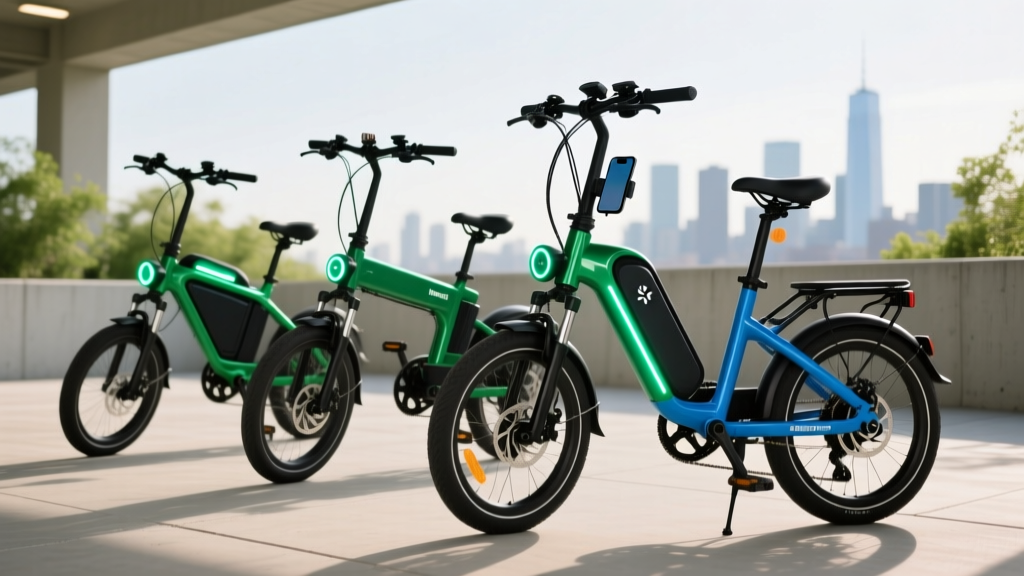
If you've searched for electric bikes under $200 at Walmart, you're likely looking for an affordable way to go electric — but the reality is sobering. In 2026, no legitimate, safe electric bike with a real motor and battery sells for under $200 at Walmart or anywhere else. The e-bikes you'll find in that price range are typically unbranded imports with uncertified lithium cells, no UL certification, motors under 250W, and real-world ranges of 5–10 miles at best. For comparison, a reputable entry-level e-bike from brands like Lectric, Rad Power, or Aventon starts at $799–$1,099, while a used entry-level EV like a 2022 Nissan Leaf begins around $12,000–$15,000. If your goal is affordable electric transportation, you'll need to decide between saving up for a certified e-bike or exploring the used EV market with federal tax credits.
What You Actually Get for Under $200
Let's look at the typical specifications of electric bikes sold under $200 at major retailers, compared to what reputable e-bike manufacturers offer in 2026:
| Specification | Sub-$200 Walmart E-Bike | Reputable Entry-Level E-Bike ($799–$1,099) |
|---|---|---|
| Motor Power | 180–250W (nominal) | 350–500W (nominal) |
| Battery Capacity | 100–180 Wh (unverified) | 360–540 Wh (rated) |
| Claimed Range | 12–18 miles | 28–55 miles |
| Real-World Range | 5–10 miles | 20–45 miles |
| UL Certification | None | UL 2849 (full system) |
| Battery Chemistry | Unknown/uncertified lithium-ion | NMC or LFP, name-brand cells |
| Warranty | 30 days (if any) | 1–2 years |
| Top Speed | 12–15 mph | 20–28 mph (Class 1–3) |
The battery is the biggest concern. At the sub-$200 price point, manufacturers cut costs by using salvaged or second-tier lithium cells without proper battery management systems (BMS). A quality BMS prevents overcharging, cell imbalance, and thermal runaway — the exact failures that have caused e-bike fires in apartment buildings across New York, San Francisco, and Chicago. According to NFPA data, uncertified lithium-ion batteries in micromobility devices caused over 250 fires in the U.S. between 2021 and 2025, resulting in dozens of injuries and multiple fatalities.
The Real Cost of 'Cheap' Electric Transportation
It's tempting to think a $180 e-bike is a low-risk experiment, but the math tells a different story. Here's what ownership actually looks like compared to saving for a certified alternative:
| Cost Factor | Sub-$200 E-Bike | Certified $999 E-Bike | Used 2022 Nissan Leaf (EV) |
|---|---|---|---|
| Purchase Price | $180 | $999 | $13,500 |
| Expected Lifespan | 3–6 months | 3–5 years | 10+ years (with battery health) |
| Replacement Battery Cost | $80–$120 (if available) | $299–$499 | $6,500–$9,000 (after warranty) |
| Cost Per Mile (Year 1) | ~$0.18–$0.36 | ~$0.02–$0.04 | ~$0.04–$0.06 (electricity + tires) |
| Safety Certification | None | UL 2849 | NHTSA/IIHS rated |
| Fire Risk | Elevated | Minimal | Extremely low (thermal management) |
A sub-$200 e-bike that dies in 4 months and needs a $100 battery replacement (if you can even find a compatible one) has a first-year cost of ownership of roughly $280–$330. A $999 certified e-bike ridden 2,000 miles in its first year costs about $40–$80 in electricity and maintenance. Over three years, the certified bike is dramatically cheaper per mile — and far safer to charge in your home.
How E-Bikes Compare to Actual Electric Vehicles
Many shoppers searching for electric bikes under $200 are actually looking for any affordable way to go electric. It's worth understanding where e-bikes fit in the broader EV landscape:
| Factor | E-Bike (Certified) | Used EV (Leaf/Bolt) | New Budget EV (2026) |
|---|---|---|---|
| Upfront Cost | $799–$2,500 | $12,000–$18,000 | $28,000–$38,000 |
| Federal Tax Credit (§30D) | Not eligible | Up to $4,000 (used EV credit, §25E) | Up to $7,500 (if sourcing/income rules met) |
| Range | 20–55 miles | 100–220 miles (EPA) | 230–340 miles (EPA) |
| Charging Time | 3–6 hours (standard outlet) | 8–10 hrs (L2 home) / 30–45 min (DCFC) | 7–9 hrs (L2 home) / 18–30 min (DCFC) |
| Weather Protection | None | Full | Full |
| Cargo Capacity | Panniers: 20–60 lbs | Trunk + folded seats | Trunk + frunk (varies) |
| Year-Round Usability | Limited (rain, cold, snow) | Full (range drops 20–30% in cold) | Full (heat pump models lose ~10–15%) |
An e-bike is a complement to car ownership, not a replacement — unless your commute is under 15 miles round-trip, you live in a mild climate, and you have a backup plan for bad weather. A used EV like a 2022 Chevrolet Bolt EV (EPA range 259 miles, often found for $14,000–$17,000 in 2026) is a dramatically more capable vehicle, and per IRS §25E rules, you may qualify for a used-EV tax credit of up to $4,000 if you meet income limits (under $75,000 single / $150,000 joint) and the vehicle's sale price is under $25,000.
Common Misconceptions About Budget E-Bikes
| Myth | Fact |
|---|---|
| "A $180 e-bike will save me gas money." | At 5–10 miles real range and frequent failures, your cost-per-mile is higher than a certified e-bike or even a fuel-efficient gas car. Most sub-$200 bikes also can't sustain speeds above 12 mph, making them impractical for commuting alongside traffic. |
| "All lithium batteries are basically the same." | Certified batteries from Samsung, LG, or CATL use matched cells with a BMS that monitors voltage and temperature. Uncertified packs use mismatched or salvaged cells that can overheat, swell, or ignite — especially during charging. This is not a theoretical risk. |
| "If Walmart sells it, it must be safe." | Marketplace sellers on major retail platforms are not subject to the same vetting as name-brand products. UL 2849 certification — the standard for e-bike electrical systems — is voluntary and rarely present on sub-$200 models. Check for the UL mark explicitly. |
| "I can just replace the battery when it dies." | Cheap e-bikes use proprietary battery shapes and connectors. Replacement batteries are often unavailable within 6–12 months, effectively making the entire bike disposable. Certified brands guarantee parts availability for years. |
| "A 250W motor is enough for city riding." | 250W is adequate on flat ground for riders under 150 lbs. Any hill, headwind, or heavier rider will cause the motor to bog down to 8–10 mph — slower than pedaling a regular bicycle. Most U.S. urban commutes require at least 350W for practical use. |
What a First-Time EV or E-Bike Buyer Should Know
Whether you're considering a budget e-bike or your first electric car, these principles apply:
Battery chemistry matters. E-bikes and EVs use either NMC (nickel manganese cobalt) or LFP (lithium iron phosphate) cells. NMC offers higher energy density (more range per pound), while LFP offers longer cycle life and better thermal stability. Budget products rarely disclose chemistry at all — a red flag. For context, Tesla's standard-range models and the 2026 Ford Mustang Mach-E Select use LFP for longevity; long-range models use NMC for energy density.
Watt-hours (Wh) determine range, not just voltage. A 36V, 10Ah battery holds 360 Wh of energy. A 48V, 7Ah battery holds only 336 Wh despite the higher voltage. Always calculate: Volts × Amp-hours = Watt-hours. Most e-bikes average 15–25 Wh per mile depending on terrain, rider weight, and assist level.
Home charging access is the #1 ownership factor. For e-bikes, you need a standard 120V outlet in a safe, dry location (never charge in a hallway or near your only exit — this is a documented fire-safety recommendation from the FDNY). For EVs, a Level 2 home charger (240V, 7–11 kW) costs $800–$2,500 installed depending on your electrical panel. Without home charging, EV ownership becomes significantly less convenient, though DC fast-charging networks (Tesla Supercharger, Electrify America, EVgo) now cover most U.S. metro areas.
Cold weather reduces range for all battery-powered vehicles. E-bike batteries lose 30–50% of their range below freezing due to increased internal resistance. EVs with heat pumps (Hyundai Ioniq 5, Tesla Model Y, BMW i4) lose 10–20%; EVs with resistive heaters lose 25–40%. If you live in a cold climate, plan for worst-case range.
Decision Framework: What Should You Actually Buy?
If your budget is under $200: Do not buy an electric bike. A quality used pedal bicycle ($50–$150 from a bike co-op or marketplace) will be faster, safer, and more reliable than a $180 e-bike. Save the difference toward a certified e-bike or a used EV.
If your budget is $500–$1,000: Look for certified e-bikes from Lectric (Lectric One at $799), Aventon (Soltera at $999), or Rad Power (RadMission at $1,099 on sale). Verify UL 2849 certification. These offer 20–45 miles of real range, 20 mph top speed, and 1–2 year warranties.
If your budget is $5,000–$15,000 and you need a car: Explore the used EV market. A 2021–2022 Chevrolet Bolt EV (EPA 259 miles), Nissan Leaf SV Plus (EPA 212 miles), or Hyundai Kona Electric (EPA 258 miles) can be found in this range. Check fueleconomy.gov for official EPA range data. You may qualify for the §25E used-EV credit of up to $4,000.
If your budget is $25,000+ and you want new: The 2026 Chevrolet Equinox EV (EPA 319 miles, starting ~$33,000), Hyundai Ioniq 5 (EPA 303 miles, ~$42,000), or Tesla Model 3 RWD (EPA 272 miles, ~$38,990) are strong options. Federal §30D credit eligibility depends on battery sourcing, your income, and MSRP caps — consult IRS.gov for current rules or speak with a tax professional.
If you need electric transportation today and have $0 budget flexibility: A regular bicycle plus a bus pass is safer and more practical than an uncertified electric bike. Many cities offer subsidized e-bike purchase programs for low-income residents — check your local transportation authority.
FAQ: Electric Bikes and Budget EV Questions
Are there any safe electric bikes under $200?
No. As of 2026, no electric bike with UL 2849 certification, a reliable motor, and a safe battery is available for under $200. The cheapest certified e-bikes start around $799. If you see a listing claiming otherwise, check for a visible UL mark and verifiable manufacturer contact information before purchasing.
Can I get a tax credit for buying an e-bike?
There is no federal tax credit for e-bikes under current IRS rules. Some states and cities (notably California, Colorado, and Denver) offer point-of-sale rebates for e-bikes, typically $300–$1,200, often income-based. Check your state energy office or local transportation authority for current programs. Federal credits (§30D and §25E) apply only to four-wheeled vehicles.
What's the cheapest practical electric vehicle I can buy?
For a car, the cheapest practical EV in 2026 is a used Chevrolet Bolt EV (2017–2022), often found for $10,000–$17,000 with 100,000+ miles remaining on the battery. For a two-wheeler, a certified Lectric One ($799) or Aventon Soltera ($999) offers genuine daily utility.
How do I know if an e-bike battery is safe?
Look for three things: (1) UL 2849 certification mark on the product listing and the physical battery; (2) named battery cells (Samsung, LG, Panasonic, CATL); (3) a visible battery management system (BMS) specification. If none of these are present, the battery is uncertified and poses a fire risk, especially during charging.
Is a used EV cheaper to own than an e-bike?
For daily commuting under 15 miles, a certified e-bike costs roughly $100–$200/year in electricity and maintenance. A used EV costs $500–$1,200/year (electricity, insurance, tires). However, the EV provides weather protection, cargo capacity, passenger seating, and year-round usability that an e-bike cannot. The right choice depends on your climate, commute distance, and whether you need a car for other purposes.