Quick Answer: Yes, Electric Bikes Are Street Legal in Florida
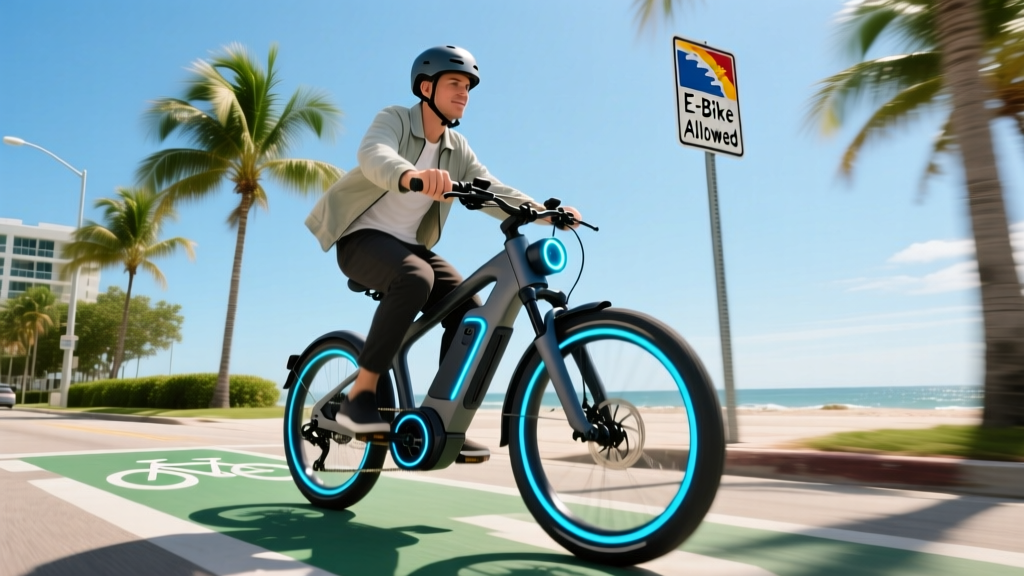
Under Florida Statute § 316.003(40), electric bicycles (e-bikes) are classified into three classes and are legal on all public roads, bike lanes, and multi-use paths where traditional bicycles are permitted — no driver's license, registration, or insurance required. However, Class 3 e-bikes (up to 28 mph motor-assisted) face some path restrictions, and local municipalities can impose additional rules. E-bikes are not classified as motor vehicles under Florida law.
If you've landed here wondering whether you can legally ride an e-bike on Florida roads, the short answer is reassuring. But the full picture — which class you can ride, where you're restricted, what it actually costs to own one versus a car, and whether an e-bike can realistically replace a vehicle for daily commuting — requires a closer look. As a publication focused on electric mobility, we're evaluating e-bikes through the same lens we apply to EVs: real-world utility, total cost of ownership, and honest limitations.
Florida's Three E-Bike Classes: What's Legal and Where
Florida adopted the model three-class e-bike system in 2020 (updated through subsequent legislative sessions). Understanding your class determines where you can legally ride.
| Class | Motor Type | Max Assisted Speed | Motor Wattage | Where You Can Ride |
|---|---|---|---|---|
| Class 1 | Pedal-assist only (no throttle) | 20 mph | ≤ 750W | Roads, bike lanes, multi-use paths, sidewalks (where bikes allowed) |
| Class 2 | Throttle-assisted + pedal-assist | 20 mph | ≤ 750W | Roads, bike lanes, multi-use paths, sidewalks (where bikes allowed) |
| Class 3 | Pedal-assist only (no throttle) | 28 mph | ≤ 750W | Roads, bike lanes; not multi-use paths unless locally permitted |
Key detail most guides miss: Florida law requires Class 3 e-bike operators to be at least 16 years old. All classes are capped at 750 watts (approximately 1 horsepower) for the motor — anything above that is classified as a moped or motorcycle and requires registration, a license, and insurance. If you're shopping for an e-bike, verify the motor wattage on the spec sheet; some imported models exceed 750W and would not qualify as legal e-bikes under Florida law.
Where You Can (and Can't) Ride: The Practical Map
Florida statute grants e-bikes the same rights and responsibilities as traditional bicycles on public roadways. That means:
- Roads and streets: All three classes may operate on any public road where bicycles are permitted, including roads with speed limits up to 30-35 mph in most jurisdictions.
- Bike lanes: Fully legal for all classes. Use them — Florida drivers are accustomed to bike-lane traffic.
- Multi-use paths and trails: Class 1 and 2 are generally permitted. Class 3 is excluded unless a local government specifically allows it. Check county-level ordinances if you ride a Class 3.
- Sidewalks: Permitted where local law allows bicycles on sidewalks, but you must yield to pedestrians. Some cities (parts of Miami Beach, downtown Tampa districts) restrict sidewalk riding.
- State parks and nature trails: The Florida Department of Environmental Protection allows Class 1 e-bikes on most state park trails where bicycles are permitted. Class 2 and 3 access varies by park.
Local variation matters. Cities like Key West, St. Petersburg, and parts of Orlando have enacted local ordinances restricting e-bike use on certain beach paths, boardwalks, or pedestrian-priority zones. Always check municipal codes if you're riding in a specific city.
E-Bike vs. EV vs. Gas Car: A Real Cost Comparison
Many Florida residents considering an e-bike are actually weighing it against a second car, a used EV, or a gas commuter car. Here's how the numbers stack up for a typical 15-mile round-trip daily commute in the Tampa Bay area.
| Cost Factor (Annual) | E-Bike (Class 2) | Used EV (e.g., 2024 Chevy Bolt EV) | Gas Car (30 MPG Combined) |
|---|---|---|---|
| Purchase Price | $1,500 – $3,500 | $22,000 – $28,000 (used) | $18,000 – $24,000 (used) |
| Fuel / Electricity | $25 – $45/yr (charging at $0.13/kWh) | $350 – $500/yr (home charging) | $1,400 – $1,800/yr ($3.50/gal avg) |
| Insurance | $0 – $150/yr (optional) | $1,400 – $2,200/yr | $1,200 – $1,800/yr |
| Maintenance | $100 – $250/yr (tires, brakes, chain) | $300 – $600/yr (tires, cabin filter, wipers) | $600 – $1,200/yr (oil, filters, brakes) |
| Registration / Taxes | $0 | $100 – $300/yr | $100 – $300/yr |
| Total Annual Operating Cost | $125 – $445 | $2,150 – $3,600 | $3,300 – $5,100 |
The math is stark: An e-bike costs roughly $2,000 to $4,500 less per year to operate than even an efficient used EV for a short daily commute. Over five years, that's $10,000 to $22,500 in savings — often exceeding the purchase price of the e-bike itself.
However, this comparison only works if your commute and lifestyle actually support e-bike use. Florida's heat, afternoon thunderstorms (particularly June through September), and lack of protected bike infrastructure in many suburban areas are real constraints. We'll address those honestly below.
Real-World Ownership: What Florida Riders Actually Face
Spec sheets and statutes only tell part of the story. Here's what matters once you're actually riding daily in Florida.
Battery Range and Degradation
Most mid-range e-bikes (Rad Power, Lectric, Aventon) ship with 48V, 10–15 Ah lithium-ion batteries, delivering 20–45 miles of real-world range depending on assist level, rider weight, terrain, and temperature. In Florida's flat terrain, you'll skew toward the higher end of that range. However, expect 15–25% battery capacity loss over 3–5 years of daily use — similar to EV battery degradation, just on a smaller scale. Replacement batteries cost $400–$800.
Charging: Trivially Easy
Unlike EVs, e-bikes charge from any standard 120V outlet. A full charge takes 3–6 hours (depending on battery capacity and charger amperage) and costs roughly $0.05–$0.12 at Florida's average residential electricity rate of $0.13/kWh. There is no Level 2 installation, no panel upgrade, no public charging dependency. This is the simplest electrified-vehicle ownership experience available.
Climate Realities
Florida's climate is both an advantage and a challenge for e-bikes:
- Year-round riding: Unlike northern states, Florida riders can commute by e-bike 12 months a year. No cold-weather battery range loss (which can cut EV range by 20–30% in freezing temperatures).
- Heat and humidity: Summer temperatures routinely exceed 90°F with high humidity. Riding at 20 mph generates significant heat stress — many commuters shift to early-morning or evening rides.
- Afternoon thunderstorms: Florida's daily summer storms (June–September) make waterproofing essential. IP-rated motors and controllers (IP65 or higher) are worth the premium.
- Hurricane season: If you rely on an e-bike as primary transportation, have a backup plan for weeks when flooding or debris blocks bike lanes.
Safety and Infrastructure
Florida consistently ranks among the most dangerous states for cyclists. According to NHTSA fatality data, Florida had over 170 cyclist fatalities in recent annual reports. Protected bike lanes remain scarce outside downtown cores in Miami, St. Petersburg, and Orlando. If your commute requires riding on 45 mph suburban arterials with painted-only bike lanes, an e-bike may not be a practical daily replacement for a car — even though it's perfectly legal.
Common Misconceptions About Florida E-Bike Law
| Myth | Fact |
|---|---|
| "You need a driver's license to ride an e-bike in Florida." | False. No license, registration, or insurance is required for any e-bike class under Florida law. |
| "E-bikes aren't allowed on sidewalks." | Partially false. E-bikes have the same sidewalk rights as traditional bicycles, subject to local ordinances. Many Florida cities allow it; some restrict it in business districts. |
| "Any bike with a motor is an e-bike." | False. Motors exceeding 750W, or bikes that can exceed 28 mph with motor assist, are classified as mopeds or motorcycles and require registration and licensing. |
| "You can modify your e-bike to go faster." | Legally risky. Removing speed limiters or upgrading motors beyond 750W reclassifies the vehicle. If you're in an accident on a modified e-bike, you could face liability for operating an unregistered motor vehicle. |
| "E-bikes qualify for the federal EV tax credit." | Generally false. The IRS §30D credit applies to four-wheeled highway-capable vehicles. However, some e-bikes may qualify under separate state or local rebate programs — check your utility provider. |
Decision Framework: Should You Get an E-Bike, an EV, or Keep Your Gas Car?
If Your Situation Matches This → Choose This
- Commute is under 15 miles, mostly flat, with bike-lane access → E-bike (Class 1 or 2). You'll save $3,000–$5,000/year versus any car. Invest in a quality lock, lights, and rain gear.
- Commute is 15–40 miles, suburban highways, no protected bike infra → Used EV (Bolt EV, Nissan Leaf, or Model 3). An e-bike isn't safe or practical here. Home Level 2 charging makes EV ownership straightforward in Florida's single-family housing stock.
- Commute exceeds 40 miles or requires frequent highway driving → EV with 250+ mile EPA range (Model Y, Ioniq 5, Equinox EV) or a PHEV (Prius Prime, RAV4 Prime) if you lack reliable home charging.
- You want a second vehicle for errands and short trips only → E-bike paired with your existing car. This is the highest-value use case — replace 60–70% of short car trips and pocket the fuel/insurance savings.
- You live in a condo or apartment without charging access → E-bike is your most practical electrified option. No charging infrastructure needed beyond a wall outlet in your unit.
What First-Time E-Bike Buyers Should Know
If you're buying your first e-bike in Florida, here's a practical checklist that mirrors what we'd tell a first-time EV buyer:
- Buy Class 2 if you're unsure. The throttle gives you flexibility in traffic (starting from a stop without pedaling) and the 20 mph cap keeps you legal on virtually all paths.
- Prioritize motor wattage compliance. Confirm the motor is ≤ 750W. Some direct-to-consumer brands sell 1000W+ models that are technically illegal on Florida roads as e-bikes.
- Budget for accessories. A quality U-lock ($80–$150), front and rear lights ($40–$100), fenders ($50–$80), and a rear rack or panniers ($60–$150) are not optional for daily commuting.
- Test the weight. E-bikes weigh 50–75 lbs. If you live in a walk-up apartment or need to carry it onto a bus rack, test-lift before you buy.
- Check your homeowner's or renter's insurance. Many policies cover e-bike theft, but some exclude motorized bicycles. A $50–$150/year e-bike-specific policy from providers like Velosurance or Sundays Insurance fills the gap.
- Plan for battery replacement. Budget $400–$800 for a replacement battery in years 3–5. Store the battery indoors (not in a hot garage) to maximize lifespan.
How E-Bikes Fit Into the Broader Electrified-Vehicle Picture
E-bikes occupy a unique niche in the EV ecosystem. They're not cars — they can't handle highway speeds, carry multiple passengers, or protect you in a collision with a 4,000-lb vehicle. But for the specific use case of short-distance, single-rider urban commuting, they deliver better economics than any four-wheeled EV on the market.
For context: a new 2026 Chevrolet Equinox EV starts around $33,000 (before the up-to-$7,500 federal §30D tax credit, subject to MSRP caps, income limits, and battery sourcing requirements per IRS rules). Even with the credit, you're spending $25,500+ for a vehicle that costs $2,000–$3,000/year to insure, charge, and maintain. A $2,500 e-bike with $300/year in total operating costs solves the same commute for a fraction of the price — if the commute is short and safe enough to bike.
The smart play for many Florida households is a combination: an e-bike for daily short trips and a single EV or PHEV for longer drives, groceries, and family transportation. That pairing cuts household transportation costs dramatically while still providing full mobility.
Frequently Asked Questions
Do I need a helmet to ride an e-bike in Florida?
Florida law requires helmets for riders under 16 on all bicycle types, including e-bikes. For riders 16 and older, helmets are not legally required on e-bikes (unlike motorcycles). We strongly recommend wearing one regardless — e-bike speeds of 20–28 mph make head injuries more severe than traditional cycling accidents.
Can I ride my e-bike on the beach or beach paths?
It depends on the municipality. Most Florida beaches prohibit motorized vehicles (including e-bikes) on sand. Paved beach paths vary — some cities allow Class 1 and 2 e-bikes, others restrict all motorized bicycles. Check local ordinances before riding.
Are e-bikes legal on Florida state park trails?
The Florida State Parks system generally permits Class 1 e-bikes on trails where traditional bicycles are allowed. Class 2 and 3 access varies by park. Call ahead or check the specific park's regulations page.
Can I carry a passenger on my e-bike?
Only if the e-bike is designed for it (with a rated passenger seat and footrests). Carrying a passenger on a single-rider e-bike is illegal and voids most manufacturer warranties. Cargo e-bikes with rated rear seats (like the RadWagon or Tern GSD) are legal for passenger use.
What happens if I'm in an accident on my e-bike?
E-bikes are treated as bicycles in accidents, meaning the driver of a motor vehicle is typically liable if they caused the collision. However, without auto insurance, your medical costs depend on the at-fault driver's coverage, your health insurance, or an optional e-bike insurance policy. Florida's no-fault (PIP) auto insurance does not extend to e-bike riders.
Do e-bikes qualify for any Florida tax incentives or rebates?
Florida does not currently offer a state-level e-bike purchase rebate. The federal §30D EV tax credit does not apply to e-bikes. However, some Florida utility companies (like JEA in Jacksonville or FPL) occasionally offer e-bike rebates or e-mobility incentives — check with your local provider. Employer commuter benefits (pre-tax transit benefits under IRS §132) can sometimes be applied to e-bike purchases through qualifying programs.