Quick Answer: Are Electric Bikes Street Legal in California?
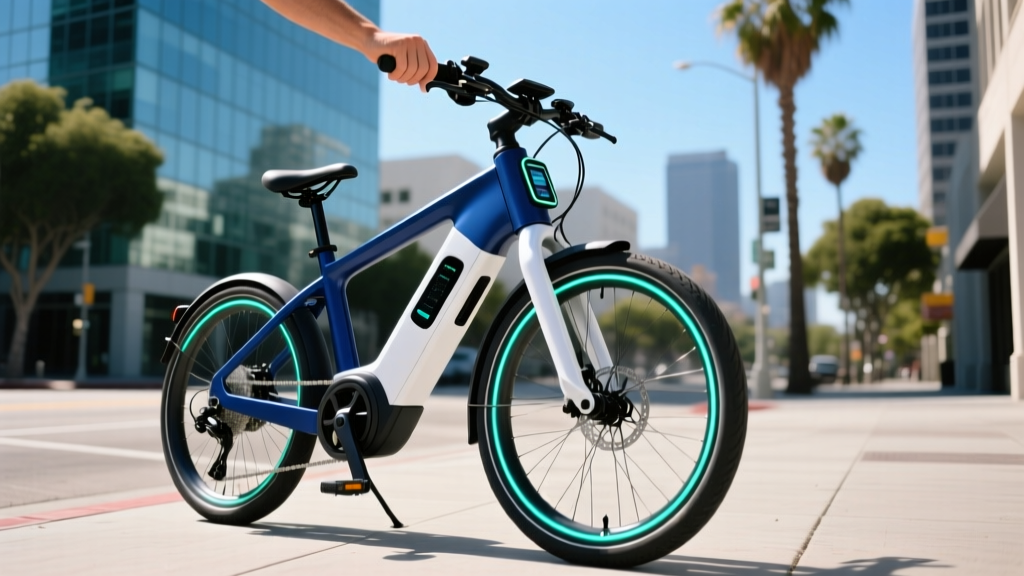
Yes, electric bikes are street legal in California under the state's three-class e-bike framework (AB 1096, codified in the California Vehicle Code). You do not need a driver's license, registration, or insurance to ride a compliant e-bike. However, legality depends on which class your e-bike falls into — Class 1, Class 2, or Class 3 — and each class has different rules about where you can ride, speed limits, and age restrictions. Class 3 e-bikes, for example, require riders to be at least 16 and wear a helmet regardless of age.
At AutoEdgeView, our core focus is four-wheeled electric vehicles — EVs, PHEVs, and the charging infrastructure that supports them. But many of our readers also use e-bikes for commuting and last-mile trips, and the legal landscape around them is confusing enough to warrant a clear, data-backed guide. California leads the nation in both EV adoption and e-bike usage, so understanding the rules here matters whether you're supplementing your EV commute or considering an e-bike as a primary urban vehicle.
California's Three E-Bike Classes: What the Law Actually Says
California law defines electric bicycles under California Vehicle Code §312.5 and §406(b). The state recognizes three classes, each with specific motor power, speed, and operational constraints:
| Class | Motor Assist Type | Max Assisted Speed | Max Motor Power | Helmet Required? | Min Rider Age |
|---|---|---|---|---|---|
| Class 1 | Pedal-assist only (no throttle) | 20 mph | 750W (1 hp) | Under 18 only | None |
| Class 2 | Throttle-assisted (up to 20 mph) | 20 mph | 750W (1 hp) | Under 18 only | None |
| Class 3 | Pedal-assist only (no throttle) | 28 mph | 750W (1 hp) | All ages | 16 |
A critical detail many buyers miss: if your e-bike exceeds 750W or can go faster than 28 mph under motor power alone, it is no longer classified as a bicycle. It becomes a motor-driven cycle or moped, which requires registration, a license, and insurance — essentially putting it in the same regulatory category as a gas scooter.
Where Can You Actually Ride? Streets, Bike Lanes, and Trails
Street legality is only half the question. California law also governs where each class can operate:
- Class 1 and Class 2: Permitted on streets, bike lanes, and most multi-use paths. Local jurisdictions can restrict them on specific trails, but they default to bicycle access.
- Class 3: Allowed on streets and bike lanes, but prohibited on multi-use paths and trails unless the local authority explicitly permits them. This is the most common compliance trap for new Class 3 owners.
- Sidewalks: Generally prohibited for all e-bike classes in most California cities, though enforcement and local ordinances vary.
Class 3 e-bikes also require a speedometer. If you're riding a 28 mph e-bike on a city street, you're subject to the same traffic laws as any other vehicle — stop signs, signals, and right-of-way rules all apply.
E-Bike vs EV Commuting: A Real Cost Comparison
For urban commuters within a 10-15 mile radius, an e-bike can rival — or beat — an electric car on total cost. Here's how a mid-range Class 2 e-bike stacks up against a 2026 Chevrolet Equinox EV (one of the most affordable mainstream EVs) over a 5-year ownership period, assuming a 12-mile round-trip commute, 250 commuting days per year:
| Cost Factor | Class 2 E-Bike (e.g., Rad Power RadCity 5 Plus) | 2026 Chevy Equinox EV 2LT |
|---|---|---|
| Purchase Price | $1,999 | $33,600 (before incentives) |
| Federal Tax Credit / Incentive | $0 (no federal e-bike credit as of 2026) | Up to $7,500 (§30D, income/MSRP/sourcing rules apply) |
| Annual Energy Cost (1,500 mi/yr commute) | ~$15/yr (~$0.01/mi) | ~$240/yr (~$0.04/mi at $0.16/kWh) |
| 5-Year Energy Total | $75 | $1,200 |
| Insurance (Annual) | $0-$150 (optional, not required) | $1,800-$2,400 (required, varies by ZIP) |
| 5-Year Insurance Total | $0-$750 | $9,000-$12,000 |
| Maintenance (5-Year) | $300-$600 (tires, brake pads, chain) | $800-$1,500 (tires, cabin filter, fluid top-offs) |
| 5-Year Total Cost | $2,374-$3,424 | $37,100-$40,800 (after credit) |
The cost gap is enormous, but so is the capability gap. An e-bike doesn't protect you from weather, carry four passengers, or handle a 200-mile road trip. The point isn't that an e-bike replaces an EV — it's that for a specific commute profile, it can serve as a primary vehicle at a fraction of the cost, or complement an EV household by eliminating short car trips entirely.
Real-World Ownership: What First-Time E-Bike Buyers Miss
Based on reader feedback and our own testing, here are the practical considerations that don't appear on a spec sheet:
Battery Degradation and Replacement
E-bike batteries use the same lithium-ion chemistry as EVs but at a much smaller scale. A typical 48V, 14Ah (672 Wh) battery will degrade to roughly 80% capacity after 500-800 full charge cycles — translating to about 15,000-20,000 miles of real-world use before you notice meaningful range loss. Replacement batteries cost $300-$600 depending on the brand and capacity. Unlike EVs, there's no federal battery warranty mandate for e-bikes, so check the manufacturer's warranty (most offer 1-2 years).
Charging Realities
E-bike batteries charge from a standard 120V outlet using a dedicated charger. A 672 Wh battery at a 2A charge rate takes about 4-5 hours from empty to full. You don't need a Level 2 home charger or an electrical panel upgrade — a regular outlet in your apartment, garage, or office is sufficient. This is a significant advantage for renters who can't install EV charging infrastructure.
Theft and Security
E-bike theft is a serious and growing problem in California cities. A $2,000 e-bike is an attractive target, and unlike cars, there's no ignition lock or GPS tracking by default. Budget $100-$200 for a high-quality U-lock and chain, and consider e-bike insurance (typically $100-$150/year through providers like Velosurance or Sundance) if you park in public regularly.
Weather and Seasonal Riding
California's climate is forgiving, but even in SoCal, winter rain and morning fog affect visibility and traction. Fenders, lights, and a waterproof jacket are practical necessities, not accessories. Battery range also drops 10-20% in temperatures below 50°F — a smaller effect than in EVs, but noticeable on a bike with a 40-mile rated range.
Common Misconceptions: Myth vs Fact
| Myth | Fact |
|---|---|
| "You need a driver's license to ride an e-bike in California." | False. No license, registration, or plates are required for Class 1, 2, or 3 e-bikes that comply with the 750W/28 mph limits. |
| "All e-bikes are allowed on bike paths." | False. Class 3 e-bikes are prohibited on multi-use paths unless a local ordinance explicitly permits them. |
| "I can modify my e-bike to go faster and it's still legal." | False. Modifying an e-bike to exceed class speed limits or the 750W power cap reclassifies it as a motor vehicle, requiring registration, license, and insurance. |
| "E-bikes are covered under my homeowner's or renter's insurance." | Often false. Many standard policies exclude motorized bicycles. Check your policy; you may need a specific e-bike endorsement. |
| "California offers a tax credit for e-bike purchases." | As of 2026, California has piloted e-bike incentive programs (like CARB's e-bike voucher program for low-income residents), but there is no universal state or federal tax credit for e-bike purchases. Check CARB's e-bike incentive page for current availability. |
Decision Framework: Should You Get an E-Bike, an EV, or Both?
Choose an e-bike if:
- Your one-way commute is under 15 miles and mostly on bike-friendly routes
- You live in an apartment or lack access to Level 2 home EV charging
- Your annual transportation budget is under $5,000
- You want a vehicle today without the insurance, registration, and parking costs of a car
Choose an EV if:
- You regularly drive more than 30 miles round-trip or carry passengers/cargo
- You have (or can install) Level 2 home charging — a 240V/40A circuit adds ~$500-$2,000 in installation
- You need all-weather, highway-capable transportation
- You qualify for the §30D federal tax credit (income caps: $150K single / $300K joint; MSRP caps: $55K sedans / $80K SUVs/trucks — verify current rules at IRS.gov)
Choose both if:
- You're a two-vehicle household that can downsize one car to an e-bike for local trips
- You want to reduce EV battery wear by reserving the car for longer trips
- Your combined e-bike + EV energy cost is still under what a single gas car would cost in fuel alone (~$1,500-$2,000/yr at current gas prices for 12,000 mi/yr)
Frequently Asked Questions
Can I ride a Class 3 e-bike on a California bike trail?
Generally, no. California Vehicle Code prohibits Class 3 e-bikes on multi-use paths and trails unless the local jurisdiction has passed an ordinance specifically allowing them. Always check with your city's transportation department before riding a Class 3 on a trail. Streets and dedicated bike lanes are always fine.
Do I need to register my e-bike with the DMV?
No. E-bikes meeting the Class 1/2/3 definition (≤750W, ≤20 or 28 mph depending on class) are classified as bicycles, not motor vehicles. No DMV registration, no license plate, no VIN requirement beyond what the manufacturer provides.
What happens if my e-bike has a motor bigger than 750W?
An e-bike with a motor exceeding 750W (1 hp) is classified as a motor-driven cycle under California law. This means you must register it with the DMV, carry insurance, hold a valid driver's license (M1 or M2 endorsement), and wear a DOT-approved helmet. Riding an unregistered overpowered e-bike on public roads can result in citations and impound.
Are there any California state incentives for buying an e-bike?
California's Air Resources Board (CARB) has run pilot e-bike incentive programs, primarily targeting low-income residents in disadvantaged communities. These are not universal rebates and availability varies by funding cycle. As of early 2026, check CARB's official page for the latest program status. There is currently no federal tax credit for e-bike purchases.
How does e-bike range compare to what manufacturers claim?
Similar to EVs, manufacturer e-bike range claims assume ideal conditions — flat terrain, mild temperatures, light rider, low assist level. Real-world range on a typical 500-700 Wh battery at moderate pedal-assist is 25-45 miles, not the 60-80 miles sometimes advertised. Cold weather, hills, higher rider weight, and max-assist mode can cut range by 30-40%. Always budget for about 60% of the claimed range as your reliable daily distance.
Can I ride my e-bike in bike lanes on California streets?
Yes. All three e-bike classes are permitted in bike lanes on public streets. Class 1 and 2 e-bikes have the same access as traditional bicycles. Class 3 e-bikes are allowed in bike lanes but must obey the 28 mph motor-assist speed cap and are restricted from multi-use paths.