Quick Answer: Are Electric Bikes with Sidecars Practical in 2026?
Electric bikes with sidecars — three-wheeled e-mobility rigs pairing a battery-electric motorcycle or cargo e-bike with a bolt-on or integrated sidecar — are a niche but growing segment. In 2026, expect real-world ranges of 40–90 miles per charge depending on battery size (typically 3–10 kWh), combined weight, and terrain. Purchase prices range from $6,500 to $22,000+ for road-legal models. They are not eligible for the federal §30D EV tax credit (which applies to four-wheeled vehicles), though some state e-bike rebate programs and local utility incentives may offset costs. For urban and suburban riders who need passenger or cargo capacity without a full car, they can replace thousands of dollars in annual gas and insurance — but they are not a highway-capable EV replacement.
What Are Electric Bikes with Sidecars — and Who Are They For?
Electric bikes with sidecars occupy a regulatory gray zone between motorcycles and e-bikes. The most common configurations in 2026 include:
- Electric motorcycle + sidecar: Road-legal three-wheelers built on platforms like the Ural-era sidecar tradition, now electrified by custom shops and small manufacturers. These typically use 5–10 kWh NMC battery packs, produce 30–60 kW (40–80 hp), and carry a passenger or cargo in the sidecar chair.
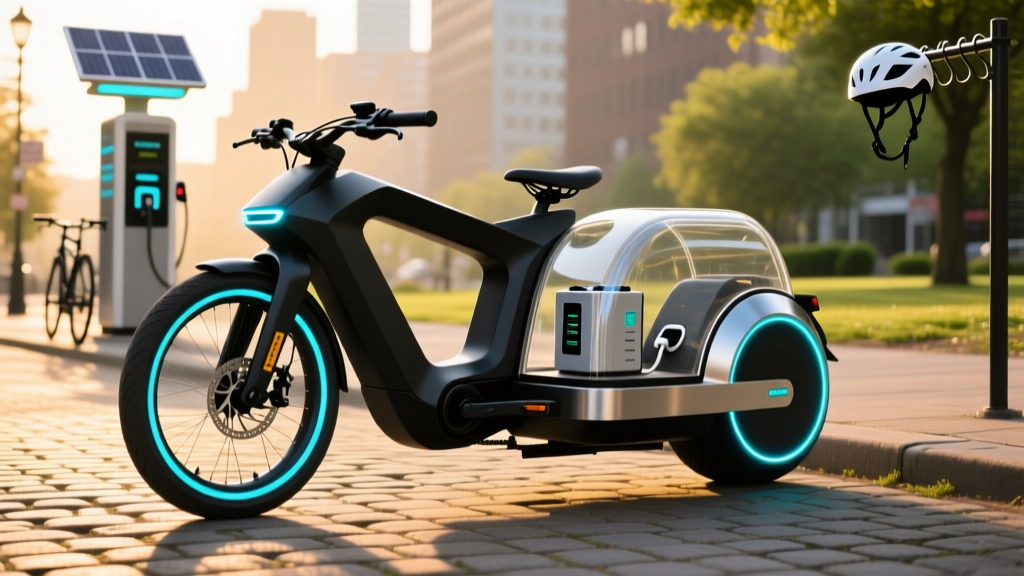
- Cargo e-bike + sidecar attachment: Heavy-duty electric cargo bikes (think RadWagon, Urban Arrow-class) fitted with a sidecar-style trailer or passenger pod. Battery capacity is usually 1–3 kWh, with pedal-assist ranges of 30–60 miles. Speeds are often limited to 20–28 mph to stay within Class 2 or Class 3 e-bike regulations.
- Purpose-built electric trikes: Factory three-wheelers from companies like Arcimoto (now restructured), Doohan, or European brands adapted for the US market, with integrated sidecar-style seating.
The primary buyers are urban commuters who want passenger capacity, cargo haulers replacing a second car, riders with mobility needs that make two wheels unstable, and enthusiasts drawn to the sidecar aesthetic with zero tailpipe emissions.
Range, Battery, and Charging: What the Numbers Actually Look Like
Range on electric bikes with sidecars is heavily dependent on total weight. A sidecar and passenger can add 200–400 lbs to an already heavy electric motorcycle, reducing range by 20–35% compared to solo riding.
| Category | Battery (kWh) | Chemistry | EPA-Equiv. Range | Real-World Range (w/ Sidecar Load) | Charge Time (Level 1, 120V) | Charge Time (Level 2, 240V) |
|---|---|---|---|---|---|---|
| Cargo e-bike + sidecar pod | 1.0–2.5 kWh | NMC or LFP | 40–60 mi (pedal-assist) | 25–45 mi | 4–6 hours | 1.5–3 hours |
| Electric motorcycle + sidecar | 5–8 kWh | NMC | 70–100 mi | 45–75 mi | 8–12 hours | 2–4 hours |
| Purpose-built electric trike | 8–12 kWh | NMC/LFP | 80–120 mi | 55–90 mi | 10–14 hours | 3–5 hours |
Key distinction — kW vs. kWh: Battery capacity is measured in kilowatt-hours (kWh), which is the total energy stored — think of it as the "tank size." Charging speed is measured in kilowatts (kW), the rate of energy flow. A 7 kWh battery charging at 2 kW takes roughly 3.5 hours from empty. Most electric sidecar rigs charge on standard 120V household outlets (Level 1 at ~1–1.5 kW) or 240V outlets (Level 2 at 3–7 kW). None currently support DC fast charging, which is a meaningful limitation for riders who need quick top-ups.
Real-world range caveat: Cold weather (below 40°F) reduces lithium-ion battery performance by 15–30%. A rig rated for 80 miles in summer may deliver only 55–65 miles in winter, especially with a passenger in the sidecar adding drag and weight. Hilly terrain and sustained speeds above 45 mph also erode range faster than the sticker suggests.
Cost Breakdown: Electric Sidecar vs. Gas Motorcycle vs. Car
The economics of electric bikes with sidecars depend entirely on what vehicle they're replacing. Here's a five-year ownership comparison for an urban commuter driving 8,000 miles per year:
| Cost Factor | Electric Motorcycle + Sidecar (~$16,000) | Gas Motorcycle + Sidecar (~$18,000 Ural) | Compact Gas Car (~$26,000) |
|---|---|---|---|
| Purchase Price | $16,000 | $18,000 | $26,000 |
| Federal Tax Credit (§30D) | $0 (not eligible — 3 wheels) | $0 | Up to $7,500 (if eligible) |
| Annual Fuel/Energy (8k mi/yr) | ~$120/yr (electricity at $0.14/kWh) | ~$560/yr (gas at $3.50/gal, 40 mpg) | ~$980/yr (gas at $3.50/gal, 28 mpg) |
| 5-Year Fuel/Energy Total | $600 | $2,800 | $4,900 |
| Annual Insurance | ~$400–$700 | ~$500–$900 | ~$1,200–$1,800 |
| 5-Year Insurance Total | $2,750 | $3,500 | $7,500 |
| 5-Year Maintenance | ~$400 (tires, brakes, minimal) | ~$2,500 (oil, valves, chain, carbs) | ~$3,500 (oil, filters, brakes, tires) |
| 5-Year Total Cost | ~$19,750 | ~$26,800 | ~$41,900 |
The electric sidecar rig saves roughly $7,000 over five years compared to a gas motorcycle with sidecar, and over $22,000 compared to a compact car. However, the utility is very different — you lose weather protection, highway-speed capability, and cargo space versus a car.
Tax credit reality: The federal IRS §30D tax credit applies only to vehicles with four wheels and a gross vehicle weight rating under 14,000 lbs. Three-wheeled electric motorcycles and e-bikes with sidecars do not qualify. Some states and municipalities offer e-bike rebates (typically $300–$1,500), and certain utility companies provide off-peak charging credits — check your local programs. Consult a tax professional for eligibility specifics.
Real-World Ownership: What First-Time Buyers Must Know
Before purchasing an electric bike with a sidecar, honestly assess these practical factors:
Home Charging Access
Most electric sidecar rigs charge on a standard 120V outlet, which is convenient but slow — expect 8–14 hours for a full charge on a 7 kWh battery. If you need daily turnaround, a 240V Level 2 outlet (NEMA 14-50 or hardwired station) cuts this to 2–5 hours. Installation of a 240V circuit typically costs $500–$2,000 depending on panel capacity and run length. Renters and apartment dwellers without dedicated parking and outlet access face a serious practical barrier — public charging infrastructure for motorcycles and e-bikes is extremely limited in 2026.
Climate and Seasonality
Electric batteries lose efficiency in cold weather, and riding a sidecar rig in rain, snow, or ice is significantly more hazardous than a car. Riders in northern climates should expect to use the vehicle seasonally (roughly April–October) and budget for 20–30% winter range loss during shoulder months. LFP (lithium iron phosphate) batteries handle cold slightly better than NMC and offer longer cycle life, but they are heavier — a meaningful trade-off on a three-wheeler.
Registration, Licensing, and Insurance
Regulatory classification varies by state. Road-legal electric motorcycles with sidecars require a motorcycle endorsement (M-class license), registration, and insurance. Cargo e-bikes with sidecar pods may be classified as e-bikes (no license or registration needed) if they meet the federal 750W motor / 20 mph limit for Class 2, or state-specific Class 3 limits (28 mph). Insurance for electric motorcycles averages $400–$700 annually — cheaper than a car but more expensive than a standalone e-bike. Verify your state's DMV classification before purchasing, as aftermarket sidecar installations may require inspection.
Safety Considerations
Sidecars fundamentally change handling dynamics. Unlike a two-wheeled motorcycle that leans into turns, a sidecar rig does not lean — the rider must actively manage weight transfer, and cornering too fast can lift the sidecar wheel. This is amplified with electric powertrains, which deliver instant torque. New riders should seek formal sidecar training (offered by organizations like the NHTSA-recognized Motorcycle Safety Foundation). Always wear a DOT-certified helmet, and consider that three-wheelers are less visible to drivers than cars.
Common Misconceptions About Electric Bikes with Sidecars
| Myth | Fact |
|---|---|
| "They qualify for the $7,500 federal EV tax credit." | They do not. §30D requires four wheels. Some state e-bike rebates may apply, but federal credit is unavailable for three-wheeled vehicles. |
| "Range is the same with or without a sidecar passenger." | A sidecar passenger and cargo add 200–400 lbs plus aerodynamic drag. Expect 20–35% range reduction versus solo riding. |
| "I can charge at any public EV station." | DC fast chargers (CCS, NACS) are designed for cars. Most electric sidecar rigs charge via standard J1772 or household plugs at Level 1/2 speeds. Public motorcycle-accessible charging is rare. |
| "Electric means zero maintenance." | Tires, brake pads, suspension, and sidecar alignment still require regular service. Battery degradation (typically 10–20% over 5 years) is also a factor. |
| "They're as fast as a gas motorcycle." | Electric sidecar rigs prioritize torque and efficiency over top speed. Most top out at 60–85 mph — adequate for surface streets but not highway passing at 75+ mph. |
Decision Framework: Should You Buy an Electric Bike with a Sidecar?
Choose an electric bike with sidecar if:
- You commute 15–40 miles round-trip on surface streets (under 55 mph)
- You have secure home parking with access to a 120V or 240V outlet
- You need to carry a passenger or moderate cargo (groceries, a child, a pet) without a full car
- You live in a mild-to-moderate climate, or accept seasonal use
- You want to reduce fuel and insurance costs versus a car or gas motorcycle
- You already hold a motorcycle endorsement or are willing to obtain one (for road-legal models)
Choose a different vehicle if:
- You need highway-speed commuting (65+ mph sustained) — consider a compact EV like the Chevy Equinox EV or Hyundai Ioniq 5
- You lack home charging access and cannot install a 240V circuit
- You need all-weather, year-round transportation in a cold/snowy climate — consider a PHEV like the Toyota RAV4 Prime
- You need to carry more than one passenger or large cargo — a small EV or PHEV is more practical
- You want federal tax credit eligibility — §30D requires a four-wheeled vehicle meeting MSRP, income, and battery-sourcing requirements
Frequently Asked Questions
How long do the batteries last in electric bikes with sidecars?
Most NMC batteries in electric motorcycles are rated for 800–1,200 full charge cycles before degrading to 80% of original capacity. At one full cycle per day, that's roughly 3–5 years before noticeable range loss. LFP batteries last longer (2,000–3,000 cycles) but are heavier. Replacement battery packs cost $2,000–$6,000 depending on capacity and manufacturer. Store the battery at 40–60% state of charge during long off-season periods to minimize calendar degradation.
Can I add a sidecar to any electric motorcycle?
Technically, many electric motorcycles can be fitted with an aftermarket sidecar, but the frame must handle asymmetric loads and the motor must have enough torque for the added weight. Purpose-built platforms (or gas motorcycles converted to electric by specialty shops) are more reliable. Consult the motorcycle manufacturer — adding a sidecar may void the warranty and will require re-registration in most states.
Are electric bikes with sidecars street-legal?
It depends on classification. If the base vehicle is a road-legal electric motorcycle, adding a registered sidecar maintains street legality (with inspection in some states). If it's a low-speed e-bike (under 750W, under 20 mph), it may be legal on bike paths and roads without registration. Check your state DMV and local ordinances — rules vary significantly between jurisdictions.
How does charging cost compare to gasoline for a sidecar motorcycle?
At the US average electricity rate of ~$0.14/kWh (per EIA data), charging a 7 kWh battery costs roughly $0.98. If that delivers 55 real-world miles with a sidecar load, your energy cost is about $0.018 per mile. A gas sidecar motorcycle averaging 35 mpg at $3.50/gallon costs $0.10 per mile — roughly 5.5× more expensive per mile. Over 8,000 miles annually, that's a fuel savings of approximately $656 per year.
What about towing capacity or hauling heavy cargo?
Electric bikes with sidecars are not designed for towing. The sidecar itself can typically carry 100–200 lbs of cargo or one passenger. For heavier hauling needs, an electric pickup (Ford F-150 Lightning, Rivian R1T) or a compact EV with a cargo trailer is a more capable — though more expensive — solution.