Quick Answer: Can Electric Bikes Hit 60 MPH?
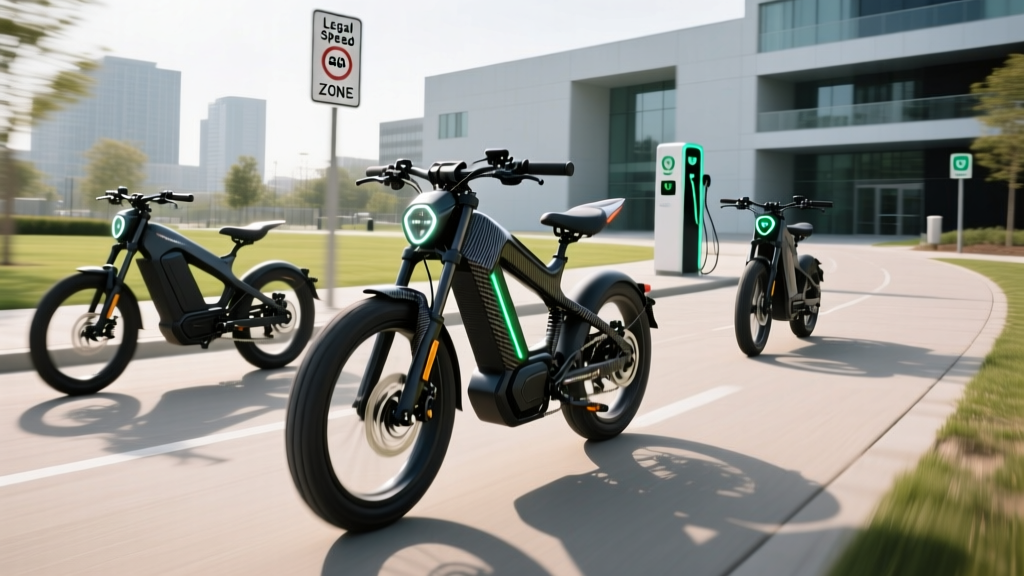
Yes — several production electric bikes and electric motorcycles now reach 60 mph, but they cross a critical legal threshold. In the U.S., any two-wheeled electric vehicle exceeding 28 mph with a motor over 750W is no longer classified as a bicycle under federal CPSC rules. It becomes a moped or motorcycle, requiring registration, insurance, a license, and in many states, a helmet. Models like the Super73 RX Mojave (top speed ~28 mph stock, unlocked higher), the Onyx RCR (60+ mph), and full electric motorcycles like the Zero SR/S (124 mph) occupy different regulatory tiers with very different ownership costs.
AutoEdgeView covers electrified vehicles — cars, trucks, SUVs, and the adjacent world of high-speed electric two-wheelers that buyers increasingly cross-shop against compact EVs. If you're researching electric bikes 60 mph capable, you're likely weighing whether a fast e-bike or light electric motorcycle can replace a second car or serve as a commuter. This guide gives you the exact numbers on speed, range, cost, and legality to make that call.
Speed-Capable Electric Bikes vs Electric Motorcycles: Where's the Line?
The term "electric bike" covers a wide spectrum. The legal and practical differences matter enormously when you're looking at 60 mph capability.
| Category | Motor Power | Top Speed | Legal Class (U.S.) | License/Registration |
|---|---|---|---|---|
| Class 1 E-Bike | ≤750W | 20 mph (pedal-assist) | Bicycle | None |
| Class 2 E-Bike | ≤750W | 20 mph (throttle) | Bicycle | None |
| Class 3 E-Bike | ≤750W | 28 mph (pedal-assist) | Bicycle (some state restrictions) | None (usually) |
| Speed Pedelec / Moped | 750W–4kW | 28–45 mph | Moped (state-dependent) | Varies by state |
| Electric Motorcycle | 4kW+ | 60–120+ mph | Motorcycle | Full motorcycle license, registration, insurance |
Any electric two-wheeler genuinely capable of 60 mph falls into the electric motorcycle category. Models marketed as "e-bikes" that unlock to 40-60 mph exist in a gray zone — they may look like bicycles but carry legal obligations closer to mopeds or motorcycles depending on your state. The CPSC defines a bicycle as having a motor under 750W that cannot propel the vehicle over 20 mph on motor power alone on level ground. Anything beyond that is a motor vehicle in the eyes of federal law, even if the manufacturer markets it otherwise.
Models That Reach 60 MPH: Specs and Pricing
Here's a look at representative electric two-wheelers that can sustain highway-adjacent speeds, with the data you need to compare them.
| Model | Category | Top Speed | Battery (kWh) | Range (mi) | Charge Time (0-100%) | MSRP |
|---|---|---|---|---|---|---|
| Onyx RCR | Electric Moped/Moto | 60 mph | 1.9 kWh (dual battery option) | ~75 (dual battery, city) | ~4 hrs (Level 1) | $5,495 |
| Cake Kalk OR | Electric Moto | 56 mph | 2.6 kWh | ~53 (mixed) | ~2.5 hrs | $14,970 |
| Zero FXE | Electric Motorcycle | 85 mph | 7.2 kWh | ~100 (city) / 64 (hwy) | ~9.2 hrs (Level 1) / 1.3 hrs (optional fast charger) | $11,795 |
| Zero SR/S | Electric Motorcycle | 124 mph | 15.6 kWh (with Power Tank) | ~161 (city) / 82 (hwy) | ~10 hrs (L1) / 1.5 hrs (Charge Tank) | $23,995 |
| Ryvid Anthem | Electric Moto | 60 mph | 4.2 kWh (removable) | ~60 (mixed) | ~3 hrs | $7,999 |
Real-world range caveat: Manufacturer range figures assume moderate city speeds. At sustained 55-60 mph, expect 35-50% range reduction due to aerodynamic drag scaling with the square of velocity. A Zero FXE rated for 100 miles city may deliver only 55-65 miles at sustained highway speed. Cold weather (below 40°F) further reduces usable capacity by 10-20% due to lithium-ion internal resistance increase.
Cost Breakdown: High-Speed E-Bike vs Compact EV vs Gas Car
Buyers cross-shopping a 60 mph electric two-wheeler against a used compact EV or an economy gas car need real numbers. Here's a 5-year ownership comparison assuming 8,000 miles/year of commuting.
| Cost Factor | Electric Moto (e.g., Zero FXE) | Compact EV (e.g., Chevy Equinox EV LT) | Gas Economy Car (e.g., Honda Civic) |
|---|---|---|---|
| Purchase Price | $11,795 | $33,600 (after ~$7,500 §30D credit) | $24,250 |
| Fuel/Energy (5 yrs, 40k mi) | $720 (home charging at $0.14/kWh) | $2,240 | $4,800 (30 MPG, $3.60/gal) |
| Insurance (5 yrs) | $3,500–$5,500 (motorcycle rates) | $6,000–$8,500 | $5,500–$7,000 |
| Maintenance (5 yrs) | $400 (tires, brake pads, belt) | $1,800 | $3,200 (oil, filters, brakes, fluids) |
| Registration/License (5 yrs) | $750 (motorcycle endorsement + reg) | $600 | $600 |
| 5-Year Total | $17,165–$19,165 | $44,240–$46,740 | $38,350–$39,850 |
The electric motorcycle wins on pure cost — but only if it can serve as your sole commuter. You sacrifice weather protection, cargo capacity, passenger space, and crash protection. For a single-rider urban commute in mild climates, the math works. For a family needing to haul groceries, kids, or drive in Minnesota winter, it doesn't replace a car.
Federal Tax Credits: What Applies to Electric Two-Wheelers?
This is a common misconception. The federal §30D Clean Vehicle Credit (up to $7,500) applies only to four-wheeled vehicles with a gross vehicle weight rating under 14,000 lbs. Electric bikes and electric motorcycles do not qualify for §30D.
However, the IRC §25D Alternative Motor Vehicle Credit previously covered some two- and three-wheeled electric vehicles at 10% of the purchase price up to $2,500. As of 2026, this credit has undergone legislative changes — check the current status on IRS.gov before counting on it. Some states offer additional rebates for electric motorcycles; California's CVRP has historically included two-wheeler incentives, but program availability varies.
Common Misconceptions About 60 MPH Electric Bikes
| Myth | Fact |
|---|---|
| "It's just an e-bike, I don't need a license" | If the motor exceeds 750W or propels the vehicle over 20 mph on motor alone, federal law classifies it as a motor vehicle. Most states require a motorcycle endorsement for 60 mph capable models. |
| "I can ride it in the bike lane" | Bike lanes are for Class 1-3 bicycles (≤28 mph, ≤750W). A 60 mph electric motorcycle belongs in the traffic lane and is subject to all motor vehicle laws. |
| "The range is 100 miles" | City-range estimates assume 25-35 mph. At 60 mph, expect 35-50% less range due to aerodynamic drag. A "100-mile" bike may deliver 55-65 miles at highway speed. |
| "Charging is free at public stations" | Most public Level 2 and DC fast-charging networks (Electrify America, EVgo) are designed for cars with CCS/NACS connectors. Electric motorcycles typically charge on standard 120V (Level 1) at home — 3-10 hours depending on battery size. |
| "No maintenance means no costs" | Electric motorcycles still need tire replacement (high-torque motors wear rear tires faster), brake fluid, belt/chain service, and battery monitoring. Budget $80-100/year minimum. |
Real-World Ownership: Charging, Weather, and Practical Limits
Charging at Home
Most electric motorcycles and high-speed e-bikes charge on standard 120V household outlets (Level 1). The Zero FXE's 7.2 kWh battery takes roughly 9 hours on a standard outlet — fine for overnight charging but limiting if you need a midday top-up. Unlike electric cars, most two-wheelers lack DC fast-charging capability or use proprietary connectors rather than NACS/CCS. You won't pull into a Tesla Supercharger or Electrify America station.
Practical tip: If your model has a removable battery (like the Ryvid Anthem or Cake Kalk), you can charge at your desk or apartment without needing a garage outlet — a significant advantage for urban riders without dedicated parking.
Cold Weather Performance
Lithium-ion batteries lose 10-20% usable capacity below 40°F and up to 30% below 20°F. Unlike electric cars with active thermal management (heat pumps, battery preconditioning), most electric motorcycles passively cool — meaning cold-soaked batteries deliver noticeably reduced range and slower acceleration. If you commute year-round in the Midwest or Northeast, plan for significantly reduced winter usability or seasonal storage.
Safety Considerations
At 60 mph, you're traveling at speeds where motorcycle crash dynamics apply. According to NHTSA data, motorcyclists are roughly 24 times more likely to die in a crash per vehicle mile traveled than car occupants. A 60 mph electric motorcycle offers the same risk profile as a gas motorcycle of equivalent speed — the electric drivetrain doesn't change crash physics. Budget for proper gear: full-face helmet (DOT/Snell rated), armored jacket, gloves, and boots — $800-$1,500 in safety equipment.
Decision Framework: Should You Buy a 60 MPH Electric Two-Wheeler?
Choose a 60 MPH Electric Bike/Moto If:
- Your commute is under 40 miles round-trip and mostly on surface streets or highways with speed limits ≤55 mph
- You live in a mild climate (rarely below 35°F) or accept seasonal limitations
- You already have a car for passengers, cargo, bad weather, and longer trips
- You have a motorcycle license or are willing to obtain one (MSF course + DMV test, ~$200-$400)
- You have secure parking — a garage, locked carport, or apartment storage where you can charge
- Your budget prioritizes low operating cost over passenger comfort and cargo space
Choose a Compact EV (Car) Instead If:
- You need year-round, all-weather transportation in a cold or rainy climate
- You carry passengers or cargo regularly (groceries, kids, luggage)
- Your commute exceeds 50 miles or includes sustained 70+ mph highway driving
- You want federal tax credits — the §30D credit (up to $7,500) applies only to four-wheeled qualifying vehicles
- You don't have a motorcycle license and don't want to get one
- You need access to public DC fast-charging networks for road trips or midday top-ups
Choose a Class 3 E-Bike (28 MPH) Instead If:
- Your commute is under 15 miles on bike-friendly roads with speed limits ≤35 mph
- You want zero licensing, registration, or insurance requirements
- You want bike-lane and bike-path access where local law permits Class 3 use
- Your budget is under $3,500 — quality Class 3 commuters start around $2,000-$3,000
Charging and Energy Costs: The Numbers
| Charging Scenario | Power (kW) | Time to Full (7 kWh battery) | Cost per Full Charge | Cost per Mile (at 60 mi range) |
|---|---|---|---|---|
| Standard 120V outlet (home) | 1.4 kW | ~5 hours | $0.98 (at $0.14/kWh) | $0.016/mi |
| 240V Level 2 (if supported) | 3.3 kW | ~2.2 hours | $0.98 | $0.016/mi |
| Gas equivalent (60 MPG scooter) | N/A | N/A | $2.16 (at $3.60/gal, 1 gal per 60 mi) | $0.036/mi |
Electric two-wheelers are remarkably cheap to "fuel" — roughly half the per-mile energy cost of even an efficient gas scooter. Over 8,000 miles/year, that's roughly $130 in electricity vs. $480 in gas. The savings are real but modest in absolute terms because you're moving a much lighter vehicle (150-400 lbs vs. 3,500-4,500 lbs for a car).
Frequently Asked Questions
Do I need a motorcycle license for a 60 mph electric bike?
In virtually all U.S. states, yes. Any electric two-wheeler capable of 60 mph exceeds the federal bicycle definition (750W, 20 mph motor-only limit) and is classified as a motorcycle or moped. You'll need at minimum a moped license, and typically a full motorcycle endorsement (M-class) on your driver's license. Check your state DMV for specific requirements — they vary, but enforcement is increasing as high-speed e-bikes proliferate.
Can I ride a 60 mph electric bike on bike paths or trails?
No. Multi-use paths, bike lanes, and trails are designated for human-powered and Class 1-3 bicycles (max 20-28 mph). A 60 mph electric motorcycle must operate in the traffic lane as a motor vehicle. Riding one on a bike path risks citations, impound, and serious safety hazards for pedestrians and cyclists.
How long do electric motorcycle batteries last?
Most quality electric motorcycle batteries (NMC chemistry) are rated for 800-1,200 full charge cycles before degrading to 80% capacity. At 60 miles per charge cycle, that's roughly 48,000-72,000 miles. Zero Motorcycles warranties their batteries for 5 years/unlimited miles with a minimum 80% capacity retention guarantee. Replacement batteries cost $3,000-$6,000 depending on the model — a significant long-term ownership cost to factor in.
Do electric motorcycles qualify for the $7,500 federal EV tax credit?
No. The §30D Clean Vehicle Credit applies only to four-wheeled vehicles under 14,000 lbs GVWR that meet battery sourcing and MSRP cap requirements. Two- and three-wheeled electric vehicles may qualify under a separate provision (IRC §25D or successor), but the credit is typically smaller (10% up to $2,500) and subject to different eligibility rules. Consult IRS.gov or a tax professional for current-year eligibility.
Is a 60 mph electric bike practical for daily commuting?
It depends on your specific commute. For a 15-30 mile round-trip on surface streets in a mild climate, with secure parking and home charging, yes — it's a low-cost, zero-emission commuter that's cheaper to operate than any car. For longer highway commutes, cold climates, or riders who need to carry anything beyond a backpack, a compact EV or PHEV is more practical. The honest answer: it's an excellent second vehicle for a specific use case, not a car replacement for most households.
What's the difference between kW and kWh on an electric motorcycle?
This distinction matters for every electric vehicle. kW (kilowatts) measures power — how fast the motor can deliver energy (acceleration, top speed) or how fast a charger can replenish the battery. kWh (kilowatt-hours) measures energy capacity — the size of the "fuel tank." A 7.2 kWh battery with a 35 kW motor is like a 2-gallon tank with a 47-horsepower engine. Bigger kWh = more range. Bigger kW = faster acceleration and (if the charger supports it) faster charging.
For more on four-wheeled EV options that might better serve as a primary vehicle, see the EPA's electric vehicle database at fueleconomy.gov for official range and efficiency data on every qualifying EV on the market.