The Quick Answer: What Is an Electric Automatic?
Every battery-electric vehicle (BEV) on the market today is an "electric automatic" by default. Unlike gas cars that require multi-speed transmissions, EVs use a single-speed reduction gear that delivers smooth, uninterrupted acceleration with no gear shifts. There is no clutch, no torque converter, and no shifting — just press the pedal and go. If you're searching for an electric automatic, you're simply looking for an EV, and the drivetrain simplicity is one of the biggest ownership advantages over internal combustion.
Why All EVs Are Automatic — The Drivetrain Explained
Gasoline engines produce usable power only within a narrow RPM band (typically 2,000–5,500 RPM), which is why they need 6-, 8-, or even 10-speed transmissions to keep the engine in its sweet spot as vehicle speed changes. Electric motors, by contrast, deliver peak torque from 0 RPM and can safely rev to 15,000+ RPM. That enormous usable range means a single fixed gear ratio — usually around 9:1 to 10:1 — covers everything from a standing start to 100+ mph.
The result: zero shift shock, zero torque interruption, and fewer moving parts. Where a conventional automatic transmission contains hundreds of components — planetary gearsets, clutch packs, valve bodies, torque converters — an EV reduction gear has a handful. This translates directly to lower maintenance costs and higher long-term reliability.
The Porsche Taycan and Audi e-tron GT use a two-speed rear axle for optimized highway efficiency and launch performance, but even these still feel like a seamless automatic to the driver — there's no manual mode or shift lever involved.
Electric Automatic vs Gas Automatic: Cost & Performance Compared
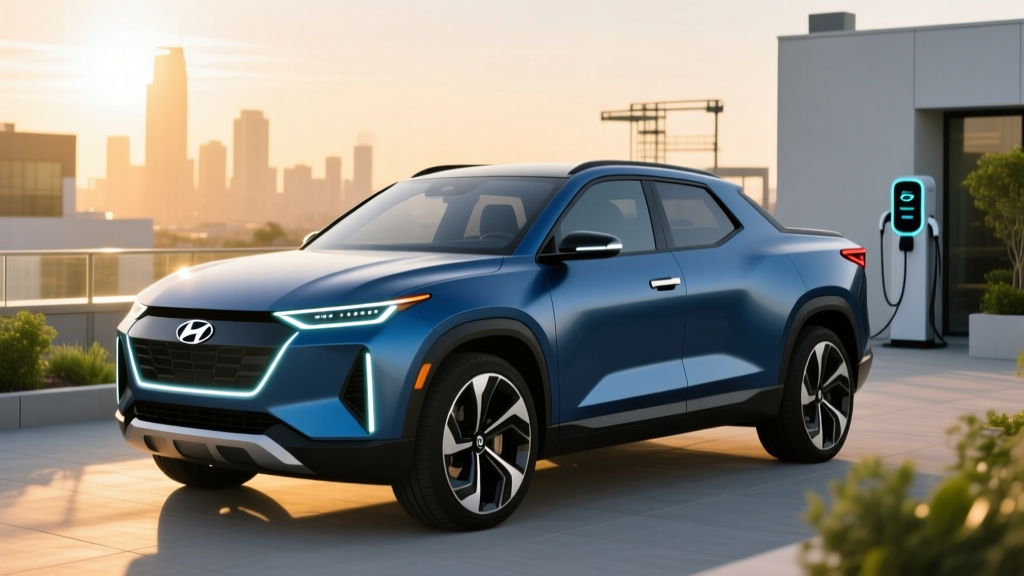
The comparison below uses 2026 model-year data for a mid-size crossover — the Hyundai Ioniq 5 (Long Range RWD) versus a comparably equipped gas crossover baseline (2026 Toyota RAV4 LE AWD).
| Metric | 2026 Ioniq 5 (BEV) | 2026 RAV4 LE AWD (Gas) |
|---|---|---|
| Drivetrain | Single-speed electric automatic | 8-speed automatic transmission |
| Horsepower / Torque | 168 hp / 258 lb-ft | 203 hp / 184 lb-ft |
| 0–60 mph | ~7.4 sec | ~8.8 sec |
| EPA Combined Efficiency | 132 MPGe (25 kWh/100mi) | 30 MPG combined |
| EPA Range / Tank Range | 303 miles (77.4 kWh usable, NMC) | 449 miles (14.5 gal) |
| Base MSRP | ~$42,600 | ~$30,600 |
| Federal Tax Credit (§30D) | Up to $7,500 (eligibility varies) | None |
| Effective Starting Price | ~$35,100 (if credit-eligible) | ~$30,600 |
| Transmission Fluid Changes | None (lifetime gear oil) | Every 60,000 mi (~$200–$350) |
The EV's single-speed electric automatic eliminates transmission maintenance entirely. Over a 150,000-mile ownership cycle, a gas automatic may require 2–3 fluid services plus potential solenoid or mechatronic repairs that average $1,200–$3,500 out of warranty. The EV's reduction gear is effectively a sealed, maintenance-free unit.
Real Costs of Owning an Electric Automatic in 2026
Understanding the true economics requires looking beyond the sticker price. Here's a 5-year / 75,000-mile cost projection based on current energy prices, IRS rules, and typical insurance data.
| Cost Category | EV (Ioniq 5) | Gas (RAV4 AWD) | Notes |
|---|---|---|---|
| Purchase (after credit) | $35,100 | $30,600 | EV assumes full §30D credit via point-of-sale transfer |
| Fuel / Energy (5 yr) | $3,200 | $7,500 | EV: $0.14/kWh home avg; Gas: $3.50/gal, 30 MPG |
| Maintenance (5 yr) | $1,100 | $3,800 | EV: cabin filter, wipers, tires, brake fluid check. Gas: oil, filters, brakes, trans fluid |
| Insurance (5 yr) | $9,500 | $7,800 | EV premiums average 15–25% higher (repair cost data) |
| Estimated Depreciation | $14,200 | $11,500 | EV resale improving but still trails gas in some segments |
| 5-Year Total Cost | $63,100 | $61,200 | Gap narrows further with state rebates or cheaper electricity |
At the federal level, the IRS §30D clean vehicle credit can offset up to $7,500, but eligibility depends on your modified adjusted gross income (AGI caps: $150K single / $300K joint), the vehicle's MSRP (under $55K for sedans, $80K for SUVs/trucks), and battery critical-mineral and component sourcing requirements that tighten each year. Always verify current-year rules with a tax professional before counting on the credit.
What First-Time EV Buyers Must Know Before Switching
Home Charging Is the Make-or-Break Factor
Over 80% of EV charging happens at home. If you can install a Level 2 charger (240V, 32–48 amps, 7.7–11.5 kW), you'll wake up every morning with a full battery — effectively eliminating range anxiety for daily driving. A typical Level 2 installation runs $800–$2,500 including equipment, electrician labor, and permits, though older homes may need a $1,500–$3,500 electrical panel upgrade to support a 50-amp circuit.
If you live in an apartment or rely solely on street parking, public DC fast charging becomes your primary refueling method. At current Electrify America and EVgo pricing ($0.35–$0.55/kWh), your "fuel" cost roughly doubles compared to home charging — bringing it closer to gas-car economics.
Cold Weather Reduces Range — Plan for It
Lithium-ion batteries lose efficiency in cold temperatures. At 20°F, expect 20–30% range reduction compared to the EPA sticker. A 303-mile Ioniq 5 might deliver 210–240 real-world winter miles on the highway. EVs with heat pumps (standard on the Ioniq 5, Hyundai/Kia E-GMP platform, Tesla Model Y) recover roughly 5–10% of that loss compared to resistive cabin heaters.
Charging Speed: Peak kW Is Not Sustained kW
When a manufacturer advertises "240 kW DC fast charging," that's a peak rate, not a sustained one. The charge curve tapers significantly above 80% state of charge (SoC) to protect the battery. A realistic 10–80% session on a 240 kW-capable EV takes 18–25 minutes at a compatible station, not the 12 minutes the peak rate might suggest. Always evaluate charging by 10–80% time, not peak kW alone.
Common Misconceptions About Electric Automatics
| Myth | Fact |
|---|---|
| "EVs need manual shifting for performance." | Electric motors deliver instant torque from 0 RPM — no shifting needed. Most EVs out-accelerate comparable gas cars off the line. |
| "The battery will need replacing in 5 years." | Modern NMC and LFP batteries are warrantied for 8 years / 100,000 miles (10 years in CARB states) with a 70% capacity retention threshold. Real-world data shows ~10–15% degradation at 150K miles for liquid-cooled packs. |
| "EVs are worse in winter than gas cars." | Range drops, yes — but EVs start instantly in any cold, have no cold-start emissions or oil thickening, and can precondition the cabin while plugged in without idling or carbon monoxide risk. |
| "There's no such thing as an electric automatic." | Every EV is automatic. The single-speed reduction gear makes the distinction meaningless — there's no manual-transmission EV available to consumers. |
| "EVs cost more to insure because they're faster." | Higher premiums are driven by repair complexity and parts costs (especially battery packs and ADAS sensors), not speed. Shop quotes from EV-friendly insurers before purchasing. |
Decision Framework: Is an Electric Automatic Right for You?
Choose an EV (electric automatic) if:
- You can charge at home — a garage, driveway, or dedicated parking spot with 240V access transforms ownership. Daily driving becomes nearly cost-free.
- Your daily commute is under 80 miles round-trip — even a modest-range EV covers this easily, and you'll rarely need public charging.
- You want minimal drivetrain maintenance — no oil changes, no transmission fluid, no spark plugs, no timing belts. Regenerative braking also extends brake pad life to 80,000–120,000+ miles.
- You qualify for federal or state incentives — the §30D credit (up to $7,500) plus state rebates can erase the EV price premium within the first year.
- You value instant torque and smooth acceleration — the single-speed electric automatic delivers a driving experience no gas automatic can match at this price point.
Consider a hybrid or gas vehicle instead if:
- You have no reliable home or workplace charging — relying entirely on public DC fast chargers raises your per-mile cost and adds time to your routine.
- You regularly tow heavy loads over long distances — towing cuts EV range by 30–50%, and DC fast charging with a trailer is logistically difficult at most stations.
- You live in extreme cold and drive long rural routes — a PHEV gives you electric daily driving with a gas backup for -20°F road trips where charging infrastructure is sparse.
- Your budget is under $28,000 and you buy new — the most affordable new EVs start around $29,000–$30,000 MSRP (before credits). The used EV market offers more options in this range.
Frequently Asked Questions
Can you get a manual transmission in an electric car?
No production EV currently sold in the US offers a manual transmission. The electric motor's wide RPM range and instant torque make a multi-gear manual unnecessary. The discontinued Porsche Taycan prototype "Mission R" had a simulated two-speed for testing, but no consumer EV requires or offers manual shifting.
Do electric automatics have a "park" setting?
Yes. EVs use an electronic parking pawl or electronic parking brake to hold the vehicle stationary. The PRND selector works identically to a gas automatic — Park, Reverse, Neutral, Drive — though some EVs (Tesla, Rivian) use a column stalk or touchscreen-based gear selection.
How long do EV reduction gears last?
The single-speed reduction gear in an EV is one of the most durable components in the vehicle. With sealed synthetic gear oil and far fewer moving parts than a gas transmission, these units are designed to last the life of the vehicle (200,000+ miles) with no scheduled service. There is no equivalent to a gas transmission rebuild.
Is regenerative braking part of the electric automatic system?
Regenerative braking is a function of the electric motor, not the gear. When you lift off the accelerator, the motor reverses its function and acts as a generator, converting kinetic energy back into battery charge. This is what enables "one-pedal driving" in many EVs and is a key reason brake pads last significantly longer on electric vehicles.
What's the cheapest electric automatic car available in 2026?
The most affordable new EVs in the US market include the Nissan Leaf S (~$29,000 MSRP, 149-mile EPA range, CHAdeMO DC charging) and the Chevrolet Equinox EV (~$33,600, 315+ mile range, NACS). After the §30D credit (if eligible), effective prices can drop below $26,000. Always check fueleconomy.gov for current EPA ratings and the IRS for credit eligibility before purchasing.
Do electric automatics need special tires?
EVs are heavier (battery mass) and produce instant torque, which increases tire wear by roughly 15–25% compared to equivalent gas vehicles. Many manufacturers fit EV-specific tires with reinforced sidewalls, low rolling resistance, and noise-reducing foam liners. Budget $800–$1,400 for a set of four EV-rated tires every 30,000–45,000 miles.