What Are Electric Amazon Trucks?
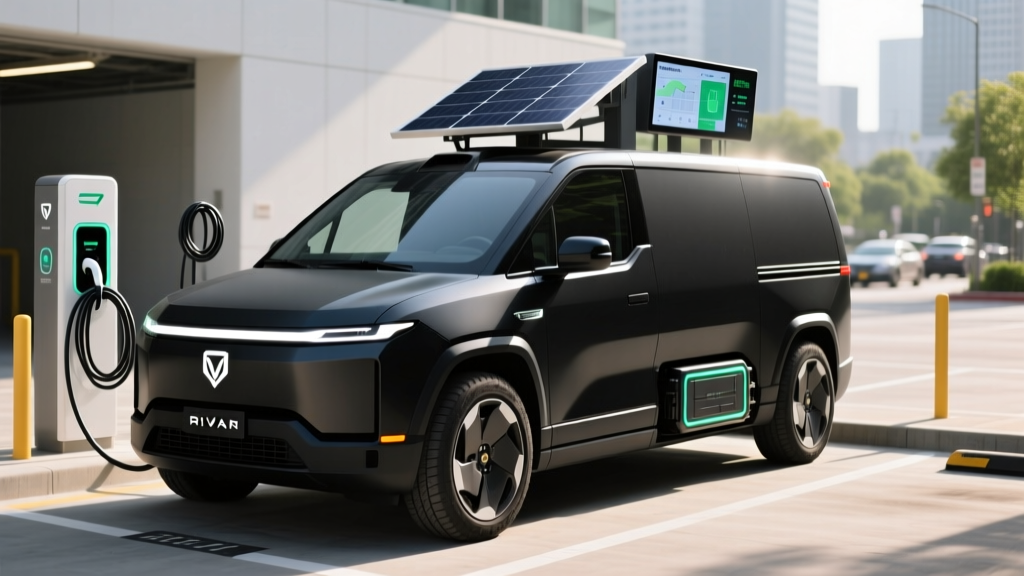
Amazon's electric delivery trucks are the Rivian EDV (Electric Delivery Van), a purpose-built commercial BEV produced exclusively for Amazon under an order originally totaling 100,000 units. As of early 2026, Amazon has deployed over 15,000 EDVs across U.S. and European metro delivery routes. The EDV comes in three body lengths — 500, 700, and 900 cubic feet of cargo volume — powered by battery packs ranging from roughly 120 kWh to 200+ kWh, delivering an estimated 120–150 miles of real-world range depending on payload, climate, and stop frequency. These are not consumer vehicles; they are fleet-only assets unavailable for retail purchase.
The Rivian EDV Lineup: Specs That Matter
Rivian designed the EDV from the ground up for last-mile delivery — frequent stops, curbside parking, package sorting, and return-to-depot overnight charging. Unlike a consumer truck such as the R1T, the EDV prioritizes cargo ergonomics, low step-in height, and stop-and-go efficiency over highway speed or towing.
| Spec | EDV 500 | EDV 700 | EDV 900 |
|---|---|---|---|
| Cargo Volume | ~500 cu ft | ~700 cu ft | ~900 cu ft |
| Battery Capacity (est.) | ~120 kWh (NMC) | ~150 kWh (NMC) | ~200 kWh (NMC) |
| EPA-Est. Range | ~150 mi | ~150 mi | ~120 mi |
| Real-World Range (loaded, mixed) | ~110–130 mi | ~110–130 mi | ~90–110 mi |
| Peak DC Charge Rate | ~125 kW | ~150 kW | ~150 kW |
| 10–80% DC Charge Time (est.) | ~45–55 min | ~50–60 min | ~60–75 min |
| Level 2 Rate (depot overnight) | ~19.2 kW | ~19.2 kW | ~19.2 kW |
| Motor Output | ~250 kW (335 hp) | ~250 kW (335 hp) | ~250 kW (335 hp) |
| Drive | RWD (single motor) | RWD (single motor) | RWD (single motor) |
These figures are compiled from fleet operator reports, Rivian's commercial disclosures, and third-party fleet tracking. Because the EDV is not EPA-certified for consumer sale, official fueleconomy.gov listings do not exist; range estimates derive from Amazon's operational disclosures and Rivian engineering presentations.
Electric vs. Diesel Delivery Vans: The Real Cost Math
Amazon's primary comparison isn't against a consumer EV — it's against the Mercedes-Benz Sprinter, Ford Transit, and Ram ProMaster diesel vans that previously dominated last-mile routes. Here's how fleet economics stack up per vehicle, per year, based on typical metro delivery patterns (~80 miles/day, 250 operating days/year).
| Cost Category | Rivian EDV (Electric) | Diesel Sprinter/Transit |
|---|---|---|
| Fuel / Electricity (20,000 mi/yr) | ~$2,400–$3,200 (depot rate ~$0.12–0.16/kWh) | ~$5,000–$6,500 (~$3.80/gal diesel, 14 mpg) |
| Maintenance (oil, filters, brakes) | ~$400–$700 (regen braking saves pads; no oil/fluids) | ~$2,000–$3,200 (oil changes, DPF, DEF, brake wear) |
| Estimated Annual Savings | ~$4,000–$6,000/vehicle/year | |
| Upfront Vehicle Cost (est.) | ~$90,000–$120,000 (fleet contract pricing) | ~$45,000–$60,000 |
| Depot Charging Infrastructure (amortized) | ~$1,500–$3,000/yr per stall | N/A |
| Payback Period (est.) | ~5–8 years depending on route density and electricity rates | |
The fuel savings alone are substantial. At depot electricity rates of $0.12–$0.16 per kWh and an efficiency of roughly 2.0–2.5 kWh/mile (typical for a loaded step van), the EDV costs $0.24–$0.40 per mile in energy. A diesel van at 14 mpg and $3.80/gallon costs roughly $0.27 per mile — but that gap widens sharply when you factor in diesel price volatility, idling burn during stops, and the maintenance items that EVs simply don't have (no oil changes, no DEF fluid, no diesel particulate filter replacements, dramatically reduced brake wear thanks to regenerative braking).
Real-World Fleet Ownership: What Operators Face
Amazon doesn't charge these trucks at public stations. The entire operational model depends on depot-based Level 2 charging — vehicles return to a delivery station in the evening, plug in, and charge overnight at 19.2 kW, adding roughly 50–70 miles of range per hour of charging. A full charge from 10% to 100% takes 7–10 hours depending on pack size, which aligns with overnight depot scheduling.
Climate and Range Reality
The EDV's real-world range is heavily influenced by climate and route profile:
- Mild climate, flat metro route: Expect 120–140 miles on the EDV 700 — sufficient for most 80–100 mile daily routes with margin.
- Cold climate (below 32°F): Battery chemistry (NMC) loses 15–25% usable capacity in freezing temps. Range drops to ~90–110 miles. Amazon addresses this with route optimization, depot preconditioning, and in some regions, supplemental diesel vans for longer routes.
- Hot climate (above 95°F): Thermal management draws additional power for battery and cabin cooling. Expect 5–10% range reduction. The EDV's liquid-cooled pack handles this better than passively cooled commercial EVs.
- High stop density (150+ stops/day): Regenerative braking recovers energy in stop-and-go traffic, partially offsetting the efficiency hit of frequent acceleration from zero.
Charging Infrastructure Costs
Deploying depot charging at Amazon's scale is a massive capital project. Industry estimates for commercial Level 2 infrastructure suggest:
- Level 2 charger hardware (19.2 kW commercial unit): $3,000–$6,000 per port
- Electrical installation (conduit, wiring, transformer): $5,000–$15,000 per port depending on site conditions
- Utility demand charges and panel upgrades: $50,000–$500,000+ per depot depending on the number of chargers and existing electrical capacity
- Software/fleet management: $500–$1,500/year per charger for load management and scheduling
Amazon has invested heavily in depot solar and battery storage at some locations to reduce peak demand charges — a strategy that wouldn't apply to a small fleet operator with 5–10 vans.
Consumer Alternatives: What You Can Actually Buy
Since the Rivian EDV is fleet-exclusive, consumers and small business owners interested in electric trucks or commercial EVs have different options in 2026:
| Vehicle | Type | EPA Range | Battery | Starting MSRP | Best For |
|---|---|---|---|---|---|
| Ford E-Transit | Cargo Van | 126 mi | 68 kWh (NMC) | ~$52,000 | Small fleet last-mile, urban delivery |
| BrightDrop Zevo 600 | Step Van | ~160 mi (est.) | ~140 kWh (NMC) | ~$90,000+ (fleet) | Mid-size fleet, FedEx/Amazon DSP routes |
| Rivian R1T (Dual Motor) | Pickup | 352 mi (Max Pack) | 149 kWh (NMC) | ~$79,900 | Consumer truck, light commercial |
| Ford F-150 Lightning | Pickup | 230–320 mi | 98–131 kWh (NMC) | ~$55,000 | Consumer/work truck, V2L capable |
| Chevrolet Silverado EV | Pickup | 390 mi (Max) | 200 kWh (NMC) | ~$78,000 | Long-range work/consumer truck |
The Ford E-Transit is the closest consumer/small-business equivalent to the EDV concept — a purpose-built electric cargo van with ~126 miles of EPA range, adequate for urban routes under 80 miles. For small fleet operators, the E-Transit qualifies for the §30D commercial clean vehicle credit (up to $7,500 for vehicles under 14,000 lbs GVWR), which can meaningfully offset the upfront premium over a gas Transit.
Common Misconceptions About Electric Amazon Trucks
| Myth | Fact |
|---|---|
| "You can buy an Amazon electric truck." | The Rivian EDV is exclusive to Amazon under a fleet contract. Consumers cannot purchase one. Rivian's consumer vehicles (R1T, R1S) are separate products. |
| "Electric trucks can't handle cold weather." | Range drops 15–25% in freezing temps, but depot-based fleets mitigate this with route planning and preconditioning. Amazon operates EDVs in Minneapolis, Chicago, and Boston winters. |
| "Electric delivery vans are slower and less capable." | The EDV's single-motor RWD produces ~335 hp with instant torque — it accelerates faster from stops than a loaded diesel Sprinter and handles 80+ mph highway speeds, though it's governed for efficiency. |
| "Amazon's EV fleet is a publicity stunt." | With 15,000+ EDVs deployed and millions of deliveries completed, the fleet is a core operational asset. Amazon reports measurable per-mile cost reductions versus diesel on established routes. |
| "The batteries won't last." | NMC packs in commercial stop-and-go service are designed for 300,000+ mile lifespans. Rivian provides fleet battery warranties, and degraded packs can be refurbished for secondary stationary storage use. |
Decision Framework: Is an Electric Commercial Van Right for Your Fleet?
Should Your Business Go Electric?
Choose an electric van (Ford E-Transit, BrightDrop Zevo) if:
- Your daily routes are under 100 miles and predictable
- You have access to depot or home Level 2 charging (or can install it)
- Your operation is in a metro area with moderate climate, or you can plan for cold-weather range reduction
- You want to reduce per-mile fuel and maintenance costs over a 5–8 year ownership period
- Your state or utility offers commercial EV incentives or reduced electricity rates for off-peak charging
Stick with a gas/diesel van (Transit, Sprinter, ProMaster) if:
- Your daily routes regularly exceed 150 miles or are highly variable
- You lack depot charging access and public DC fast-charging infrastructure is sparse in your area
- You operate in extreme cold (below 0°F regularly) without the ability to adjust routes or schedules
- Your fleet turnover is under 3 years — the EV payback period typically requires 5+ years to recoup the higher upfront cost
- You need to tow heavy trailers — most electric cargo vans have limited or no tow ratings compared to diesel equivalents
Frequently Asked Questions
Can I buy a Rivian EDV for personal use?
No. The Rivian EDV is manufactured exclusively for Amazon under a fleet agreement. Rivian has indicated that a commercial van for broader sale may be in future planning, but as of 2026, the EDV is not available to consumers, independent contractors, or non-Amazon fleets.
How much does it cost Amazon to charge an EDV per day?
At depot electricity rates of $0.12–$0.16/kWh and a daily consumption of roughly 160–200 kWh (for an 80-mile route), daily energy cost is approximately $19–$32 per vehicle. By comparison, a diesel van covering the same distance at 14 mpg and $3.80/gallon costs about $22/day in fuel — but the diesel also incurs idling burn, higher maintenance, and emissions compliance costs that widen the gap.
What battery chemistry does the Rivian EDV use?
The EDV uses NMC (nickel manganese cobalt) lithium-ion cells, consistent with Rivian's consumer vehicles. NMC offers higher energy density than LFP, which is critical for a large cargo van where battery weight directly reduces payload capacity. The trade-off is that NMC cells degrade slightly faster than LFP under extreme cycling, but commercial fleet management systems optimize charge/discharge patterns to maximize longevity.
Does Amazon use the Rivian R1T pickup for deliveries?
No. The R1T is Rivian's consumer pickup truck and is not part of Amazon's delivery fleet. Amazon's electrified logistics fleet consists of the EDV step vans, and in some markets, smaller electric cargo bikes and on-foot delivery for ultra-dense urban zones.
How does the EDV compare to the Ford E-Transit?
The EDV is larger (up to 900 cu ft vs. the E-Transit's ~487 cu ft), has a bigger battery (120–200 kWh vs. 68 kWh), and offers more range (~120–150 mi vs. 126 mi EPA). However, the E-Transit is available for purchase by any business, starts around $52,000, and benefits from Ford's existing commercial service network. The EDV is a bespoke vehicle optimized for Amazon's specific delivery workflow, including integrated shelf systems, a driver-side "curb door" for safe street-side exits, and Amazon's proprietary routing software.
What happens to EDV batteries at end of life?
Rivian and Amazon have indicated plans for battery second-life applications — degraded EV packs that no longer meet vehicle range requirements can be repurposed for stationary energy storage at Amazon depots, supporting solar integration and peak-shaving. Full recycling through partners like Redwood Materials recovers 90%+ of critical minerals (nickel, cobalt, lithium) for new cell production.