The Short Answer
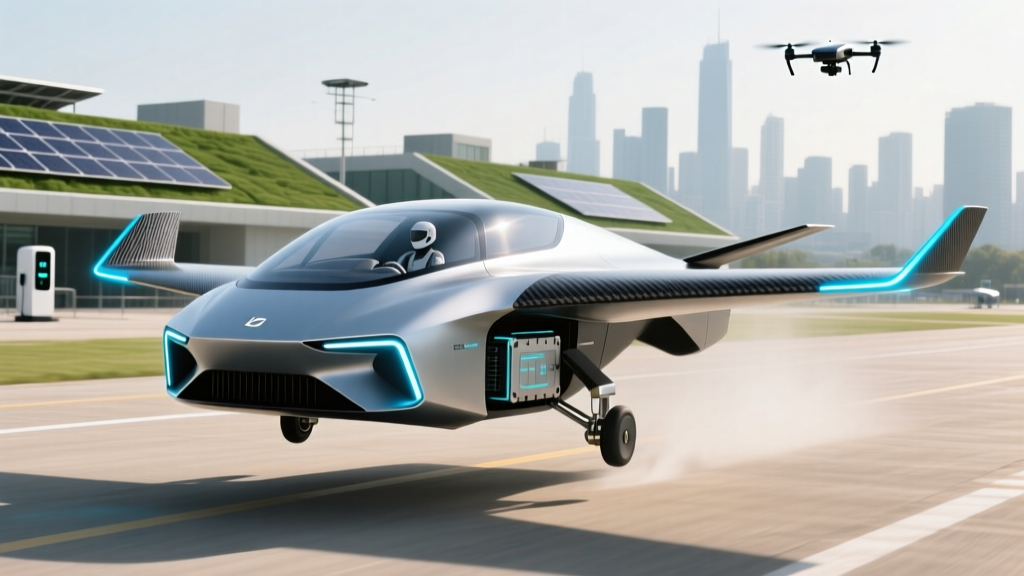
Electric aircraft companies are developing short-range electric vertical takeoff and landing (eVTOL) aircraft and regional electric planes — not consumer vehicles you can buy today. As of early 2026, no electric aircraft is available for personal purchase. The closest to commercial service are air-taxi operators like Joby Aviation and Archer Aviation, targeting 2026-2027 limited urban routes at roughly $3-5 per passenger mile. For personal transportation in 2026, a battery-electric vehicle (BEV) or plug-in hybrid (PHEV) remains the only practical, purchasable electric transport option — with models starting around $30,000 before incentives and offering 250-400+ miles of EPA-rated range.
Why Electric Aircraft Companies Matter to EV Shoppers
If you've been researching electric vehicles, you've likely seen headlines about electric aircraft companies raising billions, partnering with airlines, or testing flying taxis. The sector has attracted over $12 billion in investment since 2020, with players like Joby Aviation, Archer Aviation, Heart Aerospace, Eviation, and Lilium (now restructured) leading development. But what does this mean for someone deciding between a Tesla Model Y, a Hyundai Ioniq 5, or a Toyota RAV4 PHEV?
The honest answer: electric aviation and electric cars share battery technology DNA — lithium-ion cells, thermal management systems, and charging infrastructure concepts — but they serve entirely different markets on entirely different timelines. Understanding where each technology actually stands in 2026 helps you make a grounded decision about your next vehicle purchase without getting swept up in hype.
The battery chemistries diverge sharply. EVs increasingly use LFP (lithium iron phosphate) for cost and longevity, while electric aircraft demand maximum energy density, pushing developers toward advanced NMC (nickel manganese cobalt) or next-generation solid-state cells. An EV battery pack might weigh 400-600 kg and store 60-100 kWh. An eVTOL battery must deliver extreme power-to-weight ratios — Joby's S4 aircraft uses roughly 250 kWh of cells but weighs under 2,400 kg total, including passengers.
The Major Electric Aircraft Companies and What They're Building
Here's where the leading electric aircraft companies stand as of early 2026, with concrete specifications rather than marketing promises:
| Company | Aircraft | Type | Range | Speed | Passengers | Status (2026) |
|---|---|---|---|---|---|---|
| Joby Aviation | S4 | eVTOL | ~100 mi | 200 mph | 4 + pilot | FAA type certification in progress; Delta Air Lines partnership |
| Archer Aviation | Midnight | eVTOL | ~100 mi | 150 mph | 4 + pilot | FAA certification underway; United Airlines order |
| Heart Aerospace | ES-30 | Regional hybrid-electric | ~125 mi (electric) | ~350 mph | 30 | In development; reserve hybrid generator extends range |
| Eviation | Alice | Regional electric | ~250 mi | ~260 mph | 9 | Prototype flight testing; certification pending |
| Beta Technologies | Alia | eVTOL / cargo | ~250 mi | 170 mph | 6 or cargo | Cargo operations underway; passenger cert pending |
Notice the pattern: none of these are consumer products. They're air-taxi or regional airline platforms designed for commercial operators, not individual owners. The closest analogy isn't buying a car — it's hailing an Uber, except in the sky.
Electric Aircraft vs. Electric Vehicles: A Reality Check
Let's put the two technologies side by side with numbers that matter to your wallet and daily life:
| Factor | Battery Electric Vehicle (2026) | Electric Aircraft (eVTOL Air Taxi) |
|---|---|---|
| Available to buy now? | Yes — 80+ models on sale in the US | No — commercial air-taxi service only, 2026-2028 |
| Typical cost to consumer | $30,000–$80,000 MSRP (before §30D credit) | $3–$5 per passenger mile (estimated fare) |
| Range | 250–400+ miles (EPA rated) | 50–100 miles per flight |
| Energy storage | 60–120 kWh battery (LFP or NMC) | ~150–250 kWh (high-density NMC) |
| Charging/refueling time | 10–80% in 15–30 min (DC fast charge) | 30–45 min ground turnaround (estimated) |
| Daily usability | Commute, road trips, errands — all scenarios | Airport transfers, point-to-point urban hops |
| Infrastructure needed | Home Level 2 + public DC network | Vertiports, dedicated charging, air traffic control |
| Federal incentive | Up to $7,500 §30D tax credit (with eligibility rules) | None for passengers |
The core takeaway: electric aircraft won't replace your car. They may eventually replace some short-haul flights or premium rideshare trips — think Newark Airport to Manhattan, or San Jose to San Francisco — at a price point between a Uber Black and a helicopter charter.
What Electric Aircraft Battery Tech Means for Your EV
There is one area where electric aircraft companies indirectly benefit EV buyers: battery R&D spillover. The extreme energy-density requirements of aviation push cell manufacturers to develop higher-performance lithium-ion chemistries that eventually trickle down to automotive applications.
Consider these technology transfers already underway:
- Solid-state batteries: Companies like Toyota and QuantumScape are pursuing solid-state cells partly because aviation demands the safety and energy density they promise. Toyota has announced solid-state EV batteries targeting 2027-2028 with 450+ mile range and 10-minute charge capability — technology accelerated by aviation-sector investment.
- Silicon-anode cells: Startups like Sila Nanotechnologies (supplying Mercedes-Benz) and Group14 (backed by Porsche) use silicon-dominant anodes to boost energy density 20-40% over conventional graphite — a path aviation helped fund.
- Thermal management: eVTOL batteries face extreme discharge rates (5-10C during takeoff). The cooling systems developed for these conditions inform faster-charging EV batteries that resist degradation.
According to U.S. Department of Energy data, average lithium-ion battery pack costs fell below $130/kWh in 2024 and continue declining. Aviation-sector demand for premium cells helps fund the manufacturing scale that drives these price reductions — meaning your next EV battery may cost less and perform better partly because of what electric aircraft companies are building.
The Real Decision: Which EV Should You Actually Buy in 2026?
Since electric aircraft aren't a purchasing option, let's focus on the decision you can actually make. Here's a practical framework based on your situation:
Choose a Battery Electric Vehicle (BEV) if:
- You have access to home charging (Level 2, 240V) or reliable workplace charging
- Your daily driving is under 80 miles round-trip (covers 90%+ of US commutes)
- You want the lowest per-mile fuel cost: ~$0.04–$0.06/mile on home electricity vs. ~$0.12–$0.16/mile for gasoline
- You qualify for the IRS §30D federal tax credit (income caps: $150K single / $300K joint; MSRP caps: $55K sedans / $80K SUVs and trucks; battery sourcing rules apply)
- You want minimal maintenance: no oil changes, fewer brake replacements (regen braking), no transmission fluid
Choose a Plug-in Hybrid (PHEV) if:
- You lack reliable home charging but want some electric driving
- You frequently take road trips over 300 miles and don't want to plan around DC fast chargers
- You live in extreme cold climates where EV range drops 20-30% in winter
- You want electric-only range for daily commutes (25-50 miles on current PHEVs) with gas-engine backup
Wait and revisit if:
- Your apartment or HOA has no charging access and public chargers are sparse in your area
- You're considering an electric aircraft as a personal purchase — this is not possible in 2026 or the foreseeable future
EV Ownership Costs vs. Gas: The 5-Year Breakdown
For buyers weighing an EV against a conventional gas car, here's what the math actually looks like over five years and 75,000 miles, using a mid-range EV (like a 2026 Hyundai Ioniq 5 or Tesla Model 3) versus a comparable gas sedan:
| Cost Category | Battery EV (mid-range) | Gas Vehicle (comparable) |
|---|---|---|
| Purchase price (MSRP) | $42,000 | $33,000 |
| Federal tax credit (§30D) | –$7,500 (if eligible) | $0 |
| Net purchase | $34,500 | $33,000 |
| Fuel/energy (75K mi) | $3,750 (home charging @ $0.13/kWh) | $9,375 (gas @ $3.50/gal, 28 MPG avg) |
| Maintenance (5 yr) | $1,800 | $3,500 |
| Insurance (5 yr avg) | $9,500 | $7,500 |
| 5-year total cost | $49,550 | $53,375 |
The EV comes out roughly $3,800 ahead over five years even with higher insurance premiums (a real cost that many EV calculators gloss over). The savings widen if you install solar panels, use time-of-use electricity rates, or drive more than 15,000 miles per year. They narrow if you rely exclusively on public DC fast charging, which can cost $0.35-$0.50/kWh — approaching gas-car fuel costs.
Data from fueleconomy.gov confirms that most current EVs achieve 100-130 MPGe combined, translating to 3-4 miles per kWh. At the US average residential electricity rate of ~$0.16/kWh (EIA, 2025), that's roughly $0.04-$0.05 per mile — less than half the per-mile fuel cost of a 30 MPG gas car.
Common Misconceptions About Electric Aircraft and EVs
| Myth | Fact |
|---|---|
| "I'll be able to buy a personal electric airplane soon" | No consumer electric aircraft is on the market. All current eVTOL programs target commercial air-taxi or cargo operations. FAA certification for private ownership models is years away, and costs will likely exceed $1 million per aircraft initially. |
| "Electric aircraft will make EVs obsolete" | They serve different markets. An eVTOL carrying 4 passengers 50 miles cannot replace a family car that hauls groceries, drives 400-mile road trips, and parks in your garage. Physics limits aircraft payload and range far more severely than ground vehicles. |
| "EV batteries don't last" | Current LFP batteries routinely exceed 200,000 miles with less than 10% degradation. NMC packs typically retain 85-90% capacity at 100,000 miles. Federal warranty mandates require 8 years/100,000 miles minimum on EV batteries. Real-world data from Tesla, Hyundai, and others shows most packs outlast the vehicle. |
| "Charging takes too long" | Modern EVs on 250-350 kW DC fast chargers add 150-250 miles in 15-20 minutes (10-80%). At home on Level 2 (7-11 kW), you add 25-45 miles per hour of charging — meaning overnight replenishment covers nearly all daily driving. |
| "EVs are worse for the environment because of battery mining" | Lifecycle analyses from Argonne National Laboratory and the ICCT consistently show EVs produce 50-70% fewer lifetime emissions than gas cars, even accounting for battery manufacturing. The grid is getting cleaner every year, making EVs cleaner over time — the opposite of gas cars. |
What First-Time EV Buyers Should Actually Focus On
Rather than watching electric aircraft company stock prices, here's where to direct your research energy as a first-time EV buyer in 2026:
- Confirm your charging situation first. Can you install a Level 2 (240V) home charger? A typical installation runs $800–$2,500 including a 40-amp or 48-amp wallbox and electrician labor, depending on your panel capacity and conduit run distance. If your electrical panel is maxed out, a panel upgrade adds $1,500–$3,000.
- Check §30D tax credit eligibility carefully. The rules have tightened significantly. Battery components and critical minerals must meet US-sourcing thresholds that increase annually. Some popular models lose eligibility mid-year as sourcing requirements tighten. Verify on the fueleconomy.gov tax credit page before committing.
- Test real-world range, not just EPA stickers. If the EPA says 310 miles, plan for ~250 miles on a highway road trip at 70+ mph, and ~220 miles in freezing weather. Cold reduces battery efficiency, and highway speeds increase aerodynamic drag — both cut range meaningfully.
- Understand the charge curve. Peak DC fast-charge rates (e.g., "250 kW") are sustained only between roughly 10-50% state of charge. Above 80%, charging slows dramatically to protect battery health. A "10-80% in 18 minutes" spec is far more useful than a peak kW number.
- Budget for insurance. EV insurance premiums run 15-25% higher than equivalent gas cars due to higher repair costs and specialized parts. Get quotes before purchasing — the difference can erase some fuel savings.
Frequently Asked Questions
Can I invest in electric aircraft companies instead of buying an EV?
These are separate financial decisions. Publicly traded electric aircraft companies like Joby (NYSE: JOBY), Archer (NYSE: ACHR), and Heart Aerospace (private) carry substantial risk — none are profitable, and FAA certification timelines remain uncertain. An EV purchase is a transportation decision with immediate utility; investing in eVTOL startups is a speculative bet on a nascent industry. Consult a financial advisor before making investment decisions.
Will electric aircraft charging infrastructure help EV owners?
Possibly, but indirectly. Beta Technologies has built a network of megawatt-scale charging stations across the northeastern US designed for its Alia aircraft — and these stations include CCS connectors compatible with EVs. However, the network is small (roughly 20 stations as of 2026) and located near airports, not along typical highway corridors. Don't factor aviation charging into your EV purchase decision.
How does eVTOL energy efficiency compare to driving an EV?
An eVTOL air taxi consumes roughly 2.5–3.5 kWh per passenger-mile during cruise, compared to about 0.25–0.35 kWh per mile for a typical EV carrying one driver. That makes an EV roughly 8-10x more energy-efficient per passenger-mile than an air taxi. The aircraft's advantage is speed and direct routing — not efficiency. For daily commuting, an EV wins on cost and energy by a massive margin.
What's the best EV for someone who also travels by air frequently?
If you fly often and want an EV, prioritize models with strong DC fast-charge capability (250+ kW peak, 10-80% under 20 minutes) for road trips to airports, and consider vehicles with advanced driver-assist features for highway cruising. The Hyundai Ioniq 5 (peak 240 kW, ~18 min 10-80%), Tesla Model 3 Highland (peak 250 kW, ~15 min), and Porsche Macan Electric (peak 270 kW, ~17 min) are strong choices. Your air travel habits don't change which EV makes sense — your daily driving and home-charging access do.
When will electric aircraft actually affect my transportation choices?
Realistically, not before 2028-2030 for most US metro areas. Initial eVTOL air-taxi services will launch in select cities (Los Angeles, New York, Dallas, and Miami are early candidates) with limited routes between airports and downtown cores. Pricing will initially target business travelers at $50-$150 per trip. Widespread availability and pricing competitive with premium rideshare is likely a 2030s scenario. For now, your best electric transportation decision is choosing the right EV or PHEV for your daily needs.