Quick Answer: How Electric Air Conditioning Works in EVs
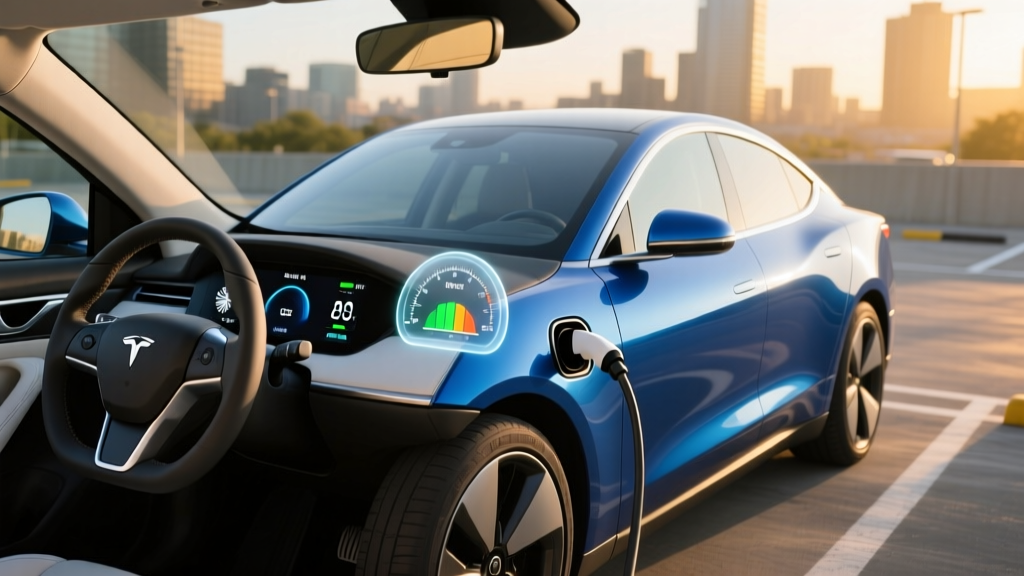
Unlike gas cars that use a belt-driven compressor tied to the engine, EVs use an electric compressor powered directly by the high-voltage traction battery. This means your AC runs even when the car is stationary — but it also draws energy that reduces driving range. Typical EV climate systems pull 1–4 kW of continuous power depending on cabin size, outside temperature, and fan speed. In extreme heat, that can translate to a 5–15% range reduction on moderate days and up to 20–30% loss when temperatures exceed 100°F. The good news? Modern heat pump systems in 2026 models like the Hyundai Ioniq 5 and Tesla Model Y are significantly more efficient than older resistive-PTC setups, cutting climate energy draw by up to 40%.
Electric Air Conditioning vs. Gas Car AC: What's Actually Different?
If you're coming from a gas vehicle, you may not have given AC much thought — it just runs off the engine. In an EV, every watt matters because it comes straight from the same battery that moves the car.
| Factor | Gas Car AC | EV Electric AC |
|---|---|---|
| Power Source | Engine-driven belt (parasitic loss ~5–8 HP) | Electric compressor from HV battery (1–4 kW) |
| Range/Fuel Impact | ~0.5–2 MPG reduction (EPA tests show ~4–10% fuel economy loss) | 5–30% range reduction depending on conditions |
| Works When Parked? | No (engine must run) | Yes (battery-powered, no idle emissions) |
| Preconditioning | Not practical (requires remote start, burns fuel) | Standard feature — cools cabin while plugged in, preserving range |
| Heating Method | Waste heat from engine (free) | Heat pump or resistive PTC (draws battery energy) |
The key insight: EV AC is more efficient in absolute terms, but because range is finite and visible on the dash, the impact feels more acute. A gas car losing 1.5 MPG from AC use rarely registers; an EV dropping from 310 to 270 miles EPA-equivalent range in summer heat absolutely does.
Real Range Impact: What the Numbers Show
Let's look at concrete energy consumption data from testing and owner reports across popular 2025–2026 EVs:
| Condition | Climate System Power Draw | Estimated Range Loss (300-mi EPA Baseline) |
|---|---|---|
| Mild day, 75°F, low fan | ~1.0–1.5 kW | ~5–8% (~15–24 mi) |
| Hot day, 90°F, medium fan | ~2.0–3.0 kW | ~10–17% (~30–50 mi) |
| Extreme heat, 105°F+, max AC | ~3.5–4.5 kW | ~20–30% (~60–90 mi) |
| Cold weather, 30°F, heat pump | ~2.0–3.0 kW | ~15–25% (combined with battery cold-soak loss) |
| Cold weather, 30°F, resistive PTC | ~4.0–6.0 kW | ~25–40% (severe impact) |
These figures align with EPA/DOE data on EV accessory loads and independent testing by organizations like AAA, which found that using AC at 95°F reduced EV range by approximately 17% compared to mild-weather driving without climate control.
Heat Pump vs. Resistive PTC: The Efficiency Divide
Not all EV climate systems are created equal. The two main technologies for heating and cooling differ significantly in energy consumption:
| Technology | How It Works | Efficiency (COP) | Found In (2026 Models) |
|---|---|---|---|
| Heat Pump | Moves heat rather than generating it — works like a refrigerator in reverse. Uses ~1 kW of electricity to move 3–4 kW of thermal energy. | COP 3–4 (300–400% efficient) | Tesla Model Y/3, Hyundai Ioniq 5/6, Kia EV6/EV9, Ford Mustang Mach-E, BMW i4/iX |
| Resistive PTC Heater | Passes current through a ceramic element to generate heat directly. Simple but energy-intensive. | COP 1.0 (100% efficient) | Older Nissan Leaf, some base-trim budget EVs, older Chevy Bolt EV (pre-refresh) |
If you live in a climate with cold winters, choosing an EV with a heat pump is one of the most impactful decisions you can make. The difference between 2 kW and 5 kW of heating draw is enormous over a 40-minute commute in January. According to IIHS and manufacturer efficiency data, heat-pump-equipped EVs typically lose 10–15% less range in cold weather than PTC-equipped counterparts.
Cost Breakdown: Running EV AC vs. Gas Car AC
Let's put real dollars to the climate control question. Assume 12,000 miles/year, 5 months of significant AC use (May–September), and the following energy costs:
| Cost Factor | EV (Home Charging) | EV (Public DC Fast) | Gas Car (30 MPG) |
|---|---|---|---|
| AC energy cost per mile (summer) | ~$0.01–0.02 (at $0.15/kWh) | ~$0.04–0.08 (at $0.40–0.50/kWh) | ~$0.02–0.04 (at $3.50/gal) |
| Annual AC-related energy cost | ~$60–$120 | ~$240–$480 | ~$120–$240 |
| Total annual fueling/charging cost | ~$450–$600 | ~$1,400–$1,800 | ~$1,400 (12,000 mi ÷ 30 MPG × $3.50) |
| Maintenance (cabin filter, refrigerant) | ~$30–$50/year | ~$30–$50/year | ~$50–$80/year (belt, compressor wear) |
The takeaway: EV AC costs less than gas car AC when you charge at home. The savings evaporate if you rely exclusively on expensive public DC fast chargers, but even then the total energy cost is comparable. Home charging is where the economics strongly favor EVs — the federal §30D tax credit and home charger installation incentives further tip the scale for eligible buyers.
Practical Tips: Minimize AC Range Loss in Real-World Driving
Based on ownership experience and efficiency testing, here are the highest-impact strategies:
- Precondition while plugged in. Every major EV in 2026 supports scheduled preconditioning via app. Cooling the cabin while connected to your Level 2 home charger means you leave with a full battery AND a cool interior — zero range penalty.
- Use seat heaters/coolers over cabin air. Heated and ventilated seats draw ~50–100 watts versus 2,000+ watts for full cabin climate. On moderate days, seat cooling alone may suffice.
- Set the temp to 72–74°F, not 65°F. Every degree below ambient increases compressor load. The difference between 68°F and 74°F cabin temp can save 0.5–1.0 kW of continuous draw.
- Use recirculation mode. Re-cooling already-cooled cabin air uses far less energy than continuously chilling 95°F outside air. Most EVs default to recirculation in hot weather, but verify yours does.
- Pre-cool the car before a DC fast charge. Battery preconditioning (standard on Tesla, Hyundai E-GMP, and most 2026 platforms) also cools the cabin. The car manages thermal load holistically, so you arrive at the charger with both battery and cabin at optimal temperature.
- Park in shade or use a sunshade. Reducing cabin soak temperature by even 15°F means the compressor works significantly less on startup — saving 1–2 kWh in the first 10 minutes of driving.
Decision Framework: What EV Buyers Should Consider About Climate Control
Choose an EV with a heat pump if:
- You live where winter temps regularly drop below 40°F
- Your daily commute exceeds 40 miles round-trip
- You don't have reliable access to preconditioning (e.g., no home charging)
- Range retention in cold weather is a top priority
A resistive PTC system may be acceptable if:
- You live in a mild, warm climate (Southern California, Florida, Arizona lowlands)
- Your commute is short (under 20 miles) and you charge at home nightly
- You're buying a budget EV where the heat pump option adds $1,000+ to the price
Prioritize preconditioning capability if:
- You park in a garage with a Level 2 charger — this eliminates most AC range penalty
- You work from home and can time charging/preconditioning before trips
Common Misconceptions About EV Air Conditioning
| Myth | Fact |
|---|---|
| "Running AC will strand me — I should turn it off on long trips." | Modern EVs with 250–350+ mile EPA range lose 15–50 miles in hot weather AC use. Plan for it, but don't suffer in 100°F heat for marginal gains. Comfort and safety matter more than squeezing out 20 extra miles. |
| "EV AC is just as bad as gas car AC for the environment." | EV AC uses no engine-idle emissions. Even on a coal-heavy grid, the per-mile climate impact of EV AC is lower than a gas car's parasitic engine load, per EPA lifecycle analysis. |
| "I can't use AC while charging." | You absolutely can. The battery management system routes power to both the battery and cabin systems simultaneously. You'll be comfortable while the car charges. |
| "All EVs have heat pumps now." | Most 2026 models at the $40,000+ price point include them, but some budget models and older used EVs still use PTC heaters. Always check the spec sheet before purchasing. |
| "EV AC refrigerant is worse for the ozone layer." | Modern EVs use R-1234yf or R-744 (CO₂) refrigerants with near-zero ozone depletion potential and low global warming potential — comparable to or better than gas car systems. |
Frequently Asked Questions
Does using EV air conditioning drain the battery while parked?
Only if the car is on and climate is active. When parked and powered off, the AC compressor is off. However, EVs do use small amounts of battery for thermal management (keeping the battery within safe temperature range) — typically less than 1–2% per day in hot weather.
Can I run the AC while my EV is charging at home?
Yes. When connected to a Level 2 home charger (typically 7.2–11.5 kW), the car can simultaneously charge the battery and power the cabin AC (1–4 kW). You'll charge slightly slower, but you'll be comfortable.
How much does EV AC compressor replacement cost?
Electric AC compressor replacement typically costs $800–$1,800 including labor, depending on the model. This is comparable to gas car AC compressor replacement ($700–$1,500). Most EV AC compressors last 100,000+ miles with minimal maintenance beyond cabin air filter changes every 15,000–20,000 miles.
Which 2026 EVs have the most efficient climate control systems?
The Hyundai Ioniq 6 (heat pump standard, 360-mile EPA range), Tesla Model Y (heat pump with octovalve thermal management, 310–330 miles), and BMW i4 (integrated heat pump, 301 miles) consistently rank among the most efficient in real-world climate testing. The Kia EV9, despite its large cabin, uses a dual-zone heat pump system that keeps efficiency surprisingly competitive for a 3-row SUV.
Do I need to worry about AC impacting my EV battery warranty?
No. Using the climate system is a normal operating function covered under standard vehicle warranties. Battery degradation warranties (typically 8 years/100,000 miles, guaranteeing 70%+ capacity retention) are not voided by AC use. Battery management systems are specifically designed to handle climate loads alongside driving loads.