The Short Answer on the Dyson Electric Car
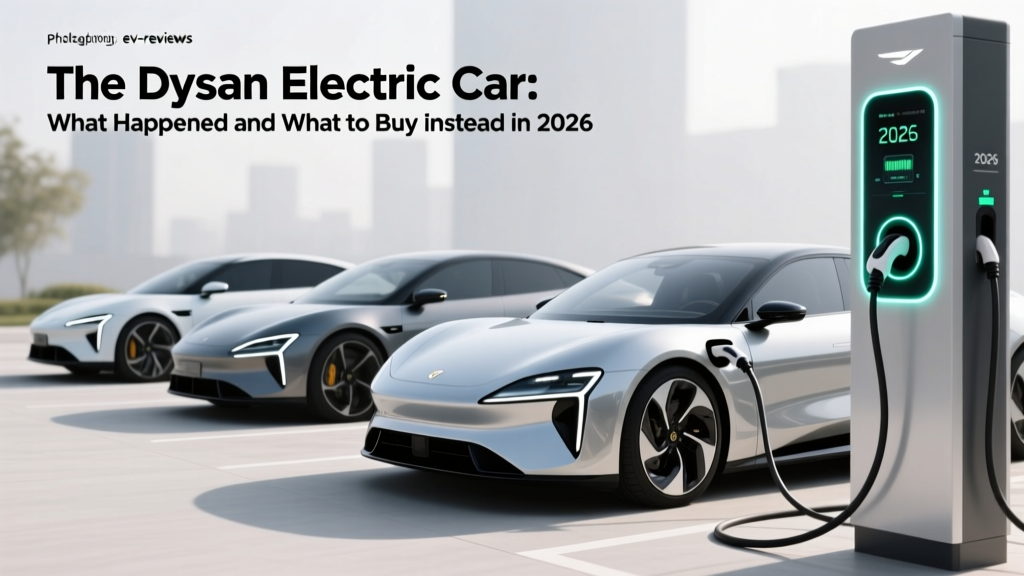
Dyson does not make an electric car, and it never will. The company canceled its EV project in October 2019 after investing approximately £500 million (roughly $640 million at the time). Founder James Dyson determined the project was not commercially viable — the prototype, a premium electric SUV, would have needed to sell for around £150,000 (~$190,000) to break even, a price point with virtually no market. If you've been searching for a "Dyson electric car" to buy, you won't find one. However, several 2026 EVs deliver the engineering ethos Dyson promised — advanced motors, premium filtration, and design-forward cabins — at prices that actually make sense. Below, we break down what happened to the project, what technology survived, and exactly which current EVs fill the gap Dyson left behind.
Why Dyson Abandoned Its Electric Car
Dyson announced its EV ambitions in September 2017, promising a "radically different" battery-electric vehicle built on a proprietary solid-state battery platform. The company assembled a team of over 500 engineers, acquired the startup Sakti3 for its solid-state battery IP, and built a working prototype — an aluminum-bodied, three-row SUV with a skateboard-style chassis.
The prototype reportedly delivered impressive specs for 2019: a targeted EPA range exceeding 300 miles, all-wheel drive via dual Dyson-designed digital pulse motors, and a self-leveling air suspension. But the economics never worked. Dyson's manufacturing costs were too high for a company with zero automotive supply chain, no dealer network, and no platform to amortize costs across. Unlike Tesla, which spent over a decade burning cash before reaching profitability, Dyson's board viewed automotive as a distraction from its core home-appliance business.
The project was shelved. The Hullavington airfield test facility in Wiltshire was eventually repurposed. Dyson pivoted the team's expertise back into vacuum cleaners, hair care products, and air purification.
What Dyson EV Technology Survived
The £500 million wasn't entirely wasted. Several technologies from the EV program migrated into Dyson's product lineup:
- Digital pulse motors: The high-speed, compact motors developed for the EV's drivetrain influenced the Hyperdymium motors now used in Dyson's Gen5detect and V15 vacuum cleaners, which spin at up to 135,000 RPM.
- Battery management systems: Thermal management and cell-balancing algorithms developed for the EV pack informed the battery packs in Dyson's cordless products and the Dyson Zone air-purifying headphones.
- Air filtration: The HEPA-grade cabin filtration system designed for the EV prototype evolved into Dyson's Purifier product line.
- Solid-state battery research: Dyson retained its Sakti3 IP but has not commercialized a solid-state cell. As of 2026, solid-state batteries remain in limited production globally, with Toyota and Samsung SDI targeting 2027-2028 volume production.
The EVs That Deliver What Dyson Promised
Dyson's EV concept emphasized three pillars: advanced electric motors, exceptional cabin air quality, and premium-but-minimalist design. Here are the 2026 production EVs that best match those ideals, with real numbers.
| Spec | 2026 Tesla Model Y Long Range | 2026 Hyundai Ioniq 5 Limited | 2026 Rivian R1S Dual-Motor | 2026 BMW iX xDrive50 |
|---|---|---|---|---|
| EPA Range | 320 mi | 305 mi | 330 mi (Max Pack) | 307 mi |
| Battery (usable) | 75 kWh (NMC) | 77.4 kWh (NMC) | 109 kWh (NMC) | 105.2 kWh (NMC) |
| Peak DC Charge Rate | 250 kW | 240 kW | 220 kW | 200 kW |
| 10–80% DC Fast Charge | ~25 min | ~18 min | ~34 min | ~31 min |
| Level 2 Charge Rate | 11.5 kW | 10.9 kW | 11.5 kW | 11 kW |
| 0–60 mph | 5.0 sec | 5.1 sec (AWD) | 4.5 sec | 4.4 sec |
| Horsepower | 346 hp | 320 hp (AWD) | 533 hp | 516 hp |
| Cabin Filtration | HEPA (Bioweapon mode) | Standard HVAC | HEPA available | HEPA (microfilter) |
| Starting MSRP | $46,630 | $52,600 | $79,900 | $87,250 |
| Federal Tax Credit (§30D) | Up to $7,500 | Up to $7,500 | Up to $7,500 | $0 (MSRP cap exceeded) |
| Powertrain Warranty | 8 yr / 120,000 mi | 10 yr / 100,000 mi | 8 yr / 175,000 mi | 8 yr / 100,000 mi |
Real-World Range Reality Check
EPA range figures assume a mix of city and highway driving at moderate temperatures. In our experience and consistent with fueleconomy.gov data, expect the following real-world adjustments:
- Highway-only at 75 mph: Subtract 10–15% from EPA (e.g., Model Y LR drops to ~272–288 mi)
- Cold weather (below 32°F): Subtract 20–30% depending on cabin heating use
- Combined real-world typical: Most owners see 85–95% of EPA in mixed temperate-climate driving
Cost Breakdown: Buying and Running These EVs vs. a Gas Equivalent
The Dyson EV would have cost ~$190,000. Let's compare what you'd actually spend on a top-pick EV versus a comparable gas-powered luxury SUV over five years, using the EPA's fuel cost calculator methodology.
| Cost Category | 2026 Tesla Model Y LR ($46,630) | 2026 BMW X5 xDrive40i ($67,000) |
|---|---|---|
| Purchase Price (after §30D credit) | $39,130 | $67,000 |
| Fuel / Electricity (5 yr, 75,000 mi) | $4,500 (home charging at $0.14/kWh avg) | $10,875 (premium gas at $3.75/gal, 22 MPG combined) |
| Maintenance (5 yr) | $1,500 (tire rotation, cabin filter, fluid top-offs) | $4,200 (oil changes, brake pads, transmission fluid) |
| Insurance (5 yr avg) | $9,750 ($1,950/yr) | $8,500 ($1,700/yr) |
| Estimated Depreciation (5 yr) | $17,500 | $28,000 |
| Total 5-Year Cost | $72,380 | $118,575 |
Net 5-year savings with the Model Y: ~$46,195. Even without the tax credit, the EV saves over $38,000 — driven primarily by lower fuel and maintenance costs plus stronger resale value on the EV side in this segment.
Important caveats: Insurance for EVs is typically 10–20% higher than equivalent gas vehicles, driven by higher repair costs and specialized parts. And these savings assume reliable home charging access — if you rely entirely on DC fast charging at $0.35–$0.48/kWh, your electricity cost roughly doubles, narrowing the gap significantly.
Federal Tax Credit Eligibility: What Actually Qualifies in 2026
The §30D Clean Vehicle Credit remains available through 2032, but eligibility is far from guaranteed. Per IRS guidelines, you must clear every hurdle below:
§30D Eligibility Checklist (2026)
- MSRP cap: SUVs, vans, and pickups must be ≤$80,000; sedans and other body styles ≤$55,000
- Buyer income cap: Modified AGI ≤$150,000 (single), ≤$225,000 (head of household), ≤$300,000 (joint)
- Battery sourcing: Increasingly strict percentages of critical minerals and battery components must be sourced from the U.S. or FTA partners — this disqualifies some trims year to year
- Final assembly: Must occur in North America
- Point-of-sale transfer: You can apply the credit as a dealer discount at purchase rather than waiting to claim it on your tax return
- One credit per vehicle, one per buyer per year
This is why the BMW iX in our comparison table shows $0 credit — its base MSRP of $87,250 exceeds the $80,000 SUV cap. Always verify eligibility at the point of sale and consult a tax professional before relying on the credit.
Common Misconceptions About the Dyson EV — and EVs in General
| Myth | Fact |
|---|---|
| "The Dyson EV is coming soon — I'll wait." | Dyson officially canceled the project in 2019. No revival has been announced as of 2026. James Dyson confirmed the decision was final. |
| "Dyson invented solid-state batteries for cars." | Dyson acquired Sakti3's solid-state IP but never commercialized it for automotive use. Solid-state EV batteries remain in limited pre-production globally as of 2026. |
| "EVs need battery replacements every few years." | Modern NMC and LFP batteries are warrantied for 8–10 years / 100,000–175,000 miles at ≥70% capacity retention. Real-world data shows most packs lose only 5–10% capacity in the first 100,000 miles. |
| "EVs are worse in cold weather, so they're impractical." | Range drops 20–30% in sub-freezing temps — real, but manageable. A 300-mile EV still delivers 210–240 miles cold. Preconditioning while plugged in recovers significant range, and heat pumps (standard on most 2026 EVs) cut cabin-heating energy use by ~30%. |
| "Charging takes too long for road trips." | A 2026 Hyundai Ioniq 5 charges 10–80% in ~18 minutes at a 240 kW DC fast charger. On a 300-mile trip, one 20-minute stop is comparable to a gas stop with food and restroom break. |
First-Time EV Buyer: What You Actually Need to Know
If the Dyson EV search brought you to electric vehicles for the first time, here are the practical realities no brochure will emphasize:
Home charging is non-negotiable for convenience. A Level 2 home charger (240V, 32–48 amps) adds 25–40 miles of range per hour of charging and costs $800–$2,500 installed, depending on whether your electrical panel needs an upgrade. Without home charging, you'll rely on public infrastructure, which is improving but still inconsistent outside major metro corridors.
Understand kW vs. kWh before you shop. This is the single most common point of confusion: kW (kilowatts) measures power — how fast energy flows, like the flow rate of a hose. kWh (kilowatt-hours) measures energy — the total capacity of the battery, like the size of a gas tank. A 75 kWh battery charged at 11.5 kW takes roughly 6.5 hours from empty. Peak DC fast charge rate (in kW) tells you how quickly you'll add range on a road trip — but the charge curve tapers significantly above 80% SoC, which is why we quote 10–80% times rather than 0–100%.
Your daily commute determines your battery needs, not your annual road trip. If you drive 40 miles round-trip daily, a 250-mile-range EV covers nearly a full week of commuting. For the 2–3 long road trips per year, plan around DC fast-charger locations using apps like PlugShare or A Better Routeplanner.
Insurance costs more — budget for it. EV insurance premiums run 10–20% higher on average. Get quotes before you buy. Companies like Geico, Progressive, and Tesla Insurance (in eligible states) offer competitive EV rates.
Decision Framework: Which EV Should You Buy?
Use this if-then guide to narrow your choice based on your actual situation:
- Choose the Tesla Model Y Long Range if you want the best Supercharger network access, strong resale value, and the lowest entry price after the §30D credit. Best for: tech-forward buyers who value charging infrastructure over cabin luxury.
- Choose the Hyundai Ioniq 5 Limited if you prioritize the fastest DC charging in the segment (10–80% in ~18 min), a 10-year powertrain warranty, and distinctive design. Best for: road-trip-oriented buyers who want minimal charging downtime.
- Choose the Rivian R1S if you need three rows, genuine off-road capability, and a 330-mile Max Pack option. Best for: families who tow (up to 7,700 lbs) or drive in rural/mountain terrain. Note: MSRP starts at $79,900 — just under the §30D SUV cap.
- Choose the BMW iX xDrive50 if you want a true luxury cabin with HEPA filtration, whisper-quiet ride quality, and don't need the federal credit (MSRP exceeds the cap). Best for: buyers who would have spent $150,000+ on the Dyson concept and want the closest production equivalent.
- Stick with a PHEV (like the Toyota RAV4 Prime) if you lack reliable home charging, frequently drive in areas with sparse DC fast-charging infrastructure, or regularly tow long distances in extreme cold. A plug-in hybrid gives you 42 miles of electric-only range for daily commuting and a gas engine for everything else.
FAQ: Dyson Electric Car and EV Buying Questions
Will Dyson ever make an electric car?
There is no indication Dyson will revive its EV program. The company has redirected its automotive engineering talent toward consumer products, and James Dyson has publicly stated the project was not commercially viable. As of 2026, Dyson has no announced vehicle plans.
What happened to Dyson's solid-state battery technology?
Dyson retained the solid-state battery IP from its 2015 acquisition of Sakti3, but has not brought a solid-state cell to market in any product. Solid-state batteries promise higher energy density and faster charging but face manufacturing-cost challenges. Toyota, Samsung SDI, and Nissan are targeting 2027–2028 for limited solid-state EV production.
How much would the Dyson electric car have cost?
Internal estimates suggested a retail price of approximately £150,000 (~$190,000 at 2019 exchange rates) to achieve profitability. For context, the most expensive EV in our comparison table — the BMW iX — starts at $87,250, less than half the Dyson's projected price.
Which 2026 EV has the best cabin air filtration?
The Tesla Model Y's HEPA "Bioweapon Defense Mode" remains the benchmark, filtering 99.97% of particulates. The BMW iX also offers a high-efficiency microfilter. If cabin air quality was what drew you to the Dyson concept, these two vehicles are the closest production matches.
Do I qualify for the $7,500 federal EV tax credit?
It depends on your income, the vehicle's MSRP, battery sourcing, and final assembly location. Per IRS §30D rules, single filers must have a modified AGI ≤$150,000 ($300,000 joint). SUVs must have an MSRP ≤$80,000. Eligibility shifts as manufacturers adjust supply chains — always confirm with your dealer at the point of sale and consult a tax professional.
How long do EV batteries actually last?
Modern EV batteries are designed to retain at least 70% of original capacity over 8–10 years and 100,000–175,000 miles (the warranty threshold). Real-world data from high-mileage Tesla and Hyundai fleets shows typical degradation of 5–10% over the first 100,000 miles. Full battery replacement costs $8,000–$22,000 depending on the pack, but most owners will sell or trade the vehicle before this becomes necessary.