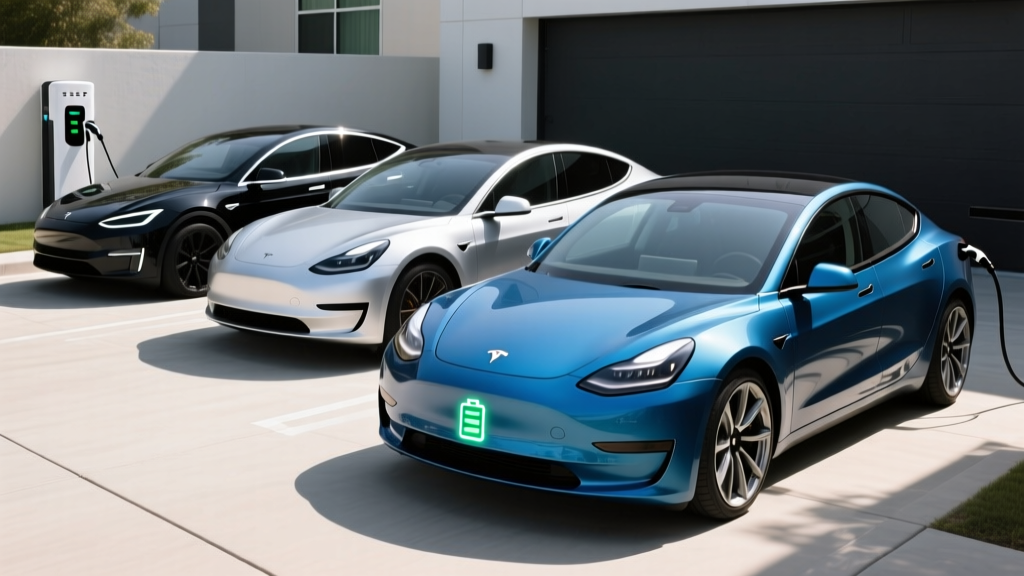
If you've been browsing Tesla's configurator, you've likely noticed that nearly every model offers a dual motor all-wheel-drive option. The dual motor setup pairs one motor on each axle, delivering better traction, quicker acceleration, and — in most cases — only a modest hit to range compared to rear-wheel-drive variants. But with four distinct Tesla models offering dual motor configurations in 2026, choosing the right one requires looking past the marketing and into the numbers.
We've driven, charged, and tracked ownership costs across the current dual motor Tesla lineup. Below is a data-driven breakdown of what each model actually delivers in range, charging speed, efficiency, cargo capacity, and real-world usability — plus the tax credit math that can shift your effective price by thousands.
2026 Dual Motor Tesla Lineup at a Glance
| Spec | Model 3 Long Range AWD | Model Y Long Range AWD | Model S Dual Motor | Model X Dual Motor |
|---|---|---|---|---|
| EPA Range | 341 mi | 320 mi | 402 mi | 335 mi |
| Battery (usable) | ~79 kWh (NMC) | ~79 kWh (NMC) | ~100 kWh (NMC) | ~100 kWh (NMC) |
| 0–60 mph | 4.2 sec | 4.8 sec | 3.1 sec | 3.8 sec |
| Horsepower | ~384 hp | ~384 hp | ~670 hp | ~670 hp |
| Drivetrain | Dual Motor AWD | Dual Motor AWD | Dual Motor AWD | Dual Motor AWD |
| Peak DC Charge | 250 kW | 250 kW | 250 kW | 250 kW |
| 10–80% DCFC Time | ~27 min | ~27 min | ~30 min | ~30 min |
| Level 2 Rate | 11.5 kW (~44 mi/hr) | 11.5 kW (~44 mi/hr) | 11.5 kW (~44 mi/hr) | 11.5 kW (~44 mi/hr) |
| MPGe (combined) | 132 MPGe | 122 MPGe | 120 MPGe | 109 MPGe |
| Base MSRP | $47,240 | $48,990 | $79,990 | $84,990 |
| Battery Warranty | 8 yr / 120,000 mi | 8 yr / 120,000 mi | 8 yr / 150,000 mi | 8 yr / 150,000 mi |
Source: fueleconomy.gov and Tesla.com 2026 model-year specifications. Prices exclude destination fee.
Real-World Range: What the EPA Sticker Doesn't Tell You
EPA vs. Reality: Tesla's dual motor models carry strong EPA range estimates, but real-world driving conditions shift those numbers significantly.
- Model 3 LR AWD: EPA 341 mi → expect ~290–310 mi highway (70–75 mph), ~250–270 mi in freezing temps
- Model Y LR AWD: EPA 320 mi → expect ~270–290 mi highway, ~230–250 mi in freezing temps
- Model S Dual Motor: EPA 402 mi → expect ~340–360 mi highway, ~300–320 mi in freezing temps
- Model X Dual Motor: EPA 335 mi → expect ~280–300 mi highway, ~240–260 mi in freezing temps
The dual motor configuration adds roughly 15–30 miles of range penalty versus single-motor RWD variants due to the added weight and drivetrain complexity of the front motor. However, Tesla's heat pump — standard on all current models — significantly reduces cold-weather range loss compared to older EVs using resistive cabin heating. In our experience, expect a 15–25% range reduction in sustained sub-freezing temperatures, with the larger-battery Model S and Model X offering the most buffer.
Highway driving at 75+ mph also cuts range by 10–15% compared to the EPA combined cycle, which includes city driving where regenerative braking recovers energy. If your commute is primarily stop-and-go urban driving, you'll likely meet or even exceed the EPA estimate.
Charging Speed: DC Fast Charging and Home Level 2
All 2026 dual motor Tesla models use the NACS (North American Charging Standard) connector natively and can access Tesla's Supercharger network — the most reliable and widely available DC fast-charging network in the U.S., with over 6,000 stations. Non-Tesla networks (Electrify America, EVgo, ChargePoint) are accessible via the included NACS-to-CCS adapter or third-party adapters.
| Charging Method | Power / Rate | Time / Miles Added | Notes |
|---|---|---|---|
| Level 1 (120V outlet) | ~1.4 kW | ~4–5 mi/hr | Emergency/top-up only; ~36 hrs for full charge |
| Level 2 (240V, 48A) | 11.5 kW | ~44 mi/hr; ~8–9 hrs full | Requires NEMA 14-50 or hardwired Wall Connector |
| DC Fast (V3 Supercharger) | Peak 250 kW | 10–80% in ~27–30 min | Peak rate sustained to ~50% SoC, then tapers |
| DC Fast (V4 Supercharger) | Peak 250 kW (current Teslas) | Similar to V3 | V4 hardware supports higher future rates; current Tesla vehicles are capped at 250 kW |
Charging curve reality check: The "250 kW peak" figure applies only at lower states of charge (roughly 10–50% SoC). Above 50%, charge rate tapers progressively — dropping to ~100 kW around 70% and below 50 kW past 85%. This is why Tesla quotes 10–80% times rather than 0–100%. Charging from 80–100% on a DC fast charger can take nearly as long as the 10–80% session. For road trips, plan stops around the 10–80% window for optimal efficiency.
At home, a Tesla Wall Connector on a 60-amp circuit delivers 11.5 kW (48A continuous), adding roughly 44 miles of range per hour — enough to fully replenish any dual motor Tesla overnight. Installation costs typically range from $500–$2,000 depending on your panel capacity and run length. If your home has a 100-amp electrical panel, a panel upgrade to 200 amps may be necessary, adding $1,500–$3,000. Always consult a licensed electrician for a site-specific quote.
Performance: The Dual Motor Advantage
The dual motor setup isn't just about all-weather traction — it fundamentally changes the performance character of each Tesla. Here's what the numbers look like in practice:
Model 3 Long Range AWD (4.2 sec, ~384 hp): This is the sweet spot for most buyers. The dual motor Model 3 delivers confident highway merging, composed handling thanks to its lower center of gravity, and AWD grip that eliminates wheelspin in rain or light snow. It's genuinely quick without crossing into "unnecessarily fast" territory.
Model Y Long Range AWD (4.8 sec, ~384 hp): Slightly slower than the Model 3 due to its taller, heavier crossover body, but the difference is negligible in daily driving. The Model Y's dual motor system shines in winter conditions — torque vectoring between the front and rear motors provides stable traction on unplowed roads.
Model S Dual Motor (3.1 sec, ~670 hp): This is supercar-rivaling acceleration in a luxury sedan. The dual motor Model S delivers relentless, silent thrust that never feels strained, even at highway speeds. The air suspension (standard) adds ride-quality refinement the Model 3 and Y lack.
Model X Dual Motor (3.8 sec, ~670 hp): Remarkably quick for a three-row SUV. The dual motor system also enables the Model X's 3,500-lb towing capacity — adequate for a small boat or utility trailer, though not class-leading.
Interior, Cargo, and Daily Usability
Practical space is where the dual motor Tesla lineup diverges most sharply:
| Model | Cargo (rear seats up) | Cargo (rear seats folded) | Frunk | Rear Legroom | Seating |
|---|---|---|---|---|---|
| Model 3 LR AWD | 23 cu ft | — (trunk, not hatchback) | 3.1 cu ft | 35.2 in | 5 passengers |
| Model Y LR AWD | 30 cu ft | 72 cu ft | 4.1 cu ft | 41.6 in | 5 (optional 7) |
| Model S Dual Motor | 28 cu ft | — (liftback trunk) | 5.3 cu ft | 40.9 in | 5 passengers |
| Model X Dual Motor | 42 cu ft (behind 2nd row) | 88 cu ft (behind 1st row) | 6.6 cu ft | 41.0 in (2nd row) | 5, 6, or 7 passengers |
The Model Y is the cargo champion for most families — its hatchback design and flat load floor make it genuinely practical for strollers, groceries, and camping gear. The optional third row is best suited for small children on short trips.
The Model X offers the most flexibility with available six- or seven-seat configurations and standard falcon-wing rear doors, which are genuinely useful in tight parking spaces despite their polarizing aesthetics. However, the Model X carries a significant price premium and higher running costs (tires, insurance).
All dual motor Teslas share the same minimalist interior: a 15.4-inch central touchscreen (17-inch in Model S/X) handles climate, media, navigation, and vehicle settings. There are no physical gauges — speed and range info live on the screen. Build quality has improved markedly since 2023, with tighter panel gaps and higher-quality materials, though it still doesn't match Mercedes or BMW in tactile luxury.
Pricing, Tax Credits, and Total Cost
| Model | Base MSRP | As-Tested (typical config) | Federal §30D Credit | Effective Price |
|---|---|---|---|---|
| Model 3 LR AWD | $47,240 | $48,490 (w/ paint, no FSD) | Up to $7,500* | ~$40,990 |
| Model Y LR AWD | $48,990 | $50,240 (w/ paint, no FSD) | Up to $7,500* | ~$42,740 |
| Model S Dual Motor | $79,990 | $82,490 | $0 (MSRP cap) | $82,490 |
| Model X Dual Motor | $84,990 | $87,490 | $0 (MSRP cap) | $87,490 |
*Federal tax credit caveats (§30D, 2026 rules):
The IRS §30D clean vehicle credit provides up to $7,500, but eligibility depends on multiple factors:
- MSRP cap: Sedans must be ≤$55,000; SUVs/pickups ≤$80,000. The Model S ($79,990 base) barely qualifies by MSRP, but typical configurations exceed the cap. The Model X exceeds the SUV cap.
- Buyer income cap: Modified AGI must not exceed $150,000 (single), $225,000 (head of household), or $300,000 (joint filers).
- Battery sourcing: At least 60% of critical minerals and 75% of battery components must be sourced from the U.S. or FTA partners. Tesla's U.S.-built batteries generally satisfy this for Model 3 and Model Y, but confirm at purchase — rules tighten annually.
- Point-of-sale transfer: You can apply the credit at purchase (dealer reduces price by $7,500) rather than waiting for a tax refund.
Always verify eligibility with a tax professional and check the latest fueleconomy.gov tax credit listings before committing.
For the Model 3 and Model Y dual motor variants, the $7,500 credit makes these vehicles extraordinarily competitive against gas-powered alternatives. A loaded Model 3 LR AWD at ~$41,000 effective price undercuts comparably equipped BMW 3-Series and Audi A4 models while offering lower fuel and maintenance costs. Over five years, the total cost of ownership advantage is typically $8,000–$15,000 depending on your local electricity rates and annual mileage.
Driver Assistance and Technology
SAE Level 2 — Not Self-Driving: Tesla's Autopilot and Full Self-Driving (Supervised) are Level 2 driver-assistance systems per SAE classification. The driver must remain fully engaged, monitor the road, and be prepared to take over at any time. These systems do not make the vehicle autonomous. Only Level 4 services like Waymo operate without a human driver — and those are limited to specific geofenced areas.
All 2026 dual motor Teslas ship with Basic Autopilot (adaptive cruise control + lane centering) included. Enhanced Autopilot ($6,000) adds auto lane change, Navigate on Autopilot, Smart Summon, and Autopark. Full Self-Driving (Supervised) ($8,000 or $99/month) includes all Enhanced features plus traffic light/stop sign recognition and city street navigation assistance.
In our experience, FSD (Supervised) handles most suburban and highway scenarios competently but still requires frequent interventions — particularly in construction zones, unprotected left turns, and poorly marked roads. It's an impressive beta, not a replacement for an attentive driver.
Other standout tech includes:
- Over-the-air software updates that add features post-purchase
- Sentry Mode (exterior camera recording when parked)
- Dog Mode (climate-controlled cabin for pets)
- Tesla app with remote preconditioning, location tracking, and charging management
- Standard 17-speaker audio (Model 3/Y) or 22-speaker premium audio (Model S/X)
Pros, Cons, and Who Should Buy
Pros
- Class-leading Supercharger network access (most reliable DC fast charging in the U.S.)
- Strong real-world efficiency — Model 3 LR AWD at 132 MPGe combined is among the best EVs sold
- Over-the-air updates continuously improve the vehicle
- $7,500 federal tax credit on Model 3/Y (when eligible) dramatically improves value
- Dual motor AWD provides confident all-weather traction without major range sacrifice
- Minimal maintenance — no oil changes, brake pads last 100,000+ mi with regen use
Cons
- No Apple CarPlay or Android Auto — Tesla's proprietary infotainment only
- Service center availability still limited in rural areas
- Insurance premiums 15–30% higher than comparable gas vehicles
- Model S/X exceed MSRP caps for federal tax credit
- FSD (Supervised) requires constant driver attention despite the name
- Ride quality on Model 3/Y is firm — noticeable on rough pavement
Which Dual Motor Tesla Suits You?
- Choose Model 3 LR AWD if: You're a commuter or couple prioritizing efficiency, value, and driving dynamics. Best bang-for-buck in the lineup.
- Choose Model Y LR AWD if: You need crossover cargo space for a family, pets, or gear. The volume seller for good reason.
- Choose Model S Dual Motor if: You want luxury-sedan refinement, 400+ mile range, and supercar acceleration — and the $80K+ price isn't a barrier.
- Choose Model X Dual Motor if: You need three rows of seating and maximum cargo flexibility in an EV, and accept the premium price and insurance costs.
Frequently Asked Questions
What is the real-world range of a dual motor Tesla?
Expect 10–15% below the EPA estimate at sustained highway speeds (70–75 mph) and 15–25% below in freezing temperatures. The Model 3 LR AWD (EPA 341 mi) delivers roughly 290–310 miles on a highway road trip in mild weather, dropping to 250–270 in winter. The Model S (EPA 402 mi) offers the most buffer for long-distance drivers.
How fast does a dual motor Tesla charge?
On a V3 or V4 Tesla Supercharger, all dual motor models peak at 250 kW and charge from 10–80% in approximately 27–30 minutes. At home on a Level 2 Wall Connector (11.5 kW), a full charge takes 8–10 hours. On a standard 120V outlet (Level 1), expect 4–5 miles of range per hour — suitable only for overnight top-ups.
Does a dual motor Tesla qualify for the federal EV tax credit?
The Model 3 LR AWD ($47,240) and Model Y LR AWD ($48,990) both fall under their respective MSRP caps ($55,000 for sedans, $80,000 for SUVs) and generally qualify for the full $7,500 credit — assuming your income is under the cap ($150K single / $300K joint) and battery sourcing requirements are met. The Model S and Model X typically exceed the MSRP cap when configured and do not qualify. Verify current eligibility at IRS.gov.
Is a dual motor Tesla worth it vs. single motor?
For buyers in regions with rain, snow, or mountain roads, the dual motor AWD system provides meaningful traction and safety benefits for a $3,000–$5,000 premium and only a 15–30 mile range reduction. In dry, flat climates, a single-motor RWD variant saves money and maximizes range. For most U.S. buyers, the dual motor is the recommended configuration.
How does dual motor Tesla compare to competitors?
The Model 3 LR AWD competes against the Hyundai Ioniq 6 (361 mi EPA, slower charging at 350 kW peak but CCS-dependent infrastructure), BMW i4 xDrive40 (~280 mi, $55K+), and Polestar 2 (~270 mi). The Model 3's combination of range, Supercharger access, and post-credit pricing remains difficult to match. The Model Y faces competition from the Hyundai Ioniq 5, Ford Mustang Mach-E, and Kia EV6, but leads in charging network reliability and software ecosystem.
What's the battery warranty on a dual motor Tesla?
Tesla covers the Model 3 and Model Y battery and drive unit for 8 years or 120,000 miles (whichever comes first), with a minimum 70% capacity retention guarantee. The Model S and Model X receive 8 years or 150,000 miles. Real-world degradation data from Tesla's fleet shows most batteries retain 85–90% capacity after 100,000 miles — well within the warranty threshold.