Quick Verdict: The Benchmark Still Holds
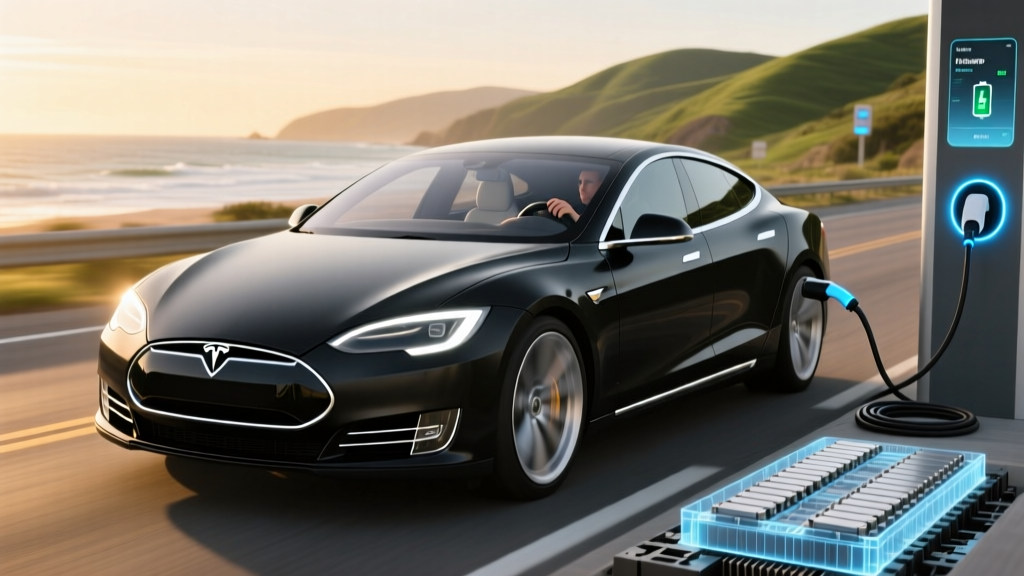
The Dual Motor Tesla Model S remains the luxury electric sedan against which all others are measured. With 402 miles of EPA-estimated range, a mature Supercharger network, and sub-$80,000 pricing before incentives, it delivers a combination that competitors like the Lucid Air and Mercedes EQS struggle to match simultaneously. But the 2025 Model S is no longer the undisputed king — it's a known quantity with aging interior bones and a firm ride that reminds you this is a performance sedan first, a luxury cruiser second.
For buyers who prioritize real-world road-trip capability, access to the most reliable DC fast-charging network in North America, and over-the-air updates that keep decade-old hardware relevant, the Dual Motor Model S earns its spot. For those chasing the newest interior materials, air-suspension comfort, or cutting-edge ADAS from non-Tesla brands, the calculus is shifting.
Range & Efficiency: EPA Sticker vs. Reality
Real-World Expectation: ~320–360 miles highway at 70–75 mph; ~280–310 miles in freezing weather with cabin heat
The 2025 Dual Motor Model S Long Range carries a 100 kWh battery pack (approximately 95 kWh usable) using NMC (nickel manganese cobalt) chemistry. Tesla does not publish exact pack chemistry on its spec sheets, but teardowns and supply-chain data confirm NMC for the Model S/X platform, unlike the LFP packs used in the Standard Range Model 3 and Model Y.
According to fueleconomy.gov, the Dual Motor Model S achieves 124 MPGe combined (131 city / 117 highway), translating to roughly 27 kWh per 100 miles driven. That efficiency figure is remarkable for a 4,500+ lb sedan producing 670 horsepower.
Real-world range varies significantly with conditions. On a 75 mph highway drive in 70°F weather with moderate HVAC use, expect to consume approximately 280–300 Wh/mile, yielding 320–340 miles before needing a charge. In cold weather (below 30°F), battery preconditioning helps but range loss of 20–30% is typical — plan for 280–310 miles of usable range. City driving with heavy regenerative braking use can push range closer to the EPA sticker, sometimes exceeding it in stop-and-go traffic below 45 mph.
Charging: Supercharger Speeds and Home Setup
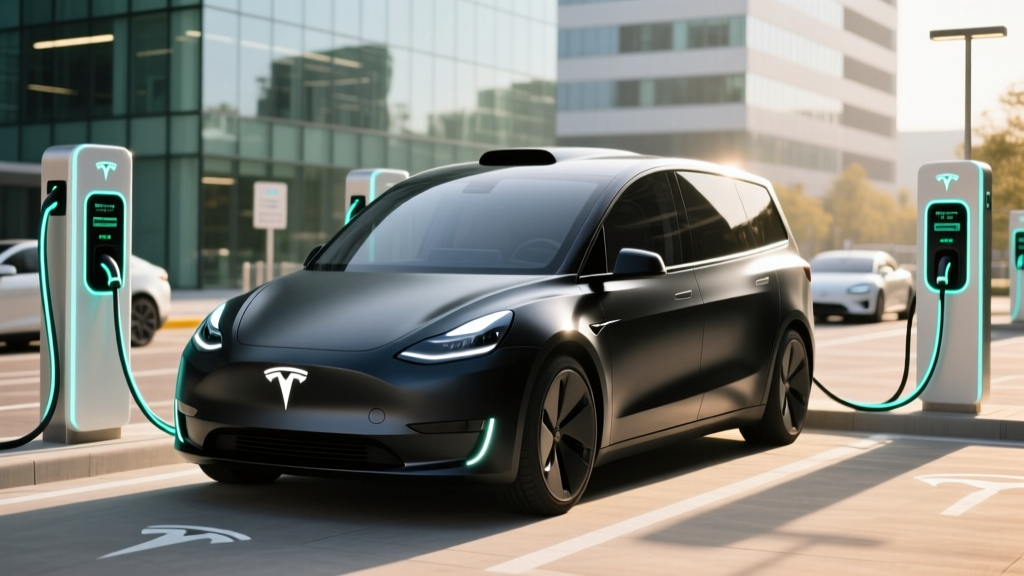
The Dual Motor Model S supports up to 250 kW peak DC fast charging via the NACS (North American Charging Standard) connector — the native Tesla plug now being adopted by Ford, GM, Rivian, and virtually every other automaker through 2025–2026.
| Charging Level | Power / Rate | Miles Added Per Hour | Notes |
|---|---|---|---|
| Level 1 (120V) | ~1.4 kW | ~3–4 mi/hr | Emergency/trickle only |
| Level 2 (240V, 48A) | 11.5 kW | ~34–40 mi/hr | Home Wall Connector; full charge in ~9 hrs |
| DC Fast Charge | Up to 250 kW peak | ~200 mi in 15 min | 10–80% in ~25–30 min; tapers sharply above 80% |
At a V3 or V4 Tesla Supercharger, the Model S sustains peak charging power between 10–30% state of charge, then progressively tapers. Expect roughly 150–175 kW sustained from 30–60%, dropping to 80–100 kW from 60–80%. The full 10–80% session takes approximately 25–30 minutes when the battery is properly preconditioned via the car's built-in navigation routing.
Without preconditioning — for example, arriving at a charger without setting it as your navigation destination — peak power may be limited to 150–175 kW, adding 5–10 minutes to the session. Always navigate to a Supercharger through the Tesla touchscreen to enable battery prep.
For home charging, the Tesla Wall Connector on a 60-amp circuit (48 amps continuous) delivers 11.5 kW, adding roughly 34–40 miles of range per hour. A full 0–100% charge takes about 9 hours. Installation typically costs $500–$2,000 depending on panel proximity and whether a 200-amp service upgrade is needed — consult a licensed electrician for a site-specific quote.
Performance & Drivetrain
The Dual Motor Model S pairs a permanent-magnet synchronous motor on the rear axle with an induction motor up front, delivering all-wheel drive and 670 horsepower. Tesla's latest firmware enables a 0–60 mph time of 3.1 seconds on rollout — a figure that was supercar territory a decade ago and remains genuinely thrilling today.
| Specification | 2025 Model S Long Range (Dual Motor) |
|---|---|
| EPA Range | 402 miles (19" wheels) |
| Battery | 100 kWh total / ~95 kWh usable, NMC |
| Drivetrain | Dual Motor AWD |
| Horsepower | 670 hp |
| 0–60 mph | 3.1 seconds |
| Top Speed | 155 mph |
| Peak DC Charging | 250 kW |
| 10–80% DC Charge | ~25–30 minutes |
| Level 2 Home Charging | 11.5 kW (48A) |
| Efficiency | 124 MPGe / 27 kWh/100mi |
| Cargo Volume | 28 cu ft (rear) + frunk |
| Base MSRP | $79,990 |
| Battery Warranty | 8 years / 150,000 miles |
The Plaid variant (tri-motor, 1,020 hp, 0–60 in 1.99s) starts at $94,990 but sacrifices roughly 40 miles of range and is not the focus of this review. For buyers who want the Model S platform without the Plaid premium, the Dual Motor Long Range is the value play.
Interior, Tech & Driver Assistance
The Model S interior has been refreshed with a 17-inch center touchscreen (now horizontally oriented), a 12.3-inch driver instrument cluster, and a rear-seat entertainment screen. Ventilated front seats, a HEPA air filtration system with Bioweapon Defense Mode, and a 22-speaker audio system are standard. Build quality has improved markedly since the 2021 refresh, though panel gaps and some hard plastics still trail what you'll find in a Lucid Air or Mercedes EQS at similar price points.
Passenger space is generous: 42.7 inches of front legroom and 35.4 inches in the rear. The 28-cubic-foot trunk includes a 60/40 split-folding rear seat, and the front trunk (frunk) adds usable storage for charging cables or a small bag. Total cargo capacity with seats folded reaches approximately 58 cubic feet.
Tesla's Autopilot comes standard — adaptive cruise control, lane-centering, and automatic emergency braking. Full Self-Driving (Supervised) remains an $8,000 option (or $99/month subscription as of 2025) and adds features like Navigate on Autopilot, Auto Lane Change, and Smart Summon. Per NHTSA and SAE classifications, both Autopilot and FSD Supervised are Level 2 driver-assistance systems: the driver must remain fully engaged with hands on the wheel and eyes on the road at all times. This is not self-driving.
Pricing, Tax Credits & Ownership Costs
| Trim | Base MSRP | Fed. Tax Credit Eligibility | Effective Price (if eligible) |
|---|---|---|---|
| Model S Long Range (Dual Motor) | $79,990 | Not eligible — exceeds $55,000 sedan MSRP cap under §30D | $79,990 |
| Model S Plaid | $94,990 | Not eligible — exceeds $55,000 sedan MSRP cap | $94,990 |
The 2025 Dual Motor Model S does not qualify for the $7,500 federal EV tax credit under IRS §30D rules. The law caps eligible sedans at a $55,000 MSRP (trucks, SUVs, and vans are capped at $80,000), and the Model S exceeds this threshold regardless of trim. Income caps ($150,000 single / $300,000 married filing jointly) and critical-mineral/battery-sourcing requirements further limit eligibility even for vehicles that clear the MSRP hurdle.
For buyers who purchased the Model S before the MSRP cap took effect, or who previously claimed the credit on a different qualifying vehicle, no additional federal credit is available. Some states — notably California, Colorado, and Massachusetts — offer their own rebates or tax credits for EVs above the federal MSRP cap; check your state energy office or the Alternative Fuels Data Center for current programs.
Over five years of ownership, the Model S Dual Motor offers meaningful fuel savings. At 27 kWh/100mi and a national average electricity rate of $0.16/kWh, you'll spend roughly $4.32 per 100 miles. A comparable BMW 5 Series (28 mpg combined) at $3.50/gallon costs $12.50 per 100 miles — a savings of over $8 per 100 miles, or about $1,200 annually at 15,000 miles/year.
Tesla's battery warranty covers 8 years or 150,000 miles (whichever comes first) with a minimum 70% capacity retention threshold. The limited vehicle warranty is 4 years / 50,000 miles. Long-term degradation data from Tesla's fleet suggests the 100 kWh NMC packs lose approximately 10–12% capacity over the first 150,000 miles, meaning most owners will remain well within warranty coverage.
Pros, Cons & Who Should Buy
- 402-mile EPA range — best in its class for a dual-motor AWD sedan
- Supercharger network access: 60,000+ stalls globally, highest uptime among DC networks
- 670 hp / 3.1s 0–60: supercar acceleration at sedan pricing
- OTA updates continuously add features to aging hardware
- Class-leading efficiency (27 kWh/100mi) keeps per-mile cost low
- Strong resale value relative to non-Tesla luxury EVs
- $79,990 MSRP — no federal tax credit due to §30D sedan cap
- Interior quality trails Lucid Air and Mercedes EQS
- Firm ride on 21" wheels; adaptive damping is good but not S-Class plush
- FSD (Supervised) requires $8,000 option and remains Level 2
- No Apple CarPlay / Android Auto — Tesla's ecosystem is closed
- Yoke steering (standard) is polarizing; round wheel is a delete option
Best for: High-mileage commuters and frequent road-trippers who value charging-network reliability above all else. The Model S Dual Motor is ideal for buyers who drive 15,000+ miles annually, regularly take trips over 300 miles, and want the lowest-effort long-distance EV experience available. It also suits tech-forward buyers who prefer Tesla's software ecosystem and OTA update cadence over traditional luxury-brand dealer service models.
Look elsewhere if: You prioritize interior luxury materials and ride comfort (consider the Lucid Air Pure or Mercedes EQS 450+), you need the federal tax credit to make the math work (the Model S doesn't qualify), or you prefer Apple CarPlay integration and a more conventional driver-assist interface from BMW or Mercedes.
Competitive Comparison
| Spec | Tesla Model S LR (Dual Motor) | Lucid Air Pure | Mercedes EQS 450+ |
|---|---|---|---|
| EPA Range | 402 mi | 419 mi | 390 mi |
| Starting MSRP | $79,990 | $69,900 | $104,400 |
| Fed. Tax Credit | No (MSRP cap) | No (MSRP cap) | No (MSRP cap) |
| 0–60 mph | 3.1s | 5.0s | 5.9s |
| Peak DC Charge | 250 kW | 200 kW | 200 kW |
| Charging Network | Supercharger (native) | CCS + adapter | CCS + adapter |
| Drivetrain | Dual Motor AWD | RWD | RWD |
The Lucid Air Pure undercuts the Model S by $10,000 and offers slightly more EPA range, but it's rear-wheel drive only, charges slower, and relies on third-party CCS networks (though a NACS adapter is becoming available). The Mercedes EQS costs significantly more and prioritizes luxury over performance. The Model S wins on acceleration, charging speed, and network reliability; the Air wins on price and range; the EQS wins on interior refinement.
Frequently Asked Questions
What is the real-world range of the Dual Motor Tesla Model S?
The EPA rates it at 402 miles, but real-world highway driving at 70–75 mph typically yields 320–360 miles. In freezing weather, expect 280–310 miles. City driving with regenerative braking can approach or match the EPA sticker.
How fast does the Model S charge at home and on the road?
At home on a 48-amp Level 2 Wall Connector, it charges at 11.5 kW, adding about 34–40 miles of range per hour (full charge in ~9 hours). On a V3/V4 Supercharger, it peaks at 250 kW and charges 10–80% in approximately 25–30 minutes with battery preconditioning.
Does the 2025 Tesla Model S qualify for the federal EV tax credit?
No. Under current IRS §30D rules, sedans with an MSRP above $55,000 are ineligible. The Model S starts at $79,990. State-level incentives may still apply — check the AFDC state law database for your jurisdiction.
Is the Dual Motor Model S worth buying over the Lucid Air or Mercedes EQS?
Yes, if you prioritize charging speed, Supercharger network access, performance, and software updates. No, if interior luxury, ride comfort, or a lower entry price (Lucid Air Pure) matters more. All three exceed the federal MSRP cap, so the tax credit doesn't factor into the decision.
How long will the Model S battery last?
Tesla warranties the 100 kWh NMC pack for 8 years or 150,000 miles with at least 70% capacity retention. Fleet data suggests 10–12% degradation at 150,000 miles is typical, meaning most packs will outlast the warranty period comfortably. Replacement cost, if needed out of warranty, ranges from $12,000–$20,000 depending on labor and pack availability.
Is Tesla FSD actually self-driving?
No. Full Self-Driving (Supervised) is an SAE Level 2 driver-assist system. You must keep your hands on the wheel and eyes on the road. It handles many highway and some city scenarios well, but requires constant supervision and will disengage in construction zones, poor weather, and unmapped areas.