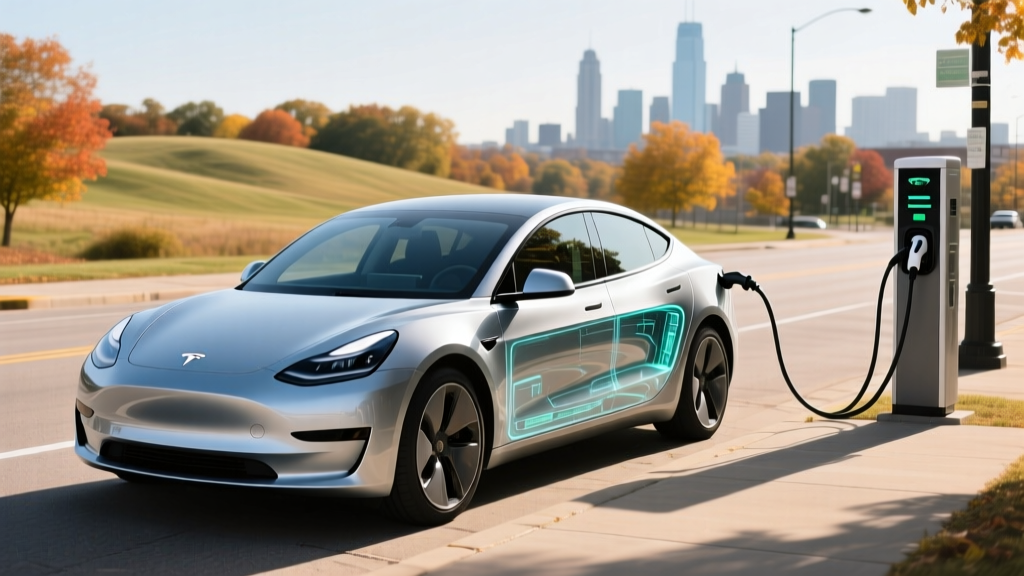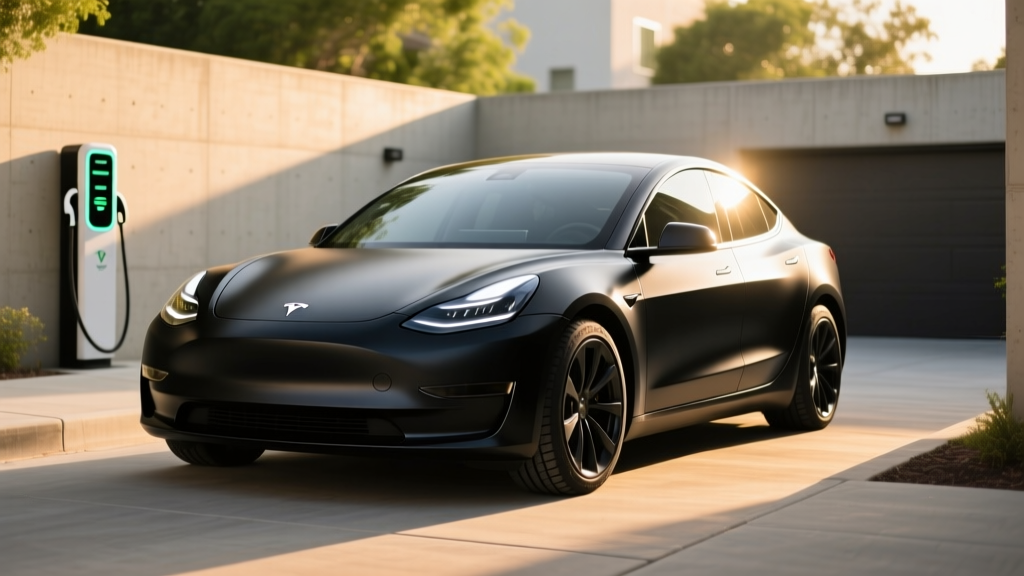
The Tesla Model 3 remains the benchmark compact electric sedan, and the dual motor Tesla Model 3 Long Range All-Wheel Drive is the version most buyers should actually consider. It trades the base rear-wheel-drive model's lower price for substantially better traction, quicker acceleration, and a larger battery that pushes EPA range past 340 miles. After spending time with the refreshed "Highland" generation Model 3, here is exactly what you get — and where the numbers diverge from the sticker.
Range Reality Check
EPA Estimated: 341 miles (Long Range AWD, 19-inch wheels)
Real-World Expectation: Plan for 270–300 miles on highway road trips at 70+ mph. In freezing winter conditions (below 32°F), expect 220–260 miles depending on cabin heat usage and preconditioning habits. City driving with regenerative braking recovers closer to the EPA sticker, often 310–330 miles in mild weather.
Specs at a Glance: Dual Motor Tesla Model 3 Long Range AWD
| Specification | 2026 Model 3 Long Range AWD |
|---|---|
| EPA Range | 341 miles (19" wheels) / 330 miles (18" Aero wheels) |
| Battery Capacity (Usable) | ~79 kWh (NMC chemistry) |
| Drivetrain | Dual Motor All-Wheel Drive |
| Horsepower | ~384 hp (combined) |
| 0-60 mph | 4.2 seconds |
| Top Speed | 125 mph |
| Max DC Fast Charge | 250 kW peak |
| 10-80% DC Charge Time | ~25 minutes |
| Level 2 Home Charging | 11.5 kW / ~44 miles per hour |
| Efficiency | 132 MPGe combined / 25 kWh/100 mi |
| Cargo Volume | 23 cu ft (trunk + frunk) |
| Rear Legroom | 35.2 inches |
| Battery Warranty | 8 years / 120,000 miles (70% capacity retention) |
| Base MSRP | $47,740 (before destination) |
Source: EPA fueleconomy.gov, Tesla specifications.
Real-World Range: What the EPA Sticker Doesn't Tell You
The 341-mile EPA figure for the dual motor Tesla Model 3 Long Range is among the best in the compact EV sedan segment. But EPA testing uses a blended city/highway cycle at moderate temperatures, and real-world results depend heavily on how you drive.
Highway driving: At sustained 75 mph on flat terrain in 65–75°F weather, expect roughly 280–300 miles before needing to charge. The Model 3's aerodynamic drag coefficient of 0.219 helps, but speed is the biggest range killer in any EV. Push to 80+ mph and you'll see 260 miles or less.
Cold weather: Lithium-ion batteries lose efficiency in cold temperatures, and cabin heating draws significant energy. In 20–30°F conditions, plan for 220–260 miles of real range. The Model 3's standard heat pump helps — it's substantially more efficient than resistive heating — but the physics of cold chemistry still apply. Always precondition the battery while plugged in before a winter commute.
City and commuter driving: This is where the Model 3 excels. Regenerative braking recaptures energy in stop-and-go traffic, and the dual motor's efficiency at low speeds is excellent. Many owners report 310–340 miles in warm-weather city commuting.
Charging Speed: DC Fast Charging and Home Setup
Charging speed is where Tesla's Supercharger network advantage remains tangible, though the gap is narrowing as CCS networks expand and Tesla opens Superchargers to other brands via NACS adapters.
| Charging Level | Power | Speed | Notes |
|---|---|---|---|
| Level 1 (120V household) | ~1.4 kW | ~5 miles per hour | Emergency/trickle only |
| Level 2 (240V home) | 11.5 kW max | ~44 miles per hour | Full charge in ~8 hours |
| DC Fast (Supercharger V3/V4) | 250 kW peak | 10-80% in ~25 min | Peak rate tapers above 50% SoC |
| DC Fast (3rd-party CCS) | Up to 250 kW | 10-80% in ~25-30 min | Requires NACS-to-CCS adapter or native NACS |
The charging curve matters. The 250 kW peak rate is not sustained for the entire session. The Model 3 Long Range's NMC battery hits peak charge rate below 30% state of charge and begins tapering around 50%. By 80%, you're charging at roughly 60–70 kW. This is why Tesla (and all EV makers) quote 10-80% times rather than 0-100%. Charging from 80% to 100% on DC fast charging is painfully slow — save that for overnight Level 2 at home.
Home charging setup: The onboard charger accepts up to 11.5 kW (48 amps) on Level 2. To get this rate, you need a 60-amp dedicated circuit installed by a licensed electrician. A Tesla Wall Connector costs around $420, and professional installation typically runs $500–$1,500 depending on panel proximity and whether your electrical panel needs an upgrade to 200 amps. Total home charging setup: roughly $900–$2,000.
Performance and Driving Dynamics
The dual motor setup puts an AC induction motor on the front axle and a permanent magnet synchronous motor on the rear. This isn't just about all-weather traction — the two motor types complement each other for efficiency. The rear motor handles most cruising loads (it's more efficient at steady state), while the front motor engages for acceleration, regenerative braking, and low-traction situations.
The result is a 4.2-second 0-60 mph time that feels effortless thanks to instant electric torque. For context, that's quicker than a BMW 330i xDrive and in the territory of entry-level performance sedans. The dual motor Model 3 is not a track car — the suspension tuning prioritizes comfort over the Performance trim's sharper setup — but it handles highway merging and passing with confidence.
Ride quality in the Highland refresh is noticeably improved over pre-2024 Model 3s. Tesla added acoustic glass, retuned the dampers, and improved isolation from road noise. It's still firm compared to a Lexus ES or Mercedes C-Class, but it's no longer the harsh ride that early Model 3 owners complained about.
Pricing, Trims, and Federal Tax Credit Eligibility
The dual motor Tesla Model 3 Long Range AWD starts at $47,740 (plus $1,390 destination, for a total of $49,130 before incentives). Key trim notes:
- Long Range AWD (18" Aero wheels): $47,740 — 330-mile range (note: 18" wheels now yield slightly less range than 19" in the latest EPA update due to tire compound changes)
- Long Range AWD (19" Nova wheels): $49,240 — 341-mile range
- Performance AWD: $54,990 — 315-mile range, 2.9s 0-60, track mode, sport suspension
| Scenario | Long Range AWD (19") |
|---|---|
| Base MSRP + Destination | $49,130 |
| Federal §30D Tax Credit (if eligible) | -$7,500 |
| Effective Price (federal credit applied) | $41,630 |
| Estimated State Incentives (varies) | -$0 to -$5,000 |
Does the Dual Motor Model 3 Qualify for the $7,500 Federal Tax Credit?
As of 2026, the Tesla Model 3 Long Range AWD does qualify for the full $7,500 federal EV tax credit under IRS §30D, but only if you meet all eligibility requirements. The credit can now be transferred to the dealer at point of sale as an instant rebate, which is a significant cash-flow advantage.
- MSRP cap: Sedans must be under $55,000. The Long Range AWD at $49,130 clears this easily. The Performance trim at $54,990 also qualifies.
- Buyer income cap: Modified AGI must not exceed $150,000 (single), $225,000 (head of household), or $300,000 (married filing jointly).
- Battery sourcing: The Model 3 Long Range's battery pack is assembled at Tesla's Nevada Gigafactory with a mix of domestically sourced and imported critical minerals. Tesla has confirmed compliance with the §30D critical minerals and battery component requirements for 2026.
Always verify current eligibility on IRS.gov before purchasing, as sourcing rules and qualified vehicle lists update periodically.
Interior, Cargo, and Daily Practicality
The Model 3 interior remains minimalist — some love it, others find it sparse. Everything routes through the 15.4-inch center touchscreen: climate, mirrors, glovebox, speedometer. There is no instrument cluster behind the steering wheel, which takes adjustment.
Cargo space: The trunk offers 21 cubic feet, plus a 2-cubic-foot frunk (front trunk) for charging cables or small bags. Total: 23 cu ft. That's competitive with a Honda Accord (16.7 cu ft trunk) when you factor in the frunk, but less than a Hyundai Ioniq 6 (11.2 cu ft trunk, no frunk) in pure trunk volume. The Model 3's trunk opening is relatively narrow, which makes loading bulky items trickier than a hatchback or SUV.
Rear seat: 35.2 inches of legroom is adequate for average-height adults but tight for anyone over 6'2" on longer trips. The rear floor is flat (no transmission tunnel), which helps the middle passenger. Headroom is limited by the sloping roofline — tall passengers will notice.
Notable tech: The Highland refresh added ventilated front seats, ambient lighting, a rear-seat touchscreen for climate and media controls, power-folding side mirrors, and improved cabin noise isolation. The infotainment system remains Tesla's proprietary software — no Apple CarPlay or Android Auto. For many Tesla owners, the native navigation and integrated Supercharger routing make this a non-issue. For others, it's a dealbreaker.
Driver Assistance: Autopilot and FSD (Supervised)
SAE Automation Level: Level 2
Tesla Autopilot and Full Self-Driving (Supervised) are Level 2 driver-assistance systems. The driver must remain fully engaged, hands on the wheel (or providing steering torque), and eyes on the road at all times. These systems do NOT make the Model 3 a self-driving vehicle. Only Level 4 services like Waymo operate without a human driver in geofenced areas.
The standard Autopilot includes Traffic-Aware Cruise Control and Autosteer (lane centering). It works well on divided highways and in traffic jams. The optional FSD (Supervised) package ($8,000 one-time or $99/month) adds automatic lane changes, navigation-guided on/off-ramp handling, and traffic light/stop sign recognition. In practice, FSD (Supervised) is impressive on well-marked highways but still requires frequent interventions in construction zones, on poorly marked rural roads, and during heavy rain.
Tesla's vision-only approach (no lidar, no radar in current models) means the system occasionally phantom-brakes or misreads obstacles. It's improved significantly since 2023, but buyers should test FSD extensively during the trial period before committing to the purchase.
Ownership Costs and Who This EV Suits Best
The dual motor Tesla Model 3 Long Range is ideal for:
- Commuters with round trips under 100 miles who can charge at home — you'll rarely visit a public charger.
- Road-trip-capable households that need one vehicle to handle daily driving and occasional 400+ mile trips. The Supercharger network and 25-minute 10-80% charging make this viable.
- All-weather drivers in snow-belt states who need AWD traction without stepping up to a larger, more expensive SUV.
It's less ideal for:
- Families needing rear-facing car seats — the rear door openings are narrow and the sloping roof makes loading awkward.
- Buyers who prioritize Apple CarPlay/Android Auto — Tesla's walled garden is a dealbreaker for some.
- Towing — the Model 3 is rated for just 2,000 lbs, and towing significantly reduces range.
Battery warranty: Tesla covers the Long Range's battery and drive units for 8 years or 120,000 miles, whichever comes first, with a guaranteed minimum 70% capacity retention. Real-world degradation data from Tesla's fleet suggests most Model 3 batteries retain 88–92% capacity at 100,000 miles — well above the warranty threshold.
Insurance: Expect premiums 15–25% higher than a comparable gas sedan. Teslas cost more to repair (aluminum body panels, proprietary parts, sensor calibration), and insurers price accordingly. Get a quote before purchasing.
Pros and Cons
Pros
- 341-mile EPA range — among the longest in its class
- Access to the Tesla Supercharger network (25,000+ stalls in North America)
- 4.2-second 0-60 with confident dual-motor AWD traction
- 250 kW DC fast charging, 10-80% in ~25 minutes
- Excellent efficiency: 132 MPGe combined
- Strong over-the-air update track record — the car improves over time
- Qualifies for the full $7,500 federal tax credit
Cons
- No Apple CarPlay or Android Auto
- Rear seat headroom and door access are tight for tall passengers
- Trunk opening is narrow for a sedan — no hatchback option
- Vision-only Autopilot/FSD still requires frequent driver intervention
- Insurance premiums are higher than segment average
- Minimalist interior isn't for everyone — no physical buttons for climate or volume
Frequently Asked Questions
What is the real-world range of the dual motor Tesla Model 3?
The EPA rates it at 341 miles, but real-world highway driving typically yields 270–300 miles in mild weather and 220–260 miles in freezing conditions. City commuting with regen braking recovers closer to the EPA number, often 310–330 miles.
How fast does the dual motor Model 3 charge at home and on the road?
On DC fast charging (Supercharger V3/V4), it peaks at 250 kW and charges from 10-80% in approximately 25 minutes. At home on a 240V Level 2 charger (48A/11.5 kW), it adds about 44 miles of range per hour, fully charging overnight in roughly 8 hours.
How much does the dual motor Model 3 cost after tax credits?
The Long Range AWD starts at $49,130 including destination. With the full $7,500 federal §30D tax credit applied at point of sale, the effective price drops to approximately $41,630. State incentives may reduce this further — check your local programs.
Is the dual motor Tesla Model 3 worth buying vs competitors?
Against the Hyundai Ioniq 6 (361-mile range, $42,000), the Model 3 wins on Supercharger network access, acceleration, and software. The Ioniq 6 offers more range, CarPlay, and a lower starting price. The BMW i4 xDrive40 offers a more premium interior and CarPlay but costs $10,000+ more. The Model 3 Long Range AWD remains the best all-around value if you prioritize charging infrastructure and performance.
Does the dual motor Model 3 qualify for the federal EV tax credit?
Yes, as of 2026 the Model 3 Long Range AWD qualifies for the full $7,500 credit under IRS §30D, provided the buyer meets income caps ($150K single / $300K joint) and the vehicle's MSRP is under $55,000 (it is). The credit can be transferred to the dealer at point of sale as an instant discount. Verify current eligibility on IRS.gov before purchasing.
What battery chemistry does the Model 3 Long Range use?
The Long Range AWD uses an NMC (nickel manganese cobalt) lithium-ion battery pack with approximately 79 kWh of usable capacity. This chemistry offers higher energy density than LFP (used in the base RWD Model 3) but Tesla recommends charging to 80% for daily use and only charging to 100% before long trips to maximize longevity.