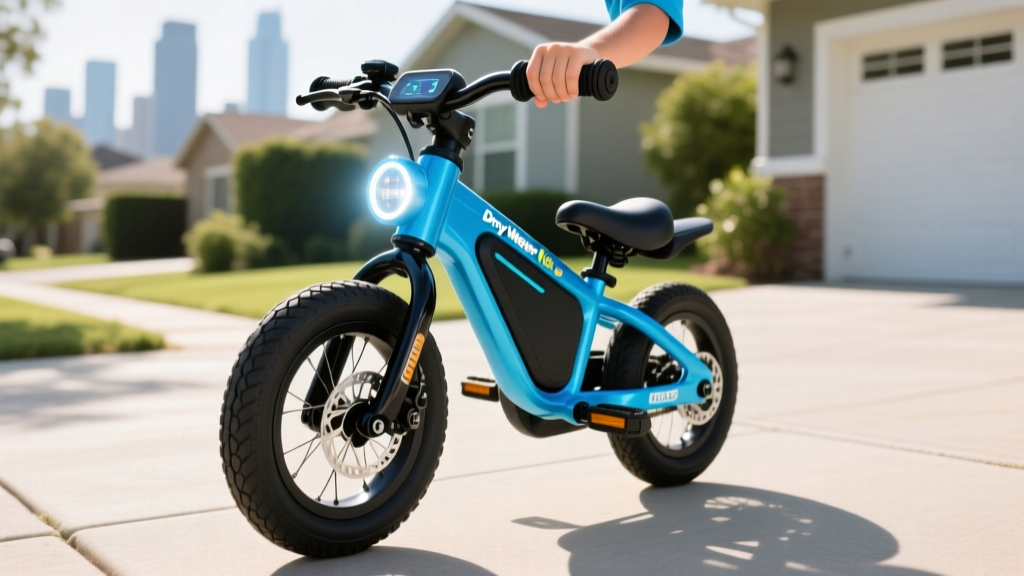
Quick Answer: The Droyd Weeler is a 24V kids' electric mini bike priced around $299, designed for ages 3–8. It delivers a top speed of roughly 10 mph, an estimated range of 5–7 miles per charge, and requires about 4–6 hours on a standard 120V outlet to fully recharge. It's a solid entry-level electric ride-on for supervised driveway and backyard use, but it is not a street-legal vehicle, not eligible for any federal EV tax credits, and should not be confused with full-size electric motorcycles or EVs.
If you've landed here searching for the Droyd Weeler kids' electric mini bike, you're likely a parent or grandparent weighing whether this compact electric ride-on is a smart buy for a young child. While AutoEdgeView typically covers full-size electric vehicles — from the Tesla Model Y to the Hyundai Ioniq 5 — we recognize that the first "EV" many kids experience is a battery-powered mini bike in the driveway. This guide applies the same data-driven lens we use for four-wheeled EVs to help you make an informed purchase.
What Exactly Is the Droyd Weeler?
The Droyd Weeler is a small, battery-electric mini bike (sometimes styled as a mini dirt bike or pocket bike) manufactured by Droyd, a brand specializing in children's electric ride-on toys. It sits in the same product category as the Razor MX350 and Hover-1 products — low-speed, rechargeable electric bikes meant for off-road play on private property.
Key specifications based on available product data:
| Specification | Droyd Weeler (Estimated) |
|---|---|
| Motor | ~100–150W brushed electric motor |
| Battery | 24V sealed lead-acid (SLA), ~7–12 Ah |
| Battery Chemistry | Lead-acid (not lithium-ion) |
| Top Speed | ~8–10 mph (varies by rider weight) |
| Range Per Charge | ~5–7 miles (real-world, flat terrain) |
| Charge Time (120V) | ~4–6 hours (0–100%) |
| Max Rider Weight | ~65–80 lbs |
| Recommended Age | 3–8 years |
| Brakes | Rear drum or band brake |
| Price (MSRP) | ~$249–$329 |
| Warranty | ~90 days (typical for category) |
Critical distinction — kW vs. kWh applies even here: The motor's wattage (roughly 100–150W) tells you its power output — how fast it can accelerate and climb. The battery's watt-hours (voltage × amp-hours, roughly 168–288 Wh) tells you its energy capacity — how far it can go. A 24V, 10Ah battery stores 240 Wh of energy. That's about 0.24 kWh — for reference, a Tesla Model Y Long Range stores roughly 75 kWh, or about 312 times more energy.
Droyd Weeler vs. Gas Mini Bikes: Cost and Practicality
The most common comparison parents make is between electric mini bikes like the Droyd Weeler and small gas-powered pocket bikes (typically 40cc–50cc two-stroke or four-stroke engines). Here's how they stack up on the metrics that matter for family use:
| Factor | Droyd Weeler (Electric) | Gas Mini Bike (~49cc) |
|---|---|---|
| Purchase Price | $249–$329 | $400–$900 |
| "Fuel" Cost Per Charge/Tank | ~$0.03–$0.05 (electricity) | ~$2.50–$4.00 (gas + oil mix) |
| Cost Per Mile (Energy) | ~$0.01 | ~$0.15–$0.25 |
| Noise Level | Near-silent (~55 dB) | Loud (~85–95 dB) |
| Emissions at Point of Use | None | CO, HC, NOx (two-stroke especially) |
| Maintenance | Minimal (brake checks, chain lube) | Oil changes, spark plugs, carburetor cleaning, air filter |
| Top Speed | ~8–10 mph | ~20–30 mph |
| Range | ~5–7 miles | ~15–30 miles per tank |
| Refuel/Recharge Time | 4–6 hours | 2 minutes (refuel) |
| Winter Storage | Maintain battery charge ~50% | Fuel stabilizer, fogging, carb drain |
The verdict: For young children (ages 3–8) riding in a backyard or driveway under supervision, the electric option wins on noise (your neighbors will thank you), simplicity, and running cost. Gas mini bikes make more sense for older kids (10+) who want higher speeds, longer range, and the ability to ride at motocross tracks or trails where charging isn't available.
Real-World Ownership: What Parents Should Know
Charging Logistics
The Droyd Weeler charges from a standard 120V household outlet using an included AC adapter — no special electrical work or Level 2 charger needed. At roughly 40–60W charge rate, a full charge takes 4–6 hours. This is the equivalent of "Level 1" charging in the full-size EV world.
Practical tip: Charge after every ride session, even if the battery isn't fully depleted. Lead-acid batteries (SLA) degrade faster when deeply discharged. Unlike the lithium-ion (NMC or LFP) batteries in full-size EVs, SLA batteries do not benefit from staying between 20–80% state of charge. In fact, storing an SLA battery at low charge for weeks can cause sulfation, permanently reducing capacity.
Range Reality vs. Marketing
Manufacturers in this category sometimes advertise ranges of "up to 10 miles" or more. Treat these as best-case scenarios under ideal conditions: lightweight rider, flat paved surface, moderate temperature (65–75°F), and no wind. In real-world use with a 50-lb child on mixed terrain (grass, slight inclines), expect roughly 5–7 miles, or about 30–45 minutes of continuous riding.
Cold weather (below 50°F) reduces SLA battery performance by roughly 20–30%, similar to how cold temperatures affect lithium-ion EV batteries. If you're riding in late fall or early spring, plan for shorter sessions.
Battery Lifespan and Replacement
Sealed lead-acid batteries typically last 200–400 full charge cycles before capacity drops noticeably (below 70–80% of original). With moderate use (2–3 rides per week, partial discharges), expect 2–3 years of usable life before replacement is needed.
Replacement 24V SLA battery packs cost roughly $30–$60 — a fraction of the bike's original price. Compare this to full-size EV battery replacement, which can run $5,000–$20,000, though those batteries are designed for 1,000–3,000+ cycles and typically last 10–15 years.
Cost Breakdown: 3-Year Ownership
Here's what owning a Droyd Weeler actually costs over three years of typical use (roughly 100 rides per year, ~5 miles per ride):
| Cost Category | Year 1 | Year 2 | Year 3 | 3-Year Total |
|---|---|---|---|---|
| Purchase Price | $299 | — | — | $299 |
| Electricity (~500 miles/yr) | $1.50 | $1.50 | $1.50 | $4.50 |
| Battery Replacement | — | — | $45 | $45 |
| Safety Gear (helmet, pads) | $60 | — | $30 (outgrown) | $90 |
| Maintenance (chain lube, brake adj.) | $10 | $10 | $10 | $30 |
| Total | $370.50 | $11.50 | $86.50 | $468.50 |
For comparison, a gas mini bike over the same period would cost roughly $800–$1,400 total, driven primarily by the higher purchase price, fuel costs (~$75–$120/year), and more frequent maintenance (spark plugs, oil, carburetor rebuilds).
Common Misconceptions — Myth vs. Fact
| Myth | Fact |
|---|---|
| "It qualifies for the $7,500 federal EV tax credit." | No. The IRS §30D clean vehicle credit applies only to highway-capable four-wheeled vehicles meeting specific MSRP, income, battery sourcing, and weight requirements. A kids' mini bike does not qualify. |
| "It's basically a small electric motorcycle." | It shares the form factor but not the engineering. A true electric motorcycle (e.g., Zero SR/F, LiveWire One) uses lithium-ion batteries, 10+ kW motors, regenerative braking, and is street-legal. The Droyd Weeler is a toy-grade ride-on. |
| "The battery will last forever if I don't use it." | SLA batteries self-discharge at ~3–5% per month and degrade if stored at low state of charge. Store at ~75% charge and top off every 4–6 weeks during off-seasons. |
| "My kid can ride it on the sidewalk or street." | In virtually all US jurisdictions, mini bikes (electric or gas) are not street-legal and should only be used on private property. Check your local ordinances. |
| "It's completely safe because it's electric and slow." | Even at 10 mph, falls can cause injury. CPSC recommends helmets and protective gear for all motorized ride-on toys. Always supervise young riders. |
Decision Framework: Is the Droyd Weeler Right for Your Child?
Choose the Droyd Weeler if:
- Your child is ages 3–8 and under 80 lbs
- You want a quiet, low-maintenance ride-on for backyard/driveway use
- You have access to a standard 120V outlet for charging (nearly everyone does)
- Your budget is under $350 and you want minimal ongoing costs
- Noise is a concern (suburban neighborhoods, close neighbors)
- You don't want to deal with gasoline, oil mixing, or carburetor maintenance
Look at alternatives if:
- Your child is older (8+) or heavier than 80 lbs — consider the Razor MX400 or MX650 (higher wattage, larger frame)
- You need more than 7 miles of range — gas mini bikes offer 15–30 miles per tank, or look at higher-capacity lithium-ion electric models ($500–$800 range)
- Your child wants to ride at motocross tracks or trails — gas bikes offer more power and range, and refueling takes minutes
- You live in a very cold climate and plan to ride year-round — SLA batteries lose significant capacity below 40°F; lithium-ion models perform better in cold
- You want a street-legal vehicle — no mini bike qualifies; look at electric scooters or mopeds rated for road use (and check your state's licensing requirements)
How This Fits Into the Bigger EV Picture
While the Droyd Weeler is a toy rather than a vehicle, it introduces children to concepts they'll encounter in full-size EVs: battery-electric propulsion, regenerative-free coasting, plug-in charging from a standard outlet, and the trade-off between battery capacity (Wh) and range. Kids who grow up comfortable with electric ride-ons are the next generation of EV owners — and the fundamentals of "plug in, charge up, ride quiet" translate directly.
For parents who are themselves researching a full-size EV, the decision-making framework is similar: match the vehicle to your actual use case, understand real-world range versus sticker claims, factor in total cost of ownership (not just purchase price), and know what infrastructure you need at home. The stakes are just higher when the battery holds 75 kWh instead of 0.24 kWh.
If you're also evaluating a family EV purchase, our guides on EV range and efficiency (fueleconomy.gov) and IRS clean vehicle tax credit rules cover the data you need for four-wheeled decisions.
Frequently Asked Questions
How long does the Droyd Weeler battery last on a single charge?
Expect roughly 5–7 miles or 30–45 minutes of continuous riding under typical conditions (50-lb rider, mixed terrain, moderate temperature). Heavier riders, hills, grass, and cold weather will reduce this. Manufacturer "up to" claims often assume ideal lab conditions.
Can I replace the battery myself?
Yes. Most kids' electric mini bikes use a standard 24V SLA battery pack connected with spade terminals or a plug connector. Replacement batteries cost $30–$60 from electronics retailers. Disconnect the old battery, swap in the new one, and reconnect — no special tools beyond a screwdriver required.
Is the Droyd Weeler safe for a 4-year-old?
The manufacturer recommends ages 3–8, but safety depends on the individual child's coordination, judgment, and supervision. Always provide a properly fitted helmet, knee and elbow pads, and closed-toe shoes. Supervise all rides, especially near driveways, streets, or uneven terrain. The CPSC offers guidance on ride-on toy safety that applies here.
Does it have regenerative braking like a Tesla?
No. The Droyd Weeler uses a simple mechanical brake (typically a rear drum or band brake) and does not have regenerative braking. Regenerative braking requires a more sophisticated motor controller that converts kinetic energy back into battery energy during deceleration — standard on full-size EVs but not found in toy-grade ride-ons at this price point.
Can I upgrade to a lithium-ion battery?
Technically possible but not straightforward. You'd need a 24V lithium pack with a compatible BMS (battery management system) and a charger designed for lithium chemistry (SLA and lithium charge profiles differ). The cost ($80–$150 for a quality pack) often exceeds the value of the bike itself. For most families, replacing the SLA battery every 2–3 years is the more practical path.
How does charging cost compare to a gas mini bike?
At the US average electricity rate of ~$0.16/kWh (per EIA data), a full charge of the Droyd Weeler's ~0.24 kWh battery costs roughly $0.04. A gas mini bike burning even a small amount of 50:1 premix fuel costs $2.50–$4.00 per tank fill. Over a year of 100 rides, the electric bike uses about $1.50 in electricity versus $75–$120 in gasoline for a comparable gas model.