Important scope note: AutoEdgeView covers electric cars, trucks, SUVs, plug-in hybrids, and EV charging/battery technology. The Droyd Blipper is a battery-powered mini bike (a low-speed recreational vehicle), not a street-legal electric vehicle eligible for federal EV tax credits or subject to EPA range testing. The analysis below applies our EV expertise to this product category so parents can make an informed purchase — but readers looking for full-size EV reviews should consult our main EV guides.
Quick Answer: Is the Droyd Blipper Right for Your Teen?
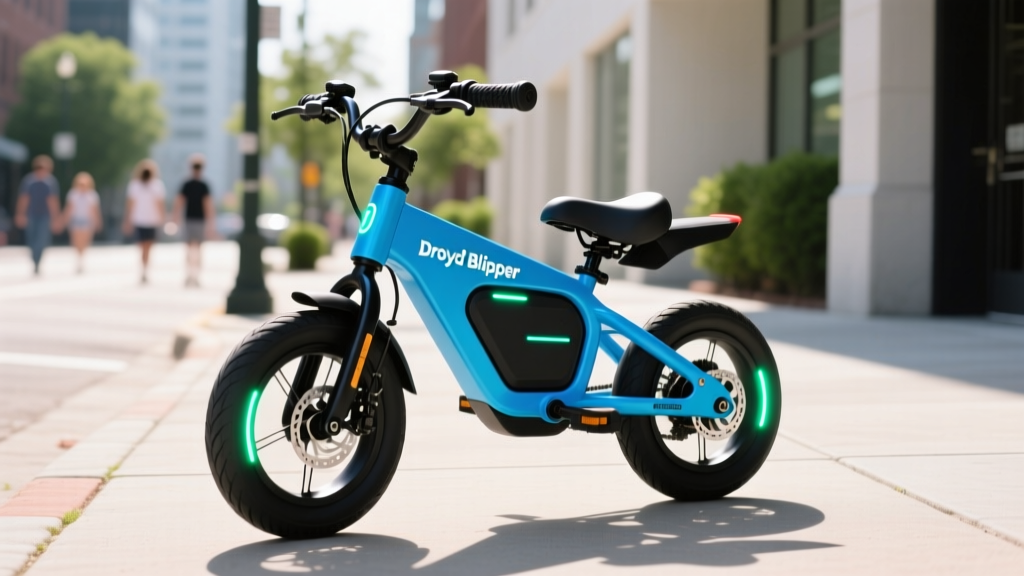
The Droyd Blipper is a compact, battery-powered mini bike aimed at riders ages 13 and up. It delivers a top speed of approximately 15 mph, an estimated range of 8–10 miles per charge, and a 250W hub motor powered by a 36V lithium-ion battery pack (roughly 4–5 Ah / ~150–180 Wh of energy). It charges from a standard 120V household outlet in about 3–4 hours. The MSRP sits around $400–$500 depending on the retailer and colorway. It is designed for neighborhood paths, driveways, and private property — not for public roads.
Core Specs and What They Mean in Practice
Before you buy, here is how the Blipper's key numbers translate to real-world riding for a teenager.
| Specification | Droyd Blipper (Estimated) | What It Means |
|---|---|---|
| Motor | 250W brushless hub motor | Adequate for flat terrain; struggles on hills >10% grade |
| Battery | 36V lithium-ion (~4.4 Ah, ~158 Wh) | Small pack — limits range and sustained high-speed riding |
| Top Speed | ~15 mph | Comparable to a fast bicycle; below most local e-bike thresholds |
| Range per Charge | 8–10 miles (real-world) | Expect less with a heavier rider, hills, or cold weather |
| Charge Time (120V) | 3–4 hours (0–100%) | Uses a standard wall outlet; no special charger needed |
| Rider Weight Limit | ~150 lbs | Best for younger teens; most adults will exceed the limit |
| Price (MSRP) | $400–$500 | Budget-friendly entry point for motorized recreation |
Real-World Range vs. Sticker Claims
Like full-size EVs, the Blipper's range depends heavily on conditions. The ~158 Wh battery pack is quite small — for reference, a typical electric car battery holds 60,000–100,000 Wh (60–100 kWh). At 15 mph on flat ground with a 100-lb rider, you can expect close to the advertised 10 miles. Add hills, a heavier rider, cold temperatures (below 50°F), or frequent stop-and-go, and expect 6–8 miles of usable range. Lithium-ion batteries also lose efficiency in cold weather, just as they do in electric cars.
Electric Mini Bike vs. Gas Mini Bike: Cost and Ownership Comparison
Parents often weigh the Blipper against gas-powered pocket bikes and mini dirt bikes. Here is how the economics compare over a typical first year of ownership.
| Factor | Droyd Blipper (Electric) | Typical Gas Mini Bike (49cc) |
|---|---|---|
| Purchase Price | $400–$500 | $600–$1,200 |
| Fuel / Energy Cost per Charge or Tank | ~$0.02–$0.04 per full charge (158 Wh at $0.16/kWh national avg) | ~$3–$5 per tank fill (approx. 0.5 gal) |
| Annual Energy/Fuel Cost (moderate use) | $2–$5 | $80–$150 |
| Maintenance | Minimal — no oil, spark plugs, air filters, or carburetor | Oil changes, spark plugs, carb tuning, chain lube ($50–$100/yr) |
| Noise Level | Near-silent | Loud (70–90 dB) — neighborhood complaints common |
| Emissions | Zero tailpipe emissions | Unburned hydrocarbons, CO, NOx from small 2-stroke/4-stroke engines |
| Year 1 Total Estimated Cost | $405–$510 | $730–$1,450 |
The electric option wins decisively on operating cost and maintenance simplicity. A gas mini bike may offer more top speed and range (some hit 30+ mph with 50+ mile range), but for a teen riding around the neighborhood, the Blipper's 15 mph cap is arguably a safety feature, not a limitation.
Charging and Battery Ownership: What Parents Should Know
One advantage the Blipper has over a full-size EV: you do not need a home charging installation. It plugs into any standard 120V outlet via its included charger, drawing roughly 50–60 watts during peak charging. That is less power than a laptop computer.
Battery Longevity and Replacement
The Blipper uses a lithium-ion pack (likely NMC chemistry given its compact size and energy density requirements). Here is what that means for long-term ownership:
- Cycle life: Typical 36V lithium-ion packs in this class are rated for 500–800 full charge cycles before capacity drops to ~80% of original.
- Calendar aging: Even with light use, expect noticeable capacity loss after 3–4 years.
- Replacement cost: A compatible 36V 4.4 Ah replacement pack typically runs $80–$150 from third-party suppliers. Check Droyd's official parts availability before purchasing.
- Storage best practice: Store at ~50% state of charge in a cool, dry place. Never store fully depleted or fully charged for extended periods — this accelerates degradation, just as it does in electric cars.
Common Misconceptions — Myth vs. Fact
| Myth | Fact |
|---|---|
| "It qualifies for the $7,500 federal EV tax credit." | No. The IRS §30D credit applies to on-road electric vehicles meeting specific battery sourcing, MSRP, and income requirements. Mini bikes are off-road recreational products and do not qualify. See IRS clean vehicle credit rules. |
| "It's basically an electric motorcycle." | At 15 mph and ~50 lbs, it is classified as a toy/recreational vehicle in most jurisdictions — not a motorcycle. It cannot be registered, insured, or ridden on public roads. |
| "The battery will die after one summer." | With proper care (avoid deep discharges, store at partial charge, keep out of extreme heat), the battery should last 2–4 years of regular use before significant capacity loss. |
| "It needs a special outlet or charger." | It charges from any standard 120V US household outlet. No electrician needed. |
Safety, Legality, and Where Your Teen Can Actually Ride
This is the area most buyers under-research. The Droyd Blipper is not street-legal in any US state. It lacks the lighting, mirrors, horn, DOT-certified brakes, and VIN required for road registration.
Where It Can Be Ridden
- Private property — your driveway, backyard, or a friend's property (with permission)
- Some bike paths and trails — check local ordinances; many municipalities prohibit motorized vehicles on multi-use paths
- Private tracks or off-road areas — some facilities allow small electric vehicles
Where It Cannot Be Ridden
- Public roads, streets, or highways
- Sidewalks (in most jurisdictions)
- Most public parks with posted motorized-vehicle bans
Safety gear is essential. Even at 15 mph, a fall on pavement can cause serious injury. Require a CPSC-certified helmet, closed-toe shoes, and consider knee/elbow pads. According to the National Highway Traffic Safety Administration, powered two-wheelers of all sizes carry elevated injury risk compared to enclosed vehicles — parental supervision and clear riding rules matter.
Decision Framework: Should You Buy the Droyd Blipper?
Choose the Droyd Blipper If:
- Your teen is 13–16 years old and under 150 lbs
- You want a quiet, low-maintenance, low-speed option for private-property riding
- You have access to a standard outlet for charging (no garage upgrades needed)
- Your budget is under $500 and you want minimal ongoing costs
- Noise and emissions from a gas mini bike are a concern in your neighborhood
Look Elsewhere If:
- Your teen wants to ride on public roads (you need a street-legal, registerable vehicle — consider a full electric scooter or moped like the NIU KQi series or a Segway eMoped)
- Your rider exceeds 150 lbs (the motor and frame are not designed for adult weight)
- You need more than ~10 miles of range per session
- Your teen wants speeds above 15 mph (look at higher-powered e-bikes rated for 20–28 mph, keeping local e-bike classification laws in mind)
- You live in an area with no legal riding locations nearby (check local ordinances before purchasing)
First-Time Electric Vehicle Buyer Basics (Applied to Mini Bikes)
If the Blipper is your family's first battery-powered vehicle, the ownership concepts mirror those of full-size EVs — just at a smaller scale:
- kW vs. kWh: The Blipper's motor is rated in watts (250W = 0.25 kW of power). Its battery holds energy measured in watt-hours (~158 Wh = 0.158 kWh). Power (kW) determines speed and hill-climbing ability; energy (kWh) determines range. This same distinction applies when you eventually shop for an electric car.
- Charge curves: Like all lithium-ion batteries, the Blipper charges fastest from 0–80% and slows as it approaches full. The stated 3–4 hour charge time includes this taper.
- Cold-weather performance: Below 40°F, expect 15–25% range loss. This is a chemistry limitation shared by every lithium-ion battery from mini bikes to the Tesla Model Y.
- No federal incentives: Unlike qualifying electric cars (which may be eligible for the §30D credit of up to $7,500 at point of sale, subject to MSRP caps, income limits, and battery-sourcing rules per the IRS), recreational mini bikes receive no federal tax benefits.
Frequently Asked Questions
How fast does the Droyd Blipper go?
Approximately 15 mph on flat ground with a rider under 120 lbs. Heavier riders or inclines will reduce top speed to 10–12 mph. This is comparable to a brisk bicycle pace — fast enough to be fun, slow enough that parents can set reasonable boundaries.
How long does the battery last on a single charge?
Expect 8–10 miles under ideal conditions (flat terrain, light rider, moderate speed, warm weather). Real-world riding with stops, hills, and a 120+ lb teen typically yields 6–8 miles. A full recharge takes 3–4 hours from a standard wall outlet.
Is the Droyd Blipper street-legal?
No. It does not meet federal or state requirements for on-road vehicles (no DOT lighting, mirrors, VIN, or registration capability). It is designed for private property and approved off-road areas only. Check your local ordinances for specific rules about motorized recreational vehicles on paths and trails.
Does the Droyd Blipper qualify for any EV tax credits?
No. The federal §30D Clean Vehicle Credit applies only to qualifying on-road electric vehicles that meet battery-sourcing, MSRP, and buyer-income requirements. Off-road recreational mini bikes are not eligible. State and local incentive programs similarly target road-going vehicles.
What happens when the battery wears out?
Lithium-ion batteries degrade over time and charge cycles. Expect noticeable range reduction after 2–4 years of regular use. A replacement 36V battery pack costs approximately $80–$150. Verify parts availability through Droyd or authorized dealers before purchasing the bike, as discontinued models can leave owners without replacement battery options.
How does it compare to an e-bike?
Class 1 and Class 2 e-bikes typically offer 20 mph assisted speed, 20–40 mile range, and cost $1,000–$2,500. They are also legal on many bike paths and some roads. If your teen needs transportation (not just recreation) or you want a longer-range option, a youth-sized e-bike may be a better investment — at roughly 2–5x the cost.
Sources: IRS §30D Clean Vehicle Credit guidelines (irs.gov); NHTSA vehicle safety information (nhtsa.gov). Droyd Blipper specifications are based on manufacturer and retailer listings; confirm exact specs with the seller at time of purchase, as product details may change.