Electric vehicles have matured past the early-adopter phase, but they still carry real trade-offs that buyers need to understand before signing a purchase agreement. The most significant downsides to electric cars in 2026 include higher upfront purchase prices (though the gap is narrowing), charging infrastructure that remains inconsistent outside major metro areas, cold-weather range reduction of 20–30%, insurance premiums that average 15–25% higher than equivalent gas vehicles, and the practical reality that apartment dwellers and street-parkers face genuine barriers to convenient home charging.
Quick Answer: Are EV Downsides Dealbreakers?
For most buyers with home charging access and moderate daily commutes, the downsides are manageable. For rural drivers, apartment residents without charging, and those who regularly tow or drive 400+ miles in winter, a plug-in hybrid (PHEV) or efficient hybrid may be the more practical choice in 2026. The key is matching the vehicle to your specific driving pattern — not the marketing.
The Real Cost Equation: Purchase Price, Tax Credits, and Total Ownership
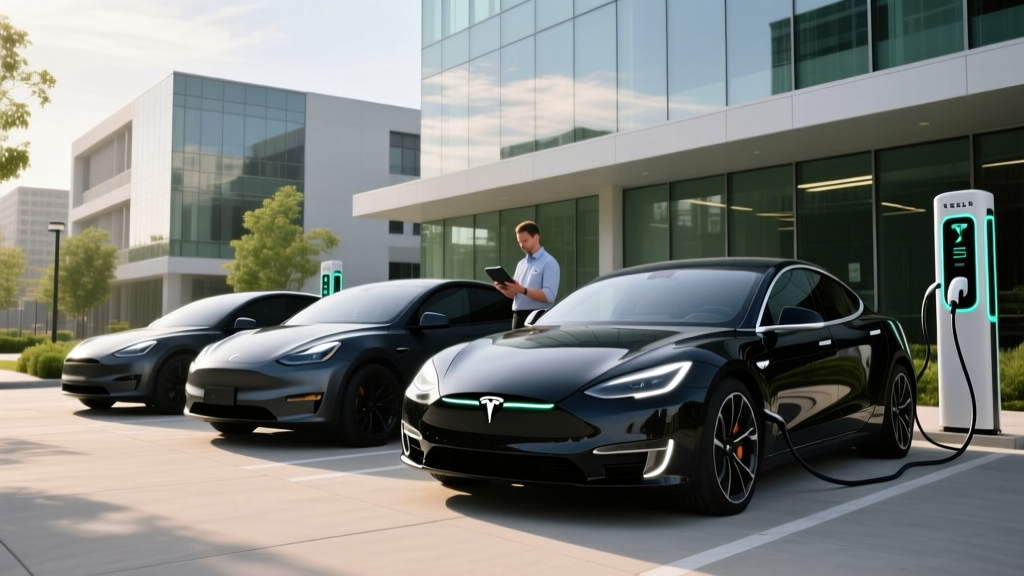
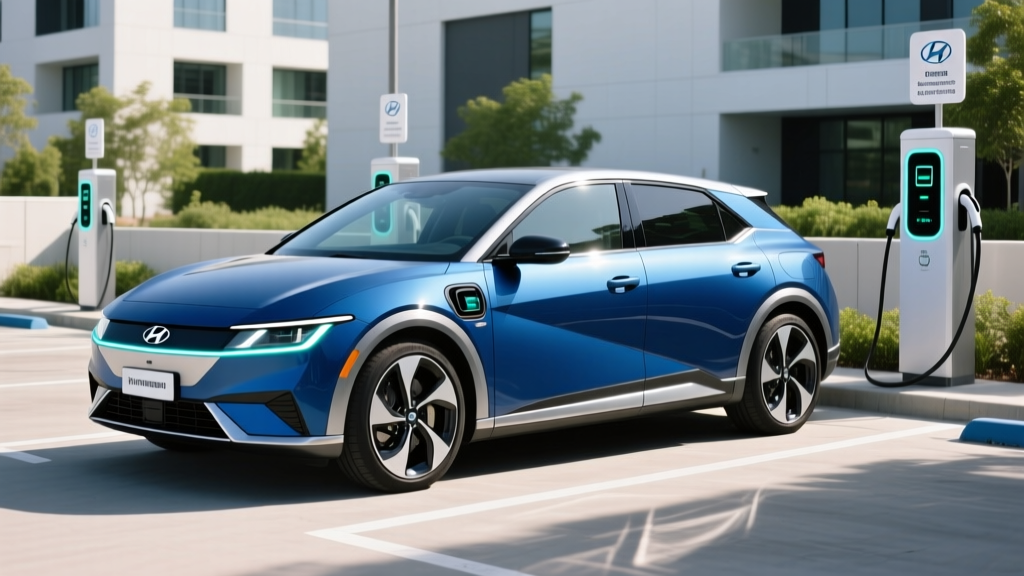
The sticker shock of EVs remains a legitimate concern, even as prices have dropped. A 2026 Tesla Model 3 Long Range starts at $42,990 before incentives, while a comparably equipped Toyota Camry LE gas sedan starts around $29,995. The Hyundai Ioniq 5 SE, a popular midsize electric crossover, begins at $43,500. These numbers matter because not every buyer qualifies for the full federal tax credit.
The IRS §30D clean vehicle credit can reduce your tax burden by up to $7,500, but eligibility depends on multiple factors that change annually:
- MSRP caps: Vans, SUVs, and trucks must be under $80,000; sedans under $55,000
- Income limits: Modified AGI cannot exceed $150,000 (single), $225,000 (head of household), or $300,000 (joint filing)
- Battery sourcing: Critical minerals and battery components must meet increasing percentages of North American or free-trade-agreement sourcing — requirements that tighten each year through 2030
- Point-of-sale transfer: As of 2024, you can transfer the credit to the dealer for an immediate price reduction, but you still must meet income requirements at tax time or repay the credit
This means a buyer earning $160,000 purchasing a $58,000 EV sedan gets zero federal credit. Always verify current-year eligibility on IRS.gov before counting on the savings.
5-Year Cost Comparison: EV vs Gas vs Hybrid
| Cost Factor (5 Years / 75,000 Miles) | 2026 Tesla Model 3 LR (BEV) | 2026 Toyota Camry LE (Gas) | 2026 Toyota Prius (HEV) |
|---|---|---|---|
| Purchase Price (MSRP) | $42,990 | $29,995 | $29,450 |
| Federal Tax Credit | -$5,000 (partial, battery sourcing) | $0 | $0 |
| Fuel/Energy Cost | $3,750 (home charging @ $0.14/kWh) | $9,375 (30 MPG @ $3.75/gal) | $5,250 (57 MPG combined @ $3.75/gal) |
| Maintenance | $1,200 (tire rotation, cabin filter, fluid top-offs) | $3,500 (oil changes, brakes, filters) | $3,200 (similar to gas, less brake wear) |
| Insurance (avg) | $12,500 ($2,500/yr) | $8,500 ($1,700/yr) | $8,750 ($1,750/yr) |
| 5-Year Total | $55,440 | $51,370 | $46,650 |
Note: This assumes 15,000 miles/year, 85% home charging for the EV, national average electricity rates, and a buyer who qualifies for a partial $5,000 credit. Your numbers will vary significantly based on local electricity costs, gas prices, insurance market, and credit eligibility. Source: fueleconomy.gov EPA estimates and AAA insurance data.
The EV breaks even around year 6–7 in this scenario, but only if you have reliable home charging. Public DC fast charging at $0.35–0.50/kWh can push energy costs to $7,000+ over five years, erasing much of the fuel savings.
Charging Infrastructure: The Persistent Gap
The most-cited downside to electric cars remains charging access, and while the network has expanded dramatically, the reality on the ground varies enormously by location and housing type.
Home Charging: The Make-or-Break Factor
Level 2 home charging (240V, 7.4–11.5 kW) adds 25–44 miles of range per hour and is the foundation of convenient EV ownership. But installation costs range from $500 (simple outlet near the panel) to $3,000+ (panel upgrade, long conduit runs, permit fees). Renters and condo owners often cannot install chargers at all, and apartment buildings with shared parking present logistical and electrical challenges that no amount of public charging fully solves.
If you rely solely on public charging, expect to spend 30–40% more on energy than gas would cost, plus the time burden of 20–40 minute charging sessions multiple times per week.
Public Charging Reliability and Coverage
The Tesla Supercharger network remains the gold standard for reliability, with 99%+ uptime and consistent speeds. The Combined Charging Standard (CCS) networks — Electrify America, EVgo, ChargePoint — have improved but still experience 10–20% downtime at some locations, broken connectors, and payment-system failures. The transition to the North American Charging Standard (NACS) connector, which most automakers adopted starting in 2025, has added confusion: older CCS vehicles now need adapters to access Tesla Superchargers, and adapter availability and compatibility vary by model.
Rural charging deserts persist across large swaths of the Midwest, Mountain West, and rural South. A 2026 road trip from Denver to Moab requires careful planning around 150–200 mile gaps between reliable DC fast chargers, and winter travel on I-70 through Colorado can be genuinely stressful when cold temperatures reduce range by 25% and chargers are sparse.
Range Reality: EPA Stickers vs Real-World Driving
EPA range estimates are measured under controlled conditions that don't reflect highway speeds, cold weather, mountain driving, or towing. Understanding the gap between sticker and reality is essential for trip planning and daily confidence.
| Vehicle | EPA Range | Real-World Highway (70-80 mph) | Cold Weather (20°F, Highway) |
|---|---|---|---|
| 2026 Tesla Model 3 Long Range | 363 miles | 280–310 miles | 220–260 miles |
| 2026 Hyundai Ioniq 5 SEL (AWD) | 290 miles | 230–260 miles | 180–210 miles |
| 2026 Ford F-150 Lightning XLT | 240 miles (std battery) | 180–210 miles | 140–170 miles |
| 2026 Chevrolet Equinox EV 3RS | 319 miles | 250–280 miles | 200–230 miles |
Cold weather is particularly punishing because lithium-ion batteries lose efficiency below 40°F, and cabin heating draws significant power (3–5 kW continuous). EVs with heat pumps — standard on most 2026 models — reduce this penalty by 30–40% compared to resistive heating, but the loss is still substantial. If you live in Minnesota, Montana, or Maine and regularly drive 150+ miles in winter, range anxiety is rational, not irrational.
Towing is another scenario where EVs struggle. The F-150 Lightning can tow 7,700 pounds, but real-world range while towing a 5,000-pound trailer drops to 80–120 miles at highway speeds. For frequent towing, a diesel or hybrid truck remains more practical in 2026.
Insurance, Depreciation, and the Hidden Costs
EV insurance premiums average 15–25% higher than comparable gas vehicles, driven by higher repair costs (specialized body shops, expensive battery replacement if damaged, advanced sensor recalibration after collisions), and in some cases, higher theft rates for popular models. A 2026 Model Y might cost $2,600/year to insure versus $2,000 for a gas RAV4, adding $3,000 over five years.
Depreciation has been volatile. Early EVs depreciated heavily due to rapid price cuts and battery degradation concerns. By 2026, mainstream models like the Model 3, Ioniq 5, and Equinox EV hold value better, but luxury EVs (Mercedes EQS, BMW iX) still depreciate faster than their gas counterparts. The used EV market is also affected by federal used-EV credits (up to $4,000 on vehicles under $25,000), which can support resale values but create pricing distortions.
Battery replacement remains a worst-case scenario rather than a common expense. Most 2026 EVs carry 8-year/100,000-mile battery warranties with capacity-retention thresholds of 70–80%. Real-world data shows most batteries degrade 10–15% over 150,000 miles, but a full replacement outside warranty can cost $12,000–$22,000 depending on the model and battery chemistry (LFP batteries are cheaper but less energy-dense; NMC batteries offer more range but cost more to replace).
Addressing Common Misconceptions with Data
| Myth | Fact (2026 Data) |
|---|---|
| "EV batteries need replacement every 5 years" | Most batteries retain 85–90% capacity at 150,000 miles. Warranty covers 8 years/100,000 miles minimum. Catastrophic failure is rare (<2% of vehicles). |
| "EVs are worse for the environment due to battery mining" | Lifecycle analysis shows EVs produce 50–70% fewer emissions over 150,000 miles even on coal-heavy grids, and 70–85% fewer on renewable-heavy grids. Battery recycling infrastructure is scaling. |
| "Charging takes too long for road trips" | Modern EVs with 250+ kW peak charging add 150–200 miles in 15–20 minutes (10–80%). This aligns with typical rest-stop breaks, though charging slows above 80% and varies by station power. |
| "EVs can't handle cold weather" | They can, with planning. Range drops 20–30%, preconditioning (warming the battery while plugged in) recovers 10–15% of that loss, and heat pumps are now standard on most models. |
| "The grid can't handle mass EV adoption" | Most charging happens overnight when grid demand is low. Smart charging and time-of-use rates manage load. Local transformer upgrades are needed in some neighborhoods, but grid-scale collapse is not supported by data. |
Decision Framework: Should You Buy an EV, Hybrid, or Stick with Gas?
Choose a Battery Electric Vehicle (BEV) If:
- You have reliable home charging (garage, driveway, or workplace Level 2)
- Your daily driving is under 80 miles round-trip
- You take road trips 1–3 times per year and can plan charging stops
- You qualify for federal/state tax credits that close the price gap
- You want minimal maintenance and lower per-mile energy costs
- You live in a mild-to-moderate climate (or accept winter range loss)
Choose a Plug-In Hybrid (PHEV) If:
- You have home charging but also drive 200+ miles regularly
- You want electric-only commuting (25–40 miles) with gas-engine flexibility
- You live in a rural area with sparse charging infrastructure
- You frequently tow or carry heavy loads
- You're not ready to commit to full electric but want to reduce gas consumption
Choose a Hybrid (HEV) or Gas Vehicle If:
- You cannot charge at home or work (apartment, street parking, no outlet access)
- You regularly drive 400+ miles in winter conditions
- You tow frequently (boats, trailers, campers)
- Your budget is under $30,000 and you need maximum vehicle for the money
- You live in a charging desert and road-trip often
What First-Time EV Buyers Must Know Before Signing
Test the charging logistics, not just the car. Before purchasing, map your weekly driving pattern. Where will you charge? How long will it take? What's the backup plan if your home charger fails or a public station is down? If you can't answer these questions concretely, you're not ready for an EV.
Understand the charging curve. Peak charge rates (250 kW, 350 kW) apply only between 10–50% state of charge. Above 80%, charging slows dramatically to protect battery health. A "15-minute charge" claim usually means 10–80%, not 0–100%. Plan road-trip stops around 10–80% charges for efficiency.
Verify tax credit eligibility before you buy. The §30D credit has MSRP caps, income limits, and battery-sourcing requirements that change annually. Check IRS.gov and confirm with your tax professional. The point-of-sale transfer option is convenient, but if you exceed income limits at tax time, you'll owe the credit back.
Get insurance quotes before committing. EV insurance varies wildly by model, location, and insurer. A Model 3 might cost $2,200/year in one state and $3,400 in another. Get quotes from 3–4 insurers before signing the purchase agreement.
Consider a used EV for value. A 2–3-year-old EV with 30,000–50,000 miles often represents the best value, especially if it qualifies for the $4,000 used-EV credit (income limits apply, vehicle must be under $25,000). Battery degradation is typically minimal at this age, and you avoid the steepest depreciation.
FAQ: Common Questions About EV Downsides
Are electric cars more expensive to insure than gas cars?
Yes, on average 15–25% more expensive. This is due to higher repair costs (specialized body shops, sensor recalibration, expensive battery components), higher purchase prices, and in some cases, higher theft rates. However, the gap is narrowing as more mechanics gain EV certification and parts availability improves.
How long do EV batteries actually last?
Real-world data shows most EV batteries retain 85–90% capacity at 150,000 miles and 80–85% at 200,000 miles. Federal law mandates an 8-year/100,000-mile warranty with capacity retention above 70–80% (varies by manufacturer). Catastrophic battery failure is rare, affecting less than 2% of vehicles. Replacement outside warranty costs $12,000–$22,000 depending on chemistry and model.
Can I own an EV if I live in an apartment?
It's challenging but possible. You'll need reliable access to public Level 2 or DC fast charging within 1–2 miles of your home or workplace. Some apartment buildings are installing shared chargers, and workplace charging is increasingly common. If you rely solely on public charging, expect to spend 30–40% more on energy and 2–3 hours per week charging. A PHEV may be more practical for apartment dwellers.
Do EVs really save money compared to gas cars?
Over 5 years and 75,000 miles, an EV typically saves $2,000–$6,000 on fuel and maintenance, but this depends on home charging access, local electricity rates, gas prices, tax credit eligibility, and insurance costs. If you qualify for the full $7,500 federal credit and have cheap home charging, the EV breaks even in 3–4 years. If you pay full MSRP, rely on public charging, and face high insurance, the gas car or hybrid may be cheaper over 5 years.
What's the biggest mistake first-time EV buyers make?
Underestimating the charging logistics. Many buyers focus on range and performance but don't map out their weekly charging plan. Before buying, answer: Where will I charge daily? What's my backup if that charger fails? How will I handle road trips? If you can't answer these concretely, consider a PHEV or wait until your charging situation improves.
The downsides to electric cars are real but manageable for the right buyer. The key is honest self-assessment of your driving patterns, charging access, climate, and budget — not marketing hype from either side of the EV debate.