Why Tesla Owners Keep Choosing These EVs for Their Dogs
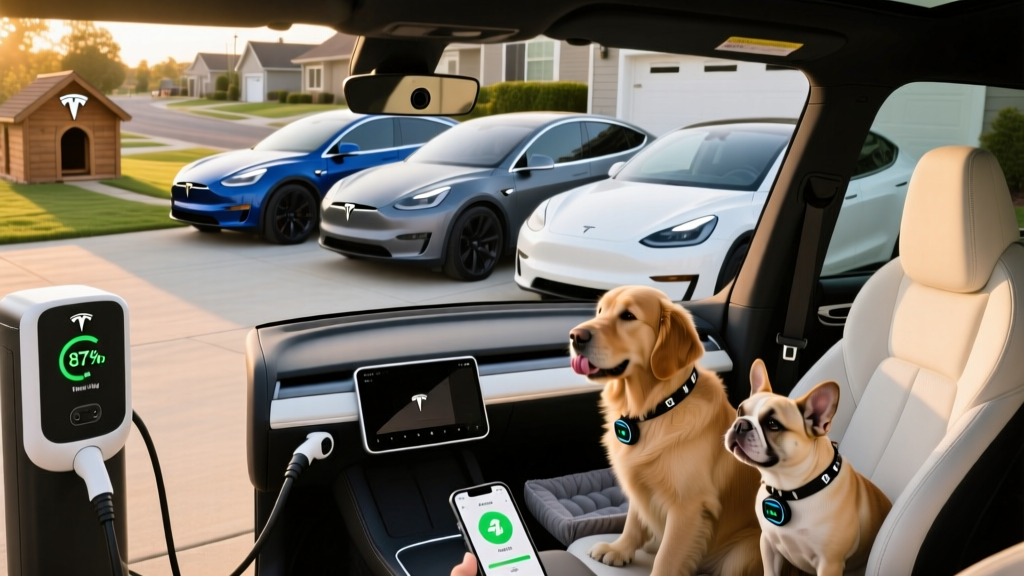
If you search "dog tesla" on any forum or social platform, you'll find thousands of photos: golden retrievers sprawled across a Model Y's flat cargo floor, huskies watching the world through a panoramic glass roof, and French bulldogs napping in climate-controlled cabins while their owners run errands. This isn't accidental marketing. Tesla has cultivated a reputation as one of the most pet-friendly EV brands on the market, and for measurable reasons: flat-load cargo areas without transmission humps, standard Dog Mode climate control, and an expanding Supercharger network that makes long road trips with pets feasible.
But which Tesla actually serves dog owners best in 2026? The answer depends on your dog's size, your typical trip length, and your budget. Below, we break down every current Tesla model through the lens of pet ownership — cargo dimensions, real-world range on road trips, charging speed at rest stops, and the total cost after federal tax credits.
Dog Mode and Climate Control: What It Actually Does
Tesla's Dog Mode is the feature most associated with the brand's pet-friendly reputation. When activated via the climate controls on the touchscreen, Dog Mode maintains your set cabin temperature indefinitely while the vehicle is parked. The touchscreen displays a persistent message: "My owner will be back soon. Don't worry! The A/C or heat is on and it's [XX]°F inside."
Unlike a basic "keep climate on" setting, Dog Mode prevents passengers (or well-meaning strangers) from accidentally turning off the HVAC. It also disables the walk-away lock chime and interior motion sensors so your dog's movement doesn't trigger the alarm.
Important limitation: Dog Mode draws from the traction battery. In extreme heat (above 100°F / 38°C), expect a battery drain of roughly 1–2% per hour. Tesla will send a notification to your phone if the battery drops below 20%. Dog Mode is not a substitute for leaving your pet unattended for extended periods — it's a safety net for short errands.
All current Tesla models (Model 3, Model Y, Model X, and Cybertruck) include Dog Mode as standard. There is no subscription or extra charge.
Model-by-Model Breakdown: Cargo, Range, and Charging
Here's the core comparison dog owners need. We've organized specs by what matters most when traveling with a pet: cargo volume with rear seats folded (the realistic configuration for medium-to-large dogs), real-world highway range, and DC fast-charging speed at Superchargers.
| Spec | Model 3 LR AWD | Model Y LR AWD | Model X LR AWD | Cybertruck AWD |
|---|---|---|---|---|
| Cargo (rear seats folded) | 23 cu ft | 72 cu ft | 88 cu ft | ~67 cu ft (bed + frunk) |
| Cargo floor length (seats down) | ~54 in | ~72 in | ~78 in | 72 in (bed, 6-ft box) |
| EPA Range | 341 mi | 320 mi | 335 mi | 340 mi |
| Battery (usable / chemistry) | ~75 kWh / NMC | ~75 kWh / NMC | ~95 kWh / NMC | ~123 kWh / NMC |
| Max DC Fast Charge | 250 kW | 250 kW | 250 kW | 250+ kW |
| 10–80% DC Charge Time | ~25 min | ~25 min | ~30 min | ~28 min |
| Level 2 Home Rate (kW) | 11.5 kW (~44 mi/hr) | 11.5 kW (~44 mi/hr) | 11.5 kW (~34 mi/hr) | 11.5 kW (~34 mi/hr) |
| 0–60 mph | 4.2 sec | 4.8 sec | 3.8 sec | 3.9 sec |
| Horsepower | 346 hp | 384 hp | 670 hp | 600 hp |
| EPA Efficiency (MPGe) | 132 MPGe | 122 MPGe | 102 MPGe | ~75 MPGe |
| Base MSRP (2026 est.) | $42,490 | $44,990 | $79,990 | $79,990 |
| Battery/Powertrain Warranty | 8 yr / 120,000 mi | 8 yr / 120,000 mi | 8 yr / 150,000 mi | 8 yr / 120,000 mi |
Sources: fueleconomy.gov (EPA data), Tesla.com spec sheets. Pricing reflects estimated 2026 MSRP before destination fees.
Real-World Range Reality Check: EPA estimates assume mixed driving at moderate temperatures. On a 75 mph highway road trip in summer, expect roughly 85–90% of EPA range (e.g., Model Y LR delivers ~275–290 real highway miles). In freezing winter (below 30°F), range drops 20–30% due to battery chemistry and cabin heating — plan for ~225–255 miles on a Model Y LR. Preconditioning the battery via the Tesla app before departing or navigating to a Supercharger helps recover some of this loss.
Which Tesla Fits Your Dog? A Practical Decision Framework
Cargo volume alone doesn't tell the full story. A Great Dane needs flat floor length more than cubic feet. A pair of corgis needs width. A nervous rescue dog needs a quiet, enclosed cabin rather than an open truck bed.
Choose Model Y Long Range if: You have a medium-to-large dog (Lab, Golden, Shepherd), need 72 cu ft of flat cargo with rear seats folded, and want the best value at ~$44,990 MSRP. The 72-inch flat floor length accommodates most breeds lying down. This is the most popular "dog Tesla" for a reason.
Choose Model X if: You have an extra-large breed or two large dogs and need 88 cu ft of space. The falcon-wing rear doors open dramatically wide, making it easier to load anxious or mobility-impaired dogs. Budget must support ~$80k MSRP.
Choose Model 3 Long Range if: You have a small-to-medium dog (under 40 lbs) and prioritize range (341 mi EPA) and efficiency (132 MPGe) over cargo space. The 23 cu ft trunk is adequate for a crate or a small dog on a harness.
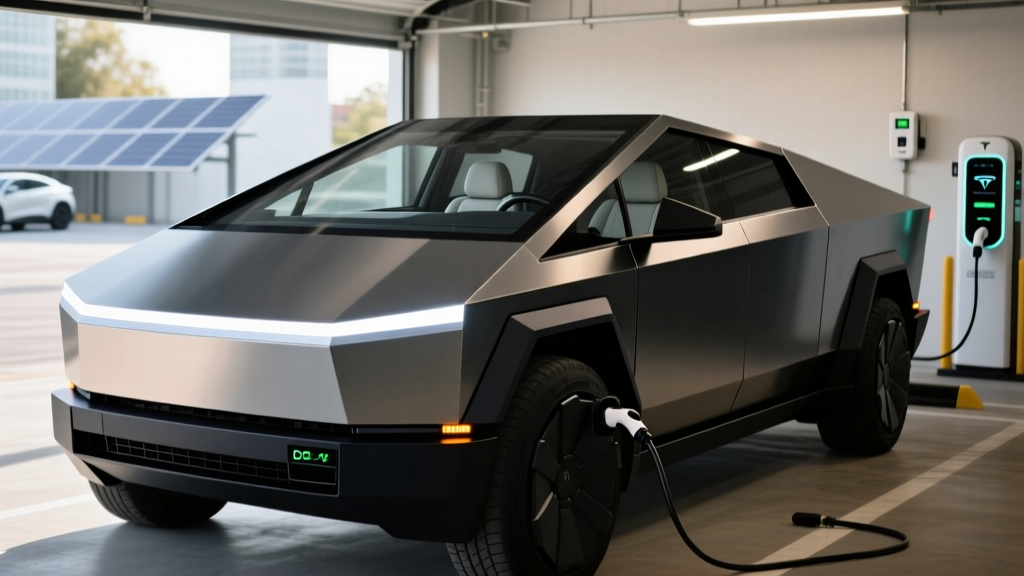
Choose Cybertruck if: You need to separate your dog from the cabin (e.g., a muddy hunting dog, a large breed that paces). The 6-foot bed with a powered tonneau cover creates a weather-sealed enclosure. However, the bed lacks climate control — Dog Mode only covers the cabin. This limits its practicality for unattended pets.
Charging on Road Trips: How Long Does a Dog Bathroom Break Take?
The real test of a pet-friendly EV is whether charging stops align with your dog's needs. A dog that needs to stretch, hydrate, and relieve itself every 2–3 hours pairs remarkably well with Tesla's Supercharger network. Here's what charging actually looks like:
| Charging Level | Power | Model Y LR (approx.) | Notes |
|---|---|---|---|
| Level 1 (120V outlet) | 1.2 kW | ~3–5 mi/hr | Emergency/trickle only |
| Level 2 (240V home) | 11.5 kW | ~44 mi/hr | Full charge overnight (~8 hrs) |
| DC Fast (V3 Supercharger) | Up to 250 kW | ~175 mi in 15 min | Peak rate, tapers above 60% |
| DC Fast (10–80%) | Varies | ~25 min | Typical road-trip stop |
A critical detail most spec sheets omit: the charge curve tapers significantly above 60% State of Charge. You'll hit peak 250 kW only between roughly 10–30% SoC. From 60–80%, the rate drops to ~100 kW or less. This means the 10–80% time (~25 minutes) is more honest than the "175 miles in 15 minutes" marketing figure.
For dog owners, this 25-minute window is ideal: leash your dog, walk a perimeter, offer water, and return to a car that's gained roughly 180–200 miles of range. Tesla's navigation system automatically preconditions the battery when you route to a Supercharger, which is essential for achieving these speeds in cold weather.
Pricing, Trims, and Federal Tax Credit Eligibility
Tesla pricing fluctuates frequently — the company adjusts MSRPs multiple times per year. Below are estimated 2026 base prices for the configurations most relevant to dog-owning buyers.
| Model / Trim | Est. Base MSRP | §30D Credit Eligibility | Est. Net Price |
|---|---|---|---|
| Model 3 RWD | $38,990 | Up to $7,500 (if sourcing rules met) | ~$31,490 |
| Model 3 LR AWD | $42,490 | Up to $7,500 | ~$34,990 |
| Model Y LR AWD | $44,990 | Up to $7,500 (under $80k SUV cap) | ~$37,490 |
| Model X LR AWD | $79,990 | Eligible (under $80k SUV cap, tight) | ~$72,490 |
| Cybertruck AWD | $79,990 | Eligible (under $80k truck cap) | ~$72,490 |
Federal tax credit caveats (IRS §30D, current for 2026):
- Income caps: Modified AGI must not exceed $150,000 (single), $225,000 (head of household), or $300,000 (joint). Source: IRS.gov.
- MSRP caps: SUVs (Model Y, Model X) must be under $80,000; sedans (Model 3) under $55,000; trucks (Cybertruck) under $80,000.
- Battery sourcing: A percentage of critical minerals and battery components must be sourced from the U.S. or free-trade-agreement countries. This requirement tightens annually — verify current-year compliance on Tesla's website or the IRS qualified vehicle list before purchasing.
- Point-of-sale transfer: As of 2024+, you can transfer the credit to the dealer at purchase, reducing your out-of-pocket cost immediately rather than waiting for a tax refund.
Consult a tax professional to confirm your personal eligibility. State incentives vary widely and are not included above.
Pros and Cons for Dog Owners
Pros
- Dog Mode standard on all models — no subscription, no extra cost
- Flat cargo floors — no transmission tunnel or hump; dogs can lie fully flat
- Supercharger network — 60,000+ stalls globally; 25-minute stops align with pet breaks
- Panoramic glass roof — natural light reduces anxiety for some dogs
- Quiet powertrain — no engine vibration or noise; calmer cabin for nervous pets
- HEPA air filtration (Model X, optional on others) — reduces allergens and odors
- Over-the-air updates — Tesla has added pet-adjacent features (e.g., Sentry Mode improvements) post-purchase
Cons
- No built-in pet barrier or tie-down — aftermarket harness or crate required for safety
- Glass roof = heat — in direct summer sun, cabin temps rise quickly if Dog Mode fails; always verify HVAC is active
- Cybertruck bed is not climate-controlled — Dog Mode only covers the cabin, limiting bed use for unattended pets
- Model 3 cargo space is limited — 23 cu ft is tight for large breeds
- Regenerative braking can be abrupt — dogs not secured in a crate or harness may slide forward on deceleration
- No factory pet accessories — Tesla does not sell official cargo liners, barriers, or ramps; third-party solutions required
Autopilot and FSD: What Dog Owners Should Know
SAE Automation Level: Level 2. Tesla's Autopilot and Full Self-Driving (Supervised) are driver-assistance systems, not autonomous driving. You must keep your hands on the wheel and eyes on the road at all times. FSD Supervised can handle highway lane changes, stoplights, and some city streets, but it requires continuous human oversight. No current Tesla is "self-driving."
For dog owners, the practical implication is that Autopilot reduces fatigue on long highway drives (e.g., a 600-mile trip to a national park), but you cannot turn around to check on your dog in the cargo area while the system is engaged. If your dog needs attention, you must disengage, pull over, and address it manually.
Accessories and Setup Tips for Dog Owners
Tesla doesn't offer a factory "dog package," but the aftermarket ecosystem is robust. Here's what experienced Tesla-dog owners recommend:
- Cargo liner (TPE or rubber): Protects the flat load floor from claws, mud, and accidents. Brands like 3D MAXpider and WeatherTech make Tesla-specific fits.
- Crash-tested harness or crate: In a collision, an unrestrained 60-lb dog becomes a projectile. A secured crate (Ruff Land, Gunner) or a crash-rated harness (Sleepypod, Kurgo) is essential.
- Portable water bowl and collapsible ramp: The Model Y and Model X load floors are ~28–30 inches high. A ramp helps senior or small dogs enter without being lifted.
- Sentry Mode awareness: If you leave your dog in the car with Dog Mode, enable Sentry Mode for security footage — but note it adds ~1% battery drain per hour on top of climate control.
Frequently Asked Questions
What is the real-world range of a Tesla when traveling with a dog?
Expect 85–90% of EPA range on summer highway trips (75 mph). A Model Y LR AWD rated at 320 mi EPA will deliver ~275–290 real highway miles. In winter (below 30°F), plan for 70–80% of EPA (~225–255 mi). Running Dog Mode while parked for 30-minute breaks adds minimal drain (~0.5–1% per stop).
How fast does a Tesla charge on a road trip?
At a V3 Supercharger (250 kW), a Model Y LR charges from 10–80% in approximately 25 minutes, adding roughly 180–200 miles of range. Charging slows significantly above 80% — plan stops around 10–60% for maximum speed. Home Level 2 charging at 11.5 kW adds ~44 miles per hour.
How much does a Tesla cost after the federal tax credit?
A Model Y LR AWD at ~$44,990 MSRP may qualify for up to $7,500 in federal tax credit under IRS §30D, reducing the effective price to ~$37,490 — assuming you meet income caps ($300k joint AGI), MSRP caps ($80k for SUVs), and battery-sourcing requirements. Verify eligibility on IRS.gov before purchasing.
Is a Tesla worth buying over competitors for dog owners?
Tesla's advantages are Dog Mode (standard, no subscription), flat cargo floors, and the Supercharger network. Competitors like the Hyundai Ioniq 5 (70 cu ft cargo), Ford Mustang Mach-E (57 cu ft), and Kia EV9 (82 cu ft) offer comparable or greater cargo space, and some include pet-friendly features. However, Tesla's charging infrastructure and route-planning integration remain the most seamless for long road trips with pets.
Does a Tesla qualify for the federal EV tax credit in 2026?
Most Tesla models qualify for up to $7,500 under §30D, subject to buyer income limits, MSRP caps, and critical-mineral/battery-component sourcing rules that tighten annually. The Model 3 and Model Y have consistently qualified in recent years, but always check the current IRS qualified vehicle list before committing. The credit can be transferred at point of sale.
Can I leave my dog in a Tesla unattended?
Dog Mode maintains cabin temperature and displays a message to passersby, but Tesla advises against leaving pets unattended for extended periods. Battery drain is ~1–2% per hour in extreme heat. If the battery drops below 20%, Tesla sends a phone alert and may disable Dog Mode to preserve range. Use it for short errands (15–30 minutes), not all-day parking.