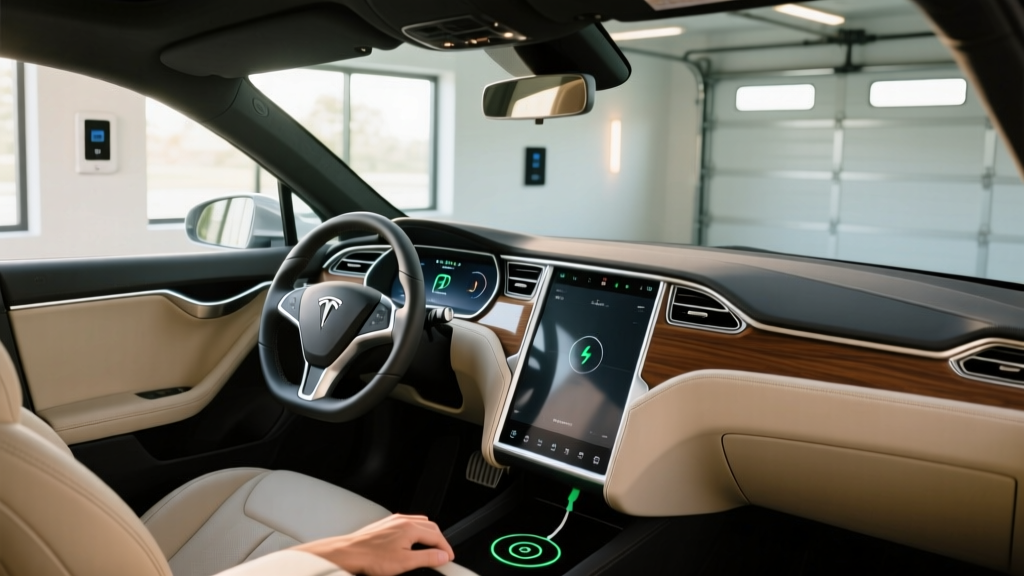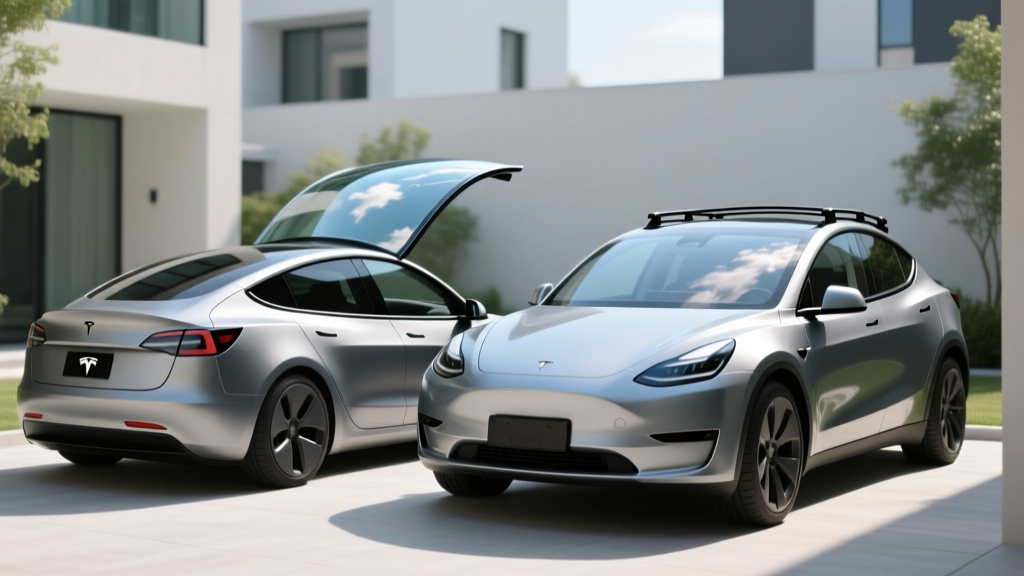
If you have been browsing Tesla forums or configurators, you have likely typed the same question into a search bar: does the Tesla sunroof open? The short answer is no. Tesla does not offer a traditional operable sunroof or moonroof on any current-production vehicle. Instead, the Model 3, Model Y, Model S, and Model X use fixed, tinted glass roof panels designed to maximize headroom and reduce weight.
This guide breaks down exactly why Tesla chose fixed glass, how it affects cabin comfort in 2026, and provides a full ownership profile of the two vehicles most buyers cross-shop for this feature: the refreshed Model 3 and the updated Model Y.
The Fixed Glass Roof: Why Tesla Ditched Moving Parts
Tesla's decision to use a fixed panoramic glass roof rather than a tilt-slide sunroof comes down to three engineering priorities: structural rigidity, weight savings, and cabin packaging.
- Structural rigidity: The bonded glass panel contributes to the roof's torsional stiffness, which improves handling precision and crash safety. The Model Y earned the IIHS Top Safety Pick+ designation, and the fixed roof plays a role in that roof-crush resistance rating.
- Weight and efficiency: A motorized sunroof mechanism (tracks, motors, seals, drainage tubes) adds roughly 30–50 lbs. In an EV, that weight directly reduces range. Tesla prioritizes kWh-per-mile efficiency over luxury features that penalize the battery.
- Headroom: Without a sunroof cassette eating into the roof cavity, Tesla gains roughly 1–2 inches of front and rear headroom — critical in a sedan like the Model 3 where the battery floor already raises seating position.
2026 Tesla Model 3: Range, Charging, and Full Specs
The refreshed Model 3 (introduced for the 2024 model year and continuing into 2026) remains Tesla's entry point for buyers wanting a fixed glass roof, sharp efficiency, and access to the Supercharger network. Here is the full spec breakdown for the current lineup.
| Spec | RWD (Base) | Long Range AWD | Performance |
|---|---|---|---|
| EPA Range | 272 mi | 363 mi | 315 mi |
| Battery Capacity (usable) | ~57.5 kWh (LFP) | ~79 kWh (NMC) | ~79 kWh (NMC) |
| Drivetrain | Rear-Wheel Drive | Dual-Motor AWD | Dual-Motor AWD |
| Horsepower | 271 hp | 346 hp | 510 hp |
| 0–60 mph | 5.8 sec | 4.2 sec | 2.9 sec |
| Max DC Fast Charge | 170 kW | 250 kW | 250 kW |
| 10–80% DC Time | ~28 min | ~25 min | ~25 min |
| Level 2 Home Charge | 11.5 kW (~44 mi/hr) | 11.5 kW (~44 mi/hr) | 11.5 kW (~44 mi/hr) |
| MPGe (combined) | 142 MPGe | 132 MPGe | 119 MPGe |
| kWh/100 mi | 24 | 25 | 28 |
| Base MSRP | $38,990 | $47,740 | $54,990 |
| Cargo (trunk + frunk) | 23 cu ft | 23 cu ft | 23 cu ft |
| Battery Warranty | 8 yr / 100,000 mi | 8 yr / 120,000 mi | 8 yr / 120,000 mi |
Source: fueleconomy.gov and Tesla.com specifications. Pricing reflects base MSRP before destination fees.
Real-World Range Expectations
The EPA numbers above represent ideal mixed-cycle testing. In real-world ownership, expect the following adjustments:
- Highway driving (70–80 mph): Subtract 10–15% from the EPA figure. The Long Range AWD delivers roughly 310–325 real highway miles in mild weather.
- Cold weather (below 32°F): Expect a 20–30% range reduction depending on cabin heating demands and whether you precondition. LFP-equipped RWD models are particularly sensitive to cold charge-speed limitations.
- City / stop-and-go: Range often matches or slightly exceeds EPA thanks to regenerative braking recapturing energy.
2026 Tesla Model Y: The Family SUV Alternative
If the Model 3's fixed glass roof feels too low-slung for your needs, the Model Y offers the same glass-roof design in a crossover package with substantially more cargo volume. The 2026 Model Y (refreshed for the 2025 model year) brought a revised interior, updated front fascia, and slightly improved efficiency.
| Spec | Long Range AWD | Performance |
|---|---|---|
| EPA Range | 320 mi | 285 mi |
| Battery Capacity (usable) | ~79 kWh (NMC) | ~79 kWh (NMC) |
| Drivetrain | Dual-Motor AWD | Dual-Motor AWD |
| Horsepower | 384 hp | 510 hp |
| 0–60 mph | 4.8 sec | 3.5 sec |
| Max DC Fast Charge | 250 kW | 250 kW |
| 10–80% DC Time | ~25 min | ~25 min |
| Level 2 Home Charge | 11.5 kW (~44 mi/hr) | 11.5 kW (~44 mi/hr) |
| MPGe (combined) | 122 MPGe | 111 MPGe |
| Base MSRP | $44,990 | $51,490 |
| Cargo (rear seats up) | 30.2 cu ft | 30.2 cu ft |
| Cargo (rear seats folded) | 72.1 cu ft | 72.1 cu ft |
| Battery Warranty | 8 yr / 120,000 mi | 8 yr / 120,000 mi |
The Model Y's larger glass roof panel creates an airy, open cabin feel that many owners cite as a key reason for choosing it over competitors with traditional metal roofs. The tradeoff: no retractable shade is included from the factory, though the 2025+ refresh improved the IR-reflective coating to reduce heat soak.
Charging Speed Deep Dive: What the Curve Really Looks Like
Tesla quotes a peak DC fast-charge rate of 250 kW for Long Range and Performance models. That is the peak — not sustained. Understanding the charge curve is essential for road-trip planning.
| Charge Method | Power / Rate | Time or Miles Added |
|---|---|---|
| Level 1 (120V household) | ~1.4 kW | ~4–5 mi/hr |
| Level 2 (240V, 48A Wall Connector) | 11.5 kW | ~44 mi/hr |
| DC Fast (V3 Supercharger, 10–50%) | Peak 250 kW | Fastest segment of curve |
| DC Fast (10–80% total) | Avg ~130 kW sustained | ~25 min (Long Range) |
| DC Fast (80–100%) | Drops to <50 kW | ~20+ additional min |
The key takeaway: plan road-trip stops around the 10–80% window. Charging from 80–100% takes nearly as long as the first 70% of the session due to the taper in the charge curve. Tesla's navigation system automatically routes through Superchargers and preconditions the battery — warming it to the optimal temperature so you hit peak charge rates on arrival. Without preconditioning (e.g., arriving at a charger without navigation routing you there), expect slower initial charge speeds, especially in cold weather.
Federal Tax Credit: Does the Model 3 or Model Y Qualify?
Federal EV tax credit eligibility under IRS §30D is a moving target, and Tesla's eligibility has shifted as battery-sourcing rules tightened through 2025 and into 2026. Here is the current framework:
- MSRP cap: Sedans (Model 3) must be ≤$55,000; SUVs/pickups/vans (Model Y) must be ≤$80,000.
- Buyer income cap: Modified AGI ≤$150,000 (single), ≤$225,000 (head of household), ≤$300,000 (joint).
- Battery sourcing: Critical minerals and battery components must meet escalating domestic/free-trade-partner percentages. Vehicles with "foreign entities of concern" (FEOC) battery components are disqualified.
- Point-of-sale transfer: Eligible buyers can transfer the credit to the dealer at purchase for an immediate price reduction rather than waiting for a tax refund.
- Assembly: Vehicle must undergo final assembly in North America (all US-market Teslas qualify).
| Model / Trim | Base MSRP | Est. Credit | Effective Price* |
|---|---|---|---|
| Model 3 RWD | $38,990 | Up to $7,500 | ~$31,490 |
| Model 3 Long Range AWD | $47,740 | Up to $7,500 | ~$40,240 |
| Model 3 Performance | $54,990 | Up to $7,500 | ~$47,490 |
| Model Y Long Range AWD | $44,990 | Up to $7,500 | ~$37,490 |
| Model Y Performance | $51,490 | Up to $7,500 | ~$43,990 |
*Effective price assumes full $7,500 credit eligibility. Battery-sourcing rules change periodically — verify current eligibility at fueleconomy.gov and consult a tax professional before purchase.
Standout Tech and Notable Drawbacks
Beyond the glass roof, Tesla's cabin experience is defined — and sometimes limited — by its minimalist approach.
Tech Highlights
- 15.4-inch center touchscreen (Model 3 refresh) with faster processor and ventilated front seats standard on all trims.
- Autopilot (SAE Level 2) included standard — adaptive cruise, lane centering, and automatic emergency braking. Full Self-Driving (Supervised) remains a $8,000 add-on and still requires active driver engagement at all times.
- Over-the-air updates continue to add features post-purchase, including UI refinements and efficiency tweaks.
- Sentry Mode / Dashcam uses the vehicle's cameras for security recording without aftermarket hardware.
- Heat pump standard on all trims — significantly improves cold-weather range and cabin heating efficiency compared to resistive heaters.
Drawbacks to Consider
- No physical stalks: The refreshed Model 3 moved turn signals to steering-wheel buttons and gear selection to the touchscreen — a learning curve many drivers find frustrating initially.
- Rear visibility: The Model 3's rear glass is small, and the Model Y's sloping roofline limits the rear window. Many owners rely heavily on the backup camera.
- No Apple CarPlay / Android Auto: Tesla's proprietary infotainment is capable but closed. If you prefer phone-mirroring, this is a dealbreaker.
- Glass roof heat: While UV protection is excellent, the radiant heat load in Southern US summers still prompts many owners to install aftermarket shades.
- Insurance costs: Teslas carry higher-than-average insurance premiums due to repair costs and parts pricing. Get a quote before committing.
- Class-leading efficiency (kWh/100 mi)
- Supercharger network — most reliable DC fast-charging ecosystem
- Spacious cargo area (Model Y: 72 cu ft folded)
- Strong resale value relative to most EVs
- OTA updates keep software current
- Heat pump standard for cold-weather efficiency
- Glass roof does not open — no fresh-air option
- Turn-signal buttons on steering wheel (no stalks)
- No Apple CarPlay or Android Auto
- Higher insurance premiums
- FSD (Supervised) is expensive and still Level 2
- LFP battery in RWD trims limits cold-weather charging speed
How It Compares: Model 3/Y vs. Key Competitors
If the fixed glass roof is a dealbreaker and you want an operable sunroof or panoramic roof that opens, here is how Tesla stacks up against rivals in the same price band:
- Hyundai Ioniq 6: Available with a tilt-slide sunroof on upper trims. EPA range up to 361 mi (SE Long Range RWD). However, it uses CCS charging (no native NACS), which means adapter-dependent Supercharger access.
- BMW i4: Offers a traditional power moonroof. Starts around $52,000 — significantly more expensive. Range tops out at ~307 mi (eDrive40).
- Polestar 2: Fixed glass roof (also does not open), similar to Tesla. Starts ~$49,900 with up to 320 mi EPA range.
- Ford Mustang Mach-E: Fixed glass roof with an available shade. EPA range up to ~320 mi (Extended Range RWD). CCS charging with NACS adapter.
The honest assessment: if an operable sunroof is a top priority, Tesla does not currently serve that need. You will find moving glass panels on legacy luxury EVs (BMW, Mercedes) and some Korean offerings — but you may sacrifice charging infrastructure access, efficiency, or software polish.
- You value Supercharger network access for road trips
- You prioritize efficiency (lowest kWh/100 mi in class)
- You prefer a bright, airy cabin over fresh-air ventilation
- You want OTA software updates and a minimal control layout
- An operable sunroof or moonroof is a must-have
- You rely on Apple CarPlay for navigation and media
- Physical controls (stalks, buttons) are important to your driving comfort
Who These EVs Suit Best
Model 3 RWD: Budget-conscious commuters who charge at home and drive mostly in mild climates. The LFP battery handles daily 100% charges well, and the 272-mi EPA range covers most round-trip commutes with margin.
Model 3 Long Range AWD: The sweet-spot trim for road-trippers and cold-climate buyers. The NMC battery delivers 363 mi of EPA range, and dual-motor AWD provides confident traction in snow and rain.
Model Y Long Range AWD: Families needing rear-seat space, cargo volume for strollers and groceries, and the elevated seating position of a crossover. The 320-mi range and 250-kW peak charging cover weekend trips with one short Supercharger stop.
Performance trims (both models): Enthusiasts who want sports-car acceleration (2.9–3.5 sec 0–60) in a practical daily driver. The range and efficiency penalty is moderate — roughly 10–15% less than Long Range.
Frequently Asked Questions
Does the Tesla sunroof open on any model?
No. Tesla has never offered an operable sunroof on the Model 3, Model Y, Model S, or Model X. All current-production Teslas use a fixed, tinted panoramic glass roof. The Model S and Model X also feature fixed glass panels, though the Model X's windshield extends dramatically overhead (the "Big Sky" windshield) for an expansive forward view.
Can I add an aftermarket sunroof to a Tesla?
Technically, some aftermarket shops offer retrofit sunroof kits, but we strongly advise against it. Cutting into the bonded glass roof compromises structural rigidity, voids the vehicle's warranty, and can interfere with the roof's crash-safety performance. If you want fresh air, open a window.
Does the glass roof make the cabin too hot in summer?
Tesla's infrared-reflective glass blocks most heat and nearly all UV, but in extreme heat (100°F+ ambient), rear-seat passengers may feel radiant warmth from the large glass surface. An aftermarket mesh sunshade ($40–$80 from third-party suppliers) is a popular and effective solution. The 2025+ Model Y refresh improved the IR coating, reducing this issue.
What is the real-world range of the Model 3 Long Range?
The EPA rates it at 363 miles. In real-world highway driving at 75 mph in mild weather (60–80°F), expect roughly 310–325 miles. In cold weather (below freezing) with cabin heating, plan for 250–280 miles. Always precondition the battery before fast-charging stops to maintain charge speed.
How fast does the Model Y charge at home?
Using a Tesla Wall Connector on a 60-amp circuit (48 amps continuous), both the Model 3 and Model Y charge at up to 11.5 kW, adding roughly 44 miles of range per hour. A full charge from 10% to 100% takes approximately 7–8 hours — easily accomplished overnight. Most owners set a daily charge limit of 80% (for NMC batteries) or 100% (for LFP batteries) and wake up with a full "tank" every morning.
Does the Tesla Model 3 or Model Y qualify for the $7,500 federal tax credit?
Eligibility depends on the current battery-sourcing requirements under IRS §30D, your income, and the vehicle's MSRP. Both models meet the MSRP cap ($55,000 for the sedan, $80,000 for the SUV) and are assembled in North America. However, battery component and critical-mineral sourcing rules have tightened — check fueleconomy.gov for the latest eligibility status before purchasing, and consult a tax professional to confirm your personal qualification.
Is Autopilot self-driving?
No. Tesla Autopilot and Full Self-Driving (Supervised) are SAE Level 2 driver-assistance systems. You must keep your hands on the wheel, eyes on the road, and remain fully engaged at all times. These systems handle highway lane-centering and adaptive cruise well, but they do not make the vehicle autonomous. Only Level 4 services like Waymo operate without a human driver — and those are limited to specific geofenced areas.