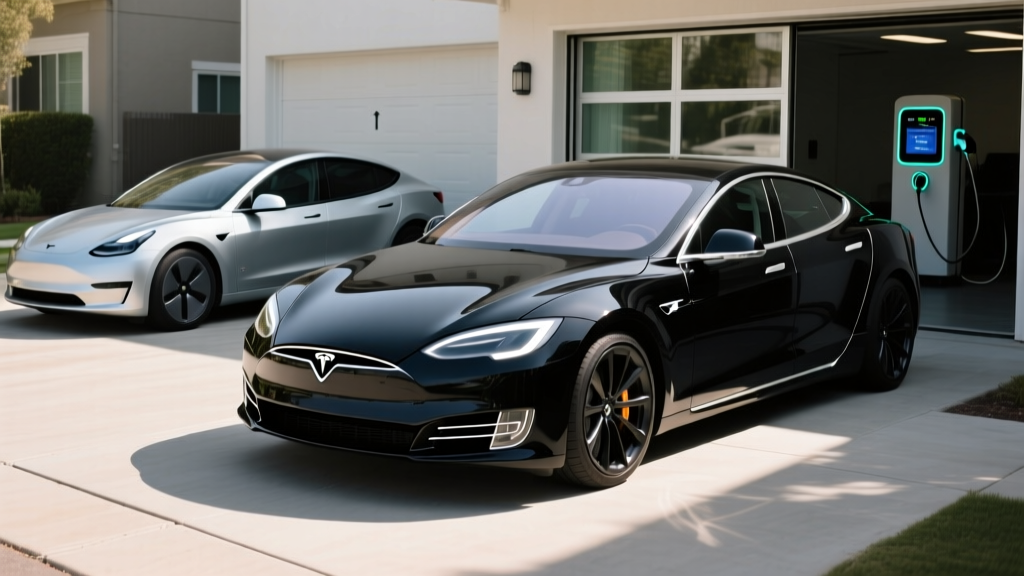
If you've been searching for a pre-owned electric vehicle, you've likely typed some version of "does Tesla sell used cars" into your browser. The short answer is yes — Tesla operates a robust used-vehicle program directly through its website, offering both Tesla-certified and non-certified pre-owned models. But the buying experience differs significantly from a traditional dealership, and knowing exactly what you're getting — from battery health to warranty coverage — is critical before you commit.
This guide breaks down how Tesla's used-car program works in 2026, what inventory you'll find, how pricing compares to the new market, and what to watch for when evaluating any used EV.
How Tesla's Used Car Program Works
Tesla sells used vehicles exclusively online at tesla.com/inventory/used. There are no physical lots to browse. Inventory rotates daily as trade-ins and lease returns are processed, and cars are shipped to your nearest Tesla Service Center for pickup or delivered to your door (delivery fees vary by distance).
Tesla categorizes its used inventory into two tiers:
- Tesla-Certified Pre-Owned: These vehicles pass a multi-point inspection, come with an extended warranty beyond the original coverage, and are generally newer (under ~6 years old, under ~70,000 miles). Tesla reconditions them to a specific standard before listing.
- Non-Certified Used: Older or higher-mileage vehicles that Tesla acquired through trade-ins. These sell "as-is" with whatever remains of the original factory warranty — no additional coverage from Tesla. They're cheaper but carry more risk.
Neither tier allows a traditional test drive before purchase. Tesla's return policy (typically 7 days or a set mileage limit, whichever comes first) serves as your trial period. This is a dealbreaker for some buyers, so factor it into your decision.
What Used Tesla Models Can You Buy?
Inventory fluctuates by region and week, but the most common models you'll find on Tesla's used platform in 2026 include:
| Model | Model Years Available | Typical Price Range | Notes |
|---|---|---|---|
| Model 3 | 2018–2025 | $18,000–$38,000 | Most abundant; Highland refresh (2024+) holds value better |
| Model Y | 2020–2025 | $24,000–$42,000 | Best-selling; Juniper refresh (2025+) commands premium |
| Model S | 2017–2024 | $30,000–$65,000 | Plaid models rare on used market; older 85/90 kWh packs may show degradation |
| Model X | 2017–2024 | $32,000–$68,000 | Falcon-wing doors add repair risk on older units |
| Cybertruck | 2024–2025 | $65,000–$95,000+ | Limited used supply; some listed above original MSRP |
The Model 3 dominates used inventory because of its production volume. If you're flexible on color and trim, you'll almost always find multiple listings. The Cybertruck, by contrast, has scarce used availability, and early examples often sell near or above their original sticker price due to demand outstripping supply.
Battery Health: The Make-or-Break Factor for Used Teslas
The single most important data point on any used EV is battery degradation. Tesla's battery management system tracks this, and the in-car display shows current range relative to the original EPA estimate at full charge.
Tesla batteries typically lose 5–10% of capacity over the first 50,000 miles, then degradation slows significantly. A 2021 Model 3 Long Range originally rated at 353 miles EPA might display 320–335 miles at full charge with 45,000 miles on the odometer. That's normal and expected.
However, cold-weather range loss is real: expect a 15–30% reduction in winter conditions (below 32°F) depending on driving style and cabin heating use. A used Model 3 LR in a Minnesota January may deliver 230–270 real-world miles per charge. Highway driving at 75+ mph also reduces range versus the EPA's mixed-cycle test.
Tesla uses two battery chemistries across its lineup, and this matters for used buyers:
| Factor | LFP (Lithium Iron Phosphate) | NMC (Nickel Manganese Cobalt) |
|---|---|---|
| Found in | Model 3/Y RWD (Standard Range) from 2021+ | Model 3/Y Long Range & Performance; Model S/X |
| Energy density | Lower — shorter range per kWh | Higher — more range in same pack size |
| Cycle life | Longer — tolerates daily 100% charging | Shorter — Tesla recommends 80% daily limit |
| Degradation curve | Slower, more linear | Slightly faster early loss, then plateaus |
| Cold-weather performance | Weaker in extreme cold | Better cold-weather range retention |
| Used-buyer tip | Check if car was routinely charged to 100% (acceptable for LFP) | Check if previous owner respected 80% daily limit |
Before buying any used Tesla, request the battery's State of Health (SoH) percentage. Tesla Service can provide this, and third-party diagnostic tools (like TeslaFi or Tessie) can estimate it from vehicle data. A SoH below 90% on a vehicle with under 60,000 miles warrants caution.
Charging Speed on Used Teslas: What Hasn't Changed
A used Tesla charges at the same rate it did when new — battery degradation affects capacity (kWh), not charge speed (kW). Here's what to expect across common used models:
| Model / Trim | Battery (kWh usable) | Peak DC Fast Charge (kW) | 10–80% Time | Level 2 Home Rate (kW) | Miles Added/Hr (L2) |
|---|---|---|---|---|---|
| Model 3 RWD (2022+, LFP) | ~57.5 | 170 kW | ~25 min | 11.5 kW (48A) | ~37 mi/hr |
| Model 3 Long Range (2021–2023) | ~75 | 250 kW | ~18 min | 11.5 kW (48A) | ~44 mi/hr |
| Model 3 Long Range (2024+ Highland) | ~75 | 250 kW | ~18 min | 11.5 kW (48A) | ~44 mi/hr |
| Model Y Long Range (2022–2024) | ~75 | 250 kW | ~20 min | 11.5 kW (48A) | ~40 mi/hr |
| Model S Long Range (2021+) | ~95 | 250 kW | ~24 min | 11.5 kW (48A) | ~38 mi/hr |
| Model X Plaid (2022+) | ~95 | 250 kW | ~25 min | 11.5 kW (48A) | ~34 mi/hr |
Charging-curve reality: The peak kW number is not sustained across the entire session. A Model 3 Long Range peaks at 250 kW only between roughly 10–30% SoC, then tapers progressively. Above 80%, charging slows dramatically to protect the battery — expect 50 kW or less. This is why Tesla (and every manufacturer) quotes 10–80% times rather than 0–100%.
All used Teslas come with NACS (North American Charging Standard) ports natively, giving you access to the full Tesla Supercharger network — the most reliable and extensive DC fast-charging network in the U.S. This is a significant advantage over used EVs from other brands that rely on CCS and third-party networks, though non-Tesla EVs are increasingly gaining Supercharger access via adapters.
Warranty Coverage on Used Teslas
Understanding warranty transferability is essential when buying used:
| Coverage | New Tesla | Tesla CPO | Non-Certified Used |
|---|---|---|---|
| Basic Vehicle | 4 yr / 50,000 mi | Remaining original + up to 2 yr extension | Remaining original only |
| Battery & Drive Unit | 8 yr / 100,000 mi (Model 3/Y RWD) 8 yr / 120,000 mi (LR/Performance) 8 yr / 150,000 mi (Model S/X) | Same as new (transfers fully) | Same as new (transfers fully) |
| Battery capacity guarantee | Minimum 70% retention during warranty period | Same | Same |
The key takeaway: Tesla's battery and drive unit warranty transfers to all subsequent owners automatically, regardless of whether you buy CPO or non-certified. A 2020 Model 3 Long Range with 55,000 miles still has roughly 3 years and 65,000 miles of battery warranty remaining. This is one of the strongest used-EV safety nets in the industry.
However, the basic vehicle warranty (covering suspension, interior, HVAC, screens, etc.) may be expired on older used models. Tesla CPO adds an extension; non-certified does not. Given that Tesla's out-of-warranty repair costs can be steep (a replacement MCU screen runs $1,500–$2,500), the CPO premium may be justified for peace of mind.
Does a Used Tesla Qualify for the Federal EV Tax Credit?
Yes — under IRS §25E, the used clean vehicle credit offers up to $4,000 (or 30% of the sale price, whichever is less) for qualifying pre-owned EVs. This applies to Tesla's used inventory and third-party purchases alike.
- Vehicle price cap: Sale price must be $25,000 or less
- Vehicle age: Must be at least 2 model years old (a 2024 model or older in 2026)
- Buyer income cap: AGI ≤ $75,000 (single), $112,500 (head of household), $150,000 (joint)
- Dealer requirement: Must be purchased from a licensed dealer (Tesla's direct sales model qualifies)
- Point-of-sale transfer: You can apply the credit at purchase to reduce the sale price immediately
- One-time use per buyer: You can only claim this credit once every 3 years
Source: IRS.gov — Used Clean Vehicle Credit. Tax rules are subject to change; consult a tax professional for your specific situation.
Practical impact: A used 2022 Model 3 RWD priced at $22,500 would qualify for the full $4,000 credit (since 30% of $22,500 = $6,750, but the $4,000 cap applies), bringing your effective cost to $18,500. That's a compelling entry point into EV ownership. However, most used Model Y listings exceed the $25,000 price cap, making them ineligible unless you find a higher-mileage example priced below the threshold.
Note: The new-vehicle §30D credit (up to $7,500) does NOT apply to used purchases — only §25E applies. And the new-vehicle credit has its own MSRP caps ($55,000 for sedans, $80,000 for SUVs/trucks), income limits, and critical-mineral/battery-sourcing requirements detailed on IRS.gov.
Used Tesla vs. Key Competitors: Is It the Best Used EV?
The used EV market has expanded considerably. Here's how a used Tesla stacks up against popular alternatives at similar price points:
| Factor | Tesla Model 3 LR (2021–2022) | Hyundai Ioniq 5 SEL (2022–2023) | Ford Mustang Mach-E Premium (2021–2022) |
|---|---|---|---|
| EPA Range | 353 mi | 303 mi (RWD) / 256 mi (AWD) | 270–305 mi |
| Peak DC Charge | 250 kW | 233 kW | 150 kW |
| 10–80% Time | ~18 min | ~18 min | ~38 min |
| Charging Network | Native NACS / Supercharger | CCS (adapter for Supercharger) | CCS (adapter for Supercharger) |
| 0–60 mph | 4.2 sec | 5.1 sec (RWD) / 4.5 sec (AWD) | 5.1 sec (RWD) / 4.8 sec (AWD) |
| OTA Updates | Frequent, feature-rich | Limited | Limited |
| Used Inventory Volume | Very high | Moderate | Moderate |
Tesla's advantages in the used market are clear: Supercharger access without adapters, faster DC charging, more frequent over-the-air updates, and deeper inventory. The Ioniq 5 matches Tesla on 10–80% charge time and offers a more conventional interior with physical controls. The Mach-E appeals to buyers who want a more traditional car-like driving experience and Ford dealer service access.
✅ Pros of Buying a Used Tesla
- Native Supercharger network access — no adapters needed
- Industry-leading DC fast-charge speeds (250 kW on LR/Performance)
- Battery/drive unit warranty transfers fully to used buyers
- Over-the-air updates continue adding features to older cars
- Largest used EV inventory — more selection, better pricing leverage
- Strong resale value retention vs. competitors
- Eligible for up to $4,000 used EV tax credit (§25E) on qualifying models
❌ Cons of Buying a Used Tesla
- No pre-purchase test drive — 7-day return policy is your only trial
- Out-of-warranty repairs can be expensive and slow (parts delays)
- No Apple CarPlay or Android Auto — Tesla's proprietary infotainment only
- Build quality on 2018–2020 Model 3 can be inconsistent (panel gaps, rattles)
- Insurance premiums often 20–40% higher than comparable non-Tesla EVs
- Non-certified used vehicles come with zero additional warranty
- Autopilot / FSD hardware on pre-2019 cars is outdated (HW2.5 vs. HW4)
Who Should Buy a Used Tesla — And Who Shouldn't
Choose a Used Tesla If:
- You want the most reliable public charging network without carrying adapters
- You're a daily commuter covering 40–80 miles round-trip (Model 3 RWD is ideal)
- You want the lowest cost-per-mile in a used EV (electricity + minimal maintenance)
- You value OTA software improvements and tech-forward features
- You live in a region with harsh winters and need good cold-weather range retention (LR/AWD models with NMC chemistry)
Look Elsewhere If:
- You need Apple CarPlay/Android Auto integration
- You want a local dealer for in-person service and warranty work
- You prefer physical buttons and traditional vehicle controls
- You're buying a family hauler and need 3-row seating (no used Model X bargains exist)
- You want to test-drive before committing
Frequently Asked Questions
Does Tesla sell used cars directly to consumers?
Yes. Tesla sells used vehicles directly through its website (tesla.com/inventory/used) in all states where it operates. There are no third-party dealerships involved. You browse, purchase, and arrange delivery entirely online.
Can I get a vehicle history report on a used Tesla?
Tesla provides basic vehicle history on its used listings (accident records, number of owners, service history within the Tesla network). For a more comprehensive check, obtain a Carfax or AutoCheck report using the VIN before purchasing. This is especially important for non-certified vehicles.
Does Autopilot or FSD transfer to the new owner?
This is nuanced. Basic Autopilot (lane-keeping, adaptive cruise) is tied to the car and transfers automatically. Enhanced Autopilot and Full Self-Driving (Supervised) capability transfers in most cases when buying through Tesla's used inventory, but Tesla has occasionally removed FSD from used listings and re-sold it separately. Always confirm the listing explicitly states FSD is included. Note: FSD (Supervised) is an SAE Level 2 driver-assistance system — the driver must remain fully engaged at all times. It is not autonomous driving.
What's the real-world range of a used Model 3?
A 2021 Model 3 Long Range (353 mi EPA) with 40,000–60,000 miles typically delivers 310–330 miles on a full charge in moderate conditions. Highway driving at 75+ mph reduces this to roughly 270–290 miles. In sub-freezing winter weather, expect 230–270 miles depending on cabin heating use and driving style. The RWD Standard Range model (263–272 mi EPA) will proportionally deliver less.
Is a used Tesla expensive to insure?
Generally, yes. Tesla insurance premiums run 20–40% higher than comparable non-Tesla EVs, driven by higher repair costs and Tesla's proprietary parts ecosystem. However, Tesla offers its own insurance product in many states that uses real-time driving data (via the car's telematics) to set premiums — safe drivers can sometimes save 10–20% versus third-party insurers. Always get quotes before purchasing.
How does Tesla's used-car return policy work?
Tesla typically offers a 7-day or 250-mile return window (whichever comes first) from the date of delivery. If you're not satisfied, you can return the vehicle for a full refund. After this window, the sale is final. This policy replaces the traditional test drive, so use those 7 days to evaluate charging behavior, range, comfort, and any issues thoroughly.
Should I buy Tesla-certified or non-certified used?
If the vehicle is under 4 years old and the price difference is under $2,000–$3,000, the CPO route is usually worth it for the extended warranty alone. For older or higher-mileage vehicles where the price gap is wider, non-certified can make sense if you've verified battery SoH, reviewed service records, and are comfortable with the remaining factory warranty coverage. Either way, the battery/drive unit warranty transfers regardless of certification status.