Does Tesla Record While Parked? The Quick Answer
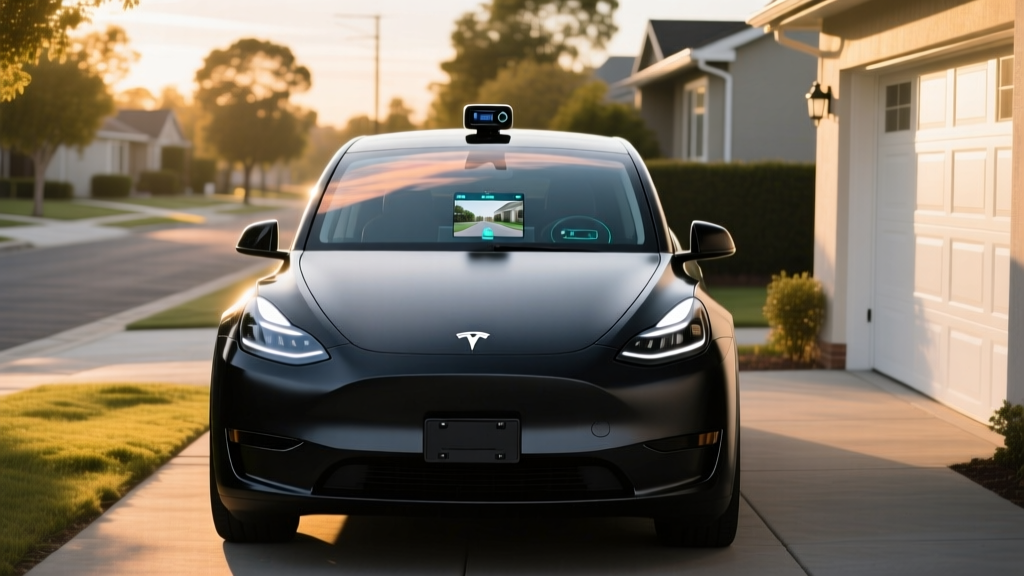
If you've walked back to your Tesla and noticed the headlights flash or received an alert that "Sentry Mode recorded an event," you've already seen the answer in action. Yes, Teslas record while parked — through two overlapping systems: Sentry Mode (a surveillance system that activates when the car is locked and parked) and the built-in Dashcam (which continuously buffers video while driving and can save clips on demand or automatically after an incident).
But how much do they record, how long is footage stored, what's the battery cost, and does it actually deter damage? This guide answers those questions while also covering the 2026 Model 3 and Model Y specs, real-world range, charging, pricing, and federal tax credit eligibility — because if you're researching Tesla's parked recording, you're likely weighing a purchase.
How Sentry Mode and Dashcam Actually Work
Sentry Mode uses the same external cameras that power Tesla's Autopilot and FSD (Supervised) vision stack. When the vehicle is parked and locked, the system enters a standby state. If it detects motion nearby, it escalates through three stages:
- Standby: Cameras monitor the surroundings with minimal power draw.
- Alert: Motion detected within close range — the touchscreen displays a recording indicator and the headlights may flash.
- Alarm: A significant threat (impact, broken glass, forced entry) triggers the car alarm, sends a push notification to the Tesla app, and saves the preceding 10 minutes of footage to the USB drive.
The Dashcam, by contrast, continuously loops video from up to four external cameras (front, left repeater, right repeater, rear) while the car is on. Clips are saved automatically if a collision or airbag deployment is detected, or manually via the dashcam icon on the touchscreen.
What You Need for Recording to Work
Both systems require a properly formatted USB drive (or, on newer 2026 builds, the optional integrated SSD storage) plugged into the correct USB port — typically the glovebox port in current Model 3 and Model Y vehicles. Tesla recommends a high-endurance drive rated for continuous write cycles, as Sentry Mode can generate significant write volume over time. A 128 GB or 256 GB drive is typical; larger capacities allow more saved clips.
Battery Drain: The Real Cost of Parked Recording
Sentry Mode is not free. Tesla states that Sentry Mode can consume roughly 1 mile of rated range per hour of activation, though real-world reports from owners vary between 0.8 and 1.5 miles per hour depending on how frequently the system wakes to Alert or Alarm states. Over a 24-hour park, expect to lose approximately 15–25 miles of range. If you park at home with access to a Level 2 charger, this is negligible — the car will top up from grid power. If you're street-parking or at an airport for days, the drain compounds meaningfully.
You can mitigate this by setting Sentry Mode to activate only at specific locations (for example, disabling it at home via the Tesla app's location-based settings) and by enabling the "exclude home" and "exclude work" toggles.
2026 Tesla Model 3: Range, Battery, and Charging
The 2026 Model 3 continues the "Highland" refresh that debuted for the 2024 model year, with updated interior materials, ventilated front seats, ambient lighting, rear-seat touchscreen, and improved acoustic glass. Here are the core specifications across the primary trims:
| Spec | Model 3 RWD | Model 3 Long Range AWD | Model 3 Performance |
|---|---|---|---|
| EPA Range | 272 mi | 363 mi | 315 mi |
| Battery (usable) | ~57.5 kWh (LFP) | ~75 kWh (NMC) | ~75 kWh (NMC) |
| Drivetrain | RWD, single motor | AWD, dual motor | AWD, dual motor |
| 0–60 mph | 5.8 sec | 4.2 sec | 2.9 sec |
| Horsepower | 271 hp | 346 hp | 510 hp |
| Max DC Fast Charge | 170 kW | 250 kW | 250 kW |
| 10–80% DC Time | ~25 min | ~25 min | ~25 min |
| Level 2 Home Rate | 11.5 kW (~44 mi/hr) | 11.5 kW (~44 mi/hr) | 11.5 kW (~44 mi/hr) |
| MPGe (combined) | 132 MPGe | 134 MPGe | 119 MPGe |
| Cargo Volume | 23 cu ft (rear trunk + frunk) | 23 cu ft | 23 cu ft |
Real-World Range Reality: The EPA numbers above are measured under controlled conditions. On sustained highway driving at 70–75 mph, expect roughly 10–15% less range than the EPA sticker — so the Long Range AWD delivers approximately 310–325 real highway miles in moderate temperatures. In cold weather (below 32°F), range can drop 20–30% due to battery chemistry limitations and cabin heating demands. The LFP battery in the RWD trim is particularly sensitive to cold; preconditioning via the Tesla app before departure is essential to recover range and enable regenerative braking.
Charging Deep Dive
Tesla's Supercharger network remains the gold standard for public DC fast charging, with V3 stalls delivering up to 250 kW and the newer V4 architecture rolling out at higher-power corridors. On a V3 stall, the Model 3 Long Range peaks at 250 kW but sustains that rate only up to roughly 40% State of Charge (SoC), after which the charge curve tapers progressively. The 10–80% time of approximately 25 minutes is competitive but not class-leading — the Hyundai Ioniq 5, with its 800V architecture, can achieve 10–80% in around 18 minutes at a 350 kW charger.
At home on a 48-amp Level 2 wall connector (hardwired, requiring a 60-amp breaker), the Model 3 accepts up to 11.5 kW, adding roughly 44 miles of range per hour. A full charge from 10% to 100% takes about 7–8 hours — easily completed overnight. Note that LFP batteries (RWD trim) benefit from periodic charging to 100%, while NMC batteries (Long Range, Performance) are best kept between 20–80% daily for longevity, charging to 100% only before long trips.
2026 Tesla Model Y: Specs and Family Practicality
The Model Y remains Tesla's volume leader and one of the best-selling vehicles of any powertrain in the United States. The 2025 "Juniper" refresh brought a redesigned exterior, updated interior, and improved ride quality, and the 2026 model year carries forward with those updates. Here's what buyers need to know:
| Spec | Model Y Long Range AWD | Model Y Performance |
|---|---|---|
| EPA Range | 320 mi | 285 mi |
| Battery (usable) | ~75 kWh (NMC) | ~75 kWh (NMC) |
| Drivetrain | AWD, dual motor | AWD, dual motor |
| 0–60 mph | 4.8 sec | 3.5 sec |
| Horsepower | 384 hp | 510 hp |
| Max DC Fast Charge | 250 kW | 250 kW |
| 10–80% DC Time | ~25 min | ~27 min |
| Level 2 Home Rate | 11.5 kW (~44 mi/hr) | 11.5 kW (~44 mi/hr) |
| MPGe (combined) | 122 MPGe | 111 MPGe |
| Cargo Volume | 76 cu ft (rear seats folded) | 76 cu ft |
| Passenger Space | 41.0 in front legroom / 38.4 in rear | Same |
Real-World Range Reality: The Model Y Long Range's 320-mile EPA rating translates to approximately 270–290 miles on a highway road trip at 70+ mph in moderate weather. In winter conditions, plan for 230–260 miles before needing to stop. The Model Y's larger frontal area and higher weight compared to the Model 3 mean it's slightly more affected by headwinds and high-speed driving. The heat pump (standard on all 2026 Teslas) significantly reduces cold-weather cabin-heating energy draw compared to older resistive heaters.
Pricing and Federal Tax Credit Eligibility
Tesla's pricing has been relatively stable entering 2026, though trim availability and option packages shift periodically. Here are the approximate MSRPs before incentives:
| Trim | Base MSRP | Est. Max §30D Credit | Effective Price (if eligible) |
|---|---|---|---|
| Model 3 RWD | $38,990 | Up to $7,500 | ~$31,490 |
| Model 3 Long Range AWD | $45,240 | Up to $7,500 | ~$37,740 |
| Model 3 Performance | $52,990 | Up to $7,500 | ~$45,490 |
| Model Y Long Range AWD | $44,990 | Up to $7,500 | ~$37,490 |
| Model Y Performance | $51,490 | Up to $7,500 | ~$43,990 |
§30D Tax Credit Rules You Must Check
The federal EV tax credit under IRS §30D is not a blanket $7,500 for every buyer. Eligibility depends on several factors that can change year to year:
- Buyer income caps: Modified adjusted gross income (MAGI) must not exceed $150,000 (single), $225,000 (head of household), or $300,000 (joint filers).
- MSRP caps: Sedans (Model 3) must be under $55,000; SUVs/trucks/vans (Model Y) must be under $80,000.
- Battery sourcing requirements: Increasingly strict critical-mineral and battery-component sourcing rules apply, potentially reducing the credit to $3,750 if only one of two requirements is met. Tesla's vertically integrated supply chain and domestic battery production (particularly from the Nevada and Texas Gigafactories) have historically positioned it well, but the exact credit amount can vary by build date and component sourcing.
- Point-of-sale transfer: As of 2024, buyers can transfer the credit to the dealer at the point of sale, reducing the purchase price upfront rather than waiting for a tax refund. This applies to Tesla direct sales as well.
Always verify your eligibility with a tax professional and check the latest fueleconomy.gov listings, as credit eligibility can change mid-year based on supply-chain compliance filings.
Warranty, Ownership Costs, and the Competition
Tesla's new-vehicle warranty covers 4 years / 50,000 miles (basic) and 8 years / 120,000 miles for the battery and drive unit on the Model 3 RWD (LFP), or 8 years / 120,000 miles on Long Range and Performance variants (with a minimum 70% capacity retention threshold). The Model Y carries identical battery/powertrain warranty terms. These are competitive with the industry standard, though some rivals like Hyundai/Kia offer 10-year/100,000-mile powertrain coverage.
How Tesla Stacks Up Against Key Rivals
The Model 3 and Model Y compete in crowded segments. Here's how they compare on the metrics that matter most to EV buyers:
- vs. Hyundai Ioniq 5: The Ioniq 5 charges faster (10–80% in ~18 min on 350 kW chargers) and offers vehicle-to-load (V2L) capability, but has less real-world range (~303 mi EPA for the Long Range AWD) and lacks access to the Supercharger network natively (though Hyundai has adopted NACS for future models, and adapters are available).
- vs. Ford Mustang Mach-E: The Mach-E offers a more traditional driving feel and BlueCruise hands-free highway driving, but its charging speed and efficiency trail Tesla's. Range tops out around 320 miles EPA for the Extended Range RWD.
- vs. BMW i4: The i4 delivers superior build quality and refinement, but starts significantly higher in price and offers less range per dollar.
Pros
- Class-leading Supercharger network reliability and coverage
- Sentry Mode and Dashcam provide genuine security value
- Over-the-air updates continuously add features
- Strong efficiency (kWh/100 mi) maximizes range per charge
- Spacious Model Y cargo area (76 cu ft) suits families
- OTA software keeps infotainment and ADAS current
Cons
- Sentry Mode battery drain adds up for unplugged long-term parking
- No native Apple CarPlay or Android Auto
- Minimalist interior lacks physical controls (turn-signal stalks removed on refreshed Model 3)
- Insurance premiums often 15–25% higher than comparable ICE vehicles
- FSD (Supervised) remains SAE Level 2 — driver must stay engaged at all times
- Service center availability can be limited in rural areas
Autopilot, FSD, and Driver Assistance: What's Included
Every 2026 Tesla ships with Basic Autopilot, which includes Traffic-Aware Cruise Control and Autosteer (lane centering on marked highways). These are SAE Level 2 driver-assistance features — the driver must keep hands on the wheel and eyes on the road at all times.
SAE Level 2 — Not Self-Driving: Tesla's FSD (Supervised) is an advanced Level 2 system that can navigate city streets, handle traffic lights, and perform lane changes, but it requires continuous driver supervision. It is not a Level 4 autonomous system like Waymo's robotaxi service. The "Supervised" label in Tesla's current branding reflects this requirement. You are legally and practically responsible for the vehicle at all times.
FSD (Supervised) costs $8,000 as a one-time purchase or $99/month as a subscription (pricing as of early 2026). Whether it's worth the cost depends on your commute profile and tolerance for beta-level software behavior. For most buyers, Basic Autopilot covers highway commuting adequately.
Who Should Buy a Tesla in 2026?
Choose the Model 3 RWD if: You want the lowest entry price, primarily commute under 50 miles daily, have reliable home Level 2 charging, and value the LFP battery's tolerance for daily 100% charging.
Choose the Model 3 Long Range AWD if: You take regular road trips exceeding 250 miles, live in a cold-weather region where AWD traction matters, and want maximum range flexibility.
Choose the Model Y Long Range AWD if: You need family cargo space (strollers, sports gear, road-trip luggage), want the SUV ride height, and your budget accommodates the ~$6,000 premium over the Model 3 LR.
Choose a competitor if: You prioritize the fastest possible DC charging (Hyundai Ioniq 5), want Apple CarPlay integration, need hands-off highway driving that's been validated on specific corridors (GM Super Cruise), or prefer a traditional dealership service experience.
Frequently Asked Questions
Does Tesla record while parked with Sentry Mode off?
No. If Sentry Mode is manually disabled or excluded for a specific location (like your home garage), the cameras do not actively monitor or record while parked. However, if the car experiences a significant impact or alarm event, certain data (like accelerometer readings) may still be logged by the vehicle's event data recorder, though this is not video footage.
How long does Tesla keep Sentry Mode footage?
Sentry Mode saves clips to your USB drive or integrated SSD. Footage is retained until the storage fills up, at which point older non-flagged clips are overwritten. Alarm-triggered clips are flagged and prioritized. Tesla does not store Sentry Mode video on its servers — all footage stays local to your vehicle's storage device.
Does Sentry Mode drain the battery significantly?
Expect roughly 1 mile of range lost per hour of Sentry Mode activation. Over a full day, that's approximately 15–25 miles. If you're plugged into a home Level 2 charger, the car will maintain its charge. For multi-day airport parking without charging, consider disabling Sentry Mode or ensuring you have at least 20–25% extra range buffer.
Can I view Sentry Mode footage remotely from my phone?
Yes. Tesla's "Live Camera" feature (included with Sentry Mode on vehicles with the appropriate hardware) allows you to view a live feed from the external cameras via the Tesla app. You can also receive push notifications when an Alarm event is triggered, though saved video clips must be accessed directly from the USB drive or SSD.
What's the difference between Sentry Mode and Dashcam?
Dashcam records continuously while driving (looping over old footage) and saves clips on demand or after an incident. Sentry Mode activates only when the car is parked and locked, monitoring for threats and escalating through Alert and Alarm states. Both use the same external cameras and write to the same USB storage device.
Does the Tesla Model 3 or Model Y qualify for the full $7,500 federal tax credit?
Both models have historically qualified, but the exact credit amount depends on current battery-sourcing compliance, your income level, and the vehicle's MSRP falling within the §30D caps ($55,000 for sedans, $80,000 for SUVs). Check the latest eligibility on fueleconomy.gov and consult a tax professional before relying on a specific credit amount.
Is the Tesla Model Y good for towing?
The 2026 Model Y has a maximum towing capacity of 3,500 pounds when equipped with the factory tow hitch. This is sufficient for a small utility trailer, a pair of dirt bikes, or a light pop-up camper, but not for a full-size boat or large travel trailer. Towing at maximum capacity will reduce range by approximately 30–40%.