Quick Verdict: Should You Lease or Buy a Tesla in 2026?
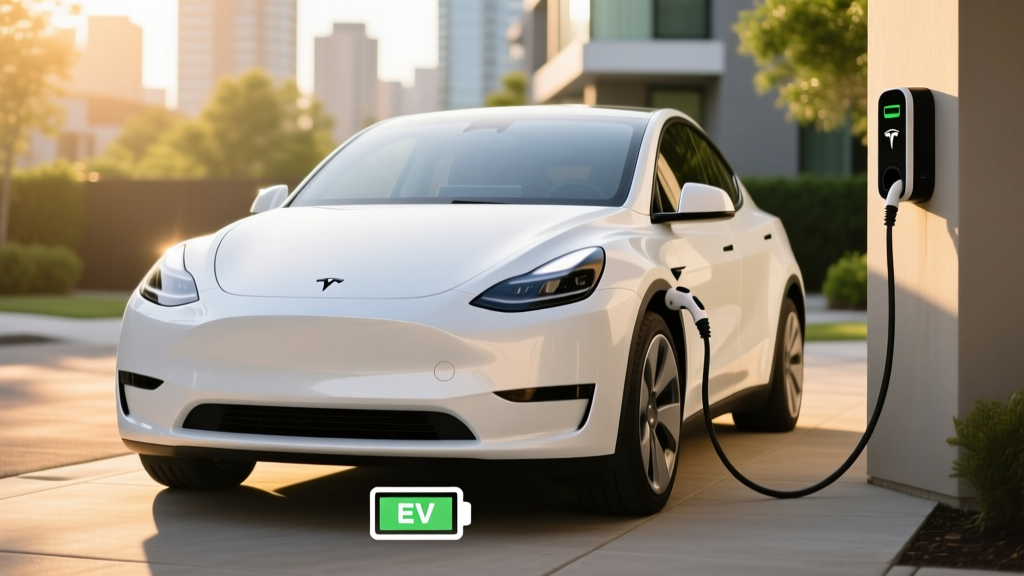
If you're searching "does Tesla lease" you've likely noticed Tesla's approach to leasing is different from legacy automakers. Tesla offers leasing on the Model Y, Model 3, Model S, and Model X through its own financing arm, but the economics work differently than a traditional dealer lease. The biggest difference? Federal tax credit eligibility. When you lease an EV, the §30D credit technically goes to the lessor (Tesla), not you — though Tesla may pass savings through as a capitalized-cost reduction. When you buy, you can claim the credit directly (subject to income, MSRP, and battery-sourcing rules).
This guide breaks down the 2026 Tesla Model Y — Tesla's best-selling vehicle and the model most buyers consider leasing — with exact range, charging, pricing, and tax-credit data so you can run the math yourself.
2026 Tesla Model Y: Core Specifications
| Spec | Long Range AWD | Performance |
|---|---|---|
| EPA Range | 320 miles | 298 miles |
| Battery Capacity (usable) | ~75 kWh (NMC) | ~75 kWh (NMC) |
| Drivetrain | Dual-Motor AWD | Dual-Motor AWD |
| Horsepower | 384 hp | 456 hp |
| 0–60 mph | 4.8 seconds | 3.5 seconds |
| Max DC Fast Charge | 250 kW (peak) | 250 kW (peak) |
| 10–80% DC Charge Time | ~27 minutes | ~27 minutes |
| Level 2 Home Charging | 11.5 kW (~44 mi/hr) | 11.5 kW (~44 mi/hr) |
| Efficiency | 122 MPGe / 28 kWh/100mi | 115 MPGe / 30 kWh/100mi |
| Cargo Volume (rear seats up) | 30.2 cu ft | 30.2 cu ft |
| Cargo Volume (rear seats folded) | 72.1 cu ft | 72.1 cu ft |
| Rear Legroom | 36.2 inches | 36.2 inches |
| Base MSRP | $44,990 | $51,490 |
| Battery Warranty | 8 yr / 120,000 mi | 8 yr / 120,000 mi |
Real-World Range: What the EPA Sticker Doesn't Tell You
Real-World Highway (70 mph, moderate temps): ~265–285 miles
Real-World Cold Weather (below 32°F, mixed driving): ~210–240 miles
City / Stop-and-Go with Regen: ~300–320 miles (regen recovers energy efficiently)
The Model Y's NMC (nickel-manganese-cobalt) battery chemistry delivers strong energy density, but like all lithium-ion packs, it's sensitive to temperature and driving style. Highway driving at sustained 70+ mph increases aerodynamic drag significantly — expect roughly a 12–18% reduction from the EPA combined figure. In cold weather, the battery's internal resistance rises and cabin heating draws substantial energy. Tesla's standard heat pump mitigates this better than resistive heaters, but you'll still see 20–30% range loss in sub-freezing conditions.
For daily commuting under 60 miles round-trip, range is a non-issue even in winter. For road trips, plan charging stops using the car's built-in trip planner, which accounts for elevation, temperature, and traffic — and generally estimates conservatively.
Charging Speed: DC Fast Charging and Home Setup
The Model Y supports a peak DC fast-charge rate of 250 kW on Tesla Superchargers (V3 and V4 stalls). However, peak rate is not sustained rate. The charging curve tapers significantly above 50% state of charge (SoC). Here's what to expect:
| Charging Method | Power (kW) | Miles Added per Hour | Notes |
|---|---|---|---|
| Tesla Supercharger V3/V4 (DC) | Up to 250 kW peak | ~180 mi in first 15 min | Tapers above 50% SoC; 10–80% in ~27 min |
| CCS Adapter + Electrify America | Up to 150–250 kW | Varies by station | Requires Tesla CCS adapter (included with newer vehicles) |
| Level 2 Home (Wall Connector, 48A) | 11.5 kW | ~44 mi/hr | Requires 60A dedicated circuit; full charge in ~7 hr |
| Level 2 Home (NEMA 14-50 outlet, 32A) | 7.7 kW | ~30 mi/hr | Requires 50A circuit; full charge in ~10 hr |
| Level 1 (120V standard outlet) | ~1.4 kW | ~4 mi/hr | Emergency/trickle only; ~50+ hr for full charge |
Preconditioning matters. If you navigate to a Supercharger in the Tesla app or in-car navigation, the car preheats the battery to optimal charging temperature. Skipping this step (e.g., pulling into a Supercharger without navigation preconditioning) can add 5–10 minutes to your session, especially in cold weather.
Home Level 2 charging via the Tesla Wall Connector is the ownership sweet spot. A professional electrician install typically runs $500–$2,000 depending on panel proximity and whether your electrical panel needs an upgrade to support a 60A circuit.
Tesla Lease vs. Buy: The Tax Credit Math
This is where the "does Tesla lease" question gets financially consequential. Under IRS §30D rules, the federal EV tax credit of up to $7,500 is available to the purchaser of a qualifying new EV. When you lease, the lessor (Tesla Finance) is technically the purchaser, and the credit goes to them.
However, many lessors — Tesla included — may pass the credit's value through as a capitalized-cost reduction, effectively lowering your monthly lease payment. This is sometimes called the "lease loophole," and it can actually benefit buyers who wouldn't qualify for the credit if purchasing (e.g., those above the income cap or where the vehicle doesn't meet battery-sourcing requirements).
| Scenario | Model Y Long Range AWD | Notes |
|---|---|---|
| Base MSRP | $44,990 | Before destination, options, or taxes |
| Buy: After $7,500 §30D credit | ~$37,490 effective | Only if income, MSRP cap ($80K SUV), and sourcing rules are met; claimed on tax return or point-of-sale transfer |
| Lease: Estimated monthly (36 mo, $4,500 down) | ~$550–$620/mo | Tesla may apply credit as cap-cost reduction; varies by money factor and residual |
| Buy: Estimated monthly (72 mo, 6.5% APR, $4,500 down, after credit) | ~$540–$580/mo | You own the asset; subject to depreciation risk |
- MSRP Cap: Vehicle MSRP must not exceed $80,000 for SUVs/pickups/vans ($55,000 for sedans). Model Y qualifies as an SUV.
- Buyer Income Cap: Modified AGI ≤ $150,000 (single), $225,000 (head of household), $300,000 (married filing jointly).
- Battery Sourcing: Critical minerals and battery components must meet phased-in domestic/free-trade-partner percentages. Requirements tighten annually — check IRS guidance for current-year specifics.
- Point-of-Sale Transfer: Eligible buyers can transfer the credit to the dealer at purchase for an immediate price reduction (instead of waiting for tax filing).
Key lease advantage: If your income exceeds §30D caps, leasing may still let you benefit from the credit via cap-cost reduction, since the lessor's eligibility (not yours) determines credit qualification. Consult a tax professional for your specific situation.
Tech, Driver Assistance, and Interior
The Model Y's cabin is minimalist by design — a single 15.4-inch center touchscreen handles navigation, media, climate, and vehicle settings. There is no instrument cluster; speed and range appear on the screen's corner. Build quality has improved meaningfully since the 2023 "Juniper" refresh, with better panel gaps, acoustic glass, ventilated front seats, and ambient lighting.
Driver Assistance — SAE Level 2 (Not Self-Driving):
Tesla Autopilot (standard) provides adaptive cruise control and lane-centering. Full Self-Driving (Supervised) adds automatic lane changes, traffic-light recognition, and navigation-on-autopilot. Both require continuous driver supervision. The driver must keep hands on the wheel and eyes on the road at all times. This is not autonomous driving — it is an advanced Level 2 driver-assist system.
Notable tech features include Tesla's over-the-air (OTA) update capability, which can add features post-purchase (new UI themes, efficiency optimizations, entertainment apps), and the Tesla mobile app's remote climate control, vehicle location, and Sentry Mode camera access.
Drawbacks: No Apple CarPlay or Android Auto (Tesla uses its own infotainment exclusively). No physical buttons for climate or volume (everything is touchscreen). Rear-seat visibility is compromised by the sloping roofline. No spare tire — Tesla provides a tire-repair kit.
Pros and Cons
- Access to Tesla Supercharger network (17,000+ stalls in North America) — the most reliable DC fast-charging network available
- Class-leading efficiency at 122 MPGe (Long Range)
- Strong cargo capacity (72.1 cu ft) with a practical hatchback form factor
- Continuous OTA updates improve the vehicle over time
- Low operating cost: ~$0.04–$0.06 per mile on home electricity vs. ~$0.12–$0.16/mi for a comparable gas SUV
- Heat pump standard — better cold-weather range retention than many competitors
- Leasing means the §30D credit goes to the lessor — savings passed through at Tesla's discretion
- No Apple CarPlay/Android Auto
- Touchscreen-only controls can be distracting while driving
- Insurance premiums run 15–30% higher than comparable gas SUVs (per IIHS industry data)
- Lease-end disposition: you cannot purchase the vehicle at lease-end in most Tesla lease agreements (unlike many legacy automakers)
- Resale value uncertainty — Tesla has cut MSRPs multiple times, which depresses used values
Who Should Lease the Model Y (and Who Should Buy)?
- Your income exceeds §30D caps but you want to benefit from the credit via cap-cost reduction
- You want a new vehicle every 3 years without worrying about battery degradation or resale value
- You drive under 12,000–15,000 miles/year (typical lease limits; excess mileage fees are ~$0.20–$0.25/mi)
- You want to test EV ownership before committing to a purchase
- You qualify for the full $7,500 §30D credit and want to claim it directly
- You drive 15,000+ miles/year (leasing penalizes high mileage)
- You plan to keep the vehicle 5+ years (total cost of ownership favors buying if you hold past the depreciation curve)
- You want the option to sell or trade the vehicle at any time
Frequently Asked Questions
Does Tesla offer leasing on all models?
Tesla offers leasing on the Model Y, Model 3, Model S, and Model X in most U.S. states, though availability varies. Leasing is not available on the Cybertruck as of early 2026. Check Tesla's website for your state's specific offerings, as some states have direct-sales restrictions that affect lease availability.
Can I buy my Tesla at the end of the lease?
In most cases, no. Unlike traditional automaker leases, Tesla's lease agreements typically do not include a purchase option at lease-end. You return the vehicle and can lease or buy a new one. This is a significant differentiator — if lease-end purchase matters to you, consider buying outright or looking at competitors like the Hyundai Ioniq 5 or Ford Mustang Mach-E, whose leases often include buyout options.
What is the real-world range of the Model Y?
The EPA rates the Long Range AWD at 320 miles. In real-world highway driving at 70 mph in moderate temperatures, expect 265–285 miles. In cold weather (below freezing), expect 210–240 miles. City driving with regenerative braking can match or slightly exceed the EPA figure.
How fast does the Model Y charge at home?
On a Tesla Wall Connector (48 amps / 11.5 kW), the Model Y adds approximately 44 miles of range per hour, reaching a full charge from empty in about 7 hours. On a NEMA 14-50 outlet (32 amps / 7.7 kW), expect ~30 miles per hour and ~10 hours for a full charge.
Does the Model Y qualify for the $7,500 federal tax credit?
The Model Y qualifies as an SUV under the §30D MSRP cap ($80,000). However, eligibility depends on the buyer's income (≤$150K single / $300K joint), and the vehicle's battery must meet critical-mineral and component sourcing requirements that tighten annually. When leasing, the credit goes to Tesla as the lessor — savings may be reflected in your lease terms. Always verify current-year rules on IRS.gov and consult a tax professional.
Is leasing a Tesla worth it vs. buying?
Leasing makes sense if you want lower monthly payments, plan to upgrade every 3 years, drive under 15,000 miles/year, or don't qualify for the tax credit as a buyer. Buying makes sense if you qualify for the credit, drive high mileage, plan to keep the car 5+ years, or want the flexibility to sell. Run both scenarios with Tesla's online calculator before deciding — the break-even point is typically around 4 years of ownership.