If you've ever popped the frunk of a Tesla and wondered what keeps all those battery cells from overheating, you're not alone. The question does Tesla have a radiator is one of the most common searches among new EV owners and curious shoppers — and the answer reveals a lot about how electric vehicles manage heat differently than gas cars.
The short answer: yes, Teslas use radiator-like heat exchangers, but they're part of a far more sophisticated liquid thermal management system that cools and heats the battery pack, motors, and power electronics — not just an engine. In this review, we'll break down exactly how Tesla's cooling architecture works, then dive into a full 2026 profile of the Tesla Model Y, the brand's best-selling vehicle and the one most buyers are researching.
How Tesla's Thermal Management System Actually Works
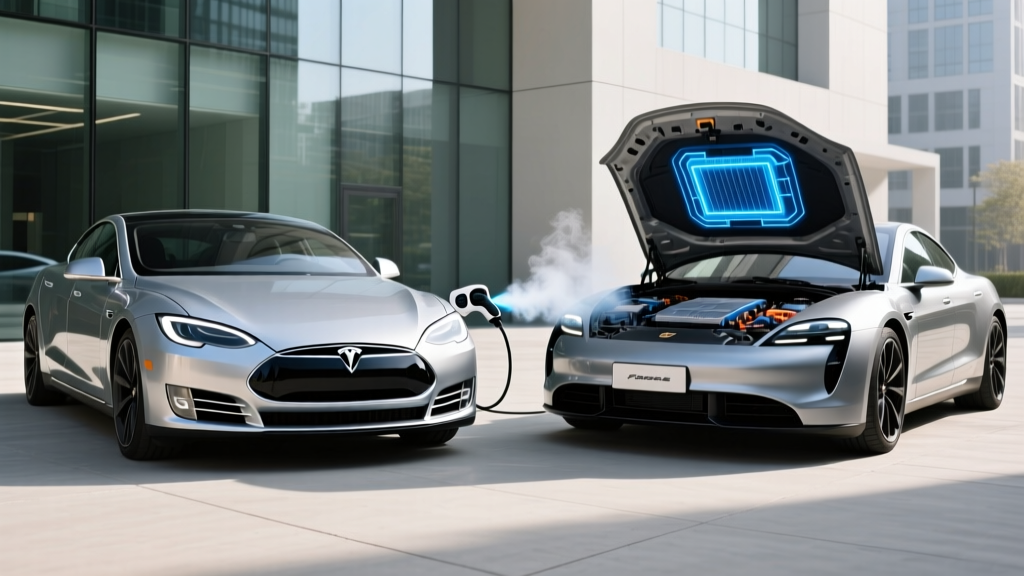
Unlike a gasoline car that uses a single radiator to cool engine coolant, Tesla employs a multi-loop liquid cooling system with several heat exchangers (which function as radiators) positioned behind the front bumper and in other locations depending on the model.
Here's what the system manages:
- Battery pack cooling: A glycol-water coolant mixture circulates through cooling tubes that run between the battery cells, maintaining optimal temperature (typically 35–45°C). This is critical for both longevity and fast-charging speed.
- Drive unit and inverter cooling: The electric motors and power electronics generate significant heat under hard acceleration and sustained highway driving.
- Cabin HVAC integration: Tesla's heat pump (standard since the 2021 Model Y refresh and across the current lineup) pulls waste heat from the drivetrain to warm the cabin in winter — reducing the range penalty of cold-weather driving by up to 30% compared to resistive heaters.
- Supercharger preconditioning: When you navigate to a Supercharger, the car preconditions the battery to its ideal fast-charging temperature window, which is why Tesla's DC fast-charging speeds are among the best in the industry.
2026 Tesla Model Y: Full EV Profile
The Model Y remains Tesla's volume leader for 2026, now built at Giga Texas with the latest structural battery pack and Juniper refresh updates. Here's the complete spec breakdown buyers need.
| Specification | Long Range AWD | Performance |
|---|---|---|
| EPA Range | 320 miles | 295 miles |
| Battery Capacity (usable) | ~75 kWh (NMC, structural pack) | ~75 kWh (NMC, structural pack) |
| Drivetrain | Dual-Motor AWD | Dual-Motor AWD |
| Horsepower | 384 hp | 456 hp |
| 0–60 mph | 4.8 seconds | 3.5 seconds |
| Max DC Fast Charge | 250 kW (peak) | 250 kW (peak) |
| 10–80% DC Charge Time | ~25 minutes | ~25 minutes |
| Level 2 Home Charge Rate | 11.5 kW (~44 mi/hr) | 11.5 kW (~44 mi/hr) |
| EPA Efficiency | 122 MPGe (28 kWh/100mi) | 111 MPGe (30 kWh/100mi) |
| Cargo Volume (rear seats up) | 30.2 cu ft | 30.2 cu ft |
| Cargo Volume (rear seats folded) | 72.1 cu ft | 72.1 cu ft |
| Base MSRP | $46,630 | $52,130 |
| Battery/Drive Unit Warranty | 8 years / 120,000 miles | 8 years / 120,000 miles |
Source: fueleconomy.gov and Tesla's official 2026 spec sheets.
Real-World Range: What the EPA Sticker Doesn't Tell You
Real-World Expectation: ~260–280 miles at sustained 75 mph highway speeds; ~200–230 miles in sub-freezing winter conditions with cabin heat; ~290–310 miles in moderate-temperature city/suburban driving with regen braking active.
The Model Y's EPA-rated 320 miles is achievable in mixed suburban driving at moderate speeds. However, efficiency drops noticeably at highway speeds above 70 mph — the aerodynamic drag penalty is real, and you'll see consumption climb to 32–35 kWh/100mi on flat interstate at 75 mph.
Cold weather is the bigger range killer. At 20°F, expect a 25–35% range reduction due to battery internal resistance increases and cabin heating demand. Tesla's heat pump mitigates this better than resistive heaters found in older EVs, but physics still wins. If your daily commute is under 60 miles round-trip, the Model Y handles winter easily. If you're planning a 300-mile winter road trip, plan a charging stop.
Charging Speed: DC Fast, Level 2, and the Charge Curve Reality
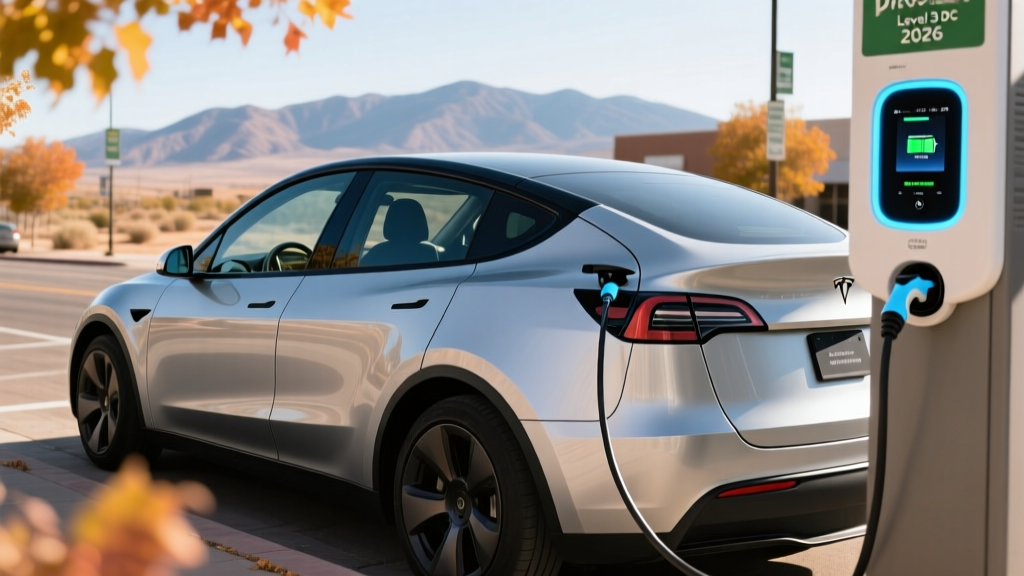
| Charging Level | Power / Rate | Miles Added per Hour | Notes |
|---|---|---|---|
| Level 1 (120V household) | ~1.4 kW | ~5 mi/hr | Emergency/trickle only |
| Level 2 (240V home, 48A) | 11.5 kW | ~44 mi/hr | Full overnight charge in ~7 hrs |
| DC Fast (V3 Supercharger) | 250 kW peak | ~1,000 mi/hr (peak) | 10–80% in ~25 min; tapers sharply above 80% |
| DC Fast (V4 Supercharger) | Up to 350 kW (future-ready) | TBD | Current Model Y architecture caps at ~250 kW |
A critical detail most spec sheets bury: peak kW is not sustained kW. The Model Y hits 250 kW only in a narrow state-of-charge window (roughly 10–30% SoC with a preconditioned battery). By 60% SoC, you're down to ~100 kW. By 80%, it drops below 50 kW. This charge-curve taper is why the 10–80% time (~25 minutes) is the number that matters — not the peak figure.
For home charging, a Tesla Wall Connector on a 60-amp circuit delivers the full 11.5 kW (48 amps continuous). That's roughly 44 miles of range per hour of charging, meaning a depleted battery fully replenishes overnight in about 7 hours. Most owners who charge nightly at home never touch a public charger for daily use.
Pricing, Trims, and Federal Tax Credit Eligibility
| Trim | Base MSRP | Destination | Est. After §30D Credit* |
|---|---|---|---|
| Long Range AWD | $46,630 | $1,390 | ~$40,520 (if eligible) |
| Performance | $52,130 | $1,390 | ~$46,020 (if eligible) |
*Federal tax credit eligibility under IRS §30D depends on multiple factors that change regularly:
- MSRP cap: SUVs must be under $80,000 — both Model Y trims qualify.
- Buyer income cap: Modified AGI must not exceed $150,000 (single) / $300,000 (joint).
- Battery sourcing requirements: Critical minerals and battery components must meet escalating domestic-content thresholds. Tesla's US-built structural packs with LFP and NMC variants have generally met these requirements, but eligibility can shift by model year and production batch.
- Point-of-sale transfer: As of 2024, the credit can be applied at purchase as an instant discount rather than waiting for tax filing — confirm with your Tesla advisor at delivery.
Always verify current eligibility on IRS.gov before purchase. State incentives (California, Colorado, etc.) may stack on top — check your state's energy office.
Standout Tech, Interior, and Notable Drawbacks
What works well:
- 15.4" touchscreen with snappy UI, integrated navigation with real-time Supercharger routing, and over-the-air updates that add features post-purchase.
- Autopilot (standard) provides competent lane-centering and adaptive cruise. Full Self-Driving (Supervised) remains a SAE Level 2 system — you must keep hands on the wheel and eyes on the road at all times.
- Supercharger network remains the most reliable DC fast-charging ecosystem in North America, with 98%+ uptime and seamless plug-and-charge billing.
- Heat pump for efficient cold-weather cabin heating and battery preconditioning.
- Frunk + rear cargo totaling 76.2 cu ft with seats folded — competitive with midsize SUVs like the Honda CR-V.
Drawbacks to know:
- Rear-seat comfort: The Juniper refresh improved cushioning, but taller passengers (6'2"+) still find the floor-high battery creates a knees-up seating position on longer trips.
- No Apple CarPlay / Android Auto: Tesla's proprietary infotainment is capable but closed — no smartphone mirroring.
- Panel gaps and paint: Giga Texas quality has improved substantially, but minor panel-gap variation remains more common than on equivalent Hyundai or BMW EVs.
- Insurance costs: Model Y insurance premiums run 15–30% higher than comparable gas SUVs due to repair costs and Tesla's integrated body structure. Get quotes before buying.
Pros
- Best-in-class DC fast-charging reliability via Supercharger network
- Class-leading efficiency at 122 MPGe (Long Range)
- Spacious cargo area (72.1 cu ft seats-folded)
- Strong real-world range with heat pump for cold climates
- OTA updates continuously improve the vehicle
Cons
- Rear-seat legroom tight for tall adults on long trips
- No smartphone mirroring (CarPlay/Android Auto)
- Higher insurance premiums than gas equivalents
- Performance trim range drops to 295 mi EPA
- FSD (Supervised) requires constant driver attention — not autonomous
Who Should Buy the 2026 Tesla Model Y?
Choose the Model Y Long Range if: You want a daily-driver EV with 260+ real-world highway miles, access to the Supercharger network for road trips, and home Level 2 charging. Ideal for suburban commuters, small families, and anyone who values efficiency (122 MPGe) and low running costs.
Choose the Model Y Performance if: You prioritize 3.5-second 0–60 acceleration and track-capable handling, and you're willing to sacrifice ~25 miles of EPA range for it. Best for enthusiasts who also need practicality.
Look at competitors if: You need three rows of seating (Kia EV9), prefer a more luxurious interior (BMW iX, Genesis GV70 Electrified), or want Apple CarPlay and a traditional dealership experience (Hyundai Ioniq 5, Ford Mustang Mach-E).
Is the Model Y Worth It vs. Key Competitors?
The Model Y competes in the hottest segment of the EV market. Here's how it stacks up on the numbers that matter:
| Metric | Tesla Model Y LR | Hyundai Ioniq 5 LR AWD | Ford Mach-E ER AWD |
|---|---|---|---|
| EPA Range | 320 mi | 290 mi | 305 mi |
| Battery | ~75 kWh (NMC) | 84 kWh (NMC) | 91 kWh (NMC) |
| Max DC Charge | 250 kW | 350 kW | 150 kW |
| 10–80% Time | ~25 min | ~18 min | ~41 min |
| EPA Efficiency | 122 MPGe | 110 MPGe | 101 MPGe |
| Base MSRP | $46,630 | $49,900 | $45,995 |
| Cargo (seats up) | 30.2 cu ft | 27.2 cu ft | 29.7 cu ft |
The Ioniq 5 charges faster (350 kW peak, 18-minute 10–80%), but the Model Y wins on range and efficiency. The Mach-E offers a more conventional driving feel and dealership support but trails on charging speed. Your charging situation matters most: if you have reliable home Level 2 access and road-trip often, Tesla's Supercharger advantage is significant. If you mostly drive locally and want the fastest DC charging for public stops, the Ioniq 5's 800V architecture is compelling.
Frequently Asked Questions
Does a Tesla have a radiator like a gas car?
Yes, but it functions differently. Tesla uses multiple liquid-cooled heat exchangers (radiator equivalents) as part of an integrated thermal management system that regulates battery temperature, motor cooling, and cabin HVAC — rather than a single radiator cooling an engine block. The system uses an octovalve manifold to route coolant intelligently, even scavenging waste heat from the motors to warm the battery in cold weather.
What is the real-world range of the 2026 Tesla Model Y?
The EPA rates the Long Range AWD at 320 miles. In real-world highway driving at 75 mph, expect 260–280 miles. In freezing temperatures with cabin heat, plan for 200–230 miles. City driving with regenerative braking in mild weather can approach or slightly exceed the EPA figure.
How fast does the Model Y charge at home and on DC fast chargers?
On a home Level 2 charger (Tesla Wall Connector, 11.5 kW / 48A), you gain about 44 miles of range per hour — a full charge takes roughly 7 hours. On a V3 Supercharger, the Model Y peaks at 250 kW and charges from 10–80% in approximately 25 minutes. Charging slows significantly above 80% SoC due to battery-protection taper.
Does the 2026 Tesla Model Y qualify for the $7,500 federal EV tax credit?
It can, but eligibility under IRS §30D depends on your income (under $150K single / $300K joint), the vehicle's MSRP (under $80K for SUVs — both trims qualify), and battery critical-mineral sourcing requirements that change periodically. The credit can now be transferred at point of sale as an instant discount. Always verify current eligibility before purchasing.
What is the battery warranty on the Tesla Model Y?
Tesla covers the Model Y's battery and drive units for 8 years or 120,000 miles (whichever comes first), with a guaranteed minimum 70% capacity retention over that period. The structural NMC pack in the 2026 model is designed for longevity, and Tesla's thermal management system — the radiator and coolant loop network discussed above — plays a key role in minimizing degradation by keeping cells in their optimal temperature window.
Is Tesla Autopilot or FSD actually self-driving?
No. Both Autopilot (standard) and Full Self-Driving Supervised are SAE Level 2 driver-assistance systems. You must keep your hands on the wheel, eyes on the road, and remain prepared to take over at any moment. True autonomous driving (SAE Level 4) is currently only offered by robotaxi services like Waymo in limited metro areas.