The Short Answer: Tesla Dropped Radar — Here's Why It Matters
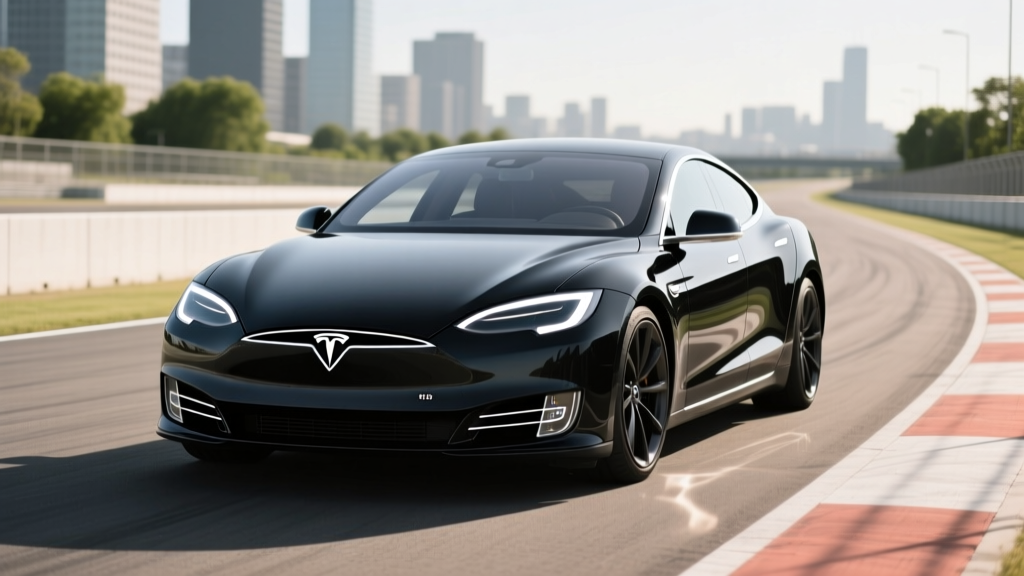
If you're shopping for a new Tesla and wondering does Tesla have radar, the answer for all current-production models is no. Since mid-2021, Tesla has progressively removed radar sensors from the Model 3, Model Y, Model S, and Model X, replacing them with a camera-only perception system the company calls Tesla Vision. As of the 2026 model year, no new Tesla sold in the United States includes a forward-facing radar unit.
This decision makes Tesla the only major automaker selling Level 2 driver-assist vehicles in the U.S. without radar, ultrasonic sensors, or lidar. Every competitor — from Ford's BlueCruise to GM's Super Cruise to Hyundai's Highway Driving Assist — fuses camera data with radar (and in some cases, lidar or ultrasonic sensors). Understanding what Tesla removed, why, and what it means for real-world Autopilot and Full Self-Driving (Supervised) performance is critical before you buy.
Tesla's Sensor Stack: Cameras Only
Current Tesla vehicles (2026 Model 3, Model Y, Model S, Model X) rely on an array of exterior cameras feeding Tesla's in-house neural network. The hardware suite includes:
- 8 exterior cameras providing 360-degree visibility (front main, front wide-angle, front narrow/telephoto, left/right forward-looking repeaters, left/right rear-looking repeaters, rear-view)
- HW4 (AI4) computer with upgraded image processing and higher-resolution camera feeds compared to the earlier HW3 platform
- No radar — removed starting 2021 (Model 3/Y) and 2022-2023 (Model S/X)
- No ultrasonic sensors (USS) — removed starting late 2022; parking distance estimation now camera-based
Tesla's argument for this approach centers on first-principles reasoning: human drivers navigate using only vision and a neural net (the brain), so a sufficiently advanced camera-and-neural-net system should achieve the same. The company also argues that sensor fusion between camera and radar can create conflicting data — for instance, radar reflecting off overhead bridges or metal drainage grates — causing phantom braking events.
Real-World Autopilot Performance Without Radar
Removing radar has real consequences that owners encounter regularly. Here's how Tesla Vision performs across common driving scenarios based on aggregated owner reports and testing:
Where Tesla Vision Excels
- Lane centering on well-marked highways: Camera systems read painted lines with high precision. On interstates with fresh lane markings, Autopilot holds center better than many radar-equipped competitors.
- Stoplight and stop-sign recognition: Vision-based detection of traffic signals is fast and accurate in daylight conditions.
- Highway exit/entrance navigation: FSD (Supervised) handles on-ramp merges and off-ramp exits with growing competence on mapped highways.
Where Camera-Only Shows Limitations
- Phantom braking: Without radar to confirm distance and relative speed, the system occasionally interprets shadows, overpasses, or roadside objects as obstacles, triggering unexpected deceleration. This remains the most frequently reported Autopilot complaint.
- Heavy rain, fog, and snow: Cameras are blinded by precipitation that radar penetrates easily. Autopilot may disengage or reduce capability during moderate-to-heavy rain — precisely when driver-assist is most valuable.
- Direct sun glare: Low-angle sunlight can saturate forward cameras, temporarily degrading perception. Radar is unaffected by sun position.
- Parking proximity: With ultrasonic sensors removed, the vehicle estimates distance to obstacles visually. Owners report less precision in tight parking situations, particularly with low curbs, bollards, or thin poles that cameras struggle to resolve.
- Cross-traffic detection: Side cameras have limited resolution at distance compared to corner-mounted radar units used by competitors for blind-spot and rear cross-traffic alerts.
How Tesla Compares to Radar-Equipped Competitors
| Feature | Tesla (Tesla Vision) | Ford BlueCruise | GM Super Cruise | Hyundai HDA2 |
|---|---|---|---|---|
| Camera | Yes (8) | Yes | Yes | Yes |
| Forward Radar | No | Yes | Yes | Yes |
| Ultrasonic Sensors | No | Yes | Yes | Yes |
| Lidar | No | No | No | No |
| Hands-Free (eyes-on) | No (torque sensing) | Yes (driver monitoring) | Yes (driver monitoring) | No |
| Phantom Braking Reports | Higher frequency | Lower frequency | Lower frequency | Lower frequency |
| Rain/Snow Degradation | More frequent disengagements | Radar maintains function | Radar maintains function | Radar maintains function |
Tesla Model Lineup: Range, Charging, and Pricing Snapshot
Whether you're evaluating radar's impact on your purchase decision, here are the core specs for the current 2026 Tesla lineup. All models use Tesla Vision with no radar.
| Spec | Model 3 LR AWD | Model Y LR AWD | Model S LR | Model X LR |
|---|---|---|---|---|
| EPA Range | 341 mi | 320 mi | 402 mi | 335 mi |
| Battery (usable, est.) | ~75 kWh (NMC) | ~75 kWh (NMC) | ~95 kWh (NMC) | ~95 kWh (NMC) |
| Peak DC Fast Charge | 250 kW | 250 kW | 250 kW | 250 kW |
| 10-80% DC Time | ~25 min | ~27 min | ~30 min | ~32 min |
| Level 2 Home Rate | 11.5 kW (~44 mi/hr) | 11.5 kW (~44 mi/hr) | 11.5 kW (~34 mi/hr) | 11.5 kW (~30 mi/hr) |
| 0-60 mph | 4.2 sec | 4.8 sec | 3.1 sec | 3.8 sec |
| Horsepower | ~346 hp | ~384 hp | ~670 hp | ~670 hp |
| Drivetrain | Dual-Motor AWD | Dual-Motor AWD | Dual-Motor AWD | Dual-Motor AWD |
| MPGe (combined) | 134 MPGe | 123 MPGe | 124 MPGe | 109 MPGe |
| Base MSRP | $47,740 | $48,380 | $79,990 | $84,990 |
| Warranty (battery) | 8 yr / 120,000 mi | 8 yr / 120,000 mi | 8 yr / 150,000 mi | 8 yr / 150,000 mi |
Federal Tax Credit Eligibility (IRS §30D)
Tesla's tax credit situation is nuanced and changes based on battery sourcing rules, MSRP caps, and buyer income limits. Here's the current framework under IRS §30D:
| Model | Base MSRP | MSRP Cap (§30D) | Max Credit | Key Caveat |
|---|---|---|---|---|
| Model 3 | $38,990 (RWD) | $55,000 (sedans) | Up to $7,500 | Critical mineral + battery component sourcing must meet 2026 thresholds; verify at point of sale |
| Model Y | $44,990 (RWD) | $80,000 (SUVs/trucks) | Up to $7,500 | Qualifies as SUV; sourcing rules apply |
| Model S | $79,990 | $55,000 (sedans) | $0 | Exceeds sedan MSRP cap — not eligible |
| Model X | $84,990 | $80,000 (SUVs) | $0 | Exceeds SUV MSRP cap — not eligible |
Income caps also apply: modified adjusted gross income (MAGI) must not exceed $150,000 (single), $225,000 (head of household), or $300,000 (joint filers). The credit can now be transferred to the dealer at point of sale as an immediate price reduction rather than claimed on your tax return. Always confirm eligibility with your tax professional and verify current sourcing compliance at fueleconomy.gov.
Who Should Buy a Tesla (and Who Shouldn't)
- You want access to the Supercharger network — still the most reliable and widespread DC fast-charging ecosystem in North America, with 250 kW V3 and V4 stalls across major highways
- You value over-the-air updates that meaningfully improve the vehicle over time (new features, efficiency gains, UI refinements)
- You primarily drive in fair-weather, well-marked highway conditions where Tesla Vision performs at its best
- You want strong resale value and brand recognition in the EV space
- You frequently drive in heavy rain, snow, or fog where radar-backed systems maintain capability
- Phantom braking concerns you — radar-fused systems from Ford, Hyundai, and GM generate fewer false-positive deceleration events
- You want true hands-free driving on approved highways (Ford BlueCruise and GM Super Cruise allow hands-off with eye monitoring; Tesla requires torque on the steering wheel)
- You need reliable ultrasonic-based parking assist for tight urban garages or low obstacles
Pros and Cons at a Glance
- Supercharger network reliability (60,000+ stalls globally)
- Industry-leading OTA software updates
- Best-in-class energy efficiency (kWh/100mi)
- Strong acceleration and performance across lineup
- Minimalist interior with large, responsive touchscreen
- Extensive service center and mobile service network
- No radar — increased phantom braking risk and weather vulnerability
- No ultrasonic sensors — less precise parking assist
- FSD (Supervised) requires $8,000 one-time or $99/mo subscription with limited measurable capability gain over basic Autopilot for most users
- Build quality inconsistencies reported across Fremont and Austin factories
- Model S/X priced out of federal tax credit eligibility
- No Apple CarPlay or Android Auto integration
Frequently Asked Questions
Will Tesla ever bring radar back?
Tesla has not announced any plans to reintroduce radar. In 2025, the company introduced an internally developed high-resolution radar for the Cybertruck and Robotaxi platform, but this has not been added to the Model 3, Model Y, Model S, or Model X consumer vehicles as of 2026. Tesla's engineering direction remains camera-primary for its consumer fleet.
Does Tesla use lidar?
No. Tesla does not use lidar on any production vehicle. CEO Elon Musk has publicly called lidar a "fool's errand," arguing that a vision-only approach is sufficient and more scalable. Every other advanced driver-assist system at the Level 2+ tier from competitors either uses or is moving toward incorporating lidar in future generations.
Is Autopilot safe without radar?
Tesla's safety data, published quarterly, claims lower crash rates with Autopilot engaged versus the U.S. average. However, NHTSA has opened multiple investigations into Tesla's Autopilot and FSD systems, particularly regarding crashes involving stationary emergency vehicles and the system's ability to detect them without radar. The real-world safety picture is mixed: Autopilot performs well in routine highway conditions but has documented limitations in edge cases that radar would help resolve.
How do I check if a used Tesla has radar?
Model 3 and Model Y vehicles built before approximately May 2021 include a forward-facing radar unit behind the front bumper. Model S and Model X retained radar through approximately 2022-2023 production. You can check the vehicle's build date on the driver's door jamb sticker, or look at the Autopilot settings menu — vehicles with radar will show different sensor visualization than Tesla Vision-only cars. A Tesla service center can confirm hardware configuration by VIN.
Does Tesla Vision work at night?
Yes, but with reduced capability compared to daytime. Cameras rely on ambient and headlight illumination, and Tesla's forward cameras perform adequately on well-lit roads. However, on unlit rural roads, camera range is limited to headlight throw distance. Radar, by contrast, detects objects at several hundred meters regardless of lighting. Night driving on Tesla Vision requires heightened driver attention.
Is FSD (Supervised) worth the $8,000 cost?
For most buyers, no. FSD (Supervised) adds automatic lane changes, traffic-light and stop-sign response, and more assertive navigation on city streets — but the driver must remain fully engaged at all times. The capability delta over the included Basic Autopilot is meaningful in stop-and-go traffic but does not reduce the cognitive load of driving. At $8,000 or $99/month, the value proposition depends heavily on your commute. If you drive 90+ minutes daily in heavy traffic, the feature may justify its cost. For weekend drivers or those with short commutes, the investment rarely pays off in convenience.
Bottom Line: Radar's Absence Is a Trade-Off, Not a Dealbreaker
Tesla's camera-only approach is a calculated engineering bet that neural networks can match or exceed radar-based perception through software alone. For many owners in moderate climates with well-maintained highways, Tesla Vision delivers a compelling Level 2 driving experience backed by the best charging network in the country. But the absence of radar creates measurable gaps in adverse weather, low-visibility conditions, and edge-case object detection that buyers should weigh honestly.
If you live in the Sun Belt, commute on well-marked interstates, and value charging infrastructure and software sophistication above all else, Tesla remains a strong choice. If you drive regularly in rain, snow, or fog — or if phantom braking incidents make you uneasy — competitors with radar-fused driver-assist systems deserve serious consideration. Test both in conditions that match your daily driving before committing.