If you've ever glanced up at the rearview mirror in a Tesla and noticed a small lens staring back, you're not imagining things. The short answer to does Tesla have cameras inside is yes: every current Tesla vehicle (Model 3, Model Y, Model S, Model X, and Cybertruck) includes an inward-facing cabin camera mounted near the top of the windshield, integrated into the rearview mirror housing. What that camera does, when it's active, and what it means for your privacy is worth understanding before you buy — and while we're at it, we'll break down the full spec sheet for the 2026 Tesla lineup so you know exactly what you're getting.
Where Is the Interior Camera and What Does It Do?
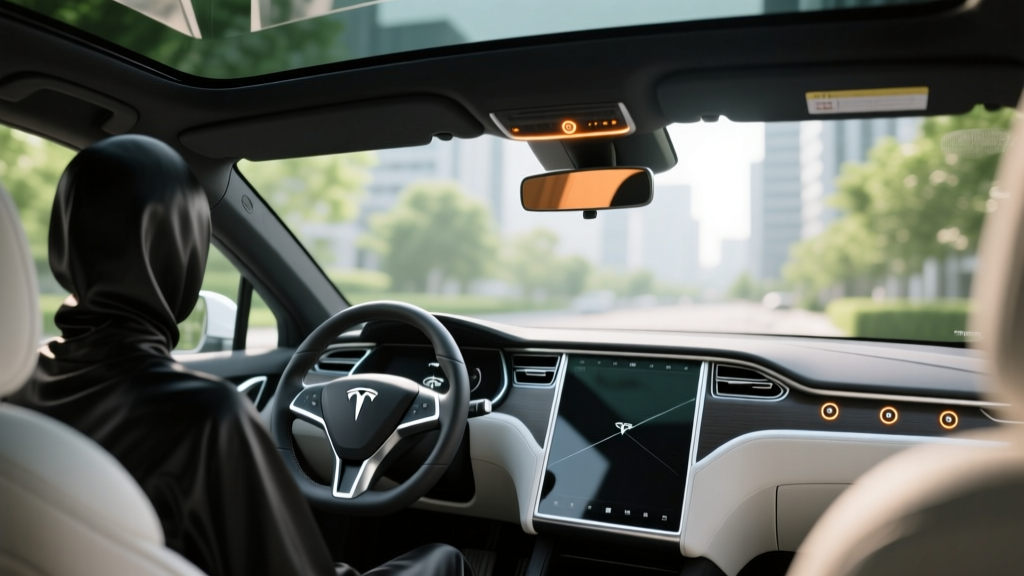
The cabin camera is a single wide-angle lens positioned in the rearview mirror assembly, aimed at the driver and front passenger. Tesla introduced it primarily as a driver-monitoring system (DMS) for vehicles equipped with Autopilot and Full Self-Driving (Supervised). Its job: confirm that you are paying attention while Level 2 driver-assist features are engaged.
Here's what the cabin camera is used for in practice:
- Attention monitoring during Autopilot/FSD: If the system detects your eyes are off the road for an extended period, it issues escalating visual and audible alerts, eventually disengaging and slowing the vehicle.
- Sentry Mode (when enabled): The cabin camera can capture footage of the interior if a break-in or threat is detected while the vehicle is parked and Sentry Mode is active.
- Robotaxi / future features: Tesla has referenced interior monitoring for eventual unsupervised autonomy, but as of 2026, no Tesla sold to consumers operates without a driver.
Privacy: What Tesla Does and Doesn't Do with Cabin Footage
According to Tesla's privacy documentation, cabin camera video is processed locally on the vehicle and is not transmitted to Tesla under normal driving conditions. Footage is only saved to the USB drive (or built-in storage) when triggered by a Sentry Mode event or a crash. You can disable the cabin camera's data-sharing features in the vehicle's Controls > Safety menu, though the attention-monitoring function itself cannot be turned off while Autopilot is active. Owners who are privacy-conscious can physically cover the lens, but doing so will result in constant "camera obstructed" warnings and may disable Autopilot features.
2026 Tesla Lineup: Full Spec Comparison
Now that the cabin camera question is settled, let's look at what you're actually buying. Below is a side-by-side comparison of the current 2026 Tesla models with the exact numbers that matter: range, battery, charging speed, performance, and price.
| Spec | Model 3 Long Range AWD | Model Y Long Range AWD | Model S Long Range | Model X Long Range | Cybertruck AWD |
|---|---|---|---|---|---|
| EPA Range | 363 mi | 320 mi | 402 mi | 335 mi | 340 mi |
| Real-World Highway | ~290-310 mi | ~255-280 mi | ~330-360 mi | ~270-300 mi | ~260-290 mi |
| Battery (usable kWh) | ~75 kWh (NMC) | ~75 kWh (NMC) | ~95 kWh (NMC) | ~95 kWh (NMC) | ~123 kWh (NMC) |
| Max DC Fast Charge | 250 kW | 250 kW | 250 kW | 250 kW | 250 kW |
| 10-80% DCFC Time | ~25 min | ~27 min | ~30 min | ~32 min | ~35 min |
| Level 2 Home Rate | 11.5 kW (~44 mi/hr) | 11.5 kW (~44 mi/hr) | 11.5 kW (~35 mi/hr) | 11.5 kW (~35 mi/hr) | 11.5 kW (~30 mi/hr) |
| 0-60 mph | 4.2 sec | 4.8 sec | 3.1 sec | 3.8 sec | 3.9 sec |
| Horsepower | ~346 hp | ~384 hp | ~670 hp | ~670 hp | ~600 hp |
| Drivetrain | Dual-Motor AWD | Dual-Motor AWD | Dual-Motor AWD | Dual-Motor AWD | Dual-Motor AWD |
| MPGe (combined) | 132 MPGe | 123 MPGe | 120 MPGe | 104 MPGe | ~87 MPGe |
| Cargo (rear seats up) | 23 cu ft | 30 cu ft | 28 cu ft | ~88 cu ft (seats folded) | ~67 cu ft (vault) |
| Base MSRP | $47,740 | $49,630 | $79,990 | $84,990 | $79,990 |
| Battery Warranty | 8 yr / 120,000 mi | 8 yr / 120,000 mi | 8 yr / 150,000 mi | 8 yr / 150,000 mi | 8 yr / 120,000 mi |
Sources: fueleconomy.gov, Tesla official specifications (2026 model year). Real-world highway range estimated at 70-75 mph in moderate temperatures; expect 15-30% reduction in sub-freezing conditions.
Real-World Range: What the EPA Sticker Doesn't Tell You
Tesla's onboard navigation and trip planner are among the best in the industry at predicting actual energy consumption. The system accounts for elevation, wind, temperature, and your driving style — and it will route you through Superchargers with specific SoC arrival targets. This is a genuine advantage over competitors whose navigation systems still rely on crude range-to-empty estimates.
Charging: Supercharger Network Advantage
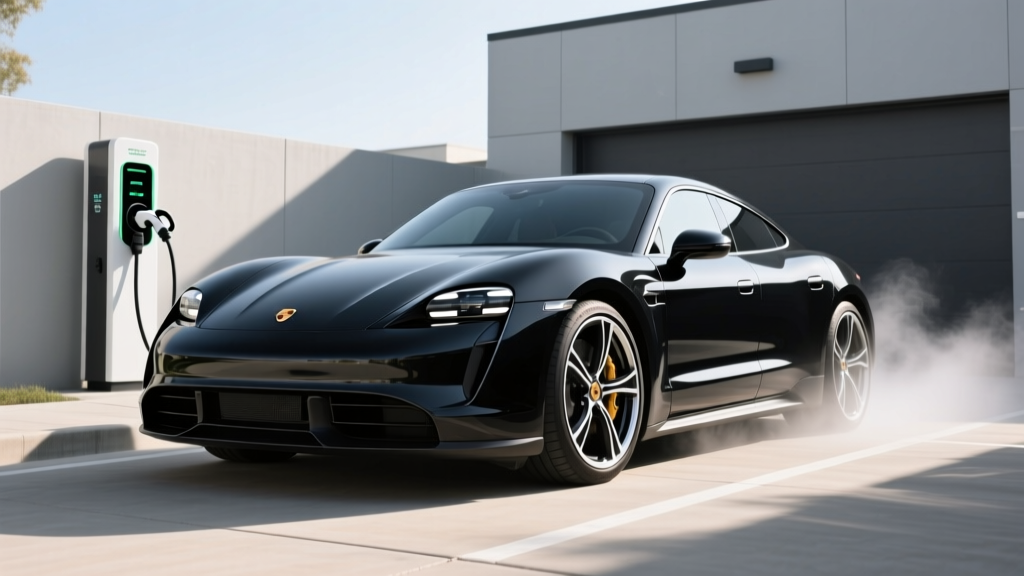
All 2026 Teslas use the NACS (North American Charging Standard) connector natively — no adapter required at Tesla Superchargers. This is the same connector now being adopted by Ford, GM, Rivian, Hyundai, and most other automakers, making Tesla's Supercharger network the de facto national standard.
| Charging Level | Power (kW) | Miles Added per Hour | Typical Use Case |
|---|---|---|---|
| Level 1 (120V) | ~1.4 kW | ~3-5 mi/hr | Overnight trickle; emergency only |
| Level 2 (240V, 48A) | 11.5 kW | 30-44 mi/hr | Home daily charging; full overnight |
| DC Fast (V3 Supercharger) | Up to 250 kW | ~1,000 mi/hr (peak) | Road trips; 10-80% in ~25-35 min |
The Charge Curve Reality
That "250 kW peak" number is exactly that — a peak. Tesla's charge curve is aggressive at low states of charge (SoC) but tapers significantly above 50%, and sharply above 80%. On a Model 3 Long Range, you might see 250 kW at 10% SoC, but by 60% you're closer to 100 kW, and by 85% you're down to ~40 kW. This is why the 10-80% time (~25 minutes) is the meaningful metric — charging from 80-100% can take nearly as long as 10-80%. For road trips, plan to charge to 80% and move on; the time spent waiting for the last 20% is better spent driving.
At home, a Level 2 Wall Connector on a 60-amp circuit (48 amps continuous) will fully replenish any Tesla overnight. Expect installation costs of $500-$2,000 depending on your panel's proximity to the garage and whether a panel upgrade is needed.
Pricing, Trims, and Federal Tax Credit Eligibility
| Model / Trim | Base MSRP | §30D Credit Eligible? | Effective Price (with credit) |
|---|---|---|---|
| Model 3 RWD | $40,240 | Yes — up to $7,500 | ~$32,740 |
| Model 3 Long Range AWD | $47,740 | Yes — up to $7,500 | ~$40,240 |
| Model Y Long Range AWD | $49,630 | Yes — up to $7,500 | ~$42,130 |
| Model Y Performance | $53,130 | Yes — up to $7,500 | ~$45,630 |
| Model S Long Range | $79,990 | No (exceeds $55K sedan cap) | $79,990 |
| Model X Long Range | $84,990 | No (exceeds $80K SUV cap) | $84,990 |
| Cybertruck AWD | $79,990 | Borderline (at $80K SUV cap) | Verify current eligibility |
- Vehicle MSRP caps: $55,000 for sedans (Model 3); $80,000 for SUVs/trucks (Model Y, Cybertruck). Model S and Model X exceed these caps.
- Buyer income caps: Modified AGI ≤ $150,000 (single), $225,000 (head of household), $300,000 (married filing jointly).
- Battery sourcing: Critical minerals and battery components must meet escalating domestic/free-trade-agreement sourcing percentages. Tesla's US-built batteries have largely qualified, but verify at fueleconomy.gov before purchasing.
- Point-of-sale transfer: You can transfer the credit to the dealer at purchase, reducing the purchase price directly rather than waiting for a tax refund.
- Not a flat $7,500 for everyone: Partial credit ($3,750) applies if only one of the two sourcing requirements (minerals or components) is met. Consult a tax professional for your specific situation.
Tech, Interior, and Driver Assistance
Tesla's cabin is defined by its minimalist approach — a single 15.4-inch central touchscreen (17-inch in Model S/X) handles everything from climate control to media to vehicle settings. There is no instrument cluster; speed and navigation appear on the central display. The Cybertruck uses an 18.5-inch screen with a unique angular dash.
Standout tech features:
- Autopilot (standard): Adaptive cruise control + lane centering. Uses the cabin camera for attention monitoring.
- FSD Supervised ($8,000 option or $99/mo subscription): Adds automatic lane changes, traffic light/stop sign recognition, and city-street navigation. Still Level 2 — you must supervise.
- Over-the-air updates: Tesla pushes regular software updates that add features, improve efficiency, and refine the UI — a genuine differentiator over legacy automakers.
- Sentry Mode + Dashcam: All eight external cameras plus the interior cabin camera can record triggered events to onboard storage.
- Heat pump (all models): Tesla's octovalve thermal management system with heat pump significantly reduces cold-weather range loss compared to resistive heating — one reason Teslas outperform many competitors in winter efficiency.
Notable drawbacks:
- No physical buttons for climate, turn signals (Model 3 refresh uses steering-wheel touch controls), or glovebox — everything is screen-mediated.
- Build quality has improved substantially since 2023 but still occasionally falls short of German luxury competitors on panel gaps and interior material quality (Model S/X excepted).
- No Apple CarPlay or Android Auto — you're in Tesla's ecosystem entirely.
- Rear-seat entertainment screen (Model S/X/Cybertruck) is small compared to competitors' offerings.
Pros and Cons at a Glance
Pros
- Best-in-class Supercharger network (17,000+ US stalls)
- Industry-leading energy efficiency (MPGe)
- Over-the-air updates continuously improve the vehicle
- Excellent real-world charging speeds with preconditioning
- Strong resale value relative to most EVs
- Heat pump standard on all models
- Spacious frunk + trunk cargo (Model Y especially)
Cons
- Minimalist interior not for everyone; no physical controls
- No Apple CarPlay / Android Auto
- FSD is expensive ($8,000) and still requires full driver attention
- Insurance premiums tend to be higher than segment average
- Model S/X no longer eligible for federal tax credit (MSRP cap)
- Cabin camera attention monitoring can feel intrusive to some drivers
- Service center wait times can be long in some metro areas
Who Should Buy a Tesla in 2026?
- Choose Model 3 if: You're a commuter or couple who values efficiency, low running costs, and access to the Supercharger network. The Long Range AWD at ~$40K after the tax credit is one of the best value-per-mile EVs available.
- Choose Model Y if: You need family-friendly cargo space (30 cu ft rear, plus a frunk), easy child-seat access, and a high seating position. It remains the best-selling EV in the US for good reason.
- Choose Model S if: You want 400+ miles of range, effortless 3.1-second 0-60 performance, and a premium sedan experience — and the $80K price tag (with no tax credit) fits your budget.
- Choose Model X if: You need three-row seating (up to 7 passengers), falcon-wing rear doors for tight parking access, and are willing to pay a premium for it.
- Choose Cybertruck if: You want a statement vehicle with genuine truck utility (11,000-lb towing capacity on AWD), 48V electrical architecture, and don't mind polarizing styling.
- Look elsewhere if: You need Apple CarPlay, prefer physical buttons and knobs, want a luxury-brand badge, or your area lacks reliable Tesla service infrastructure.
Frequently Asked Questions
Does Tesla have cameras inside the cabin?
Yes. Every current Tesla (Model 3, Model Y, Model S, Model X, Cybertruck) has a cabin camera mounted in the rearview mirror housing. It monitors driver attention during Autopilot/FSD use and can record interior footage during Sentry Mode events.
Does the cabin camera record me while I'm driving normally?
No. Under normal driving, the cabin camera processes attention data locally and does not save or transmit video. Recording only triggers during Sentry Mode events or crashes, and footage is saved to local storage (USB or built-in), not uploaded to Tesla.
Can I cover or disable the interior camera?
You can physically cover the lens, but the vehicle will display persistent "camera obstructed" warnings and may restrict Autopilot functionality. There is no software toggle to fully disable the attention-monitoring feature while Autopilot is engaged.
How many exterior cameras does a Tesla have?
All current Teslas have 8 external cameras (front, front-side left/right, rear-side left/right, rear, and a dedicated front-wide camera). Combined with the cabin camera, that's 9 total cameras on the vehicle.
Is Tesla's Full Self-Driving actually self-driving?
No. FSD (Supervised) is an SAE Level 2 system. It can handle many driving scenarios but requires continuous driver supervision. The cabin camera enforces this by monitoring your eyes. True driverless operation (Level 4) is currently only offered by commercial robotaxi services like Waymo in limited geographic areas.
Does the Tesla Model 3 qualify for the $7,500 federal tax credit?
The Model 3 RWD and Long Range AWD are generally eligible for up to $7,500 under IRS §30D, provided the buyer meets income caps ($150K single / $300K joint) and the vehicle meets battery-sourcing requirements. The credit can be transferred at point of sale to reduce the purchase price directly. Always verify current eligibility at fueleconomy.gov and consult a tax professional.
What is the real-world range of a Tesla Model Y?
The 2026 Model Y Long Range AWD is EPA-rated at 320 miles. In real-world highway driving at 70-75 mph, expect approximately 255-280 miles. In cold weather (below freezing), that drops to roughly 220-250 miles. Plan road-trip charging stops using about 75% of the EPA figure as your safe margin.
How fast does a Tesla charge at a Supercharger?
Tesla V3 Superchargers deliver up to 250 kW peak. A Model 3 Long Range charges from 10-80% in approximately 25 minutes. However, peak speed only applies at low states of charge — the rate tapers significantly above 50% SoC. For road trips, charging to 80% and moving on is the most time-efficient strategy.
All pricing, range, and specification data reflect 2026 model year information available at time of publication. Federal tax credit eligibility is subject to change; consult IRS.gov and a qualified tax professional. Safety ratings: check current scores at NHTSA and IIHS.