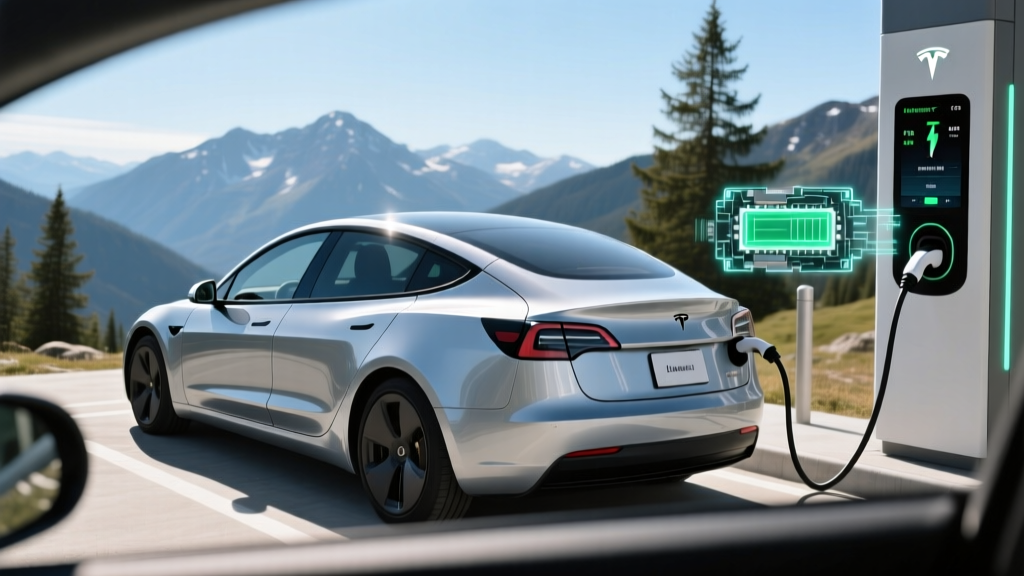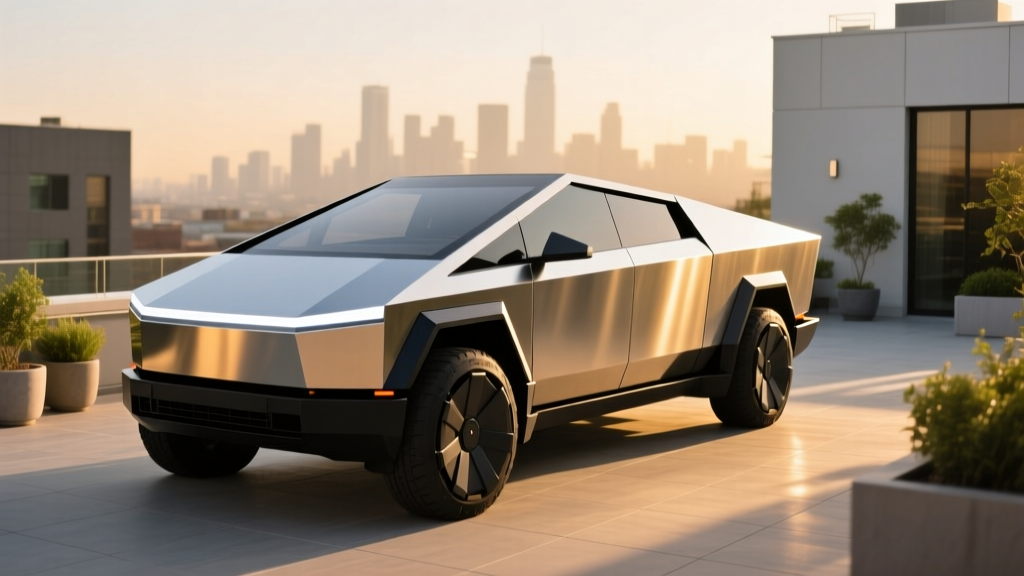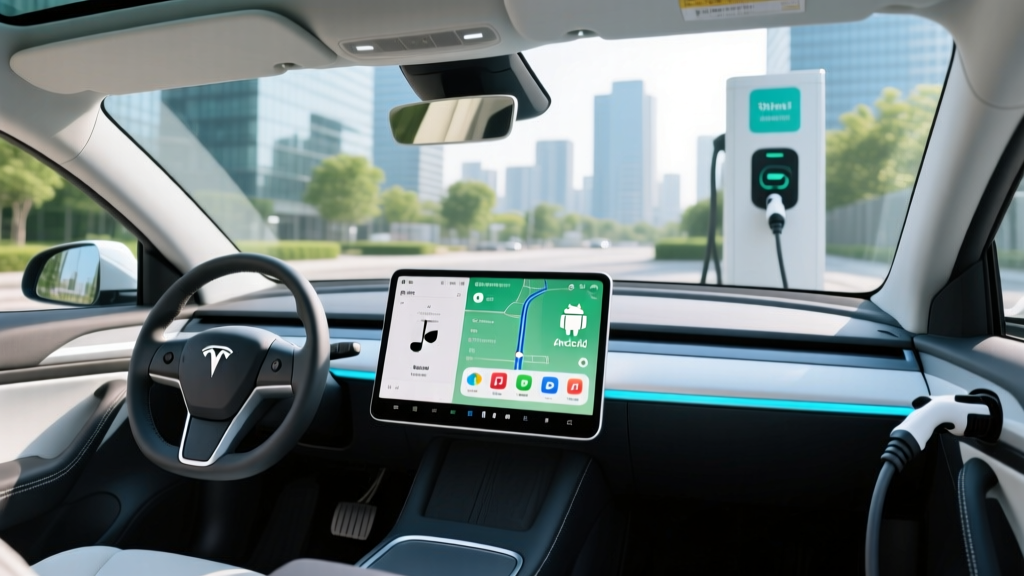
The Short Answer: Does Tesla Have Android Auto?
No. As of the 2026 model year, no Tesla vehicle — Model Y, Model 3, Model S, Model X, or Cybertruck — supports Android Auto or Apple CarPlay. Tesla uses a proprietary, Linux-based infotainment system that handles navigation, media, climate, and vehicle controls entirely through its 15.4-inch center touchscreen (or dual screens in the refreshed Model S/X).
For Android users, this means you cannot mirror your phone's Google Maps, Spotify, or Waze interface onto the Tesla display. Instead, Tesla provides its own native apps: Tesla Navigation (with real-time traffic and Supercharger routing), Spotify, Apple Music, YouTube, Netflix (parked only), and a built-in web browser. Bluetooth audio streaming from your Android phone works flawlessly for any app, and phone calls route through the car's speaker system, but the visual interface remains Tesla's own.
This is a deliberate platform choice, not an oversight. Tesla's infotainment stack is tightly integrated with its Autopilot/FSD visualization, over-the-air updates, and energy-app routing — functions that Android Auto's projection protocol doesn't support. If Android Auto integration is a non-negotiable feature for your next EV purchase, competitors like the Hyundai Ioniq 5, Ford Mustang Mach-E, and Chevrolet Equinox EV all offer it.
Below, we break down the full 2026 Tesla Model Y — the vehicle most shoppers cross-referencing when they land on this question — so you can weigh the infotainment trade-off against the car's range, charging, pricing, and ownership experience.
2026 Tesla Model Y: Range, Battery, and Real-World Efficiency
The 2026 Model Y Long Range AWD carries an EPA-estimated 320 miles of range. In real-world driving, expect approximately 270–290 miles on highway trips at 70–75 mph, and 230–260 miles in sustained cold weather (below 32°F) due to cabin heating demands and reduced battery chemistry efficiency. City driving with heavy regenerative braking can approach or slightly exceed the EPA sticker.
The 2026 Model Y lineup uses two distinct battery chemistries depending on trim:
- Long Range AWD & Performance: ~78 kWh usable capacity, NMC (nickel manganese cobalt) chemistry. Higher energy density supports the 320-mile EPA rating and 250 kW peak DC fast charging.
- Standard Range RWD: ~60 kWh usable capacity, LFP (lithium iron phosphate) chemistry. EPA-rated at 268 miles. LFP cells tolerate regular 100% charging without accelerated degradation — Tesla recommends charging to 100% at least weekly for LFP packs to maintain accurate state-of-charge calibration.
Efficiency on the Long Range AWD is rated at 122 MPGe combined (28 kWh/100 mi), making it one of the most efficient electric SUVs in its class. The RWD Standard Range achieves a slightly higher 129 MPGe combined due to its lighter single-motor drivetrain.
| Spec | Long Range AWD | Performance AWD | Standard Range RWD |
|---|---|---|---|
| EPA Range | 320 mi | 293 mi | 268 mi |
| Battery (usable) | ~78 kWh NMC | ~78 kWh NMC | ~60 kWh LFP |
| Efficiency | 122 MPGe / 28 kWh/100mi | 111 MPGe / 30 kWh/100mi | 129 MPGe / 26 kWh/100mi |
| 0–60 mph | 4.8 sec | 3.5 sec | 5.8 sec |
| Horsepower | 384 hp | 456 hp | 295 hp |
| Drivetrain | Dual-motor AWD | Dual-motor AWD | Single-motor RWD |
| Top Speed | 135 mph | 155 mph | 135 mph |
Source: fueleconomy.gov and Tesla's 2026 specifications.
Charging Speed: DC Fast, Level 2, and the Supercharger Network
Charging speed is where the Model Y's NMC and LFP packs diverge meaningfully.
| Charging Method | Long Range / Performance (NMC) | Standard Range (LFP) |
|---|---|---|
| Max DC Fast Charge | 250 kW (CCS via NACS adapter or native NACS at V4 Superchargers) | 170 kW |
| 10–80% DC Time | ~25 minutes | ~30 minutes |
| Level 2 Home (11.5 kW / 48A) | ~44 mi/hr added | ~35 mi/hr added |
| Level 2 Home (7.7 kW / 32A) | ~30 mi/hr added | ~24 mi/hr added |
| Level 1 (120V / 12A) | ~3–4 mi/hr | ~3–4 mi/hr |
A critical real-world note on the charging curve: the 250 kW peak on Long Range/Performance models is a maximum, not a sustained rate. In practice, the Model Y holds close to peak power between roughly 10–40% state of charge, then progressively tapers. By 60% SoC, you're typically seeing 120–150 kW; above 80%, charging slows dramatically to protect the cells, often dropping below 50 kW. This is why Tesla (and we) quote 10–80% times rather than 0–100% — the last 20% can add as much time as the first 60%.
For home charging, a Wall Connector or equivalent Level 2 station on a 60-amp circuit (delivering 48 amps continuous / 11.5 kW) will fully replenish a Long Range Model Y overnight in roughly 7–8 hours from near-empty. Most owners who plug in nightly start each day at 80–90% SoC and rarely think about range.
The Model Y uses the NACS (North American Charging Standard) connector natively. Tesla's Supercharger network — now exceeding 6,000 U.S. stations and 65,000+ individual stalls — remains the most reliable DC fast-charging ecosystem in North America, with real-world uptime consistently above 95%.
Pricing, Trims, and Federal Tax Credit Eligibility
Here's what the 2026 Model Y lineup costs before and after potential federal incentives:
| Trim | Base MSRP | §30D Credit Eligibility | Effective Price (if eligible) |
|---|---|---|---|
| Standard Range RWD | $44,990 | Eligible (MSRP under $80K cap; verify battery sourcing) | ~$37,490 |
| Long Range AWD | $48,990 | Eligible (MSRP under $80K cap; verify battery sourcing) | ~$41,490 |
| Performance AWD | $53,990 | Eligible (MSRP under $80K cap; verify battery sourcing) | ~$46,490 |
- MSRP cap: SUVs must be under $80,000. All Model Y trims qualify.
- Buyer income cap: Modified AGI ≤ $150,000 (single) / $300,000 (joint). Exceed this and you lose the credit entirely.
- Battery sourcing: Critical minerals and battery components must meet escalating domestic/free-trade-partner thresholds. Tesla's supply chain has adapted, but eligibility can shift — always verify on irs.gov before purchase.
- Point-of-sale transfer: You can transfer the credit to the dealer at purchase for an immediate price reduction rather than waiting to claim it on your tax return.
- One credit per VIN: The vehicle must not have been previously credited.
Tax credit rules change frequently. Consult a tax professional and the IRS Clean Vehicle Credit portal for your specific situation.
A common as-tested configuration — Long Range AWD with Ultra Red paint ($2,000) and 20-inch wheels ($2,000) — lands around $52,990 before credit, dropping to roughly $45,490 with the full $7,500 credit applied. Full Self-Driving (Supervised) adds $8,000 if purchased outright or $99/month as a subscription, but is entirely optional.
Interior, Cargo, and Passenger Space
The refreshed Model Y interior is markedly more refined than the pre-2025 version, with ventilated front seats, ambient lighting, a rear-seat touchscreen, and improved sound insulation. Materials are a step up — soft-touch surfaces replace much of the earlier hard plastic.
| Measurement | Specification |
|---|---|
| Front Headroom | 41.0 in |
| Front Legroom | 41.8 in |
| Rear Headroom | 38.4 in |
| Rear Legroom | 39.5 in |
| Cargo (rear seats up) | 30.2 cu ft |
| Cargo (rear seats folded) | 72.0 cu ft |
| Frunk | 4.1 cu ft |
The 30.2 cu ft behind the second row is competitive with the Hyundai Ioniq 5 (32.5 cu ft) and slightly ahead of the Ford Mustang Mach-E (29.7 cu ft). Fold the 60/40 split rear bench and the 72.0 cu ft total accommodates full-size furniture or camping gear. The frunk (front trunk) is modest at 4.1 cu ft — enough for a charging cable kit and a small bag.
One notable drawback: the Model Y still lacks a traditional instrument cluster behind the steering wheel. All driving information — speed, range, navigation — lives on the center screen. Some drivers adapt quickly; others find the glance distance distracting. A slim dash-mounted display was rumored for the refresh but did not materialize.
Infotainment, Autopilot, and the Android Auto Workaround
Since Tesla won't offer Android Auto, here's how Android users actually live with the system:
- Navigation: Tesla's built-in nav is excellent — it routes through Superchargers automatically on long trips, preconditions the battery for fast charging, and provides real-time traffic. Most Android users find it superior to Google Maps for EV-specific routing.
- Music: Native Spotify, Apple Music, Tidal, and TuneIn are built in. For apps not natively supported (SiriusXM, niche podcasts), Bluetooth streaming from your phone works without issue.
- Phone integration: Your phone acts as the key (Bluetooth Low Energy), and the Tesla app provides remote climate control, charging status, location tracking, and service scheduling.
- Voice commands: Tesla's voice assistant handles navigation, media, climate, and phone calls. It's improved substantially with recent OTA updates but still trails Google Assistant in natural-language comprehension.
On the driver-assistance front, every Model Y ships with Basic Autopilot (Traffic-Aware Cruise Control and Autosteer). This is an SAE Level 2 system — it handles steering and speed on marked roads but requires constant driver supervision, hands-on or eyes-on depending on configuration.
Tesla's Autopilot and Full Self-Driving (Supervised) are SAE Level 2 systems. The driver must remain fully engaged, monitor the road, and be prepared to take over instantly. FSD (Supervised) adds features like automatic lane changes, traffic light/stop sign recognition, and city-street navigation, but it does not make the vehicle autonomous. Only Level 4 services like Waymo operate without a driver. (SAE International J3016)
FSD (Supervised) is a $8,000 add-on or $99/month subscription. It's impressive on highways and improving in urban environments, but it still requires intervention in construction zones, complex intersections, and adverse weather. Budget-conscious buyers can skip it — Basic Autopilot covers the highway-commute use case well.
Warranty, Ownership Costs, and Who the Model Y Suits Best
Tesla's warranty coverage for the 2026 Model Y:
- Basic Vehicle: 4 years / 50,000 miles
- Battery & Drive Unit (Long Range/Performance): 8 years / 120,000 miles, with minimum 70% capacity retention
- Battery & Drive Unit (Standard Range, LFP): 8 years / 100,000 miles, with minimum 70% capacity retention
The 70% retention threshold is the trigger for a warranty replacement. Real-world degradation data from Tesla's fleet suggests NMC packs lose roughly 10–12% capacity over the first 100,000 miles, with the curve flattening significantly afterward. LFP packs show slightly slower initial degradation but benefit from the ability to charge to 100% regularly without long-term harm.
Insurance costs remain a consideration. The Model Y is one of the most-insured vehicles in America, and premiums average $2,200–$3,000/year depending on state, driving record, and coverage level — higher than many ICE competitors due to repair costs and parts pricing. Tesla Insurance is available in select states and can be competitive for clean-record drivers.
- Daily commuter with home charging: Ideal. Plug in nightly, wake up charged, never visit a gas station. The 320-mile range covers weeks of commuting between full charges.
- Road-trip family: Strong. Supercharger routing takes the guesswork out of long trips, and 25-minute charging stops align well with rest breaks. Cargo space handles family luggage.
- Android Auto loyalist: Think carefully. If mirroring your phone's interface is essential, the Ioniq 5 or Mach-E offer it. If you're open to Tesla's native system, most owners adapt within a week.
- Towing: Adequate but not outstanding. The Model Y is rated for 3,500 lbs — enough for a small utility trailer or a pair of dirt bikes, but not a boat or camper. Look to the Rivian R1S or F-150 Lightning for heavier towing.
Pros, Cons, and the Verdict
- 320-mile EPA range (Long Range) is class-leading for the segment
- 250 kW DC fast charging with 10–80% in ~25 minutes
- Supercharger network reliability (95%+ uptime) is unmatched
- 122 MPGe combined efficiency keeps per-mile costs very low
- Strong OTA updates add features post-purchase
- Federal §30D tax credit eligible on all trims (verify sourcing)
- No Android Auto or Apple CarPlay — proprietary system only
- No instrument cluster behind the steering wheel
- Insurance premiums higher than segment average
- Ride quality firm on 20-inch wheels; road noise noticeable on coarse pavement
- FSD (Supervised) is expensive and still requires full driver attention
- LFP Standard Range limited to 170 kW peak DC charging
The 2026 Model Y Long Range AWD remains the default recommendation in the electric compact-SUV segment for buyers who prioritize range, charging infrastructure, and efficiency over infotainment mirroring. If Android Auto is a dealbreaker, the Hyundai Ioniq 5 and Kia EV6 are compelling alternatives with comparable range and CCS/NACS charging. But if you can adapt to Tesla's native ecosystem — and most owners do — the Model Y's combination of 320 miles, 250 kW charging, Supercharger access, and sub-$42,000 effective pricing (after credit) is difficult to beat.
Frequently Asked Questions
Can I use Google Maps on a Tesla?
Not directly. Tesla's built-in navigation uses a Tesla-developed mapping platform (with data from Mapbox and other providers). You cannot display Google Maps on the Tesla screen. However, you can send destinations from Google Maps on your phone to the car via the Tesla app's share function.
Does the 2026 Model Y qualify for the $7,500 federal tax credit?
All Model Y trims fall under the $80,000 MSRP cap for SUVs. Eligibility then depends on your income (≤$150K single / ≤$300K joint) and the vehicle's battery-component and critical-mineral sourcing, which Tesla has generally met for 2026. Always confirm on fueleconomy.gov and the IRS portal before purchasing.
What's the real-world highway range of the Model Y Long Range?
Expect approximately 270–290 miles at 70–75 mph in moderate temperatures. In cold weather (below 32°F), highway range drops to roughly 230–260 miles due to increased cabin heating demand and reduced battery efficiency. Preconditioning the battery while plugged in mitigates some cold-weather loss.
How long does it take to charge a Model Y at home?
On an 11.5 kW (48-amp) Level 2 home charger, a full charge from near-empty takes approximately 7–8 hours for the Long Range and 5–6 hours for the Standard Range. Most owners who plug in overnight start each day at their configured charge limit (typically 80–90% for NMC, 100% for LFP).
Is Tesla's Autopilot self-driving?
No. Autopilot and FSD (Supervised) are SAE Level 2 driver-assistance systems. You must remain fully attentive, keep your hands available, and be ready to intervene at any time. These systems do not make the vehicle autonomous.
Does the Model Y have a frunk?
Yes, but it's small — 4.1 cubic feet. It fits the mobile charging connector, a tire inflation kit, and a small duffel bag. Don't expect to fit a full grocery load up front.
Is the Model Y worth buying over the Hyundai Ioniq 5 or Ford Mach-E?
If Supercharger network access, class-leading efficiency, and Tesla's OTA update track record are priorities, yes. If Android Auto/CarPlay support, a more traditional interior layout, or a softer ride matter more, the Ioniq 5 and Mach-E are strong alternatives worth test-driving back to back.