The Short Answer: Yes, but With Major Caveats
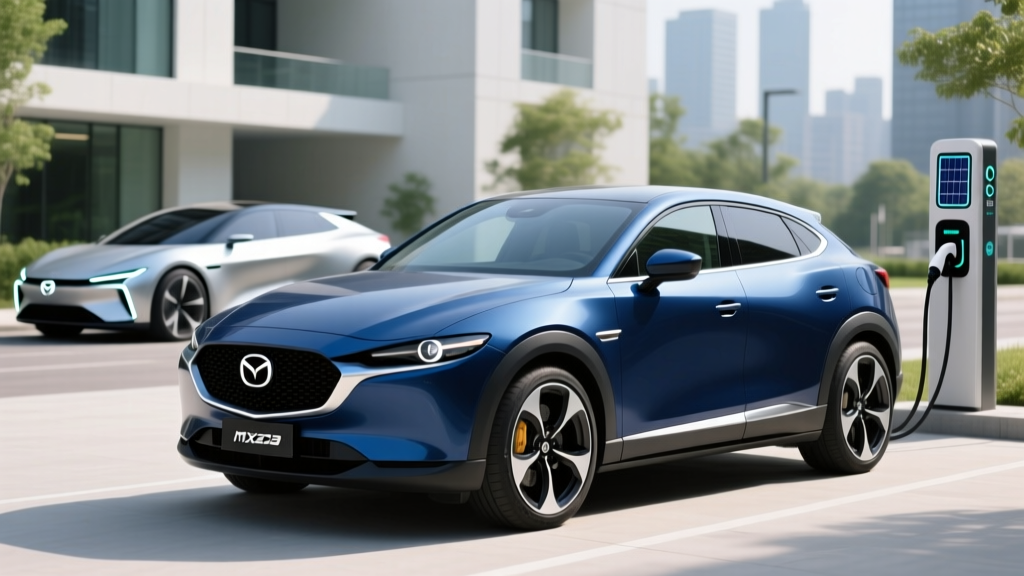
Yes, Mazda makes one fully electric vehicle: the MX-30 EV. However, its EPA-estimated range is just 100 miles from a 35.5 kWh battery — the lowest of any new EV sold in the US. Mazda also offers the CX-70 PHEV and CX-90 PHEV as plug-in hybrid alternatives with roughly 26–28 miles of electric-only driving. If you need a long-range EV for road trips or lack reliable home charging, the MX-30 is a tough recommendation. If you want a premium-feeling city commuter with a short daily drive, it can work — but the value proposition is narrow.
Mazda has been cautious about full electrification compared to competitors like Hyundai, Kia, and Volkswagen. The MX-30 launched in the US for the 2022 model year, initially sold only in California, and has seen limited availability since. For 2026, Mazda continues to lean heavily on its plug-in hybrid lineup while its next-generation EVs — built on a dedicated platform — remain in development. Let's break down exactly what Mazda offers today, what the real numbers look like, and whether any of it makes financial sense for your situation.
Mazda MX-30 EV: Specs, Range, and Charging
| Specification | Mazda MX-30 EV (2025/2026) |
|---|---|
| EPA Range | 100 miles |
| Battery Capacity | 35.5 kWh (lithium-ion, NMC chemistry) |
| Motor Output | 143 hp / 200 lb-ft torque |
| 0–60 mph | ~8.5 seconds |
| Peak DC Fast Charge Rate | 50 kW (CCS1) |
| 10–80% DC Charge Time | ~36 minutes |
| Level 2 AC Charge Rate | 6.6 kW (~22 miles/hr) |
| MPGe (Combined) | 92 MPGe |
| Base MSRP | ~$34,000 |
| Battery Warranty | 8 years / 100,000 miles |
The MX-30's 100-mile EPA range is the defining constraint. In real-world driving, expect approximately 80–90 miles on the highway at 70 mph, and potentially as low as 65–75 miles in cold weather (below 32°F) due to reduced battery efficiency and cabin heating load. This is not a vehicle for 200-mile road trips without careful planning — a single DC fast-charge stop would add roughly 50–60 miles in 30 minutes, given the modest 50 kW peak charge rate.
Real-World Range Expectation: EPA 100 mi → expect ~85 mi mixed driving, ~70 mi highway, ~65 mi in freezing temps. This is effectively a city and suburban commuter car.
The 50 kW DC fast-charging capability is well below the 150–350 kW rates offered by competitors like the Hyundai Ioniq 5 or Chevrolet Equinox EV. At 50 kW, the MX-30 charges at roughly 2.4 miles of range per minute on a fast charger — adequate for topping up, but not for corridor travel.
Mazda's Plug-In Hybrids: CX-70 PHEV and CX-90 PHEV
For buyers who want electric driving without range limitations, Mazda's PHEV lineup is arguably more practical. Both the CX-70 PHEV and CX-90 PHEV use a 17.8 kWh battery pack paired with a 2.5-liter inline-4 engine.
| Model | EV-Only Range | Total Range | Combined MPGe (EV) | Gas-Only MPG | Starting MSRP |
|---|---|---|---|---|---|
| CX-70 PHEV | 26 mi | ~450 mi | 56 MPGe | 25 MPG | ~$54,000 |
| CX-90 PHEV | 26 mi | ~460 mi | 56 MPGe | 25 MPG | ~$56,000 |
| MX-30 EV | 100 mi | 100 mi | 92 MPGe | N/A | ~$34,000 |
The PHEV models let you drive 26 miles on electricity alone — enough for most daily commutes — then switch to hybrid mode for longer trips. According to fueleconomy.gov, both achieve 56 MPGe in electric mode and 25 MPG combined on gas. The trade-off is a higher purchase price ($54K–$56K vs. $34K for the MX-30) and a more complex powertrain with ongoing maintenance requirements (oil changes, spark plugs, transmission fluid).
Level 2 charging for the PHEVs tops out at around 6.6 kW, meaning a full charge from empty takes roughly 2.5 hours on a home Level 2 charger — practical for overnight replenishment.
Cost Breakdown: MX-30 EV vs. Gas Mazda3 vs. CX-90 PHEV
| Cost Factor | MX-30 EV | Mazda3 (Gas) | CX-90 PHEV |
|---|---|---|---|
| Purchase Price (MSRP) | $34,000 | $24,000 | $56,000 |
| Federal Tax Credit (§30D) | $0 (does not qualify*) | $0 | $0 (does not qualify*) |
| Annual Fuel/Energy (12,000 mi) | ~$500 | ~$1,500 | ~$900 (mixed EV/gas) |
| Annual Maintenance | ~$300 | ~$700 | ~$600 |
| 5-Year Fuel + Maintenance | ~$4,000 | ~$11,000 | ~$7,500 |
| Estimated Insurance (Annual Avg) | ~$1,800 | ~$1,400 | ~$2,000 |
| 5-Year Total Cost (Purchase + Operating) | ~$47,000 | ~$42,000 | ~$73,500 |
*As of 2026, the Mazda MX-30 and CX-90 PHEV do not qualify for the IRS §30D federal tax credit due to battery component and critical mineral sourcing requirements. The credit offers up to $7,500 for qualifying new EVs/PHEVs, subject to MSRP caps ($55,000 for sedans, $80,000 for SUVs/vans/trucks), buyer income limits ($150K single / $300K joint), and North American final assembly. Always verify current eligibility on irs.gov or through your dealer's point-of-sale transfer system.
The MX-30's operating costs are genuinely low — electricity at $0.13/kWh nationally works out to roughly $4.15 per 100 miles driven, compared to about $12.50 per 100 miles for a gas Mazda3 at 30 MPG and $3.75/gallon. However, the $10,000 price premium over a Mazda3 means you need roughly 7–8 years of driving to break even on fuel savings alone, assuming no tax credit.
What First-Time EV Buyers Need to Know
If you're considering the MX-30 or any EV for the first time, several practical factors matter more than the spec sheet:
Home Charging Access Is Critical
With only 100 miles of range, the MX-30 demands reliable home charging. A standard 120V outlet (Level 1) adds roughly 3–4 miles of range per hour — requiring 25+ hours for a full charge, which is impractical for daily use. A Level 2 home charger (240V, 32–48 amps) adds about 22 miles per hour, fully replenishing the MX-30 in roughly 5 hours. Expect to pay $800–$2,000 for a quality Level 2 unit and $500–$2,500 for professional installation, depending on whether your electrical panel needs an upgrade. Without home charging, the MX-30's limited range and slow DC charging make public charging a frustrating daily ritual.
Climate Matters More Than You Think
Cold weather reduces EV range by 20–40% depending on severity. In sub-freezing conditions, the MX-30's 100-mile range can drop to 65 miles or less. If you live in northern climates and your daily round-trip commute exceeds 50 miles, the MX-30 becomes a risky proposition in winter.
Your Driving Pattern Determines Viability
The MX-30 works best for drivers whose daily round-trip is under 60 miles, who have Level 2 home charging, and who rarely take trips exceeding 100 miles without access to a destination charger. If that describes you, the low operating cost and Mazda's premium interior feel make it an appealing urban runabout. If your commute is longer, or you regularly drive highway distances, look elsewhere.
Common Misconceptions About Mazda and EVs
| Myth | Fact |
|---|---|
| "Mazda doesn't make any electric cars." | The MX-30 EV is a fully electric vehicle, though its 100-mile range limits its appeal. |
| "The MX-30 qualifies for the $7,500 tax credit." | It does not meet §30D battery sourcing requirements as of 2026. Verify on fueleconomy.gov. |
| "All EVs have at least 200 miles of range." | The MX-30 is a notable exception at 100 miles. Even the Mini Cooper SE offers only 114 miles. |
| "Mazda PHEVs are basically EVs." | PHEVs like the CX-90 have 26 miles of electric range, then rely on a gas engine. They are not zero-emission vehicles. |
| "EV maintenance costs nothing." | EVs still need tire rotations, cabin air filters, brake fluid checks, wiper blades, and eventual tire replacement (EVs wear tires faster due to weight and instant torque). |
Decision Framework: Should You Buy a Mazda Electrified Vehicle?
Choose the MX-30 EV if:
- Your daily round-trip commute is under 60 miles
- You have (or can install) Level 2 home charging
- You live in a mild climate (rare sub-freezing temps)
- You want a premium interior and distinctive design at a lower price point
- You have a second gas vehicle for longer trips
Choose the CX-70 or CX-90 PHEV if:
- You need SUV space and seating for 5–7 passengers
- You want electric commuting but gas flexibility for road trips
- Your daily drive is under 25 miles (the electric-only range)
- You can budget $54K–$56K+ for a premium SUV
Look at a different brand's EV if:
- You need 250+ miles of range for single-vehicle households
- You take regular road trips over 150 miles
- You live in a cold climate and your commute exceeds 50 miles
- You want DC fast charging above 150 kW for corridor travel
- You need federal tax credit eligibility to make the math work
What's Next for Mazda's EV Lineup
Mazda has announced plans for a dedicated EV platform and several new electric models by 2028, but as of early 2026, no next-generation Mazda EVs are available for purchase in the US. The company's "Multi-Solution" strategy continues to prioritize PHEVs and mild hybrids for most markets, with full EVs targeted at urban-focused segments. Until a longer-range Mazda EV arrives, buyers needing serious electric mileage should evaluate competitors like the Hyundai Ioniq 5 (303 mi EPA, ~$42K), Chevrolet Equinox EV (315 mi EPA, ~$33K), or Tesla Model 3 (341 mi EPA, ~$39K).
Frequently Asked Questions
Is the Mazda MX-30 available nationwide?
The MX-30 was initially limited to California dealerships. Availability has expanded somewhat, but inventory remains sparse compared to mainstream EVs. Check with your local Mazda dealer for current stock — many regions have zero MX-30 units available.
Does the MX-30 support Tesla Superchargers?
No. The MX-30 uses the CCS1 connector. Mazda has not announced NACS (Tesla connector) adoption for the MX-30. You'll rely on Electrify America, EVgo, ChargePoint, and other CCS-compatible networks for public charging.
How long will the MX-30 battery last?
Mazda warranties the battery for 8 years or 100,000 miles against capacity loss below a specified threshold (typically 70% state of health). The 35.5 kWh NMC pack is relatively small, and smaller batteries tend to undergo more charge cycles over the same mileage, which can accelerate degradation. Expect 85–90% capacity retention after 5 years of typical use based on industry averages for similar chemistry.
Can I tow with the MX-30?
No. Mazda does not rate the MX-30 for towing. If you need towing capability, the CX-90 PHEV is rated for up to 3,500 pounds.
Is the MX-30 worth it compared to a used Tesla Model 3?
A 2022–2023 used Model 3 Long Range offers 330+ miles of range, 250 kW Supercharging, and vastly superior public charging infrastructure — often for $25,000–$30,000. The MX-30's advantages are limited to its lower new-vehicle warranty coverage and Mazda's interior design. For most buyers, a used Model 3 or a new Chevrolet Equinox EV provides significantly more utility per dollar.
What about Mazda's hybrid models — are those electric?
Mazda offers mild-hybrid systems on some global models, but in the US, the only electrified Mazdas are the MX-30 (full EV) and the CX-70/CX-90 PHEVs. Mild hybrids cannot drive on electric power alone and do not plug in — they are not considered electrified vehicles for tax credit or emissions purposes.