The Short Answer: Does Infiniti Have an Electric Car?
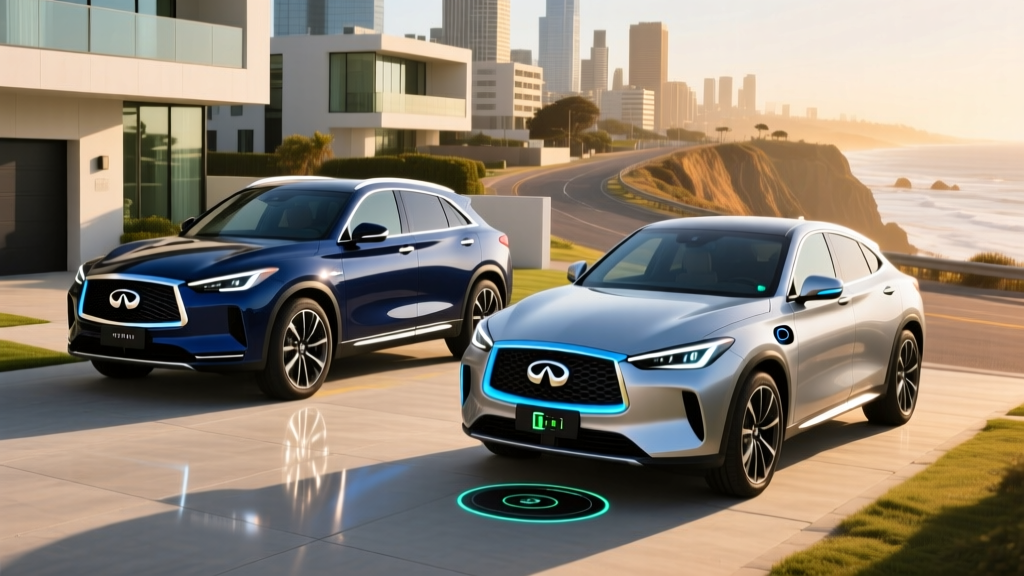
As of early 2026, Infiniti does not sell a fully electric vehicle in the United States. The brand's first production EV, the Infiniti QX65 EV, is expected to arrive for the 2027 model year (likely late 2026 on-sale date). Until then, Infiniti's electrified offerings are limited to the QX60 hybrid variants and conventional gas models. If you're shopping for a luxury EV today from a Nissan-Alliance brand, the closest option is the Nissan Ariya, which shares platform DNA with what Infiniti's upcoming EV will likely offer.
Infiniti has been promising electric vehicles since the QX Inspiration concept debuted at the 2019 Detroit Auto Show. Over six years later, buyers are still waiting. Let's examine exactly where Infiniti stands on electrification, what's coming, and whether you should wait — or look at competitors that are selling EVs right now.
Infiniti's Current and Upcoming EV Roadmap
Infiniti's parent company Nissan has committed to launching multiple EVs on its new dedicated electric platform. The Infiniti QX65 EV is slated to be a midsize luxury electric crossover — positioned to compete with the BMW iX, Genesis Electrified GV70, Cadillac Lyriq, and Mercedes-Benz EQB/EQE SUV.
Here's what we know based on Nissan's official announcements and industry reporting:
| Model | Status | Expected On-Sale | Platform | Est. Range |
|---|---|---|---|---|
| QX65 EV | Announced / Pre-production | Late 2026 (MY2027) | Nissan dedicated EV (CMF-EV evolution) | ~300 mi (est.) |
| QX Inspiration | Concept only | Unknown | Concept platform | N/A |
| Future sedan EV | Announced, no name | 2028+ (est.) | TBD | ~350 mi (target) |
Important caveat: Until Infiniti publishes official EPA range figures, battery capacity, and pricing, all specs above are preliminary estimates based on the Nissan Ariya's architecture and Infiniti's luxury positioning. Actual numbers may differ significantly.
What Infiniti Buyers Can Drive Today: The Hybrid Alternative
If you're loyal to the Infiniti brand and want to reduce fuel consumption now, the 2026 Infiniti QX60 is available with a mild-hybrid or standard turbocharged powertrain. It is not a plug-in hybrid (PHEV) and has no electric-only range.
| Vehicle | Powertrain | EPA Combined | Electric Range | Base MSRP | Federal Tax Credit |
|---|---|---|---|---|---|
| Infiniti QX60 (gas/mild-hybrid) | 2.0L Turbo VC-Turbo | 23 MPG | 0 mi | ~$51,000 | $0 (not a PEV) |
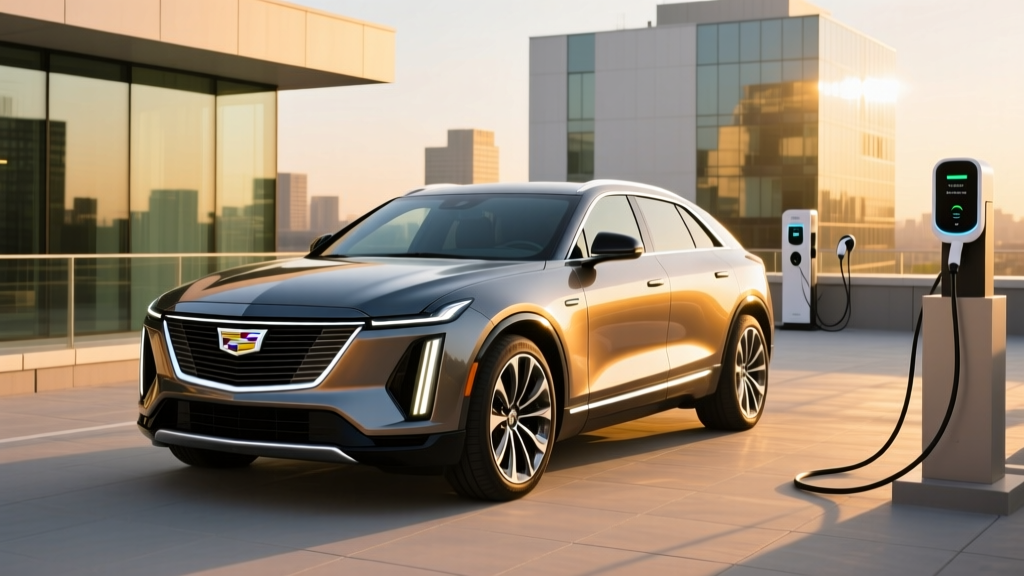
| Cadillac Lyriq (EV) | BEV, 102 kWh NMC | 89 MPGe | 314 mi | $58,590 | Up to $7,500* |
| Genesis Electrified GV70 | BEV, 77.4 kWh NMC | 87 MPGe | 236 mi | $67,550 | Up to $7,500* |
| Nissan Ariya (EV) | BEV, 91 kWh NMC | 97 MPGe | 304 mi | $40,990 | Up to $7,500* |
| BMW iX xDrive50 | BEV, 111.5 kWh NMC | 87 MPGe | 324 mi | $87,250 | $0 (MSRP cap exceeded) |
*Federal §30D tax credit eligibility depends on buyer income, battery sourcing, and MSRP caps. Verify at IRS.gov. Credit may be transferred to the dealer as a point-of-sale discount under current rules.
The comparison reveals a core problem for Infiniti: competitors are already delivering 236-324 miles of real electric range with available tax credits, while Infiniti has nothing on showroom floors. The Nissan Ariya — sharing corporate DNA — offers 304 miles of EPA range starting under $41,000, making it the most practical Nissan-Alliance EV purchase today.
Real EV Ownership Costs: What You'd Actually Spend
If you're considering waiting for the QX65 EV or buying a competitor's luxury EV now, here's what ownership actually costs in practice. We'll compare a hypothetical Infiniti QX65 EV (estimated $55,000 MSRP, 300-mile range, 3.5 mi/kWh efficiency) against the gas QX60 and the Cadillac Lyriq over five years.
| Cost Category | Infiniti QX60 (Gas) | Infiniti QX65 EV (Est.) | Cadillac Lyriq (EV) |
|---|---|---|---|
| Purchase Price (base) | $51,000 | $55,000 (est.) | $58,590 |
| Federal Tax Credit | $0 | Up to $7,500* | Up to $7,500* |
| Fuel / Electricity (5 yr) | $12,750** | $4,300*** | $4,300*** |
| Maintenance (5 yr) | $3,800 | $1,800 | $1,800 |
| Insurance (5 yr avg) | $9,500 | $11,000 | $10,500 |
| Est. Depreciation | $22,000 | $24,000 | $25,000 |
| Total (net of credit) | $99,050 | $91,600 (est.) | $92,690 |
**Assumes 23 MPG combined, $3.91/gal national avg (EIA 2025).
***Assumes 80% home Level 2 charging at $0.16/kWh, 20% DC fast charging at $0.40/kWh.
*Tax credit subject to §30D eligibility. Consult a tax professional.
The data shows that even with a higher purchase price and steeper insurance premiums (typical for EVs), the fuel and maintenance savings of an EV typically close the gap within 3-4 years. The key variable is home charging access: if you rely exclusively on DC fast charging, your electricity cost roughly doubles, erasing much of the fuel-cost advantage.
First-Time EV Buyer Essentials: What Infiniti Shoppers Need to Know
If you've been driving Infiniti gas vehicles and are considering your first EV — whether it's the upcoming QX65 or a competitor — these realities will shape your experience:
Home Charging Is Non-Negotiable for Most Owners
Over 80% of EV charging happens at home. A Level 2 home charger (240V, 40-48 amps) adds roughly 25-35 miles of range per hour and fully replenishes a ~90 kWh battery overnight. Installation costs range from $800 to $2,500 depending on your electrical panel capacity. If you need a panel upgrade (100A to 200A), add $1,500-$3,000. Without home charging, EV ownership becomes significantly less convenient and more expensive.
EPA Range vs. Real-World Range
When the QX65 EV arrives, expect its real-world highway range to be 10-15% below the EPA sticker at sustained 70+ mph speeds. In cold weather (below 30°F), range can drop 20-30% due to battery chemistry limitations and cabin heating demands. A vehicle rated at 300 miles EPA may deliver 210-240 miles in a Midwestern winter. Always plan road trips around the worst-case scenario.
Charging Speed Matters More Than Peak kW
Manufacturers advertise peak DC fast-charge rates (e.g., "up to 200 kW"), but the charge curve — how quickly power tapers as the battery fills — determines real charging time. A typical luxury EV peaks near its maximum rate only between 10-40% state of charge, then tapers progressively. A 10-80% charge in 25-30 minutes is a realistic expectation for modern luxury EVs on a 350 kW-capable charger.
Federal Tax Credit Rules Are Specific
Under IRS §30D rules, the $7,500 credit requires:
- MSRP cap: SUVs/trucks ≤ $80,000; sedans ≤ $55,000
- Income cap: AGI ≤ $300,000 (joint), $225,000 (head of household), $150,000 (single)
- Battery sourcing: Critical minerals and battery components must meet escalating domestic/free-trade-partner thresholds
- Final assembly: Must occur in North America
Many luxury EVs from European brands lose partial or full credit eligibility due to sourcing requirements. Where Infiniti's QX65 will be assembled and sourced remains a key question for credit eligibility.
Should You Wait for Infiniti's EV or Buy Now?
Choose to WAIT for the Infiniti QX65 EV if:
- You're deeply loyal to the Infiniti brand and dealer network
- Your current vehicle has 12-18+ months of useful life remaining
- You want a luxury midsize EV and don't need one immediately
- You prefer Infiniti's design language and ProPILOT driver-assist system
Choose to BUY a competitor's EV NOW if:
- You need a luxury EV within the next 6 months
- You want to lock in current §30D tax credit eligibility before sourcing rules tighten further
- You value proven real-world range data and established charging compatibility
- You're open to the Nissan Ariya as a Nissan-Alliance EV at a lower price point
- Real-world charging infrastructure reliability matters (competitors have multi-year track records)
Common Misconceptions About Infiniti and EVs
| Myth | Fact |
|---|---|
| "Infiniti already has an electric car — I saw one online." | The QX Inspiration was a concept vehicle shown in 2019. No Infiniti EV has entered production as of 2026. Concept designs often change significantly before production. |
| "The Infiniti QX60 hybrid is basically an EV." | The QX60 uses a mild-hybrid or conventional turbocharged powertrain with no plug, no electric-only range, and no eligibility for the §30D federal EV tax credit. It cannot charge from an outlet. |
| "All Nissan-Alliance EVs are the same." | While the QX65 EV will likely share platform architecture with the Nissan Ariya, Infiniti typically uses different tuning, interior materials, sound insulation, and driver-assist calibration. Expect a higher MSRP and more luxury features. |
| "Waiting is always better — the next EV will be superior." | Later models may offer incremental improvements, but current competitors already deliver 236-324 miles of range, mature software, and established service networks. The opportunity cost of waiting includes years of higher fuel and maintenance spending. |
| "Infiniti EVs will automatically qualify for the $7,500 tax credit." | Credit eligibility depends on assembly location, battery sourcing, MSRP, and buyer income. Infiniti has not confirmed where the QX65 EV will be built or whether its battery supply chain meets §30D thresholds. |
The Competitive Landscape Infiniti Is Entering
By the time the QX65 EV reaches showrooms, it will face a crowded luxury electric SUV segment. Here's the competitive context based on current EPA data from fueleconomy.gov:
- Cadillac Lyriq: 314 mi range, 102 kWh battery, ~190 kW peak DC charge, starting at $58,590. Strong value proposition with Super Cruise (Level 2 hands-free on mapped highways).
- Genesis Electrified GV70: 236 mi range, 77.4 kWh battery, ~240 kW peak DC charge (10-80% in ~18 min), starting at $67,550. Excellent build quality but range is a weakness.
- BMW iX xDrive50: 324 mi range, 111.5 kWh battery, ~200 kW peak DC charge, starting at $87,250. Exceeds the $80,000 SUV MSRP cap for the federal credit.
- Mercedes-Benz EQE SUV: 279 mi range, 90.6 kWh battery, ~170 kW peak DC charge, starting at $77,900. Approaching the MSRP cap.
- Tesla Model X: 326 mi range, ~100 kWh battery, ~250 kW peak DC charge (NACS native), starting at $79,990. Access to Supercharger network is a major advantage.
For the QX65 EV to be competitive, Infiniti will likely need to deliver at least 300 miles of EPA range, DC fast-charging capability of 200+ kW with a strong sustained charge curve, and a starting price under $60,000 to remain eligible for the full federal tax credit while undercutting the Lyriq and Genesis.
Frequently Asked Questions
Does Infiniti currently sell any fully electric vehicle?
No. As of 2026, Infiniti does not sell a battery electric vehicle (BEV) in any market. The brand's first production EV, the QX65, is expected to arrive for the 2027 model year.
Is the Infiniti QX60 a plug-in hybrid or electric car?
No. The QX60 is a conventional gas vehicle with an available mild-hybrid system. It cannot be plugged in and has no electric-only driving range. It does not qualify for any federal EV tax credit.
What is the Nissan Ariya, and how does it relate to Infiniti?
The Nissan Ariya is a fully electric crossover SUV built on Nissan's CMF-EV dedicated EV platform — the same corporate architecture expected to underpin the upcoming Infiniti QX65 EV. The Ariya offers up to 304 miles of EPA range and starts at approximately $40,990, making it the most accessible Nissan-Alliance EV today.
Will the Infiniti QX65 EV qualify for the $7,500 federal tax credit?
This is unconfirmed. Eligibility under IRS §30D depends on where the vehicle is assembled, battery component and critical-mineral sourcing, MSRP (must be ≤$80,000 for SUVs), and buyer income. Infiniti has not published sourcing details for the QX65 EV. Always verify eligibility before purchasing.
Should I wait for Infiniti's EV or buy a luxury EV now?
If your current vehicle is functional for another 12-18 months and you're committed to the Infiniti brand, waiting is reasonable. If you need a vehicle sooner, competitors like the Cadillac Lyriq, Genesis Electrified GV70, and BMW iX are available now with proven range, established service networks, and known tax-credit eligibility.
What charging connector will the Infiniti QX65 EV use?
Nissan has confirmed it will adopt the NACS (North American Charging Standard) connector for future EVs, aligning with Ford, GM, and other automakers. The QX65 EV is expected to use NACS natively, granting access to Tesla's Supercharger network — a significant practical advantage over CCS-equipped competitors that require adapters.
How much will the Infiniti QX65 EV cost?
Infiniti has not announced official pricing. Based on competitive positioning between the Nissan Ariya (~$41,000-$60,000) and luxury rivals like the Cadillac Lyriq ($58,590) and Genesis Electrified GV70 ($67,550), a reasonable estimate for the QX65 EV base MSRP is $55,000-$62,000. Higher trims could exceed $70,000.
Sources: EPA fuel economy data from fueleconomy.gov, federal tax credit rules from IRS.gov, manufacturer specifications from Nissan/Infiniti official press materials. All pricing and specifications are subject to change. Verify current figures before making a purchase decision.