The Short Answer: Yes, Acura Makes Two Electric Vehicles
Acura currently sells the ZDX — a midsize electric SUV built on GM's Ultium platform — and the ZDX Type S, its high-performance variant. The standard ZDX A-Spec delivers an EPA-estimated 313 miles of range with a 102 kWh battery pack, while the Type S trades some range (278 miles EPA) for 500 horsepower and a sport-tuned air suspension. Both seat five, feature DC fast charging up to 190 kW, and start at $64,500 (ZDX A-Spec) before incentives.
If you're cross-shopping Acura's gas lineup — the MDX, RDX, or Integra — this guide breaks down the real-world costs, charging logistics, and ownership trade-offs so you can decide whether going electric with Acura makes sense for your driving pattern.
Acura's Electric Lineup: ZDX Specs at a Glance
The ZDX is Acura's first ground-up battery-electric vehicle, co-developed with General Motors and assembled at GM's Spring Hill, Tennessee plant. Unlike the earlier Honda Prologue (its platform sibling), the ZDX gets distinct styling, a tuned chassis, and Acura-specific interior materials.
| Spec | ZDX A-Spec (AWD) | ZDX Type S |
|---|---|---|
| EPA Range | 313 miles | 278 miles |
| Battery (usable) | 102 kWh, NMC | 102 kWh, NMC |
| Horsepower | 355 hp / 354 lb-ft | 500 hp / 542 lb-ft |
| 0–60 mph | 5.7 sec | 4.2 sec |
| Max DC Fast Charge | 190 kW | 190 kW |
| 10–80% DC Charge | ~37 minutes | ~37 minutes |
| Level 2 (AC) Rate | 11.5 kW (~34 mi/hr) | 11.5 kW (~34 mi/hr) |
| MPGe (combined) | 94 MPGe | 77 MPGe |
| Cargo (rear seats up) | 26.3 cu ft | 26.3 cu ft |
| Starting MSRP | $64,500 | $73,500 |
| Battery Warranty | 8 years / 100,000 miles | 8 years / 100,000 miles |
ZDX vs. Gas Acura MDX: The Cost Comparison That Matters
The most common cross-shop for ZDX buyers is Acura's own three-row MDX — the brand's best-selling SUV. Here's how five years of ownership stacks up when you run the actual numbers. This comparison assumes 15,000 miles per year, a national-average electricity rate of $0.16/kWh, and $3.60/gallon for premium unleaded (required in the MDX A-Spec).
| Cost Category | ZDX A-Spec (EV) | MDX A-Spec (Gas) |
|---|---|---|
| Base MSRP | $64,500 | $58,950 |
| Federal Tax Credit (§30D)* | –$7,500 | $0 |
| Effective Purchase Price | $57,000 | $58,950 |
| Fuel/Energy (5 yrs, 75k mi) | $4,680 | $13,500 |
| Maintenance (5 yrs) | $1,800 | $4,200 |
| Insurance (5 yrs, est.) | $12,500 | $10,800 |
| 5-Year Total Cost | $75,980 | $87,450 |
*Federal §30D tax credit eligibility depends on your adjusted gross income (≤$150k single / ≤$300k joint), the vehicle's MSRP cap ($80,000 for SUVs), battery sourcing requirements, and point-of-sale transfer availability. The ZDX qualifies as of early 2026 because it is assembled in Tennessee with a GM-sourced battery meeting critical-mineral thresholds. Verify current eligibility at IRS.gov before purchasing. Tax advice should come from a qualified professional.
The ZDX's energy cost advantage is substantial. At 94 MPGe combined and an efficiency of roughly 35 kWh/100 miles, charging at home costs about $5.60 per 100 miles at $0.16/kWh. The MDX A-Spec, rated at 19 city / 25 highway / 21 combined MPG by the EPA, burns about $17.14 per 100 miles on premium fuel — roughly three times the per-mile energy cost.
Charging the ZDX: What You Actually Need at Home
The ZDX uses the CCS1 connector for DC fast charging and a J1772 inlet for Level 2 AC charging. Acura includes a dual-level portable charge cord (120V/240V) in the box, but for daily ownership you'll want a dedicated Level 2 home station.
| Level | Power (kW) | Miles of Range Added | Best For |
|---|---|---|---|
| Level 1 (120V outlet) | ~1.4 kW | ~4 miles/hour | Overnight top-offs, emergencies |
| Level 2 (240V, 48A) | 11.5 kW | ~34 miles/hour | Daily home charging, full overnight refill |
| DC Fast (190 kW peak) | 190 kW | ~190 miles in 20 min | Road trips, quick highway stops |
Home charging installation costs vary widely depending on your electrical panel and wiring distance:
| Component | Low End | High End |
|---|---|---|
| Level 2 charger hardware (48A, hardwired) | $400 | $750 |
| Electrician labor (240V/50A circuit run) | $600 | $2,500 |
| Electrical permit | $50 | $200 |
| Panel upgrade (200A, if needed) | $1,500 | $3,500 |
| Total (no panel upgrade) | $1,050 | $3,450 |
| Total (with panel upgrade) | $2,550 | $6,950 |
A full charge from 10% to 100% on Level 2 takes roughly 9.5 hours — ideal for overnight charging. Plug in when you get home, wake up to a full battery every morning. This is the ownership pattern that makes EVs effortless. If you lack home charging access (apartment, street parking), the ZDX's 190 kW DC fast charging capability at public stations like Electrify America or EVgo can add roughly 190 miles in about 20 minutes, but you'll need to factor in the higher per-kWh cost ($0.35–$0.55/kWh at public DC chargers) and the time commitment of stopping to charge.
Common Misconceptions About Acura's Electric SUV
| Myth | Fact |
|---|---|
| "Acura doesn't make a real EV — it's just a rebadged Chevy." | The ZDX shares GM's Ultium platform with the Cadillac Lyriq, but Acura engineers tuned the suspension, steering, and regenerative braking independently. The interior materials, infotainment skin, and chassis calibration are Acura-specific. Platform sharing is standard industry practice — the Porsche Taycan and Audi e-tron GT share a platform too. |
| "The battery will need replacing in a few years and cost $20,000." | Acura warranties the ZDX battery for 8 years / 100,000 miles against degradation below 70% of original capacity. Real-world NMC battery data from GM's Ultium fleet suggests typical degradation of 8–12% over the first 100,000 miles. Full pack replacement, if ever needed out of warranty, is estimated at $12,000–$18,000, but most owners will never need one. |
| "I can't take road trips — charging takes too long." | At 190 kW peak DC charging, a 10–80% stop takes about 37 minutes — roughly the time for a meal break. On a 600-mile trip, you'd need one to two charging stops. The ZDX supports route-based battery preconditioning: when you navigate to a DC charger, the car warms the battery to optimize charge speed on arrival. |
| "EV insurance is impossibly expensive." | EV insurance premiums are typically 15–25% higher than comparable gas vehicles due to higher repair costs and battery replacement risk. For the ZDX, expect roughly $2,400–$2,800/year depending on your profile — higher than the MDX, but partially offset by fuel and maintenance savings. |
Who Should Buy the Acura ZDX — and Who Shouldn't
Decision Framework: Is the ZDX Right for You?
✅ Buy the ZDX if:
- You can install a Level 2 charger at home (garage or driveway with 240V access)
- Your daily commute is under 100 miles round-trip — you'll rarely need public charging
- You want a premium midsize SUV with instant torque and quiet operation
- You qualify for the §30D federal tax credit (income ≤$150k single / ≤$300k joint)
- You primarily drive in moderate climates, or you accept 20–30% winter range loss
- You value lower per-mile operating costs over the lowest possible purchase price
❌ Consider the gas MDX or a PHEV alternative if:
- You live in an apartment or lack reliable home/workplace charging access
- You regularly tow (the ZDX is rated for 1,500 lbs; the MDX handles 3,500–5,000 lbs)
- You need a third row — the ZDX is strictly a five-seater; the MDX seats seven
- You frequently drive 400+ mile stretches in rural areas with sparse DC charging infrastructure
- You're in a very cold climate (sub-zero winters) and need maximum range flexibility
What Acura Has Coming Next in Electric
Acura has confirmed that an electric successor to the RDX is in development, expected to arrive for the 2027 model year on Honda's new dedicated EV platform (not GM's Ultium). Details remain preliminary, but Honda has indicated a target of 300+ miles of range and NACS (Tesla-style) charging port adoption for next-generation models. If you're considering a smaller luxury EV crossover from Acura, waiting 12–18 months may give you a second option.
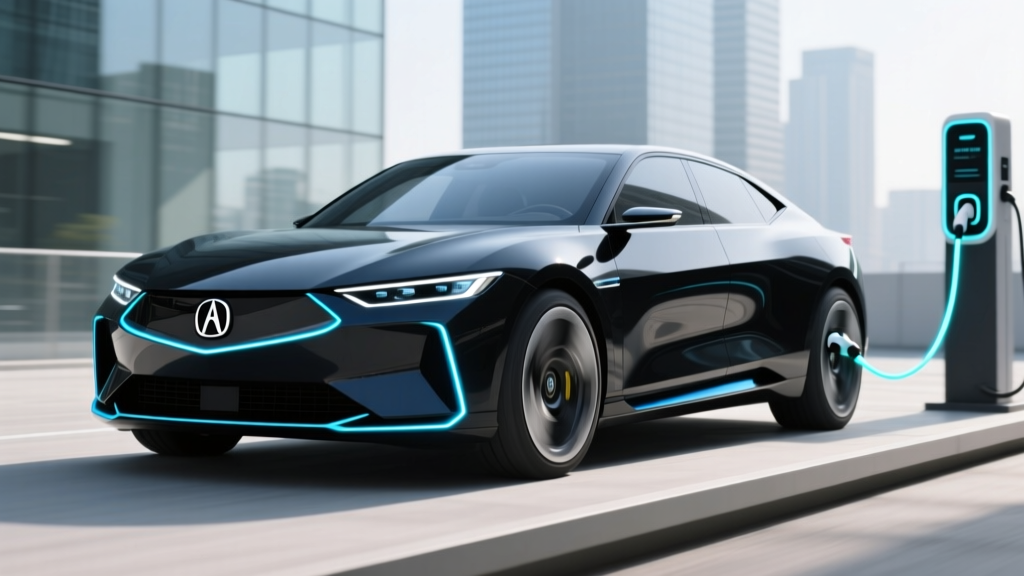
Additionally, Acura's Performance EV Concept, shown at 2024 auto shows, previewed a low-slung electric sedan with a dual-motor AWD layout. This is an announced concept — not yet available for purchase — but signals Acura's intent to expand its electric portfolio beyond a single SUV.
ZDX vs. the Competition: Where It Fits in the Luxury EV SUV Segment
The ZDX doesn't exist in a vacuum. At its price point, it competes with several established electric SUVs:
- Tesla Model Y Long Range: 310 miles EPA, starts at ~$48,000, NACS connector, access to the Supercharger network. Less premium interior, but lower price and faster charging (250 kW peak, 10–80% in ~25 min).
- Cadillac Lyriqux: Same Ultium platform, 314 miles EPA, starts at ~$58,600. More luxury-oriented, slightly softer ride. Shares the 190 kW charge rate.
- BMW iX xDrive50: 324 miles EPA, starts at ~$87,000. Significantly more expensive, but offers a more refined interior, faster 150 kW sustained charging, and 516 hp.
- Genesis Electrified GV70: 236 miles EPA, starts at ~$66,000. Shorter range but 350 kW DC charging capability and a more traditional luxury aesthetic.
The ZDX occupies a middle ground: more range than the Genesis, more affordable than the BMW, more conventionally styled than the Tesla. Its 190 kW peak charge rate is competitive but not class-leading — the Tesla Model Y and Hyundai Ioniq 5 (with 800V architecture and 240+ kW charging) refill faster on road trips.
Frequently Asked Questions
Does Acura make a hybrid car?
As of 2026, Acura does not sell a hybrid or plug-in hybrid in the U.S. market. The MDX, RDX, Integra, and TLX are offered exclusively with conventional gasoline powertrains. The ZDX is Acura's only electrified vehicle. If you want a luxury hybrid in Honda's family, the Honda Accord Hybrid (48 MPG combined) is the closest option, though it lacks the Acura badge and premium trimmings.
Can I charge the ZDX at a Tesla Supercharger?
Not natively. The ZDX uses the CCS1 connector, while Tesla Superchargers use the NACS (North American Charging Standard) connector. You can use a Tesla-approved CCS adapter (sold separately, ~$200–$250) to access Supercharger V3 stalls. Acura's next-generation EVs are expected to adopt NACS natively, but for now, the ZDX relies on the Electrify America, EVgo, and ChargePoint networks for DC fast charging, plus Superchargers via adapter.
How much does it cost to charge the ZDX at home?
A full 10–100% charge from a home Level 2 station (using about 92 kWh) costs approximately $14.70 at a national average rate of $0.16/kWh. That translates to roughly $4.70 per 100 miles driven. Compare that to the MDX at roughly $17.14 per 100 miles on premium gasoline — the ZDX saves about $12.40 per 100 miles, or approximately $1,860 per year at 15,000 miles driven annually.
Is the ZDX eligible for the $7,500 federal tax credit?
The ZDX A-Spec and Type S both qualify for the full §30D credit as of early 2026, provided you meet the income thresholds (≤$150,000 single filer, ≤$225,000 head of household, ≤$300,000 joint). The vehicle meets the MSRP cap ($80,000 for SUVs), is assembled in North America (Tennessee), and its battery satisfies the critical-mineral and component sourcing requirements. The credit can be transferred to the dealer at point of sale as a purchase-price reduction. Always confirm eligibility with your tax professional and check the latest rules at IRS.gov before finalizing your purchase.
What's the real-world highway range of the ZDX?
In independent highway driving tests at sustained speeds of 70–75 mph in moderate temperatures (65–75°F), the ZDX A-Spec delivers approximately 260–275 miles before reaching 10% state of charge. This is about 12–17% below the EPA 313-mile sticker, which is typical for EVs driven at sustained highway speeds. In cold weather (20°F and below), expect highway range closer to 210–230 miles. Using the ZDX's Eco mode and maintaining speeds below 65 mph can recover some of this deficit.
Does the ZDX have a front trunk (frunk)?
No. The ZDX does not have a front trunk. The space under the hood houses power electronics and HVAC components. Total cargo volume behind the rear seats is 26.3 cubic feet, expanding to approximately 56 cubic feet with the rear seats folded. This is competitive with the Cadillac Lyriq (28.0 cu ft) but less than the Tesla Model Y (30.2 cu ft behind the second row, plus a small frunk).