The Quick Answer: Is the Dodge Ram EV Ready for Buyers?
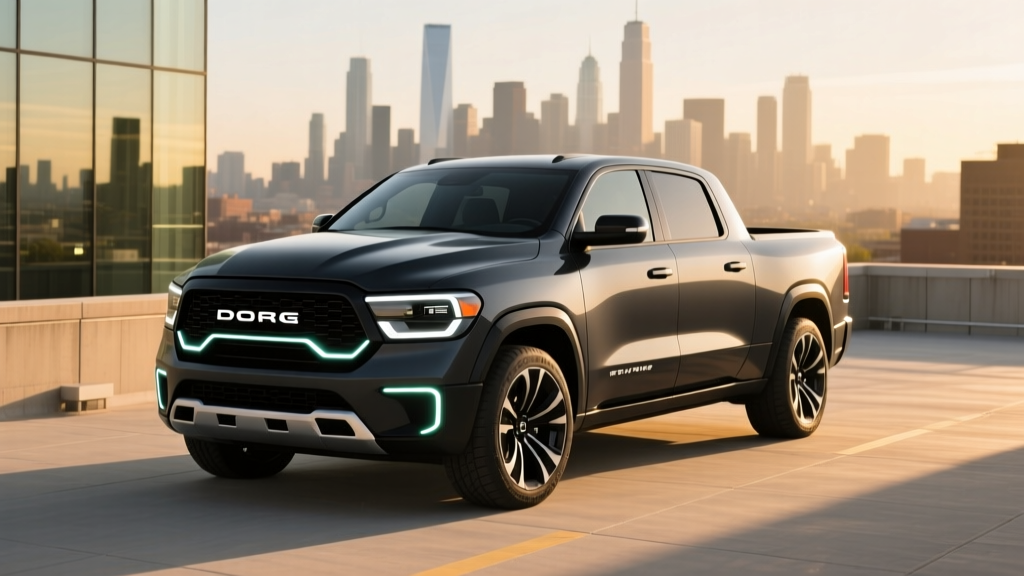
The Dodge Ram EV — officially branded as the Ram 1500 REV — is Ram's entry into the electric full-size truck segment, competing directly with the Ford F-150 Lightning, Chevrolet Silverado EV, and Tesla Cybertruck. As of early 2026, Ram has confirmed the 1500 REV will offer up to 350 miles of EPA-estimated range (with the larger battery pack), a 200+ kWh battery option, and DC fast charging at up to 350 kW. Pricing is expected to start around $58,000–$65,000 before incentives for base trims, with fully loaded models exceeding $90,000. The truck qualifies for the federal §30D tax credit (up to $7,500) on eligible trims, subject to MSRP caps, buyer income limits, and battery-sourcing requirements. However, production timelines have shifted multiple times, and buyers should verify current availability and trim specs directly with Ram before committing.
What Exactly Is the Dodge Ram EV?
When shoppers search for the "Dodge Ram EV," they're looking for the Ram 1500 REV (Ram Electric Vehicle). Ram, a Stellantis brand, has been developing this truck on the STLA Frame platform — a body-on-frame architecture designed specifically for full-size electric trucks. Unlike unibody EV crossovers, the 1500 REV retains the ladder-frame construction that truck buyers expect for towing and payload duty.
Ram has announced two battery configurations:
- Standard Range pack: ~168 kWh usable capacity, targeting approximately 350 miles of EPA range
- Extended Range pack: ~229 kWh usable capacity, targeting approximately 500 miles of EPA range (with a range-extender EREV option under consideration)
These are preliminary manufacturer estimates and final EPA certification numbers may differ. The larger pack, if it reaches production, would make the 1500 REV one of the longest-range electric trucks on the market — though at a significant price and weight premium.
Ram has also confirmed the truck will feature a front trunk (frunk) with power-operated access and available onboard power output (up to 7.2 kW) for job-site or tailgate use, similar to Ford's Pro Power Onboard.
Range, Charging, and Battery Specs
For truck buyers, range under load matters more than sticker numbers. Here's what Ram has disclosed and what real-world experience with comparable EVs suggests you should expect.
| Specification | Standard Range (Est.) | Extended Range (Est.) |
|---|---|---|
| Battery Capacity (usable) | ~168 kWh | ~229 kWh |
| EPA Range (est.) | ~350 mi | ~500 mi |
| Real-World Highway Range | ~270–300 mi | ~380–430 mi |
| Real-World Towing Range | ~150–200 mi | ~220–280 mi |
| Peak DC Fast Charge Rate | 350 kW | 350 kW |
| 10–80% DC Charge Time (est.) | ~30–40 min | ~45–60 min |
| Level 2 Home Charging (11.5 kW) | ~16–18 hours (full) | ~22–25 hours (full) |
| Battery Chemistry | NMC (est.) | NMC (est.) |
Real-World Range Reality Check
EPA estimates assume mixed driving at moderate temperatures. In real-world highway driving at 70–75 mph, expect to lose 10–15% from the EPA figure. In cold weather (below 30°F), lithium-ion batteries lose efficiency and cabin heating draws significant energy — plan for 20–35% range reduction. When towing a 5,000–7,000 lb trailer, range drops dramatically to roughly 40–55% of the EPA sticker. This is true for every electric truck on the market, not just the Ram. If you tow frequently, the Extended Range pack becomes far more practical.
Charging Speed and the Charge Curve
The 350 kW peak DC fast-charge rate is impressive on paper, but no EV sustains peak rate for the entire session. Charging speed follows a charge curve: the battery charges fastest between roughly 10–40% State of Charge (SoC), then progressively tapers as it fills. For the 168 kWh pack, expect to sustain 250–350 kW in the early portion of the session, tapering to under 100 kW above 70% SoC. The 10–80% time of 30–40 minutes assumes a capable 350 kW charger — most public stations in the U.S. currently max out at 150–350 kW, and not all can deliver sustained peak output.
At home on a Level 2 charger (240V, 48A, ~11.5 kW), fully recharging the 168 kWh pack takes roughly 16–18 hours. Most owners won't drain the battery completely between charges, so overnight top-ups from 30–80% are manageable in 8–10 hours.
How Does the Ram 1500 REV Compare to Gas and Competing EVs?
The decision between an electric Ram, a gas Ram 1500, or a competing EV truck depends on your use case. Here's a data-driven comparison.
| Metric | Ram 1500 REV (Est.) | Ram 1500 Gas (5.7L HEMI V8) | Ford F-150 Lightning (Ext. Range) |
|---|---|---|---|
| Starting MSRP | ~$58,000–$65,000 | ~$42,000–$48,000 | ~$60,000–$70,000 |
| EPA Range | ~350 mi | ~450–550 mi (26 gal tank) | ~320 mi |
| MPGe / MPG Combined | ~70–75 MPGe (est.) | ~17–20 MPG | ~70 MPGe |
| Fuel/Energy Cost per Mile | ~$0.04–$0.08 (home) | ~$0.18–$0.24 | ~$0.04–$0.08 (home) |
| Max Towing Capacity | ~10,000 lbs (est.) | ~12,750 lbs | ~10,000 lbs |
| 0–60 mph | ~4.5 sec (est.) | ~6.5 sec | ~3.8 sec |
| Federal Tax Credit | Up to $7,500* | $0 | Up to $7,500* |
* §30D tax credit eligibility depends on MSRP caps (trucks: $80,000), buyer income limits ($300k joint / $150k single), and battery critical-mineral sourcing requirements. Verify current rules at IRS.gov.
The gas Ram 1500 remains cheaper upfront and offers more range for heavy towing. But for daily commuting, job-site use without towing, and owners with home charging access, the REV's energy cost savings are substantial — roughly $2,500–$3,500 per year in fuel savings for drivers covering 15,000 miles annually, depending on local electricity rates.
Total Cost of Ownership: Breaking Down the Numbers
Upfront price is only part of the equation. Here's a five-year ownership cost comparison for a typical driver covering 15,000 miles per year.
| Cost Category (5 Years) | Ram 1500 REV (Std. Range) | Ram 1500 Gas V8 |
|---|---|---|
| Purchase Price (base, est.) | $62,000 | $46,000 |
| Federal Tax Credit | −$7,500 (if eligible) | $0 |
| Effective Purchase | $54,500 | $46,000 |
| Fuel / Energy (75,000 mi) | $3,500–$5,500 | $13,000–$17,000 |
| Maintenance | $1,200–$1,800 | $3,500–$5,000 |
| Insurance (est. average) | $9,000–$11,000 | $7,500–$9,500 |
| Estimated Depreciation | $18,000–$24,000 | $15,000–$20,000 |
| Total 5-Year Cost (approx.) | $86,200–$96,800 | $85,000–$97,500 |
The numbers are close. The REV wins on fuel and maintenance (no oil changes, fewer moving parts, regenerative braking saves brake pads). The gas Ram wins on upfront cost and potentially lower insurance premiums. Depreciation for EVs remains a wildcard — early EV trucks have seen steeper depreciation than gas counterparts, though this may stabilize as the market matures.
Key ownership insight: The cost advantage of the REV grows substantially if you have access to cheap home electricity (under $0.12/kWh) and drive primarily in stop-and-go or suburban conditions where regenerative braking maximizes efficiency. Highway-heavy driving at 80 mph erodes the advantage.
Home Charging, Installation, and Practical Considerations
Charging a truck-sized battery at home requires planning. The 168 kWh (or larger) pack means Level 1 charging (120V, ~1.4 kW) is impractical for daily use — adding only about 3–5 miles of range per hour. A Level 2 home charger is effectively mandatory.
| Item | Estimated Cost |
|---|---|
| Level 2 Charger (48A, hardwired) | $500–$800 |
| Electrician Labor (standard install) | $800–$2,000 |
| Electrical Panel Upgrade (if needed, 200A service) | $1,500–$3,500 |
| Permit & Inspection | $100–$400 |
| Total (typical) | $1,400–$3,200 |
| Total (with panel upgrade) | $2,900–$6,700 |
Many homes built before 2000 have 100A or 150A electrical panels. Adding a 48A EV charger draws roughly 55A of continuous load, which may exceed your panel's capacity. Budget for a potential panel upgrade and consult a licensed electrician for a load calculation before purchasing.
Climate considerations: If you live in a region with harsh winters (Upper Midwest, Northeast, Mountain West), battery preconditioning and a heat pump (if equipped) become critical. Cold weather can reduce range by 20–35% and slow DC charging speeds. Garage parking helps significantly. The Ram 1500 REV is expected to include battery thermal management, but Ram has not confirmed heat pump availability on all trims.
Tax Credits and Incentives: What You Actually Qualify For
The federal §30D Clean Vehicle Credit offers up to $7,500 for qualifying new EVs, but eligibility is layered with requirements that change annually. Here's the current framework:
- MSRP Cap: Trucks, vans, and SUVs must have an MSRP at or below $80,000 to qualify. Higher-trim Ram 1500 REV models (Laramie, Limited) may exceed this threshold.
- Buyer Income Limits: Adjusted gross income must not exceed $300,000 (joint), $225,000 (head of household), or $150,000 (single).
- Battery Sourcing: The credit is split into two halves — $3,750 for meeting critical-minerals requirements and $3,750 for battery-component sourcing. These requirements tighten annually, and vehicles that qualified in prior years may lose eligibility.
- Point-of-Sale Transfer: Buyers can transfer the credit to the dealer at purchase, reducing the out-of-pocket price immediately rather than waiting for a tax refund.
Always verify current eligibility on IRS.gov or consult a tax professional. State incentives (California, Colorado, New York, and others) may stack on top but vary by jurisdiction — check your state's energy or DMV website for current programs.
Common Misconceptions About the Ram 1500 REV
| Myth | Fact |
|---|---|
| "It's a Dodge Ram EV" | Ram is a separate brand from Dodge since 2009. The truck is the Ram 1500 REV, not a Dodge product. |
| "Electric trucks can't tow" | They can tow — the REV targets ~10,000 lbs. But towing cuts range by 45–60%. Plan charging stops accordingly. |
| "The battery will need replacement in 5 years" | Modern NMC batteries are warrantied for 8 years / 100,000 miles (minimum 70% capacity retention). Real-world degradation data from other EVs shows 10–15% loss over 8 years with normal use. |
| "I'll save $10,000 a year on fuel" | Realistic savings are $2,500–$3,500/year for 15,000 miles of driving at average electricity rates. Savings are higher with cheap solar or time-of-use rates, lower with expensive public DC charging. |
| "350 kW charging means 20 minutes to full" | Peak rate applies only to a portion of the session. 10–80% takes 30–40 minutes; a full charge takes significantly longer due to tapering above 80%. |
Decision Framework: Should You Buy the Ram 1500 REV?
Choose the Ram 1500 REV if:
- You have reliable home charging access (garage or driveway with 240V circuit)
- Your daily driving is under 100 miles and you rarely tow over long distances
- You want lower operating costs and less maintenance than a gas truck
- You value instant torque, quiet operation, and onboard power for job-site or recreation use
- You qualify for the federal tax credit and your state offers additional incentives
Stick with a Gas or Hybrid Ram 1500 if:
- You regularly tow heavy trailers over long distances (range loss is severe with EVs)
- You lack home charging and live in an area with limited public DC fast-charging infrastructure
- You need maximum payload capacity and lowest curb weight
- Your budget is under $50,000 and you can't absorb the EV premium even after incentives
- You operate in extreme cold climates and can't garage the vehicle
Consider a PHEV alternative if:
- You want electric commuting range (30–50 miles) but gas flexibility for towing and road trips
- You're not ready to commit to full EV ownership infrastructure
Frequently Asked Questions
When will the Ram 1500 REV be available to buy?
Ram has adjusted the 1500 REV production timeline several times. Initial units are expected to begin reaching dealers in late 2026, with broader availability in 2027. Check Ram's official site or a local dealer for the most current reservation and delivery status, as timelines remain subject to change.
Will the Ram 1500 REV use NACS or CCS charging connectors?
Stellantis has committed to adopting the NACS (Tesla-style) connector across its North American EV lineup. The 1500 REV is expected to ship with NACS, granting access to Tesla Supercharger stations (with verified compatibility) in addition to Electrify America, EVgo, and other networks.
How much will it cost to insure the Ram 1500 REV?
EV insurance premiums typically run 15–25% higher than equivalent gas vehicles due to higher repair costs and battery replacement value. Expect annual premiums in the $1,800–$2,400 range depending on your location, driving record, and coverage level. Get quotes from multiple insurers before purchasing — some now offer EV-specific discounts.
Can I use the Ram 1500 REV to power my home during an outage?
Ram has announced vehicle-to-home (V2H) capability as a feature, but this requires a compatible bidirectional charger and home electrical panel integration. The truck's onboard power output (up to 7.2 kW) can run tools and appliances directly via bed-mounted outlets. Full V2H backup power requires additional equipment and electrician installation — budget an extra $2,000–$5,000 for the bidirectional charger and setup.
What is the battery warranty on the Ram 1500 REV?
Federal regulations require a minimum of 8 years / 100,000 miles for EV battery warranties (with at least 70% capacity retention). Ram is expected to meet or exceed this standard. Final warranty terms will be confirmed at launch — check the official warranty documentation before purchase.