Quick Answer: Is There a Dodge Hornet EV?
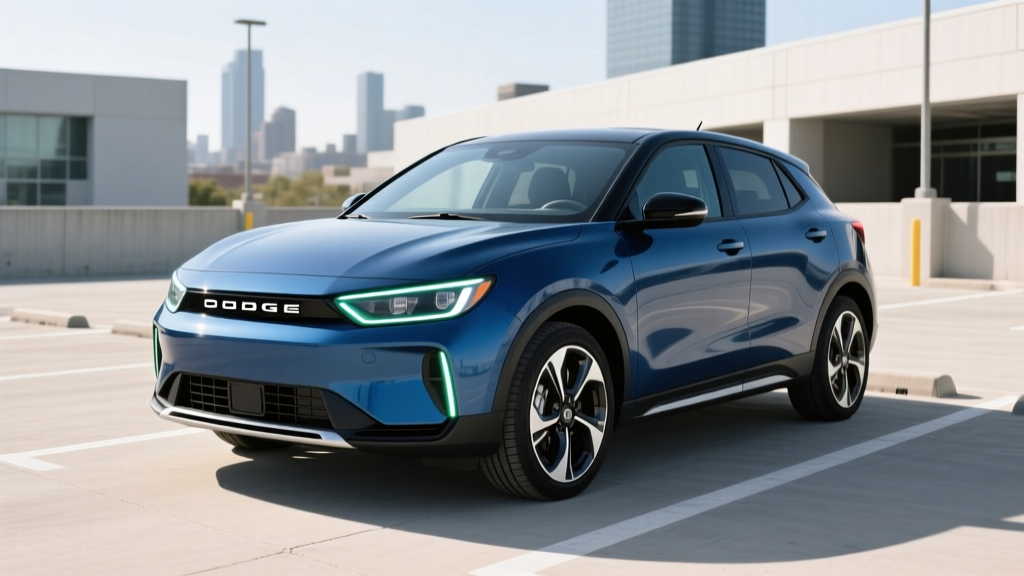
As of early 2026, Dodge has not yet released a fully electric Hornet. The current Dodge Hornet lineup consists of the turbocharged gas GT (268 hp, 28 mpg combined) and the Hornet R/T plug-in hybrid (288 hp combined, 32 miles of electric-only range). Stellantis has confirmed an all-electric Hornet is in development for the U.S. market, built on the STLA Medium platform, but no official EPA range, pricing, or on-sale date has been published. If you're shopping for a compact electric crossover now, alternatives like the Hyundai Ioniq 5 (311 mi EPA, ~$42,500) or Tesla Model Y (308 mi EPA, ~$44,990) are available today. If you want a Hornet with electrification, the R/T PHEV is the closest current option.
What the Electric Dodge Hornet Will Likely Offer
Stellantis has been vocal about the STLA Medium platform, which underpins vehicles like the European-market Peugeot e-3008 and is engineered to support battery packs from roughly 87 to 104 kWh (usable). While Dodge hasn't published final U.S. Hornet EV specs, here's what the platform's engineering targets suggest:
| Spec | Estimated (Preliminary) | Notes |
|---|---|---|
| Battery capacity | ~87–98 kWh usable | STLA Medium platform range; chemistry TBD (likely NMC) |
| EPA range | ~280–350 miles | Depends on drivetrain (FWD vs AWD) and pack size |
| Peak DC fast charge | ~150–180 kW | Platform supports up to 400V architecture |
| 10–80% charge time | ~25–32 minutes (est.) | Based on peer STLA Medium models |
| Horsepower | 201–355 hp | Single or dual motor configurations |
| 0–60 mph | ~5.5–8.0 seconds | AWD dual motor at the quick end |
| Level 2 AC charge rate | ~11 kW | Standard for this platform class |
| Base MSRP (est.) | ~$38,000–$45,000 | Before any federal or state incentives |
Important caveat: These are platform-derived estimates, not manufacturer-confirmed figures. Dodge may detune the pack for cost, offer a smaller base battery, or add a larger pack for a GT variant. Until official specs drop, treat every number as preliminary.
Current Dodge Hornet Lineup: Gas vs. PHEV Comparison
If you're considering a Hornet today, the decision is between the gas-only GT and the R/T plug-in hybrid. Here's how they stack up against each other and against a hypothetical Hornet EV:
| Metric | Hornet GT (Gas) | Hornet R/T (PHEV) | Hornet EV (Estimated) |
|---|---|---|---|
| Powertrain | 2.0L Turbo I-4 | 1.3L Turbo + PHEV | BEV (STLA Medium) |
| Horsepower | 268 hp | 288 hp combined | 201–355 hp (est.) |
| EPA range / fuel economy | 28 mpg combined (~410 mi on 14.7-gal tank) | 32 mi electric + 29 mpg gas | ~280–350 mi (est.) |
| Electric-only range | 0 mi | 32 mi | Full electric |
| Battery size | N/A (12V aux only) | 15.5 kWh (usable ~12 kWh) | ~87–98 kWh (est.) |
| Base MSRP | ~$32,590 | ~$41,590 | ~$38,000–$45,000 (est.) |
| Federal tax credit (§30D) | $0 | Up to $3,750* | Up to $7,500* (pending sourcing rules) |
| Fuel cost / 15,000 mi/yr | ~$1,960 (gas at $3.40/gal) | ~$1,100–$1,500 (mixed) | ~$540–$810 (electric at $0.13–$0.18/kWh) |
*Federal §30D tax credit eligibility depends on MSRP caps ($55,000 for SUVs), buyer income limits ($300k joint / $150k single), and battery critical-mineral and component sourcing requirements that tighten annually. Verify current-year rules with a tax professional or the IRS.
Real Costs: Hornet PHEV vs. a Compact Electric Crossover
Let's run a 5-year ownership comparison between the current Hornet R/T PHEV and a benchmark electric crossover (represented by the Hyundai Ioniq 5 SEL, a strong stand-in for what the Hornet EV would compete against). This assumes 15,000 miles/year, home Level 2 charging at $0.15/kWh average, and gas at $3.40/gallon.
| Cost Category (5-Year) | Hornet R/T PHEV | Ioniq 5 SEL (EV Benchmark) |
|---|---|---|
| Purchase price (MSRP) | $41,590 | $46,650 |
| Est. federal tax credit | –$3,750 | –$7,500 |
| Effective purchase price | $37,840 | $39,150 |
| Fuel/energy (5 years) | ~$6,500 | ~$3,375 |
| Maintenance (5 years) | ~$2,800 | ~$1,500 |
| Insurance (5 years, est. avg) | ~$9,200 | ~$9,800 |
| Total 5-year cost | ~$56,340 | ~$53,825 |
The EV benchmark saves roughly $2,500 over five years despite a higher sticker price, primarily through fuel and maintenance reductions. The gap widens if you have access to cheap overnight electricity or free workplace charging — and narrows if you rely entirely on DC fast charging at $0.35–$0.48/kWh.
Key ownership realities to factor in:
- Home charging access is critical. Without Level 2 at home (a 240V outlet or hardwired wallbox), EV ownership gets significantly more expensive and inconvenient. A Level 2 installation typically costs $500–$2,200 including electrician labor, panel assessment, and permits.
- Cold-weather range loss is real. Expect 20–35% range reduction in sustained sub-freezing temperatures. A Hornet EV rated at 320 miles EPA could deliver 210–250 miles in a Minnesota January.
- Insurance tends to be 5–12% higher for EVs due to repair costs and battery replacement exposure, though this varies by model and insurer.
- Maintenance savings are genuine. No oil changes, no spark plugs, no transmission fluid. Brake pads last longer thanks to regenerative braking. Expect roughly 40–50% lower scheduled maintenance costs vs. a gas powertrain.
How the Hornet EV Would Compete in the Compact EV Crossover Segment
If Dodge prices the Hornet EV between $38,000 and $45,000, it lands in one of the most competitive segments in the EV market. Here's the landscape it would enter:
| Vehicle | EPA Range | Battery (kWh usable) | Peak DC Charge | 0–60 mph | Base MSRP |
|---|---|---|---|---|---|
| Hyundai Ioniq 5 SEL | 311 mi | 77.4 (NMC) | 240 kW | 5.1 sec (AWD) | $46,650 |
| Tesla Model Y LR | 308 mi | ~75 (NMC) | 250 kW | 4.8 sec | $44,990 |
| Kia EV6 Wind AWD | 282 mi | 77.4 (NMC) | 240 kW | 5.2 sec | $48,700 |
| Ford Mustang Mach-E Select | 250 mi | 70 (NMC) | 150 kW | 5.8 sec (RWD) | $42,995 |
| VW ID.4 Pro S | 291 mi | 77 (NMC) | 175 kW | 7.7 sec (RWD) | $44,995 |
| Dodge Hornet EV (est.) | ~280–350 mi | ~87–98 | ~150–180 kW | ~5.5–8.0 sec | ~$38,000–$45,000 |
The STLA Medium platform's potential advantage is battery capacity. At 87–98 kWh, the Hornet EV could offer a larger pack than most rivals in this price range, translating to competitive or class-leading range — if Dodge chooses to price it aggressively. The trade-off may be charging speed; a 400V architecture at 150–180 kW peak would lag behind the 800V Hyundai/Kia models that sustain 240 kW and charge 10–80% in roughly 18 minutes.
Common Misconceptions About the Hornet EV
| Myth | Fact |
|---|---|
| "The Hornet EV is already available to buy." | It is not. The current Hornet is gas-only (GT) or PHEV (R/T). The EV variant has been announced but has no official on-sale date as of early 2026. |
| "The Hornet PHEV is basically an EV." | The R/T PHEV has only 32 miles of electric-only range. After that, it operates as a conventional hybrid burning gasoline. It's a bridge solution, not a replacement for a BEV. |
| "It will definitely qualify for the full $7,500 tax credit." | Eligibility depends on battery sourcing, critical-mineral content, buyer income, and MSRP caps — all of which change annually under IRS §30D rules. Nothing is guaranteed until Dodge publishes compliance data. |
| "Electric means zero maintenance." | EVs still need tire rotations, cabin air filters, brake fluid checks, wiper blades, and eventual tire replacement (EVs wear tires 20–30% faster due to weight and instant torque). |
| "I can't road-trip an EV." | With 300+ miles of range and DC fast-charging infrastructure along major interstates (Tesla Supercharger, Electrify America, EVgo), road trips are viable — but require planning for charging stops of 20–35 minutes each. |
Decision Framework: Should You Wait for the Hornet EV or Buy Now?
Buy the Hornet R/T PHEV now if:
- You need a vehicle within the next 3–6 months and want Dodge-brand electrification
- Your daily commute is under 30 miles round-trip (the 32-mile EV range covers it gas-free)
- You lack reliable home charging and want the flexibility of a gas tank for longer trips
- You want to stay under $42,000 before incentives
Wait for the Hornet EV (or buy a competing EV now) if:
- You have home Level 2 charging or can install it
- You drive more than 35 miles daily and want to eliminate gas entirely
- You want the lowest possible fuel and maintenance costs over 5+ years
- You're willing to wait for official specs, pricing, and tax-credit confirmation — which may not arrive until late 2026 or 2027
Buy a competing EV now (Ioniq 5, Model Y, EV6) if:
- You want a proven electric platform with established charging networks and real-world range data
- You value fast DC charging (240 kW on Hyundai/Kia, 250 kW on Tesla) for road-trip practicality
- You want confirmed §30D tax-credit eligibility today, not a future promise
What First-Time EV Buyers Should Know Before Committing
Whether you're waiting for the Hornet EV or considering another electric crossover, these fundamentals apply:
kW vs. kWh — know the difference. Kilowatt-hours (kWh) measure battery capacity — how much energy the car stores, like gallons in a gas tank. Kilowatts (kW) measure power — how fast energy flows during charging, like the flow rate of a gas pump. A 98 kWh battery charged at 150 kW will not fill in 39 minutes because charging slows as the battery fills (the "charge curve taper"). Expect real 10–80% times to be roughly 25–35 minutes at a capable DC fast charger.
EPA range is a best-case estimate. The EPA test cycle includes low-speed city driving. Sustained highway speeds of 70–80 mph typically reduce range by 10–20%. Cold weather (below 32°F) can reduce it by 20–35%. A 320-mile EPA rating might mean 240 real-world miles on a 75°F highway day at 75 mph in January.
Home charging is the backbone of EV ownership. Over 80% of EV charging happens at home. Level 1 (120V standard outlet) adds roughly 3–5 miles of range per hour — adequate only for PHEVs or very low-mileage drivers. Level 2 (240V, like a dryer outlet) adds 25–40 miles per hour and is the practical minimum for BEV owners. Budget $500–$2,200 for a quality Level 2 wallbox installation, and more if your electrical panel needs a 200-amp upgrade.
Battery warranties protect you. Most EV batteries carry 8-year/100,000-mile warranties guaranteeing at least 70% capacity retention. Real-world degradation data from fueleconomy.gov and fleet studies show most NMC packs lose 8–12% capacity over 5 years and 75,000 miles — well within warranty thresholds.
Frequently Asked Questions
When will the Dodge Hornet EV be available?
Stellantis has confirmed an electric Hornet is in development for the U.S. market using the STLA Medium platform, but no official launch date has been announced as of early 2026. Industry estimates point to late 2026 or 2027 model-year availability.
How much will the Dodge Hornet EV cost?
No official pricing has been published. Based on STLA Medium platform peers and the current Hornet lineup positioning, a reasonable estimate is $38,000–$45,000 for base to mid-level trims. A performance-oriented variant could push past $50,000.
Will the Hornet EV qualify for the $7,500 federal tax credit?
It's too early to confirm. Under current IRS §30D rules, eligibility requires the vehicle's MSRP to be at or below $55,000 (SUV threshold), the buyer's adjusted gross income to fall under $300,000 (joint) or $150,000 (single), and the battery to meet escalating critical-mineral and component-sourcing requirements. Dodge must publish compliance data before we can confirm eligibility. The credit can be transferred to the dealer at point of sale as a purchase-price reduction.
Is the Hornet PHEV a good alternative while I wait?
If your daily driving is under 30 miles and you can charge at home overnight, the Hornet R/T PHEV's 32 miles of electric range can cover most commutes without gas. For longer trips, the gas engine eliminates range anxiety. It's a practical transition vehicle, but you'll still pay for oil changes, gas for trips beyond 32 miles, and higher maintenance costs than a pure EV.
What's the biggest risk of waiting for the Hornet EV?
Two risks: (1) Stellantis could delay the launch, push it to 2027, or alter specs significantly before release — announced EV timelines have shifted frequently across the industry. (2) The §30D tax-credit sourcing requirements tighten each year, meaning a vehicle eligible for $7,500 today might qualify for less by the time the Hornet EV actually ships. If you need a vehicle now and a competing EV meets your needs, the tax-credit certainty of buying today has real dollar value.