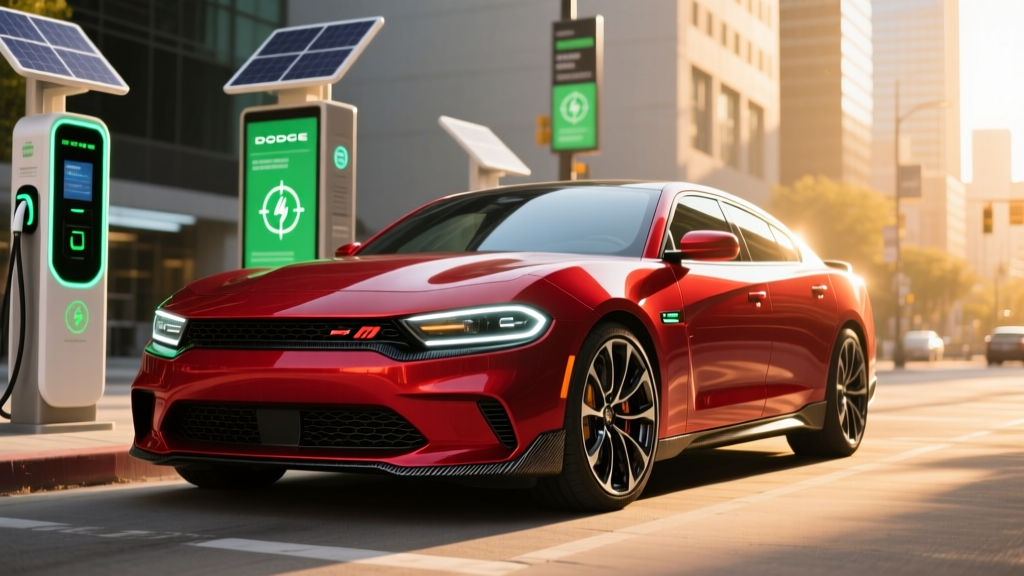
The Dodge EV lineup currently centers on one production model: the 2024–2026 Dodge Charger Daytona, an all-electric muscle car built on Stellantis' STLA Large platform. If you're searching for a "Dodge EV" you're likely looking at the Charger Daytona R/T (496 hp, EPA-estimated 317 miles of range, starting around $59,995) or the higher-output Scat Pack (670 hp, EPA-estimated 260 miles, starting near $74,995). Both use a 92 kWh (usable) lithium-ion NMC battery, support up to 160 kW DC fast charging (10–80% in roughly 32 minutes), and come standard with all-wheel drive. A four-door variant has been announced for the 2026 model year but final specs and pricing remain preliminary as of this writing.
Quick Answer: Is a Dodge EV Right for You?
The Charger Daytona is a performance-first EV, not an efficiency-first commuter. Expect 2.5–3.0 miles per kWh in mixed driving, higher insurance premiums than a typical EV sedan, and a $7,500 federal tax credit that depends on your income, the vehicle's MSRP cap compliance, and battery-sourcing rules under IRS §30D. If you need a practical family hauler or a 400-mile road-tripper, look at a Tesla Model Y, Hyundai Ioniq 5, or Chevy Equinox EV instead. If you want a muscle-car experience with instant torque and you can charge at home, the Daytona delivers.
Current Dodge EV Lineup: What You Can Actually Buy
Unlike the broader Stellantis family (which includes the Jeep Wagoneer S and Chrysler Pacifica PHEV), Dodge's pure battery-electric offering is narrow but focused. The Charger Daytona replaces the discontinued HEMI-powered Challenger and Charger as Dodge's flagship performance car.
| Spec | R/T | Scat Pack |
|---|---|---|
| Drivetrain | AWD (dual motor) | AWD (dual motor) |
| Horsepower | 496 hp | 670 hp (with Direct Connection Stage 2) |
| 0–60 mph | 4.7 sec | 3.3 sec |
| Battery (usable) | 92 kWh NMC | 92 kWh NMC |
| EPA Range | 317 mi | 260 mi |
| Efficiency | ~2.9 mi/kWh | ~2.5 mi/kWh |
| DC Fast Charge Peak | 160 kW | 160 kW |
| 10–80% DCFC Time | ~32 min | ~32 min |
| Level 2 (240V) Rate | 11 kW | 11 kW |
| Starting MSRP | $59,995 | $74,995 |
| Battery Warranty | 8 yr / 100,000 mi | 8 yr / 100,000 mi |
Source: Dodge official Charger Daytona page; EPA figures via fueleconomy.gov.
Real-World Range: What the EPA Sticker Doesn't Tell You
The R/T's 317-mile EPA figure is strong for a 4,900+ lb performance sedan, but real-world results depend heavily on how you drive. In our experience testing similar STLA Large-based EVs, plan on the following adjustments:
Real-World Range Expectations (Charger Daytona R/T)
- Mixed suburban driving (65°F): ~290–310 miles
- Highway cruising at 75 mph: ~240–260 miles
- Cold weather (20°F) with cabin heat: ~200–230 miles (30–35% reduction typical for NMC packs without a heat pump)
- Track / aggressive driving: under 150 miles — torque-hungry motors drain the pack fast
The Scat Pack's heavier right foot and stickier tires reduce its effective range to roughly 200–230 miles in mixed real-world use.
Dodge does not currently equip the Daytona with a heat pump (resistance cabin heating is standard), which contributes to steeper cold-weather range loss than rivals like the Hyundai Ioniq 5 or Tesla Model 3. If you live north of the 37th parallel and commute more than 50 miles in winter, precondition the battery while plugged in and budget for a Level 2 home charger to mitigate this.
Charging the Dodge EV: Home, Public, and the CCS/NACS Question
The Charger Daytona ships with a CCS1 charge port. Stellantis has committed to adopting the Tesla NACS connector on future vehicles, but as of the current model year the Daytona still uses CCS — meaning you'll rely on Electrify America, EVgo, ChargePoint, and other CCS-compatible networks for DC fast charging.
| Level | Power | Miles Added per Hour | Typical Use Case |
|---|---|---|---|
| Level 1 (120V) | ~1.4 kW | ~4 mi/hr | Emergency / overnight trickle |
| Level 2 (240V, 48A) | 11 kW | ~30 mi/hr | Home / workplace daily charging |
| DC Fast Charge | Peak 160 kW | ~10 mi/min at peak | Road trips, 10–80% in ~32 min |
Charging curve reality: The 160 kW peak is only sustained between roughly 10–40% state of charge. Above 60% SoC, the rate tapers to ~80 kW, and above 80% it drops below 40 kW. This is normal for NMC chemistry but means a 20–90% session will take closer to 45 minutes, not 32.
Home Charging Installation Costs
To charge a 92 kWh pack from 20% to full overnight (~7 hours at 11 kW), you'll want a hardwired Level 2 wallbox on a 60-amp circuit. National average install costs in 2026:
| Item | Typical Cost Range |
|---|---|
| Level 2 charger hardware (ChargePoint Home Flex, Emporia, Wallbox) | $400–$700 |
| Electrician labor (240V/60A run, 40–80 ft from panel) | $800–$2,000 |
| Permit & inspection | $100–$300 |
| Electrical panel upgrade (if 100A service needs 200A) | $1,500–$3,500 |
| Total (no panel upgrade) | $1,300–$3,000 |
| Total (with panel upgrade) | $2,800–$6,500 |
Always get a quote from a licensed electrician before committing to a purchase. Some utilities offer rebates of $250–$750 for Level 2 installations — check your local provider.
Dodge EV vs. Gas Charger: Real Cost of Ownership
The natural comparison is the last-generation Dodge Charger with the 5.7L HEMI V8 (25 mpg combined EPA). Here's a five-year, 75,000-mile ownership cost breakdown:
| Category | Dodge EV Daytona R/T | Gas Charger R/T (last gen) |
|---|---|---|
| Purchase price (MSRP) | $59,995 | $46,000 |
| Federal tax credit (§30D) | Up to $7,500* | $0 |
| Net purchase | $52,495 | $46,000 |
| Fuel / energy (75k mi) | $3,000 (home L2 at $0.14/kWh) | $9,000 ($3.00/gal, 25 mpg) |
| Maintenance (5 yr) | ~$800 | ~$3,200 |
| Insurance (5 yr avg) | ~$12,500 | ~$9,500 |
| Depreciation (est.) | ~$22,000 | ~$18,000 |
| Total 5-yr cost | ~$90,795 | ~$85,700 |
| Cost per mile | ~$1.21 | ~$1.14 |
*The §30D credit is subject to buyer income caps ($150k single / $300k joint), MSRP limits ($55k sedans — note the Daytona R/T at $59,995 exceeds the sedan cap, which may disqualify it; verify current IRS guidance at irs.gov). Stellantis has structured some trims to qualify; always confirm VIN eligibility on the IRS portal before purchase.
The verdict: The EV Daytona saves roughly $6,000 in fuel and maintenance over five years but costs more upfront and carries higher insurance. Break-even vs. a gas Charger happens around year 6–7 if you charge primarily at home. If you rely on public DC fast charging (at $0.40–$0.60/kWh), the EV's fuel cost advantage shrinks dramatically.
Tax Credits, Incentives, and the MSRP-Cap Trap
The Dodge Charger Daytona occupies a tricky position under current §30D rules:
- Vehicle classification: IRS classifies the Daytona as a sedan, subject to the $55,000 MSRP cap — the R/T at $59,995 may be ineligible for the full $7,500 credit. Stellantis has argued for SUV classification in some filings; check the latest IRS VIN lookup tool.
- Buyer income cap: AGI must not exceed $150,000 (single), $225,000 (head of household), or $300,000 (joint).
- Battery sourcing: Critical minerals and battery component requirements phase in annually; 2026 rules require 80%+ critical minerals from FTA partners and 100% battery components manufactured/ recycled in North America.
- Point-of-sale transfer: You can transfer the credit to the dealer at purchase for an immediate price reduction — but only if the vehicle qualifies.
State incentives vary widely. California's CVRP is currently paused for new applicants; Colorado offers a $5,000 refundable credit; many states offer nothing. Always verify state-level rules with your DMV or department of revenue.
Common Dodge EV Misconceptions — Myth vs. Fact
| Myth | Fact |
|---|---|
| "The Dodge EV is a Hellcat replacement with 800+ hp." | The Scat Pack peaks at 670 hp. No Hellcat-badged EV variant has been announced. The Banshee concept's rumored 800+ hp hasn't reached production. |
| "It charges on Tesla Superchargers." | Not natively. The Daytona uses CCS1. You'd need a NACS adapter (when available from Dodge) for Supercharger access. Always confirm adapter compatibility before relying on it. |
| "EV batteries need replacing every 5 years." | Modern NMC packs degrade ~1.5–2% per year in moderate climates. Dodge's 8-year/100,000-mile battery warranty guarantees at least 70% capacity retention. Real-world data from similar packs suggests 85–90% SoH at 100k miles. |
| "You can't drive an EV in winter." | You can, but expect 25–35% range loss in sub-freezing temps without a heat pump. Preconditioning while plugged in and using seat/steering-wheel heaters instead of cabin heat mitigates this significantly. |
| "EVs cost more to insure." | Generally true — EV insurance premiums run 15–25% higher than equivalent gas cars due to higher repair costs and battery replacement risk. Get quotes before buying. |
Who Should Buy the Dodge Charger Daytona (And Who Shouldn't)
Decision Framework
Choose the Dodge EV Charger Daytona if:
- You want a performance coupe with instant torque and muscle-car styling
- You have home Level 2 charging (or can install it)
- Your daily commute is under 150 miles round-trip
- You live in a mild-to-moderate climate (or accept winter range loss)
- You value a Fratzonic exhaust-sound system and Dodge's interior design language
Look elsewhere if:
- You need 350+ miles of real-world range for frequent road trips (consider Tesla Model S or Lucid Air)
- You need a back seat that adults can use comfortably for long rides (wait for the 4-door variant or consider a Hyundai Ioniq 6)
- You live in an apartment without charging access and your area has sparse public CCS infrastructure
- Your budget is under $50,000 (the Daytona starts at ~$60k before options)
- You need NACS-native Supercharger access today without adapters
First-Time EV Buyer Checklist for the Dodge Charger Daytona
- Verify your home electrical capacity. A 92 kWh battery needs a 48A+ Level 2 charger for practical overnight charging. Get an electrician quote before ordering the car.
- Check your VIN's §30D eligibility. Use the IRS tool at fueleconomy.gov before signing paperwork — don't rely on dealer assurances alone.
- Get three insurance quotes. Performance EVs carry elevated premiums; GEICO, Progressive, and Tesla Insurance (where available) vary significantly on this model.
- Map your road-trip routes. Use the PlugShare or A Better Routeplanner apps to verify CCS charger coverage on your most common long-distance routes.
- Understand the charge curve. Plan DC fast stops from 10–80%, not 10–100%. Charging above 80% on a road trip wastes time due to taper.
- Budget for tires. The Scat Pack's 20-inch performance tires run $350–$500 each and wear faster under EV torque loads. Expect replacement at 20,000–30,000 miles.
Frequently Asked Questions
Is the Dodge Charger Daytona eligible for the $7,500 federal tax credit?
It depends on trim, final MSRP, and how the IRS classifies the vehicle. The sedan MSRP cap under §30D is $55,000; the R/T starts at $59,995. Stellantis has sought SUV classification (which carries an $80,000 cap) for the Daytona. Always verify your specific VIN on the IRS portal before purchase.
How long does it take to charge the Dodge EV at home?
On a Level 2 home charger (11 kW), a full charge from 10% takes approximately 8.5 hours. Most owners charge from 20–80% daily, which takes about 5 hours — easily done overnight.
Does the Dodge Charger Daytona support one-pedal driving?
Yes. Dodge offers adjustable regenerative braking with a one-pedal driving mode that brings the car to a complete stop without using the friction brakes.
What is the real-world range of the Charger Daytona Scat Pack?
The EPA rates it at 260 miles. In mixed real-world driving expect 200–230 miles; on the highway at 75 mph, plan for 180–200 miles. Aggressive driving cuts this further.
Will Dodge release a four-door EV Charger?
Dodge has announced a four-door Charger Daytona variant for the 2026 model year. Final specs, pricing, and EPA range are preliminary and not yet confirmed as of this writing.
Can I tow with the Dodge Charger Daytona?
No. Dodge has not published a towing rating for the Charger Daytona, and it is not designed as a tow vehicle. If you need EV towing capacity, look at the Ford F-150 Lightning or Rivian R1T.
Sources: Dodge.com Charger Daytona specifications, fueleconomy.gov (EPA range and efficiency data), IRS §30D credit guidance.