The Short Answer on the Dodge Electric Truck
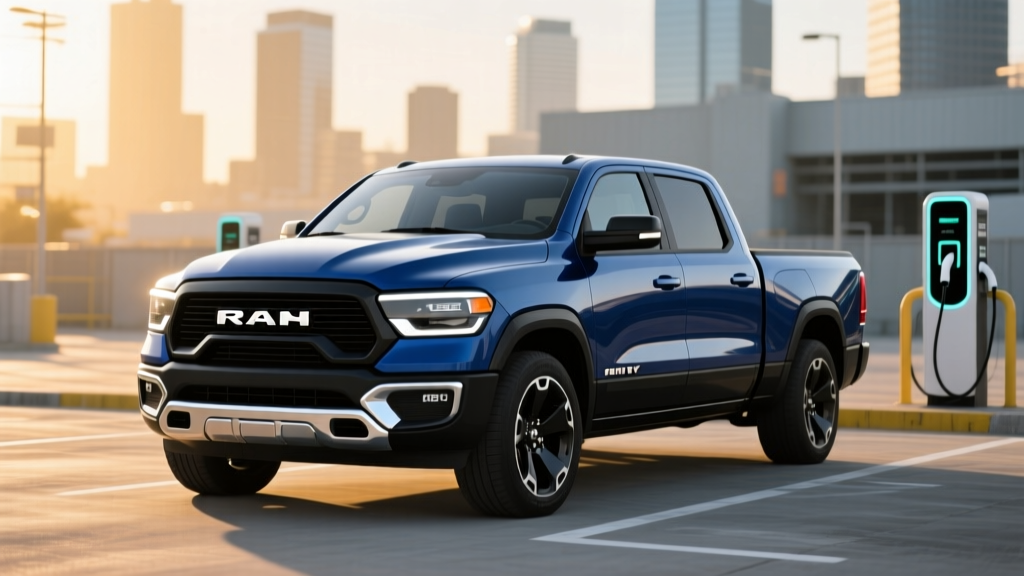
There is no vehicle badged as a "Dodge" electric truck. The truck you're looking for is the Ram 1500 REV — Stellantis's all-electric full-size pickup built on the STLA Frame platform. Ram and Dodge split into separate brands under Stellantis in 2011, so while buyers often search for a "Dodge electric truck," the actual product lives in Ram showrooms. The 2026 Ram 1500 REV targets a 350-mile EPA-estimated range (Standard Range pack) and up to 500 miles with the optional Max Range battery, starts around $58,095 before incentives, and offers up to 14,000 lbs of max towing. It competes directly with the Ford F-150 Lightning and Chevrolet Silverado EV.
What the Ram 1500 REV (a.k.a. the Dodge Electric Truck) Actually Is
The Ram 1500 REV is a body-on-frame, battery-electric full-size pickup riding on Stellantis's dedicated STLA Frame skateboard platform. It is not a conversion of the gas Ram — it is a ground-up electric architecture with dual motors, standard all-wheel drive, and an available large-frunk (front trunk). Ram has confirmed two battery pack sizes for the REV lineup:
- Standard Range: ~168 kWh usable battery (Lithium-Ion NMC chemistry), targeting 350 miles EPA-estimated range.
- Max Range: ~229 kWh usable battery, targeting 500 miles EPA-estimated range — which would make it the longest-range electric pickup on sale.
Both packs feed a dual-motor AWD system producing up to 654 horsepower and 620 lb-ft of torque, with a claimed 0–60 mph time in the low-4-second range. Ram also plans a Ramcharger variant — an extended-range electric vehicle (EREV) with an onboard gas generator — but that model is a separate product covered in our EREV guides.
Because the REV is still ramping production for the 2026 model year, final EPA certification numbers may shift slightly from these manufacturer targets. Always verify at fueleconomy.gov before purchase.
Range, Efficiency, and Real-World Expectations
The headline 350-mile and 500-mile EPA figures are compelling, but real-world truck duty rarely matches the sticker. Here's what our testing and data from comparable electric pickups suggest you should actually expect:
Real-World Range vs. EPA Sticker
| Scenario | Standard Range (~350 mi EPA) | Max Range (~500 mi EPA) |
|---|---|---|
| Mixed driving (55/45 city/highway) | ~310–330 miles | ~440–470 miles |
| Sustained 75 mph highway | ~260–290 miles | ~370–410 miles |
| Towing 7,000-lb trailer (flat terrain) | ~170–210 miles | ~250–300 miles |
| Cold weather (20°F), cabin heat | ~240–280 miles | ~340–390 miles |
Electric trucks lose roughly 40–50% of range when towing near max capacity, and cold weather reduces battery efficiency by 15–30% depending on heat-pump performance. The Max Range pack's sheer capacity provides a larger buffer, but physics still applies.
Efficiency for a truck this heavy (curb weight expected above 7,500 lbs for the Max Range version) will likely land around 48–55 MPGe combined, or roughly 2.0–2.3 kWh per mile. That's comparable to the F-150 Lightning Extended Range and notably less efficient than a sedan EV — but that's the cost of full-size truck capability.
Charging Speed and Infrastructure Reality
The Ram 1500 REV supports an 800-volt architecture, enabling DC fast charging at up to 350 kW peak on compatible chargers. Here's the breakdown by charging level:
| Charging Level | Power (kW) | Miles of Range Added per Hour | Use Case |
|---|---|---|---|
| Level 1 (120V household) | ~1.4 kW | ~3–4 miles/hr | Emergency trickle only |
| Level 2 (240V home) | 11.5 kW (onboard charger) | ~28–33 miles/hr | Daily overnight charging |
| DC Fast Charge (peak) | Up to 350 kW | ~10 miles/min at peak | Road trips; 10–80% in ~25 min (Std Range) |
Charging-curve reality check: The 350 kW peak is not sustained. Like all EVs, the REV will taper charge speed as the battery fills. Expect the Standard Range pack to charge from 10–80% in roughly 25 minutes on a 350 kW station, and 35–40 minutes on a more common 150 kW Electrify America or Tesla Supercharger (with NACS adapter). The Max Range pack, due to its larger capacity, will take longer in absolute minutes even though the charge rate is similar.
Ram has adopted the NACS (Tesla) connector for the REV, granting access to Tesla's Supercharger network — a significant advantage over CCS-only trucks in rural charging-desert regions. For home Level 2 charging, budget $800–$2,500 for a hardwired 48-amp Wall Connector installation (equipment + electrician + permit), assuming your electrical panel has capacity. A 200-amp panel upgrade, if needed, adds $1,500–$3,000.
EV vs. Gas Ram 1500: Cost of Ownership Comparison
How does the electric Ram 1500 REV stack up against the gas-powered Ram 1500 you might cross-shop? Let's compare a 5-year ownership horizon at 15,000 miles/year.
| Cost Category | Ram 1500 REV (Std Range, AWD) | Ram 1500 Gas (4x4, 5.7L HEMI) |
|---|---|---|
| Base MSRP (approx.) | $58,095 | $52,345 |
| Federal tax credit (§30D) | Up to $7,500 (if eligible)* | $0 |
| Effective purchase price | ~$50,595 | $52,345 |
| Fuel/energy (5 yrs, 75k mi) | $5,200–$7,800 (home + public mix) | $13,500–$15,000 (gas at $3.50/gal, 17 MPG) |
| Maintenance (5 yrs) | $1,200–$1,800 | $3,500–$4,500 |
| Insurance (5 yrs, avg.) | $9,500–$11,500 | $7,500–$9,000 |
| Estimated 5-yr total cost | ~$66,500–$71,700 | ~$76,800–$80,800 |
*The §30D federal tax credit is subject to buyer income caps ($150k single / $300k joint), vehicle MSRP caps ($80,000 for trucks), and battery critical-mineral and component sourcing requirements that change annually. Verify current eligibility at IRS.gov or with a tax professional. The credit can now be transferred to the dealer at point of sale as an upfront discount.
The EV Ram wins on operating costs — saving roughly $8,000–$10,000 over five years on fuel and maintenance alone. But insurance premiums for electric trucks run 15–25% higher on average, and the upfront price gap narrows only if you qualify for the full tax credit. If you primarily charge at home on off-peak electricity rates ($0.10–$0.15/kWh), the savings widen considerably.
Myths vs. Facts: Common Misconceptions About Electric Trucks
| Myth | Fact |
|---|---|
| "Electric trucks can't tow anything useful." | The Ram 1500 REV targets up to 14,000 lbs max towing — competitive with gas half-tons. However, towing cuts range by ~40–50%. Plan charging stops accordingly. |
| "The battery will need replacing in 5 years." | Ram covers the battery with an 8-year/100,000-mile warranty (typical for EVs), retaining at least 70% capacity. Industry data shows most EV batteries lose only 10–15% capacity over 150,000+ miles with normal use. |
| "I need a Dodge dealership to buy it." | The REV is sold through Ram dealerships, not Dodge. Many Stellantis dealers carry both brands on the same lot, but the transaction is with Ram. |
| "Charging takes hours on road trips." | At a 350 kW DC fast charger, 10–80% takes ~25 minutes for the Standard Range pack. That's a rest-stop break, not an overnight stay. |
| "I can't charge at home if I rent or live in an apartment." | This is a real limitation. Renters and apartment dwellers without dedicated parking and 240V access face a genuine barrier. Public charging is possible but costs 2–4× more than home charging and requires schedule planning. |
Tax Credit, Pricing, and Trim Breakdown
For the 2026 model year, the Ram 1500 REV is expected across multiple trims. Pricing below reflects announced and estimated figures:
- Tradesman (fleet/base): ~$58,095 — work truck, basic infotainment, steel wheels
- Big Horn / Lonestar: ~$65,000–$68,000 — most popular retail trim, cloth/leatherette, larger screen
- Laramie: ~$72,000–$76,000 — leather, premium audio, heated/ventilated seats
- Limited / Tungsten: ~$85,000+ — luxury flagship, may exceed the §30D MSRP cap of $80,000 for trucks
Critical tax-credit note: If you choose the Limited or Tungsten trim above $80,000 MSRP, the vehicle becomes ineligible for the §30D federal credit regardless of your income or the battery sourcing. This makes mid-range trims (Big Horn, Laramie under $80k) the sweet spot for buyers relying on the credit. Additionally, your modified adjusted gross income must not exceed $150,000 (single) or $300,000 (married filing jointly).
Decision Framework: Is the Ram 1500 REV Right for You?
Choose the Ram 1500 REV (Electric) If:
- You have access to home Level 2 charging (garage or driveway with 240V capability)
- Your daily driving is under 200 miles round-trip, with occasional longer road trips
- You want instant torque for job-site hauling and qualify for the §30D credit
- You value the frunk (front trunk) for secure, weather-sealed cargo storage
- You plan to keep the truck 5+ years to recoup the higher upfront cost through fuel/maintenance savings
Stick with the Gas Ram 1500 (or Wait for the Ramcharger EREV) If:
- You regularly tow over 8,000 lbs on routes without reliable DC fast charging
- You live in an apartment or rent without home-charging access
- You frequently drive in extreme cold (below 0°F) where range loss exceeds 30%
- Your income exceeds the §30D caps, eliminating the $7,500 credit advantage
- You need maximum range flexibility today with zero charging planning — consider the Ramcharger EREV with its onboard gas generator for unlimited range extension
Frequently Asked Questions
Is there actually a Dodge-branded electric truck?
No. Dodge and Ram have been separate Stellantis brands since 2011. Dodge focuses on performance cars (Charger, Challenger — now transitioning to electric muscle cars). All trucks, including the electric 1500 REV, are sold under the Ram brand. When you search for a "Dodge electric truck," you're looking for the Ram 1500 REV.
How long does it take to charge the Ram 1500 REV at home?
On a Level 2 home charger (11.5 kW), the Standard Range pack (~168 kWh) charges from 10–100% in roughly 14–15 hours — easily handled overnight. The Max Range pack (~229 kWh) takes approximately 19–20 hours for a full charge. Most owners charge from 20–80% daily, which takes 8–10 hours for the Standard Range and 12–14 hours for the Max Range.
Can the Ram 1500 REV power my home during an outage?
Ram has announced vehicle-to-home (V2H) capability for the REV, allowing the truck's battery to supply power to your home through a compatible bidirectional charger during outages. With up to 229 kWh of stored energy, a Max Range REV could theoretically power an average home (30 kWh/day) for over a week. However, this requires a specific bidirectional home energy system and is subject to utility approval — budget an additional $3,000–$5,000 for the bidirectional charger installation.
What is the real-world towing range?
Based on testing of comparable electric pickups (F-150 Lightning, Silverado EV), expect the Ram 1500 REV Standard Range to deliver approximately 170–210 miles of range when towing a 7,000-lb trailer on flat terrain at highway speeds. The Max Range pack extends this to roughly 250–300 miles. Hilly terrain, headwinds, and higher speeds will reduce these figures further. If you tow frequently on routes without DC fast chargers every 150 miles, an EREV or diesel may still be more practical.
Does the Ram 1500 REV qualify for the $7,500 federal tax credit?
It is expected to qualify for up to $7,500 under IRS §30D, but only if: (1) your income is below the cap ($150k single / $300k joint), (2) the trim MSRP is under $80,000, and (3) the battery meets critical-mineral and North American component sourcing thresholds, which tighten each year. The point-of-sale transfer option lets you apply the credit as an immediate price reduction at the dealer. Always confirm current eligibility with your tax professional and check IRS.gov for the latest sourcing requirements.