Quick Answer: Is the Dodge Electric Challenger Worth Waiting For?
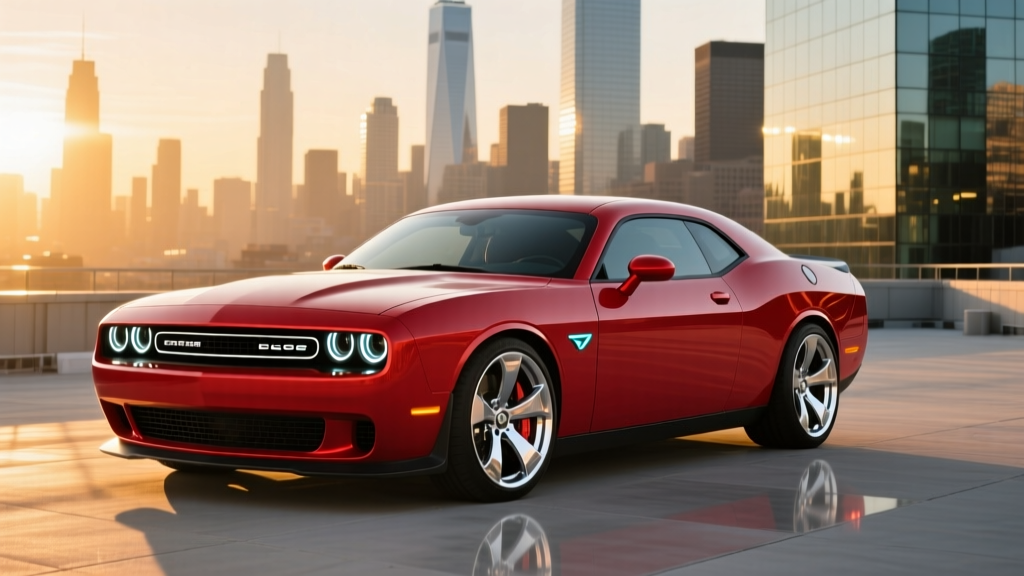
The Dodge electric Challenger (badged as the Charger Daytona EV in production form) is Dodge's bid to prove electrification and muscle-car soul can coexist. As of early 2026, the two-door coupe variant remains announced but not yet on sale; the four-door Charger Daytona Scat Pack and R/T are the first models reaching driveways. Expect the coupe to follow with a similar powertrain: up to 670 hp, 0-60 in ~3.3 seconds, and an EPA-estimated range near 317 miles (R/T trim). Pricing is projected to start in the mid-$50,000s for the R/T, climbing past $70,000 for the Scat Pack. If you want a daily-drivable electric muscle car with real straight-line fury and don't mind a heavy curb weight, it's worth tracking. If you need a lightweight canyon carver or a budget commuter, look elsewhere.
The Electric Challenger: What We Know So Far
Stellantis confirmed the next-generation Challenger would ride the same STLA Large platform as the Charger Daytona EV, sharing its 800-volt architecture and dual-motor all-wheel-drive layout. Dodge has shown the Charger Daytona in both coupe and sedan body styles, but the two-door "Challenger" successor has been delayed relative to the sedan to let Dodge refine the shorter-wheelbase chassis dynamics.
Here's what the platform delivers based on the production Charger Daytona specs Dodge has published:
| Spec | R/T Trim | Scat Pack Trim |
|---|---|---|
| Powertrain | Dual-motor AWD | Dual-motor AWD |
| Horsepower | 496 hp | 670 hp |
| 0-60 mph | ~4.7 sec | ~3.3 sec |
| Battery (usable) | ~92 kWh, NMC | ~92 kWh, NMC |
| EPA Range (est.) | ~317 mi | ~260 mi |
| Max DC Fast Charge | ~175 kW peak | ~175 kW peak |
| 10-80% Charge Time | ~32 min | ~32 min |
| Level 2 Charging | 11.5 kW onboard | 11.5 kW onboard |
| Architecture | 800V | 800V |
| Projected MSRP | ~$55,000 | ~$73,000 |
Note: Specs are preliminary based on the Charger Daytona sedan. Dodge may adjust tuning, battery calibration, or pricing for the coupe variant. Final EPA certification numbers will be published closer to launch.
Electric Challenger vs. Gas Challenger: The Numbers Don't Lie
For muscle-car loyalists, the real question isn't whether the electric Challenger is fast — it obviously is. The question is whether the ownership math works compared to the last-generation gas Challenger R/T and Scat Pack with the 5.7L and 6.4L HEMI V8s.
| Metric | Electric Challenger R/T (proj.) | Gas Challenger R/T (5.7L HEMI, final gen) |
|---|---|---|
| Horsepower | 496 hp | 375 hp |
| 0-60 mph | ~4.7 sec | ~5.1 sec |
| Fuel/Energy Cost (annual, 12k mi) | ~$650 (home charging at $0.15/kWh) | ~$2,300 (19 MPG combined at $3.65/gal) |
| Annual Maintenance | ~$300 (tires, cabin filter, wipers) | ~$800 (oil, brakes, filters, plugs) |
| EPA Range / Tank Range | ~317 mi | ~350 mi (18.5-gal tank) |
| "Refuel" Time (best case) | ~32 min (10-80% DC fast) | ~5 min (gas pump) |
| Base MSRP (when available/new) | ~$55,000 | ~$42,000 (2023 final MSRP) |
| Federal Tax Credit (§30D) | Potentially up to $7,500* | $0 |
| Weight (approx.) | ~5,800 lbs | ~4,300 lbs |
*The IRS §30D tax credit has strict requirements: buyer income caps ($150k single / $300k joint), vehicle MSRP caps ($55,000 for sedans/coupes — which may disqualify higher trims), battery critical-mineral sourcing rules, and final assembly in North America. The Scat Pack trim's projected ~$73,000 price would exceed the MSRP cap. Always consult a tax professional and check the current IRS eligibility list before purchasing.
Real-World Range: What the EPA Sticker Won't Tell You
Dodge's projected 317-mile EPA range for the R/T is competitive with rivals like the Ford Mustang Mach-E GT and the Tesla Model S. But muscle-car buyers tend to drive hard, and that's where real-world numbers diverge from the sticker.
Real-World Range Expectations
- EPA estimate (R/T): ~317 miles
- Highway driving at 75-80 mph: ~240-265 miles (EVs lose efficiency at sustained high speed — no multi-gear transmission to keep RPMs low)
- Cold weather (below 32°F): ~210-250 miles (battery chemistry slows, cabin heating draws power; the Charger Daytona's heat pump helps but doesn't eliminate loss)
- Aggressive "Scat Pack" driving: ~180-220 miles (hard acceleration and regen-braking cycles eat energy fast)
- Ideal city/suburban with regen: ~300-330 miles (regenerative braking recaptures energy in stop-and-go traffic)
The 800V architecture helps with charging speed but doesn't change the physics of a ~5,800-pound coupe. If your commute is under 60 miles round-trip and you can charge at home, range will rarely be a concern. If you're planning 400-mile road trips, you'll need to factor in at least one 30-minute DC fast-charge stop — and verify that Electrify America or Tesla Supercharger (with adapter) coverage exists along your route.
Charging the Electric Challenger at Home and on the Road
Understanding the difference between kW (power — how fast energy flows) and kWh (energy — how much the battery holds) is essential. The Challenger EV's ~92 kWh battery is the "fuel tank"; the charge rate in kW determines how fast you fill it.
| Charging Level | Power (kW) | Miles Added Per Hour | Full Charge Time | Best For |
|---|---|---|---|---|
| Level 1 (120V outlet) | ~1.4 kW | ~4-5 mi/hr | ~65+ hours | Emergency top-ups only |
| Level 2 (240V home) | 11.5 kW | ~35-40 mi/hr | ~8-9 hours | Daily overnight charging |
| DC Fast Charge | ~175 kW peak | ~200+ mi/hr (peak) | 10-80% in ~32 min | Road trips |
Home charging setup: Most buyers will need a Level 2 (240V) home charger installed on a 60-amp circuit to get the full 11.5 kW onboard charging rate. Expect $800-$2,500 for a quality Level 2 unit (like the ChargePoint Home Flex or Emporia V2) plus $500-$2,000 for electrician installation, depending on whether your electrical panel needs an upgrade. If you live in an apartment or lack garage access, public charging becomes your primary option — and that changes the cost equation significantly.
Charging-curve reality: The "175 kW peak" figure only applies at low state-of-charge (SoC) and optimal battery temperature. Expect peak rates between 10-40% SoC, tapering to ~100 kW by 60% and ~50 kW by 80%. This is why manufacturers quote 10-80% times — the last 20% is painfully slow on any EV to protect battery longevity.
Total Cost of Ownership: 5-Year Breakdown
Let's run the numbers on a 5-year, 60,000-mile ownership scenario comparing the projected electric Challenger R/T against the final-generation gas Challenger R/T (5.7L HEMI). This assumes 12,000 miles/year, home charging at $0.15/kWh, and gas at $3.65/gallon.
| Cost Category | Electric Challenger R/T (proj.) | Gas Challenger R/T (5.7L HEMI) |
|---|---|---|
| Purchase Price (MSRP) | $55,000 | $42,000 |
| Federal Tax Credit (§30D)* | -$7,500 | $0 |
| Effective Purchase Price | $47,500 | $42,000 |
| Fuel/Energy (5 years) | $3,250 | $11,530 |
| Maintenance (5 years) | $1,500 | $4,000 |
| Insurance (5 years, est.) | $12,500 | $9,500 |
| Home Charger Install | $2,000 | $0 |
| 5-Year Total | $66,750 | $67,030 |
| Cost Per Mile | $1.11/mi | $1.12/mi |
*Tax credit assumes full eligibility. Many buyers will not qualify due to income caps, MSRP caps, or battery-sourcing rules. Without the credit, the electric Challenger costs roughly $7,500 more over 5 years — still competitive given the performance gap, but no longer a clear financial win.
Insurance note: EVs typically cost 15-25% more to insure than comparable gas cars due to higher repair costs and battery replacement risk. Get quotes from your insurer before committing — the gap varies wildly by carrier and state.
Common Myths About the Electric Challenger, Debunked
| Myth | Fact |
|---|---|
| "Electric muscle cars have no soul — they're just fast appliances." | Dodge engineered the "Fratzonic" exhaust system to generate synthetic engine-like sound and vibration through tuned chambers and external speakers. It's not a V8 rumble, but road tests confirm it's visceral and adjustable. Whether it's "soul" is subjective — the straight-line performance is not. |
| "The battery will need replacing in 5 years and cost $20,000." | Stellantis provides an 8-year / 100,000-mile battery warranty (the federal minimum for EVs). Real-world degradation data from similar NMC packs shows ~10-15% capacity loss over 150,000 miles. Full battery replacement is rare and typically covered under warranty if capacity drops below 70%. |
| "You can't take an EV on a road trip." | The 800V architecture and ~175 kW peak charge rate mean a 10-80% top-up takes about 32 minutes at a compatible DC fast charger. On a 500-mile trip, that's one stop — roughly the same time you'd spend on food and a bathroom break. The limitation is route planning in charging deserts (rural Midwest, parts of the Mountain West). |
| "The electric Challenger will qualify for the full $7,500 tax credit." | Not guaranteed. The §30D credit requires the vehicle MSRP to be ≤$55,000 for coupes/sedans, the buyer to meet income caps, and the battery to meet critical-mineral and component sourcing thresholds that tighten every year. The Scat Pack trim almost certainly exceeds the MSRP cap. Check fueleconomy.gov for the current eligibility list before purchasing. |
| "EVs are worse in winter." | Range drops 15-30% in freezing temps — real, but manageable with preconditioning (warming the battery while plugged in before departure). The dual-motor AWD system actually provides excellent winter traction, often outperforming the rear-drive gas Challenger on snow and ice. |
Decision Framework: Should You Buy the Electric Challenger?
Choose the Electric Challenger If:
- You have home charging access (garage or driveway with 240V capability) — this makes daily ownership effortless and keeps "fuel" costs at ~$0.05/mile.
- You want 496-670 hp daily-driver performance without the fuel bill of a HEMI V8 — the electric powertrain delivers instant torque that the gas Challenger can't match off the line.
- Your typical drive is under 200 miles round-trip — the real-world range handles this easily, even in cold weather with preconditioning.
- You qualify for the §30D tax credit — the $7,500 credit (available as a point-of-sale reduction at the dealer) closes the price gap with the gas Challenger almost entirely.
- You value low maintenance — no oil changes, no spark plugs, regenerative braking saves brake pads (expect 80,000+ miles on original pads).
Look Elsewhere If:
- You live in an apartment without charging access — relying solely on public DC fast charging raises your per-mile energy cost to ~$0.12-0.18/mile and adds significant time to your week.
- You regularly drive 300+ miles in a single trip through areas with sparse charging infrastructure. The ~32-minute charge stop is fine once; three stops on a single day gets old fast.
- You prioritize lightweight handling over straight-line speed — at ~5,800 lbs, this is a drag-strip and highway cruiser, not a canyon carver. The Porsche Taycan or even the gas Challenger Hellcat Redeye (at ~4,500 lbs) will feel more agile on twisty roads.
- Your budget is under $45,000 — even with the tax credit, the electric Challenger won't hit that price point. Consider a used gas Challenger or a more affordable EV like the Tesla Model 3 Performance or Hyundai Ioniq 5 N for performance on a budget.
- You want a proven platform with years of reliability data — the STLA Large EV platform is brand-new. Early adopters accept the risk of first-year build-quality issues and software bugs.
What First-Time EV Buyers Should Know Before Ordering
If the electric Challenger is your first EV, here's what no brochure will tell you:
- Get your home electrical panel assessed first. A Level 2 charger needs a 240V / 60-amp circuit. If your home has a 100-amp panel (common in older builds), you may need a $2,000-$5,000 panel upgrade before you can charge at full speed. Get a licensed electrician's quote before you order the car.
- Download the charging apps now. Electrify America, EVgo, ChargePoint, and PlugShare are essential. Check what's available near your home, workplace, and frequent routes before committing. The Dodge will use the NACS (Tesla-style) connector for DC fast charging in North America, giving access to Tesla Superchargers with a native plug — a significant infrastructure advantage.
- Preconditioning is non-negotiable. Set your departure time in the car's app while plugged in at home. The car will warm the battery to optimal temperature, which preserves range and enables faster DC charging when you hit the road.
- Tires wear faster on EVs. The instant torque and heavy weight chew through tires 20-30% faster than on gas cars. Budget $1,200-$1,800 for a set of performance all-season or summer tires every 25,000-35,000 miles.
- Plan for the tax credit paperwork. If you qualify for §30D, you can transfer the credit to the dealer at point of sale (reducing your purchase price directly) or claim it on your federal tax return. Either way, you'll need the vehicle's battery sourcing documentation and your income verification. Start gathering this before tax season.
Frequently Asked Questions
When will the Dodge electric Challenger coupe actually be available to buy?
As of early 2026, Dodge has confirmed the two-door coupe variant is in development on the STLA Large platform but has not announced a firm on-sale date. The four-door Charger Daytona sedan began deliveries in late 2024/early 2025. Industry estimates place the coupe in showrooms by late 2026 or early 2027. Reservations have not yet opened for the coupe specifically.
Will the electric Challenger have a manual transmission or drift mode?
No manual transmission — EVs don't use multi-gear transmissions. However, Dodge has confirmed the Scat Pack trim includes a "Drift Mode" that adjusts torque distribution to the rear wheels for controlled slides, along with launch control and configurable drive modes. The eRupt multi-speed transmission concept was explored but abandoned in favor of a direct-drive setup for reliability and efficiency.
Can I charge the electric Challenger at a Tesla Supercharger?
Yes. Dodge has adopted the NACS (North American Charging Standard) connector for the Charger Daytona platform, which is the same connector used by Tesla Superchargers. This gives the electric Challenger access to the largest DC fast-charging network in North America natively, without an adapter — a significant advantage over CCS-only vehicles.
How much will insurance cost compared to the gas Challenger?
Expect insurance premiums 15-25% higher than the equivalent gas Challenger, primarily due to higher vehicle cost, specialized EV repair requirements, and battery replacement risk. For a 35-year-old driver with a clean record, that might mean $2,400-$3,000/year for the electric R/T vs. $1,800-$2,200/year for the gas R/T. Get quotes from at least three carriers — EV insurance pricing varies dramatically by company.
Is the electric Challenger AWD only, or will there be a rear-wheel-drive version?
The initial R/T and Scat Pack trims are dual-motor AWD. Stellantis has hinted at a single-motor rear-wheel-drive variant for a future, more affordable trim — which would be lighter and potentially offer longer range, but with significantly less power (estimated ~340 hp). No timeline has been announced for an RWD model.
What happens if the battery degrades — is replacement affordable?
The battery is warranted for 8 years / 100,000 miles against defects and excessive capacity loss (typically defined as dropping below 70% of original capacity). Out-of-warranty replacement for a ~92 kWh NMC pack would likely cost $12,000-$18,000 based on current pricing for comparable packs — expensive, but rarely needed. Real-world data from similar platforms shows most EV batteries retain 85-90% capacity at 100,000 miles with normal use.
Sources: Dodge Charger Daytona official specs, IRS §30D Tax Credit Guidelines, U.S. EPA fueleconomy.gov.