The Short Answer on the Dodge Charger Daytona EV
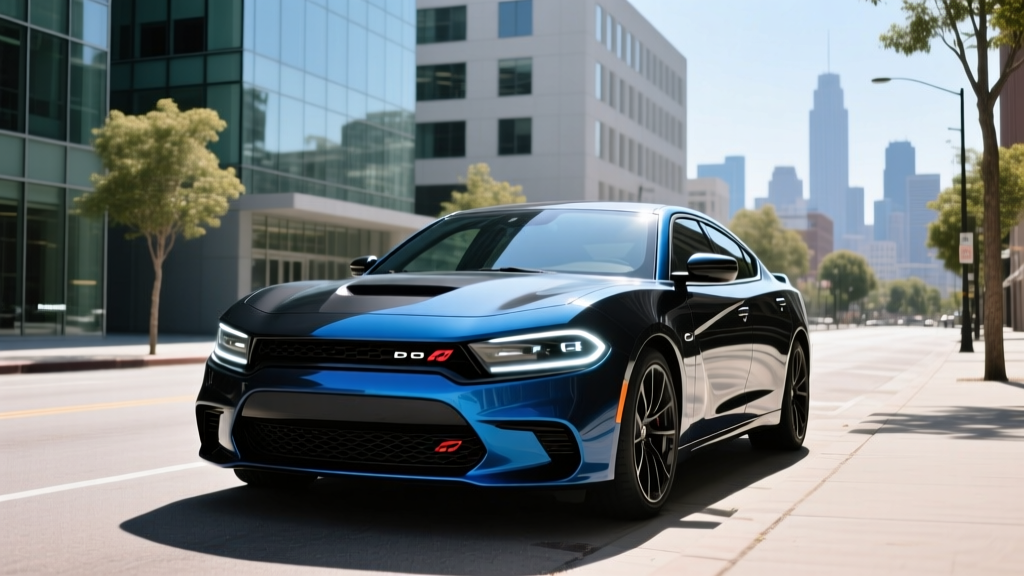
The Dodge Charger Daytona EV is the brand's first all-electric muscle car, available in R/T ($51,990) and Scat Pack ($56,990) trims. The Scat Pack delivers 670 horsepower and a 0-60 time of 3.3 seconds, while the R/T produces 496 hp. EPA range reaches 318 miles on the R/T and 284 miles on the Scat Pack, both from a 100.6 kWh (usable) battery pack. DC fast charging peaks at roughly 175 kW, with a 20-80% charge taking approximately 27 minutes. If you want American muscle-car performance without a V8, this is currently the only EV wearing a Dodge badge — but understand that real-world highway range drops to roughly 230-260 miles, and the Scat Pack's performance-oriented tuning trades some efficiency for acceleration.
Range and Efficiency: EPA Sticker vs. Real World
The Charger Daytona uses an 800-volt electrical architecture and a liquid-cooled NMC (nickel manganese cobalt) lithium-ion battery with approximately 100.6 kWh of usable capacity. Here is what the EPA rates and what you should actually expect:
| Spec | Charger Daytona R/T | Charger Daytona Scat Pack |
|---|---|---|
| EPA Range | 318 miles | 284 miles |
| Battery (Usable) | 100.6 kWh NMC | 100.6 kWh NMC |
| Efficiency (MPGe) | ~92 MPGe combined | ~82 MPGe combined |
| Horsepower | 496 hp | 670 hp |
| 0-60 mph | 4.7 seconds | 3.3 seconds |
| Drivetrain | AWD (dual motor) | AWD (dual motor) |
| Curb Weight | ~5,838 lbs | ~5,930 lbs |
Real-World Range Reality Check
The EPA numbers assume mixed driving. On sustained highway trips at 70-75 mph, expect the R/T to deliver roughly 250-270 miles and the Scat Pack around 220-245 miles. In cold weather (below 30°F), range drops an additional 15-25% due to battery resistance and cabin heating demands — meaning a winter highway trip in a Scat Pack could net you as little as 180-200 miles before needing a charge. The Charger Daytona's heavy curb weight (nearly 6,000 lbs) and wide performance tires are the primary efficiency penalties compared to sleeker EVs like the Hyundai Ioniq 6 or Tesla Model 3.
Charging Speeds and Infrastructure
The 800V architecture allows the Charger Daytona to accept higher charge rates than older 400V EVs, though it does not reach the 250+ kW peaks of a Tesla Model 3 or Porsche Taycan. Here is the breakdown:
| Charging Level | Power | Charge Rate | Notes |
|---|---|---|---|
| Level 1 (120V household) | ~1.4 kW | ~3-4 miles/hour | Emergency top-up only; a full charge takes 3+ days |
| Level 2 (240V home/public) | Up to 11.5 kW | ~28-32 miles/hour | Full charge in ~9-10 hours; ideal for overnight home charging |
| DC Fast Charging | Peak ~175 kW | 20-80% in ~27 min | Charge curve tapers significantly above 80%; 10-80% closer to 32-35 min |
The Charger Daytona uses the CCS1 connector for DC fast charging. Dodge has not announced a transition to the Tesla NACS connector for this model year, so you will rely on Electrify America, EVgo, ChargePoint, and other CCS-compatible networks. Battery preconditioning is available — activating navigation to a DC fast charger warms the battery for optimal charge acceptance, which is especially important in cold weather. Always precondition before a fast-charge stop to avoid the slow charge speeds that occur when a cold battery limits the C-rate.
Home charging reality: A Level 2 home charger is practically mandatory for daily ownership. Charging on a standard 120V outlet adds only about 3-4 miles of range per hour, meaning a depleted battery would take over 72 hours to fully replenish. Budget $500-$1,200 for a quality Level 2 wallbox (like the ChargePoint Home Flex or Emporia Vue) and $800-$2,500 for professional installation by a licensed electrician, depending on whether your electrical panel needs an upgrade to support a 48-amp circuit.
EV vs. Gas: Charger Daytona Compared to a V8 Challenger
The Charger Daytona replaces the Hemi V8 Challenger that ended production in 2023. Here is how the EV stacks up against the last-generation gas muscle car on cost and performance:
| Metric | Charger Daytona Scat Pack (EV) | 2023 Challenger R/T Scat Pack (Gas) |
|---|---|---|
| Base MSRP | $56,990 | ~$48,000 (final MSRP) |
| Horsepower | 670 hp | 485 hp (6.4L Hemi) |
| 0-60 mph | 3.3 seconds | ~4.2 seconds |
| Fuel/Energy Cost per Mile | ~$0.045 (home charging at $0.16/kWh) | ~$0.18 (at $3.50/gal, 19 MPG combined) |
| Annual Fuel/Energy (12,000 mi) | ~$540 | ~$2,160 |
| Annual Maintenance | ~$300-400 | ~$700-900 |
| Estimated Insurance (Annual) | ~$2,400-3,000 | ~$1,800-2,400 |
The EV Charger is faster to 60 mph and dramatically cheaper to "fuel" if you charge at home. Over five years and 60,000 miles, the energy savings alone approach $8,000-$9,000. However, the EV's higher purchase price, potentially higher insurance premiums (performance EVs tend to carry steeper rates), and depreciation uncertainty partially offset those gains. The gas Challenger also had a lighter curb weight and more predictable long-term maintenance costs.
Total Cost of Ownership: 5-Year Breakdown
| Cost Category | Charger Daytona Scat Pack (EV) | Comparable Gas Muscle Car |
|---|---|---|
| Purchase Price (MSRP) | $56,990 | $48,000 |
| Federal Tax Credit (§30D) | $0-$7,500 (see eligibility below) | $0 |
| Home Charger Install | $1,500-$3,000 | $0 |
| 5-Year Energy/Fuel (60k mi) | ~$2,700 (home) / ~$5,400 (public DC) | ~$10,800 |
| 5-Year Maintenance | ~$1,750 | ~$4,000 |
| 5-Year Insurance (Est.) | ~$13,500 | ~$10,500 |
| Estimated Depreciation (5yr) | ~$22,000-$28,000 | ~$18,000-$22,000 |
| Approx. 5-Year Total | ~$74,000-$82,000 (net of credit) | ~$73,000-$75,000 |
The ownership math is close. The EV wins on energy and maintenance costs but gives ground on purchase price, insurance, and potentially steeper depreciation (performance EVs have depreciated faster than their gas counterparts in recent years, per industry data). Your actual numbers depend heavily on home-charging access, local electricity rates, and whether you qualify for the federal tax credit.
Federal Tax Credit Eligibility (§30D)
The Charger Daytona's eligibility for the up-to-$7,500 federal EV tax credit under IRS §30D rules depends on several factors that change annually:
- MSRP Cap: The vehicle must be under the $55,000 sedan cap. The R/T at $51,990 qualifies; the Scat Pack at $56,990 exceeds it and is ineligible unless reclassified.
- Buyer Income Limits: AGI must not exceed $150,000 (single), $225,000 (head of household), or $300,000 (joint filers).
- Battery Sourcing: Critical minerals and battery components must meet phased-in percentages from US/free-trade partners. Stellantis has not confirmed full compliance for all battery cells.
- Point-of-Sale Transfer: If eligible, the credit can be transferred to the dealer at purchase for an immediate price reduction.
Always verify current eligibility on fueleconomy.gov before purchasing, as sourcing rules tighten each year.
Common Misconceptions About the EV Dodge Charger
| Myth | Fact |
|---|---|
| "The EV Charger has no soul — it doesn't sound like a V8." | Dodge includes a "Fratzonic" exhaust system that generates synthetic engine-like sound through external speakers. It is not a Hemi rumble, but it provides audible feedback. You can also turn it off for silent cruising. |
| "I'll get 318 miles no matter how I drive." | The 318-mile EPA rating applies to the R/T under mixed conditions. Aggressive acceleration, sustained highway speeds, cold weather, and hilly terrain all reduce range. Real-world highway range is closer to 230-270 miles. |
| "EV batteries need replacing every few years." | Stellantis provides an 8-year/100,000-mile battery warranty covering capacity below 70%. Industry data from similar NMC packs shows average degradation of 8-12% over 8 years. Most EV batteries outlast the vehicle itself. |
| "I can fast-charge from 0-100% in 30 minutes." | DC fast charging speeds taper dramatically above 80% SoC to protect battery health. The 20-80% charge takes ~27 minutes, but 80-100% can add another 25-35 minutes. Plan road-trip stops around 80% to minimize total time. |
| "The Charger Daytona is self-driving." | No. The Charger Daytona offers Level 2 driver-assistance features (adaptive cruise, lane centering). The driver must remain engaged and hands-on at all times per SAE automation levels. |
Battery Longevity, Warranty, and What to Expect
The Charger Daytona's NMC battery pack is liquid-cooled with active thermal management — critical for preserving battery health during repeated hard launches and DC fast charging. Stellantis backs the pack with an 8-year/100,000-mile warranty guaranteeing at least 70% capacity retention. If the battery degrades below that threshold within the warranty period, Stellantis will repair or replace it at no cost.
For long-term ownership, follow these battery-care principles:
- Avoid routinely charging to 100% — set your daily charge limit to 80-90% and reserve 100% for road trips.
- Minimize repeated back-to-back DC fast charges when possible; Level 2 home charging is gentler on cell chemistry.
- In extreme cold, precondition the battery before driving and before fast-charging sessions.
- Monitor State of Health (SoH) through the vehicle's infotainment system or third-party diagnostic tools.
A full battery replacement outside of warranty, should it ever be needed, is estimated at $15,000-$22,000 based on current NMC pack pricing for ~100 kWh batteries. However, this scenario is rare within the first 10-15 years of ownership based on degradation data from comparable EV platforms.
Decision Framework: Is the EV Dodge Charger Right for You?
Choose the Charger Daytona R/T if:
- You want EV muscle-car performance with a lower starting price ($51,990) and the best chance at federal tax-credit eligibility.
- 496 hp and a 4.7-second 0-60 are more than sufficient for your needs.
- Maximizing range (318 miles EPA) is a priority for road trips.
- You have reliable home Level 2 charging and your daily commute is under 100 miles round-trip.
Choose the Charger Daytona Scat Pack if:
- You want maximum performance — 670 hp and 3.3-second 0-60 times rival supercars from a decade ago.
- You accept a ~34-mile range penalty (284 vs. 318 EPA) for the performance upgrade.
- You are less concerned about federal tax-credit eligibility (the $56,990 MSRP likely exceeds the sedan cap).
- Track days and aggressive driving are part of your ownership plan — the Scat Pack includes performance-tuned suspension, larger brakes, and launch control.
Look elsewhere if:
- You lack home charging access and your area has limited public DC fast-charging infrastructure. The Charger's 175 kW peak charge rate and heavy weight make public-charging-only ownership inconvenient.
- You need maximum cargo space or rear-seat practicality. This is a coupe, and the battery pack intrudes on interior volume compared to crossover EVs.
- Efficiency and range-per-dollar are your top priorities. A Tesla Model 3 Long Range or Hyundai Ioniq 6 delivers more miles per kWh at a lower price.
- You live in a region with extreme cold and limited charging infrastructure — the range penalty compounds in these conditions.
First-Time EV Buyer Checklist
If the Charger Daytona is your first EV, prepare for ownership with these steps:
- Assess your home electrical panel. A 48-amp Level 2 charger requires a 60-amp dedicated circuit. Older homes with 100-amp panels may need a $1,500-$3,000 panel upgrade — have a licensed electrician evaluate this before purchase.
- Map your charging options. Download apps for Electrify America, EVgo, and ChargePoint. Identify DC fast chargers along your most common road-trip routes. The CCS1 connector is widely supported but verify compatibility.
- Understand your electricity rate. Time-of-use (TOU) plans can cut charging costs by 40-60% if you charge during off-peak hours (typically 10 PM - 6 AM). Contact your utility about EV-specific rate plans.
- Budget for insurance. Get quotes before purchasing. Performance EVs with high horsepower and expensive repair costs tend to carry premiums 20-40% higher than comparable gas vehicles.
- Learn regen braking. The Charger Daytona offers adjustable regenerative braking, including a one-pedal driving mode. Practice in a low-traffic area to build muscle memory before relying on it in daily traffic.
- Plan for cold weather. If you live in a climate with sub-freezing winters, budget for 15-25% range loss and always precondition the battery before driving or charging.
Frequently Asked Questions
Does Dodge make any other electric vehicles besides the Charger Daytona?
As of the current model year, the Charger Daytona is Dodge's only all-electric vehicle. Stellantis (Dodge's parent company) also sells the Jeep Wrangler 4xe and Chrysler Pacifica Hybrid as plug-in hybrids, and the all-electric Jeep Wagoneer S, but no other Dodge-badged EVs are currently in production. Dodge has signaled additional electrified models in future years, but nothing has been confirmed for sale.
Can the Charger Daytona tow?
Dodge has not published an official towing rating for the Charger Daytona. As a performance coupe, it is not designed for heavy towing. If towing is a priority, look at electric trucks or SUVs like the Ford F-150 Lightning or Rivian R1S.
How does the Fratzonic exhaust system work?
The Fratzonic system uses externally mounted speakers and an amplifier to generate synthetic exhaust-like sounds that correspond to vehicle speed, acceleration, and driving mode. It is designed to provide auditory feedback that muscle-car enthusiasts expect, and it can produce up to 126 dB — comparable to a Hellcat at full throttle. You can adjust the volume or disable it entirely through the infotainment system.
Is the Dodge Charger Daytona eligible for the $7,500 federal tax credit?
The R/T trim at $51,990 falls under the $55,000 MSRP cap for sedans and may qualify, depending on your income and the battery's critical-mineral and component sourcing compliance. The Scat Pack at $56,990 likely exceeds the MSRP cap. Verify current eligibility on fueleconomy.gov and consult a tax professional for your specific situation. Rules under IRS §30D are subject to change.
What is the real-world charging cost on a road trip?
DC fast-charging costs vary by network and location. Expect $0.35-$0.55 per kWh at Electrify America or EVgo stations. A 20-80% charge (~60 kWh added) costs roughly $21-$33 per stop. For a 600-mile road trip requiring two fast-charge stops, budget approximately $50-$75 in charging costs — compared to $80-$110 in gasoline for a V8 Challenger getting 19 MPG at $3.50/gallon.
How does the Charger Daytona handle compared to the old gas Challenger?
The EV Charger's dual-motor AWD system provides instant torque to all four wheels, resulting in better launch traction and a lower 0-60 time. However, the nearly 6,000-pound curb weight is felt in corners — the gas Challenger was lighter and more nimble on twisty roads despite its lower power output. The Charger Daytona trades some cornering agility for straight-line dominance and a lower center of gravity thanks to the floor-mounted battery pack.