Quick Answer: Is the Electric Daytona Worth It?
The 2026 Dodge Charger Daytona EV is a performance-focused electric muscle car starting around $59,595 (R/T) and climbing to $73,595 (Scat Pack). The Scat Pack delivers 670 horsepower and a 0-60 mph time of 3.3 seconds with an EPA-estimated 260 miles of range, while the R/T produces 496 hp with up to 317 miles of EPA range. Real-world highway driving at 75 mph typically yields 220-250 miles in the R/T and 190-210 miles in the Scat Pack. Charging peaks at roughly 175 kW on DC fast chargers, adding 10-80% in approximately 27 minutes. The Daytona qualifies for varying federal tax credit amounts depending on battery sourcing and buyer income under IRS §30D rules. It's a compelling choice for muscle car enthusiasts going electric, but range and efficiency trail competitors like the Tesla Model S and Hyundai Ioniq 5 N.
What Exactly Is the Electric Daytona?
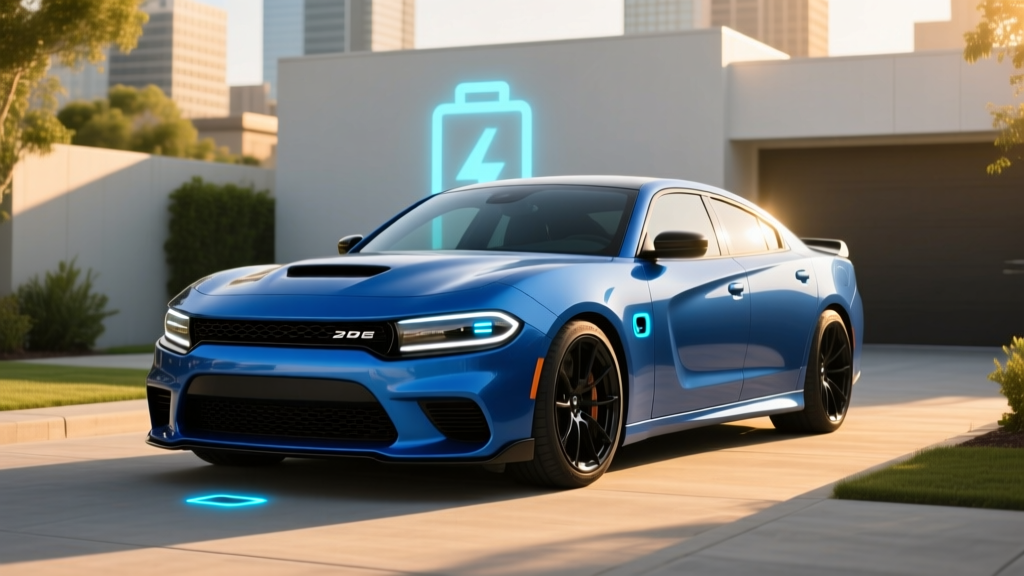
Dodge's Charger Daytona replaces the outgoing HEMI V8 Charger with a fully electric platform built on Stellantis's STLA Large architecture. Unlike the Charger Sixpack (which retains a twin-turbo inline-six), the Daytona is a pure battery-electric vehicle (BEV) offered in two main trims: the R/T and the Scat Pack. Both use a 100.6 kWh (gross) battery pack with an NMC (nickel manganese cobalt) chemistry and feature standard all-wheel drive via dual electric motors.
The Daytona represents Dodge's attempt to translate muscle-car identity into the EV era — complete with an "eRupt" multi-speed transmission that simulates gear shifts and a "Fratzonic" exhaust system that pipes synthetic engine notes through external speakers. Whether those features resonate or feel gimmicky is personal, but the underlying hardware is serious.
| Spec | Daytona R/T | Daytona Scat Pack |
|---|---|---|
| Base MSRP | $59,595 | $73,595 |
| Horsepower | 496 hp | 670 hp |
| 0-60 mph | 4.7 sec | 3.3 sec |
| Battery (gross / usable) | 100.6 kWh / ~92 kWh | 100.6 kWh / ~92 kWh |
| Chemistry | NMC | NMC |
| EPA Range | 317 mi | 260 mi |
| MPGe (combined) | 92 MPGe | 82 MPGe |
| Peak DC Fast Charge | ~175 kW | ~175 kW |
| 10-80% DC Charge Time | ~27 min | ~27 min |
| Level 2 Charge Rate | 11.5 kW | 11.5 kW |
| Drivetrain | AWD (dual motor) | AWD (dual motor) |
| Battery Warranty | 8 yr / 100,000 mi | 8 yr / 100,000 mi |
Source: fueleconomy.gov and Dodge official specs.
Real-World Range vs. EPA Sticker: What to Actually Expect
The EPA range numbers tell only part of the story. The Daytona's large, heavy battery pack and aggressive performance tuning mean efficiency suffers compared to more aero-optimized EVs. Here's how the numbers shake out in practice:
R/T (EPA 317 miles)
- Mixed city/suburban driving (65°F): ~285-305 miles
- Highway cruising (75 mph, 65°F): ~240-265 miles
- Highway in cold weather (30°F): ~195-225 miles
Scat Pack (EPA 260 miles)
- Mixed city/suburban driving (65°F): ~230-245 miles
- Highway cruising (75 mph, 65°F): ~195-215 miles
- Highway in cold weather (30°F): ~160-185 miles
The Scat Pack's wider 305-section rear tires, stiffer suspension tuning, and higher performance motor output all conspire to reduce efficiency. If range is your priority within the Daytona lineup, the R/T is the clear choice — you gain nearly 60 miles of EPA range while sacrificing some straight-line punch.
Cold weather hits the NMC battery hard. Expect 25-35% range reduction in sustained sub-freezing temperatures, particularly on highway trips where the heat pump and cabin heating draw significant energy. Preconditioning the battery while plugged in (using the Dodge app's scheduled departure feature) can recover some of that loss by warming the pack before you drive.
Charging Speeds and Infrastructure Reality
The Daytona supports DC fast charging at up to approximately 175 kW. That's competitive for the segment but trails the 800V architectures in the Hyundai Ioniq 5 (peak ~240 kW) and Porsche Taycan (peak ~270 kW). Here's the charging breakdown:
| Level | Power | Miles Added per Hour | Use Case |
|---|---|---|---|
| Level 1 (120V outlet) | ~1.4 kW | ~4-5 mi/hr | Emergency/overnight trickle |
| Level 2 (240V home) | 11.5 kW | ~35-38 mi/hr | Daily home charging (~8 hrs empty-to-full) |
| DC Fast Charge | Peak ~175 kW | ~500+ mi/hr (at peak) | Road trips; 10-80% in ~27 min |
Charging curve reality: The 175 kW peak only holds roughly between 10-30% state of charge. Above 50%, the rate tapers significantly — expect roughly 100 kW by 60% SoC and under 50 kW past 80%. This is why the 10-80% time is the useful metric, not peak kW. Charging from 80-100% on DC fast charging is painfully slow; plan to unplug at 80% during road trips and charge more frequently.
At home on a Level 2 charger (such as a ChargePoint Home Flex or Emporia V2 on a 48-amp circuit), a depleted Daytona R/T battery refills in roughly 8-9 hours. If you install a 60-amp circuit delivering the full 11.5 kW, you'll wake up to a full charge every morning — the ideal EV ownership pattern.
The Daytona uses the CCS1 connector standard. Dodge has not announced a transition to NACS (Tesla's connector) for the 2026 model year, so Supercharger access requires an adapter. Check current Stellantis announcements for any adapter programs before relying on Tesla's network.
Electric Daytona vs. Gas Charger vs. EV Competitors
The natural question: how does the Daytona EV stack up against the gas Charger it replaces and the EV performance alternatives?
| Metric | Daytona Scat Pack (EV) | 2023 Charger Scat Pack (6.4L V8) | Tesla Model S Plaid | Hyundai Ioniq 5 N |
|---|---|---|---|---|
| Price (base MSRP) | $73,595 | ~$52,000 (discontinued) | $89,990 | $66,995 |
| Horsepower | 670 hp | 485 hp | 1,020 hp | 640 hp |
| 0-60 mph | 3.3 sec | 4.2 sec | 1.99 sec | 3.4 sec |
| EPA Range / MPG | 260 mi / 82 MPGe | ~18 MPG combined | 396 mi / 120 MPGe | 221 mi / 84 MPGe |
| Fuel/Energy Cost per Mile | ~$0.05 (home) | ~$0.19 (gas) | ~$0.04 (home) | ~$0.05 (home) |
| 10-80% Charge / Fill Time | ~27 min | ~5 min | ~25 min | ~18 min |
| Annual Maintenance | ~$300 | ~$900 | ~$300 | ~$350 |
The Daytona Scat Pack delivers more horsepower and a quicker 0-60 than the old 6.4L V8 Scat Pack, while costing roughly one-quarter per mile in energy. However, the old Charger was significantly cheaper to buy upfront and could refuel in five minutes anywhere. The Tesla Model S Plaid is in another performance league entirely but costs $16,000 more. The Ioniq 5 N is the closest rival in price and spirit, offering comparable power with faster charging but less range and a smaller footprint.
Total Ownership Cost: Purchase, Charging, Insurance, and Maintenance
Let's model five-year ownership for a Daytona R/T driven 12,000 miles per year with mostly home charging:
| Category | Daytona R/T (EV) | Gas Muscle Car (~$50k, 20 MPG) |
|---|---|---|
| Purchase Price (MSRP) | $59,595 | $50,000 |
| Federal Tax Credit (§30D) | Up to $7,500* | $0 |
| Effective Purchase Price | ~$52,095 | $50,000 |
| Energy/Fuel (5 yrs, 60k mi) | ~$2,700 (home charging) | ~$11,400 (gas at $3.80/gal) |
| Maintenance (5 yrs) | ~$1,500 | ~$4,500 |
| Insurance (5 yrs, estimated) | ~$14,000 | ~$11,000 |
| Estimated Depreciation | ~$24,000 | ~$20,000 |
| Total 5-Year Cost | ~$68,295 | ~$76,900 |
*Federal tax credit eligibility under IRS §30D depends on buyer income limits (AGI caps: $150k single / $300k joint), vehicle MSRP caps ($55,000 for sedans — note: the Daytona R/T at $59,595 may exceed the sedan cap, though classification as a "truck/SUV" for credit purposes is under review; verify with a tax professional), and battery critical-mineral and component sourcing requirements that change annually. The credit can now be transferred at point of sale to reduce the purchase price directly.
The EV wins on energy and maintenance by a wide margin — roughly $11,700 in combined savings over five years. Insurance is the offset: EVs typically cost 15-25% more to insure due to higher repair costs and specialized parts. Depreciation remains a wildcard; early Charger Daytona resale values are unproven, though performance EVs generally depreciate faster than mainstream models in the first three years.
Common Misconceptions About the Electric Daytona
| Myth | Fact |
|---|---|
| "It gets the full $7,500 tax credit automatically." | Credit eligibility depends on MSRP classification, buyer AGI, and battery sourcing rules. The R/T's $59,595 price may exceed the $55,000 sedan cap unless Stellantis classifies it as a truck/SUV. Always verify current-year rules at irs.gov. |
| "260 miles of range isn't enough for road trips." | With DC fast charging adding ~150 miles in 15 minutes, road trips are manageable with planned stops. Most daily driving (under 50 miles) never touches range limits. |
| "The battery will need replacing in a few years." | The NMC pack is warrantied for 8 years/100,000 miles at 70% capacity retention. Industry data shows most NMC packs retain 85-90% capacity at 100,000 miles under normal use. |
| "It charges as fast as a Tesla." | At ~175 kW peak, the Daytona charges slower than Tesla's 250 kW V3 Superchargers and Hyundai's 800V architecture. Plan for slightly longer stops. |
| "The fake engine noise makes it feel like a V8." | The Fratzonic system is a synthetic sound enhancement. Some enthusiasts appreciate the drama; others find it disconnected from actual drivetrain feedback. Test-drive before deciding. |
First-Time EV Buyer Checklist: What to Know Before Ordering
If this is your first EV, the Daytona's performance credentials don't exempt you from the standard EV ownership homework:
- Home charging is essential. A Level 2 home charger (240V, 48-amp circuit) is the single biggest quality-of-life factor. Budget $800-$2,000 for the charger unit and professional installation by a licensed electrician. If your electrical panel is maxed out (common in older homes), a panel upgrade to 200A can add $1,500-$3,500.
- Public charging access matters. Use PlugShare or the Dodge app to map DC fast chargers along your regular routes. If you live in a charging desert (rural areas with sparse Electrify America, EVgo, or ChargePoint coverage), a 260-mile Scat Pack may create genuine range stress on longer trips.
- Cold climate? Plan for 25-35% range loss. The Daytona's heat pump helps, but sub-freezing highway driving will cut range substantially. Garage parking and battery preconditioning are your best defenses.
- Insurance will cost more. Get quotes before ordering. Performance EVs from Dodge carry higher premiums than mainstream EVs — expect $200-$350/month depending on your profile and state.
- Tires wear faster. The Daytona's instant torque and heavy curb weight (~5,800 lbs for the Scat Pack) accelerate tire wear. Budget for replacement tires every 25,000-35,000 miles, and choose EV-rated tires with low rolling resistance to preserve range.
Decision Framework: Should You Buy the Electric Daytona?
Choose the Daytona R/T if:
- You want muscle-car styling and 496 hp with 300+ miles of real-world-friendly range
- You have home Level 2 charging and mostly drive under 200 miles daily
- You value the Dodge brand identity and want to stay in the Charger ecosystem going electric
- You're willing to pay a premium over a Tesla or Hyundai for design and sound character
Choose the Daytona Scat Pack if:
- Performance is your top priority — 670 hp and 3.3-second 0-60 at $73,595 is serious value per horsepower
- You accept the 260-mile EPA range (real-world ~200 highway) as a trade-off for power
- You primarily drive in warm or moderate climates where cold-weather range loss is minimal
Look elsewhere if:
- Maximum range and efficiency are your priorities — the Tesla Model S (402 mi) or Lucid Air Pure (419 mi) dominate here
- You frequently road-trip in rural areas with sparse DC fast charging infrastructure
- You don't have access to home or workplace Level 2 charging — public-only charging at 175 kW peak gets expensive and time-consuming
- Budget is tight — the Ioniq 5 N offers similar thrills for $7,000 less with faster charging
Frequently Asked Questions
Does the Dodge Charger Daytona qualify for the $7,500 federal tax credit?
Possibly, but it's complicated. Under IRS §30D, sedans must have an MSRP under $55,000, while trucks, vans, and SUVs cap at $80,000. The Daytona R/T at $59,595 may exceed the sedan limit unless Stellantis successfully classifies it under the higher cap. The Scat Pack at $73,595 would clear the SUV/truck cap but not the sedan cap. Additionally, buyer AGI limits ($150k single / $300k joint) and battery sourcing requirements apply. Confirm eligibility with your tax professional and the dealer at point of sale.
How long does it take to charge the Daytona at home?
On a Level 2 home charger delivering 11.5 kW (48 amps at 240V), a fully depleted battery recharges in approximately 8-9 hours. Most owners plug in overnight and wake up to a full charge daily. On a standard 120V household outlet (Level 1), expect roughly 4-5 miles of range per hour of charging — only practical for emergency top-ups or very low-mileage drivers.
Is the Daytona a practical daily driver?
Yes, with caveats. The R/T's 317-mile EPA range handles virtually any daily commute without range anxiety. Cargo space is reasonable for a coupe/sedan with a rear hatch and fold-down seats. However, the wide body and 20+ inch wheels make tight parking lots more stressful, and the firm ride (especially in Scat Pack trim) is noticeable on rough pavement. Ground clearance is low — watch steep driveways and speed bumps.
How does the Daytona compare to a Tesla Model S?
The Model S Long Range offers 402 miles of EPA range and 120 MPGe efficiency versus the Daytona R/T's 317 miles and 92 MPGe. The Model S Plaid is dramatically quicker (1.99 sec 0-60 vs. 3.3 sec) but costs $89,990. Where the Daytona wins is design character, muscle-car identity, and the simulated shift/exhaust experience that Tesla doesn't attempt. If you prioritize efficiency and tech, Tesla wins. If you want personality and presence, the Daytona delivers.
What happens to the battery after the warranty expires?
The 8-year/100,000-mile battery warranty guarantees at least 70% capacity retention. Industry data from NREL and fleet studies suggest modern NMC packs typically retain 80-88% capacity at 150,000 miles. A full battery replacement outside warranty for a 100 kWh pack would likely cost $15,000-$22,000 at current pricing — a significant expense, but one most owners may never face. Individual module replacement is sometimes possible at lower cost.