The Short Answer
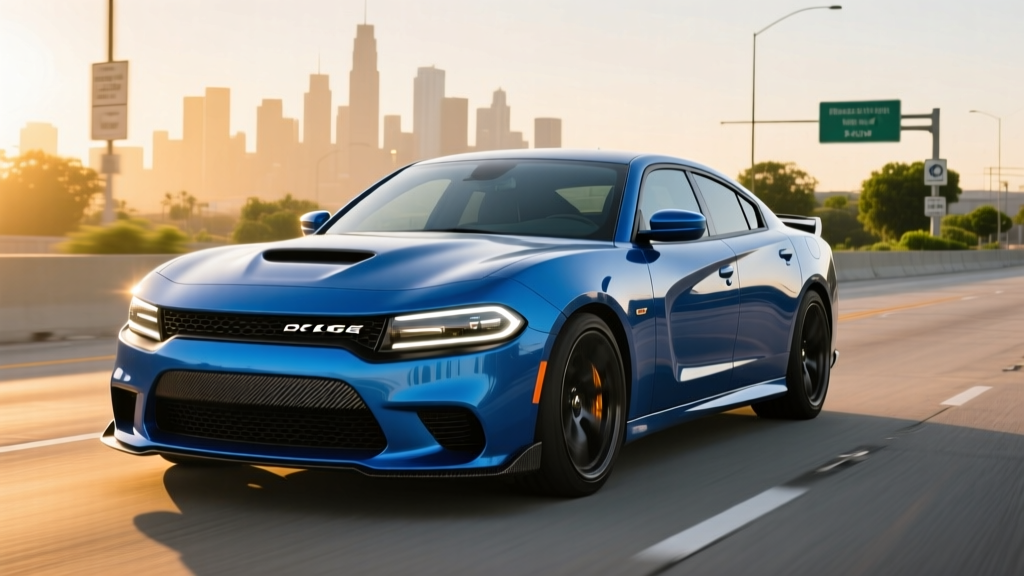
There is no standalone "all-electric Challenger" — Dodge retired the gas Challenger after the 2023 model year and replaced its two-door muscle coupe lineup with the Dodge Charger Daytona EV, a battery-electric fastback built on Stellantis's STLA Large platform. For the 2026 model year, the Charger Daytona R/T starts around $59,590 with 496 hp and an EPA-estimated 317 miles of range, while the Scat Pack variant delivers 670 hp, a 3.3-second 0-60, and approximately 260 miles of range. A gas-powered Charger Sixpack (inline-six) is also available for buyers not ready to go electric.
What Replaced the Challenger — And Why It Matters
The Dodge Challenger ended production in December 2023 after a 15-year run as America's quintessential modern muscle coupe. Stellantis confirmed that its successor would be electrified, and the result is the Charger Daytona — a two-door fastback that keeps the aggressive stance and rear-biased performance character enthusiasts expect while adopting an 800-volt electric architecture.
The naming shift matters: Dodge consolidated its two-door performance line under the Charger badge. If you're searching for an all-electric Challenger, the Charger Daytona is the vehicle you'll actually find on dealer lots. It's not a sedan, and it's not a four-door — it's a coupe that carries the muscle-car torch into the battery era.
For 2026, Dodge offers two primary EV trims alongside the gas Sixpack models:
- Charger Daytona R/T — 496 hp, 317 mi EPA range, ~$59,590 MSRP
- Charger Daytona Scat Pack — 670 hp, 260 mi EPA range, ~$73,590 MSRP
Specs That Matter: Range, Battery, and Charging
| Specification | Daytona R/T | Daytona Scat Pack |
|---|---|---|
| EPA Range | 317 miles | 260 miles |
| Real-World Highway Range (est.) | ~255–275 miles | ~205–225 miles |
| Battery Capacity (usable) | ~93 kWh (NMC) | ~93 kWh (NMC) |
| Battery Chemistry | NMC (Nickel Manganese Cobalt) | NMC |
| Architecture | 800V | 800V |
| Peak DC Fast Charge Rate | ~270 kW | ~270 kW |
| 10–80% DC Fast Charge | ~22 minutes | ~22 minutes |
| Level 2 Home Charge Rate | 11.5 kW (48A) | 11.5 kW (48A) |
| Level 2 Full Charge Time | ~8.5 hours | ~8.5 hours |
| Horsepower | 496 hp | 670 hp |
| 0–60 mph | 4.7 sec | 3.3 sec |
| Drivetrain | AWD (dual motor) | AWD (dual motor) |
| Starting MSRP (2026) | ~$59,590 | ~$73,590 |
| Battery/Powertrain Warranty | 8 yr / 100,000 mi | 8 yr / 100,000 mi |
Real-World Range Reality Check
The R/T's 317-mile EPA estimate is competitive with rivals like the Tesla Model S Long Range and BMW i5. However, expect real-world highway driving at 70–80 mph to yield roughly 255–275 miles in mild weather. In cold conditions (below 30°F), NMC chemistry typically loses 20–30% of range, which could drop the R/T to ~220–240 miles before needing a charge. The Scat Pack, with its higher-output motors and stickier tire compound, sacrifices range for performance — budget about 205–225 miles on a warm-weather highway run.
The 800-volt architecture is a genuine advantage. At a 350 kW-capable DC fast charger (like newer Electrify America or Tesla Supercharger V4 stalls), the Daytona can peak near 270 kW, adding roughly 100 miles of range in 10 minutes. However, like all EVs, the charge curve tapers significantly above 80% — the final 20% can take as long as the first 80%. For road trips, plan stops around the 10–80% window and move on rather than waiting for a full charge.
Daytona EV vs. the Gas Challenger It Replaces
| Metric | Charger Daytona Scat Pack (EV) | 2023 Challenger R/T Scat Pack (6.4L V8) |
|---|---|---|
| Horsepower | 670 hp | 485 hp |
| 0–60 mph | 3.3 sec | ~4.2 sec |
| EPA Range / Tank Range | 260 miles | ~350 miles (18.5-gal tank) |
| "Fuel" Cost per Mile | ~$0.04–$0.06 (home L2) | ~$0.18–$0.22 (premium at $4.00/gal, 18 mpg) |
| Annual Fuel/Energy (12k mi) | ~$480–$720 | ~$2,160–$2,640 |
| Annual Maintenance | ~$200–$400 | ~$600–$900 |
| Weight | ~5,800 lbs | ~4,300 lbs |
| Cargo Space | ~16 cu ft (fastback hatch) | ~16.2 cu ft (trunk) |
| Exhaust Note | Fratzonic electronic exhaust | 6.4L HEMI V8 rumble |
The raw performance numbers favor the EV decisively — 670 hp and a 3.3-second 0-60 time beat anything the naturally aspirated 6.4L V8 produced. But the gas Challenger still wins on total range, refueling speed (5 minutes at any gas station), and weight. At nearly 5,800 pounds, the Daytona EV is roughly 1,500 pounds heavier than its predecessor, which affects tire wear, braking distances, and the feel through corners. If you prioritize quarter-mile heroics and instant torque, the EV delivers. If you value lightweight, analog engagement and cross-country road-trip simplicity, the gas Challenger's spirit lives on in the used market.
Total Cost of Ownership: The Real Numbers
| Cost Category (5-Year / 60k Miles) | Daytona Scat Pack EV | Gas Muscle Car Equivalent |
|---|---|---|
| Purchase Price (MSRP) | $73,590 | ~$55,000 (used/remaining Challenger Scat Pack) |
| Federal Tax Credit (§30D) | Up to $7,500 (if eligible) | $0 |
| Effective Purchase | ~$66,090 | ~$55,000 |
| Energy/Fuel (60k mi) | ~$2,400–$3,600 | ~$10,800–$13,200 |
| Maintenance (60k mi) | ~$1,000–$2,000 | ~$3,000–$4,500 |
| Insurance (est. annual avg.) | ~$2,800–$3,500/yr | ~$2,200–$2,800/yr |
| 5-Year Insurance Total | ~$14,000–$17,500 | ~$11,000–$14,000 |
| Estimated 5-Year Total | ~$83,490–$89,190 | ~$79,800–$86,700 |
The EV's energy savings are substantial — roughly $8,000–$10,000 less spent on "fuel" over five years if you charge primarily at home on Level 2. Maintenance savings add another $1,500–$2,500 (no oil changes, fewer brake replacements thanks to regenerative braking, no spark plugs or exhaust work).
However, EV insurance premiums run 15–30% higher on average due to repair costs, battery replacement exposure, and the vehicle's higher MSRP. The federal §30D clean vehicle credit can offset up to $7,500 at point of sale, but eligibility depends on your adjusted gross income (caps at $150k single / $300k joint), the vehicle's MSRP (must be under $80,000 for SUVs/pickups or $55,000 for sedans — confirm the Charger's classification with your dealer), and battery critical-mineral sourcing requirements. Always verify current-year rules on IRS.gov or with a tax professional before counting on the credit.
Home Charging: What First-Time EV Buyers Need to Know
The single biggest ownership variable is whether you can charge at home. The Daytona's 11.5 kW onboard charger means a properly installed Level 2 home station (240V, 48-amp circuit) will add roughly 30–35 miles of range per hour and fully replenish the ~93 kWh battery overnight in about 8.5 hours.
| Home Charging Item | Typical Cost Range |
|---|---|
| Level 2 Charger (hardware, e.g., ChargePoint Home Flex, Emporia Vue) | $400–$750 |
| Electrician install (240V/50A circuit, 20–40 ft run) | $800–$2,500 |
| Electrical panel upgrade (if needed, 100A → 200A) | $1,500–$4,000 |
| Permit and inspection | $50–$300 |
| Total (no panel upgrade) | $1,250–$3,550 |
| Total (with panel upgrade) | $2,750–$7,550 |
If you live in an apartment or lack garage/driveway access, you'll rely on public DC fast charging and workplace charging. At current Electrify America and EVgo pricing (~$0.40–$0.55/kWh), public charging costs roughly $0.10–$0.15 per mile — still less than premium gasoline in a V8, but 2–3× more expensive than home Level 2 charging. Factor this into your decision honestly.
Preconditioning matters. The Daytona's battery thermal management system can warm or cool the pack before you arrive at a DC fast charger, enabling faster charging speeds. Always use the navigation system to route to a charger — this triggers automatic preconditioning and can shave 5–10 minutes off your 10–80% charge time, especially in cold weather.
Addressing the Myths Around an Electric Muscle Car
| Myth | Fact |
|---|---|
| "EVs have no soul — no sound, no drama." | Dodge's Fratzonic exhaust system generates synthetic V8-style sound through cabin speakers and external chambers. It's subjective, but it's not silent. |
| "The battery will need replacing in 5 years." | NMC batteries in modern thermal-managed packs typically retain 85–90% capacity after 100,000 miles. Stellantis warrants the battery for 8 years/100,000 miles against defects and excessive degradation (below 70% capacity). |
| "You can't road-trip an EV." | With 260–317 miles of range and 10–80% DC fast charging in ~22 minutes, road trips are viable — they just require 20-minute stops every 2–3 hours instead of 5-minute gas stops every 4 hours. |
| "EVs are worse in the cold." | Range drops 20–30% in sub-freezing temperatures — this is real. But the Daytona's heat pump and battery preconditioning mitigate this. Remote-start cabin heating while plugged in costs zero range. |
| "It's not a real muscle car without a V8." | 670 hp, 3.3-second 0–60, and a sub-$75k price point put the Scat Pack EV in supercar territory for acceleration. The definition of muscle is evolving. |
Who Should Buy the Charger Daytona EV — And Who Shouldn't
Decision Framework
Choose the Charger Daytona R/T if:
- You want a daily-drivable electric coupe with 300+ miles of range and strong but not extreme performance
- You have home Level 2 charging access and drive under 60 miles round-trip daily
- You want muscle-car styling without V8 fuel and maintenance costs
- You qualify for the §30D tax credit, bringing effective price closer to $52,000
Choose the Charger Daytona Scat Pack if:
- Maximum performance is the priority — 670 hp and 3.3-second 0–60 are non-negotiable
- You accept ~260 miles of range and plan road trips around DC fast-charger routing
- You're cross-shopping the Tesla Model S Plaid or Porsche Taycan but want American styling
Look elsewhere (used gas Challenger, Charger Sixpack, or a different EV) if:
- You lack home charging and your area has sparse DC fast-charger infrastructure
- You regularly tow (the Daytona is not rated for towing)
- You need four doors and rear-seat practicality — consider the Hyundai Ioniq 6, BMW i5, or Tesla Model S instead
- Long cross-country road trips are frequent and you can't tolerate 20-minute charging stops
- The V8 exhaust note and analog mechanical feel are irreplaceable to you — the used 2023 Challenger market is your best bet
Frequently Asked Questions
Is there an all-electric Dodge Challenger?
No. Dodge discontinued the Challenger nameplate after the 2023 model year. The all-electric successor is the Dodge Charger Daytona, a two-door fastback coupe. It fills the same muscle-car role but wears the Charger badge.
Does the Charger Daytona qualify for the $7,500 federal tax credit?
It may, depending on your income (under $150k single / $300k joint AGI), the vehicle's MSRP classification, and whether its battery meets current critical-mineral and component sourcing requirements under IRS §30D rules. The credit can be transferred to the dealer at point of sale as a price reduction. Verify eligibility with your tax advisor before purchase — rules change annually.
How long does the Charger Daytona battery last?
Stellantis warranties the high-voltage battery for 8 years or 100,000 miles, whichever comes first. Industry data from similar NMC packs with active thermal management suggests 85–90% state of health at 100,000 miles is typical. Full battery replacement, if ever needed outside warranty, currently costs in the range of $12,000–$18,000 — though prices are declining as battery manufacturing scales.
Can I charge the Charger Daytona at a Tesla Supercharger?
The 2026 Charger Daytona uses the CCS1 connector standard. Tesla has opened select Supercharger stalls to non-Tesla EVs via the built-in Magic Dock CCS adapter at those locations. You can also use Electrify America, EVgo, and other CCS-compatible networks. Stellantis has indicated future models may adopt NACS (Tesla's connector), but the 2026 Daytona ships with CCS1.
What's the real-world 0–60 time, not just the marketing number?
Dodge claims 3.3 seconds for the Scat Pack on a prepped surface with launch control engaged. Independent testing of similar dual-motor AWD EVs in this power class typically yields 3.3–3.6 seconds depending on surface, tire temperature, and state of charge. Performance drops slightly below 20% SoC — keep the battery above 50% for maximum acceleration.
How does the Daytona compare to a Tesla Model S or Ford Mustang Mach-E?
The Model S Long Range offers ~405 miles of EPA range and access to the full Supercharger network, but starts above $80,000 and lacks the Daytona's coupe styling. The Mustang Mach-E GT is a practical crossover with 312 miles of range and 480 hp at ~$60,000, but it's a four-door SUV, not a muscle coupe. The Daytona occupies a unique niche: the only American two-door electric performance coupe at its price point.