Quick Answer: Is the Electric Challenger Worth It?
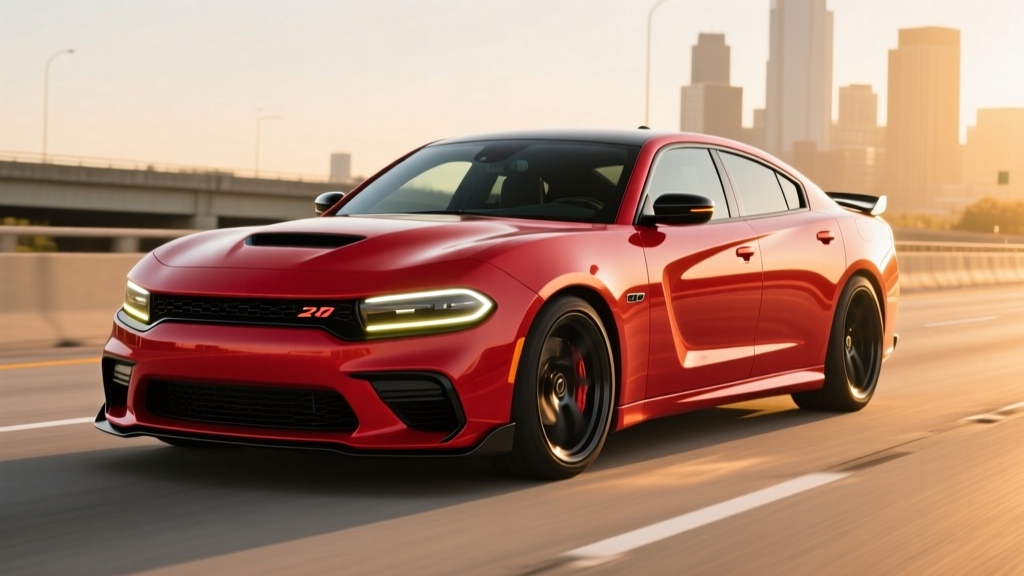
The 2026 Dodge Charger Daytona EV is the spiritual successor to the gas-powered Challenger, delivering muscle-car performance in an all-electric package. The R/T trim starts at $51,990 with 496 hp and 319 miles of EPA range, while the Scat Pack hits 670 hp and 0-60 mph in 3.3 seconds. However, real-world highway range drops to roughly 240-260 miles, DC fast charging peaks at 175 kW (not class-leading), and at 5,800+ lbs, this EV prioritizes straight-line thrust over efficiency. It qualifies for a partial federal tax credit depending on battery sourcing. If you want muscle-car drama with daily-driver practicality and home charging access, it works. If you need maximum range or fastest charging, look to Tesla or Hyundai.
Range and Efficiency: EPA vs. Real-World Numbers
The Charger Daytona EV uses a 100.6 kWh (gross) battery pack with NMC chemistry, delivering an EPA-estimated 319 miles on the R/T and 274 miles on the Scat Pack (the extra power and wider tires reduce efficiency). Efficiency ratings land around 98 MPGe combined for the R/T, according to fueleconomy.gov.
Real-World Range Expectations
EPA Sticker: 319 miles (R/T) / 274 miles (Scat Pack)
Highway Driving (70-80 mph): Expect 240-260 miles (R/T), 210-230 miles (Scat Pack)
Cold Weather (below 32°F): Subtract 20-30%, yielding ~220-250 miles (R/T)
City/Regen-Heavy Driving: Can exceed EPA estimate, up to 330+ miles
The Charger Daytona's heavy curb weight and aggressive tire compound hurt highway efficiency. Use preconditioning to minimize cold-weather losses and optimize charging speed.
Charging Speed and Infrastructure
The Charger Daytona supports up to 175 kW DC fast charging on CCS1-equipped models (2026 production). Dodge has confirmed NACS compatibility for future builds, but current 2026 models ship with CCS1. Level 2 home charging maxes out at 11.5 kW (48A), adding roughly 30-35 miles of range per hour.
| Charging Level | Power (kW) | Miles Added Per Hour | 10-80% Time |
|---|---|---|---|
| Level 1 (120V) | 1.4 kW | ~4 miles | N/A (days) |
| Level 2 (240V, 48A) | 11.5 kW | ~32 miles | ~8.5 hours |
| DC Fast (peak) | 175 kW | ~180 miles in 20 min | ~27 minutes |
Charging curve reality: The 175 kW peak is not sustained. Expect 150-175 kW from 10-40% SoC, tapering to 100 kW by 60%, and 50 kW above 80%. A 10-80% charge takes approximately 27 minutes at a capable station. This is slower than the Hyundai Ioniq 5 (240 kW peak, 18-minute 10-80%) or Tesla Model S (250 kW peak).
Performance: Muscle Car DNA, Electric Delivery
| Specification | R/T | Scat Pack |
|---|---|---|
| Horsepower | 496 hp | 670 hp |
| Torque | 404 lb-ft | 627 lb-ft |
| 0-60 mph | 4.7 seconds | 3.3 seconds |
| Top Speed | 137 mph | 140 mph |
| Battery Capacity | 100.6 kWh (gross) | 100.6 kWh (gross) |
| EPA Range | 319 miles | 274 miles |
| Curb Weight | 5,838 lbs | 5,952 lbs |
The instant torque delivery transforms the Charger Daytona into a legitimate stoplight-to-stoplight performer. The Scat Pack's 3.3-second 0-60 time matches the outgoing Hellcat Redeye, but without the supercharger whine or fuel bill. Dodge includes a "Fratzonic" exhaust sound system that pipes synthetic engine noise through cabin speakers—a polarizing choice that attempts to replicate V8 drama.
Cost Breakdown: Purchase, Charging, and Ownership
| Cost Factor | Charger Daytona R/T | 2023 Challenger R/T (Gas Baseline) |
|---|---|---|
| Base MSRP | $51,990 | $43,000 (est. used/discontinued) |
| Federal Tax Credit (§30D) | $3,750 (partial, sourcing-dependent) | $0 |
| Effective Purchase Price | ~$48,240 | $43,000 |
| Fuel/Energy Cost (15k mi/yr) | $600-$900 (home charging) | $2,400-$3,000 (premium fuel) |
| Maintenance (Annual) | $200-$400 | $800-$1,200 |
| Insurance (Annual) | $2,800-$3,500 | $2,400-$3,000 |
| 5-Year Total Cost | ~$64,000-$72,000 | ~$68,000-$76,000 |
Tax credit caveat: The Charger Daytona's eligibility for the full $7,500 §30D federal tax credit depends on battery component and critical mineral sourcing requirements that shift annually. As of 2026, partial credits ($3,750) are common for vehicles with North American assembly but overseas cell sourcing. Verify eligibility via the IRS portal and confirm with a tax professional before purchase. Income caps apply: $150k single / $300k joint filers.
EV vs. Gas Challenger: What You Gain and Lose
| Factor | Charger Daytona EV (2026) | Challenger R/T (Gas, Discontinued) |
|---|---|---|
| 0-60 mph | 4.7 sec (R/T) / 3.3 sec (Scat Pack) | 5.0 sec (5.7L HEMI) |
| Range / Tank | 240-319 miles (real-world/EPA) | 350-400 miles (18.5-gal tank) |
| Refuel/Recharge Time | 27 min (10-80% DC fast) | 5 minutes (gas station) |
| Annual Fuel Cost | $600-$900 | $2,400-$3,000 |
| Sound/Drama | Synthetic Fratzonic (polarizing) | Real V8 rumble (iconic) |
| Weight | 5,838 lbs | 4,200 lbs |
| Availability | On sale now | Discontinued 2023 |
The trade-off: You gain instant torque, lower running costs, and a car you can actually buy new. You lose the visceral V8 sound (unless you embrace Fratzonic), 100+ miles of range, and the 5-minute refueling convenience. For road trips exceeding 250 miles, plan charging stops or rent a gas car.
Common Misconceptions About the Electric Challenger
| Myth | Fact |
|---|---|
| "It's not a real muscle car without a V8." | The Scat Pack's 3.3-second 0-60 and 627 lb-ft torque beat most gas Challengers. Performance is undeniable; sound is subjective. |
| "EVs are cheaper to own, period." | Higher purchase price, insurance, and potential home charging install ($1,000-$2,500) offset fuel savings. Break-even takes 4-6 years for most buyers. |
| "I can road-trip just like a gas car." | 240-mile real-world range means charging every 2-2.5 hours on the highway. Plan routes around DC fast chargers or accept longer travel times. |
| "The battery will need expensive replacement soon." | Dodge warranties the battery for 8 years/100,000 miles (minimum 70% capacity retention). Most NMC packs last 150,000-200,000 miles before significant degradation. |
| "I need a Tesla to use Superchargers." | Tesla Superchargers now accept non-Tesla EVs via Magic Dock (CCS1) at select locations. The broader Electrify America and EVgo networks also work. |
Decision Framework: Is the Charger Daytona EV Right for You?
Choose the Charger Daytona EV If:
- You have home Level 2 charging access (240V, 40A+ circuit)
- Your daily commute is under 100 miles round-trip
- You want muscle-car acceleration without the fuel bill
- You accept 2-3 charging stops on 500+ mile road trips
- You value instant torque over V8 sound authenticity
- You can absorb a $50k+ purchase price after tax credits
Look Elsewhere If:
- You lack home charging and rely solely on public infrastructure
- You regularly drive 300+ miles in a single day
- You live in extreme cold climates (Alaska, northern Minnesota) without garage parking
- You prioritize maximum range (Tesla Model S: 402 miles EPA) or fastest charging (Ioniq 5: 18-min 10-80%)
- You want a sub-$40k purchase price
Frequently Asked Questions
Does the Charger Daytona EV qualify for the full $7,500 federal tax credit?
As of 2026, most Charger Daytona EV trims qualify for a partial credit ($3,750) due to battery sourcing rules. The full $7,500 requires both battery components and critical minerals to meet North American sourcing thresholds. Check the fueleconomy.gov tax credit database for VIN-specific eligibility before purchase.
How long does the battery last, and what does replacement cost?
Dodge warranties the 100.6 kWh battery for 8 years/100,000 miles with a minimum 70% capacity retention threshold. Real-world NMC degradation data suggests 10-15% capacity loss over 100,000 miles under normal use. Out-of-warranty replacement costs $15,000-$20,000 (parts + labor), though most packs outlast the vehicle's economic life.
Can I charge at Tesla Superchargers?
Yes, but with caveats. Tesla has opened select Superchargers to non-Tesla EVs via the Magic Dock adapter (CCS1-compatible). However, not all locations have Magic Dock, and charging speeds may be limited to 150 kW on older V2 stalls. Use the Tesla app to locate compatible stations. The broader CCS1 network (Electrify America, EVgo, ChargePoint) remains more reliable for non-Tesla EVs.
How does cold weather affect range?
Expect 20-30% range loss in sub-freezing temperatures due to battery chemistry and cabin heating demands. A 319-mile EPA range drops to 220-250 miles in 20°F weather. Preconditioning the battery while plugged in mitigates this loss and improves DC fast charging speed. If you live in cold climates, garage parking and a Level 2 home charger are essential.
Is the Fratzonic exhaust sound worth it?
This is subjective. Fratzonic pipes synthetic engine noise through cabin speakers, simulating V8 rumble and gear-shift cues. Some owners find it immersive; others find it artificial. You can disable it entirely for silent EV operation. Test-drive with and without Fratzonic before deciding.
What's the insurance cost compared to a gas Challenger?
Insurance premiums for the Charger Daytona EV run 15-25% higher than the gas Challenger, averaging $2,800-$3,500 annually for a 35-year-old driver with clean record (varies by state and coverage). EV repair costs, battery replacement risk, and higher MSRP drive the premium. Shop quotes from GEICO, Progressive, and State Farm before purchase.
Do I need to upgrade my home electrical panel for Level 2 charging?
Maybe. A Level 2 charger (11.5 kW, 48A) requires a 60A dedicated circuit. If your home has a 200A panel with spare capacity, installation costs $800-$1,500 (electrician + permit + charger). Older homes with 100A panels may need a $2,000-$4,000 panel upgrade. Get a quote from a licensed electrician before committing to the vehicle.
Final Verdict: The Electric Challenger's Place in 2026
The Dodge Charger Daytona EV is a legitimate muscle car for the electric era—fast, heavy, and unapologetically American. It trades range and charging speed for straight-line performance and daily-driver practicality. If you have home charging, a sub-100-mile commute, and a taste for instant torque, it delivers. If you need 400+ miles of range, 15-minute charging, or a sub-$40k price, look to Tesla, Hyundai, or Chevrolet. The electric Challenger isn't perfect, but it proves muscle cars can survive electrification—just not without compromise.